Outdated Drivers Are Slowing You Down
One free scan finds every outdated or missing driver and matches the right update for your exact hardware.Free scan · exact hardware matchWindows Errors? Fix Them Before They Spread
Repair common Windows errors and clear accumulated junk for a smoother, more stable PC - no reinstall needed.Free scan · no reinstallChoose the motorcycle, not the badge. In the 2026 US market, an Indian Sport Scout and a Harley-Davidson Low Rider ST represent very different motorcycles, budgets and missions. The Scout is a compact, liquid-cooled cruiser with a lower starting price and lighter published running-order weight. The Low Rider ST is a substantially more powerful, heavier motorcycle with a frame-mounted fairing, cruise control and integrated luggage. Neither is a universal winner.
Start with your riding use, physical fit, equipment requirements and out-the-door budget. Then compare the exact Indian or Harley-Davidson model and trim that matches those criteria. The figures below come from manufacturer pages for the US market accessed October 13, 2026; they are specifications and advertised prices, not independent test results.
As an Amazon Associate I earn from qualifying purchases.
The practical answer: match the model to your riding
“Indian versus Harley-Davidson” is too broad a question to answer with one brand recommendation. Indian’s Scout family, Chief family and various trims cover different needs. Harley-Davidson’s 2026 cruiser range runs from the relatively simple Street Bob to the touring-oriented Low Rider ST, with substantial differences in price, mass, output and equipment.
Use this decision order:
- Define the riding: commuting and urban errands, relaxed day rides, fast back roads, frequent passenger use or long highway days.
- Set a real purchase ceiling: include destination and setup charges, taxes, title, registration, insurance, financing and the accessories you actually need.
- Check fit: sit on the exact year, trim and seat configuration. Seat-height and weight figures are only useful when their measurement basis is the same.
- Specify equipment: decide whether you need cruise control, ride modes, traction control, navigation, a fairing, luggage or passenger provisions.
- Ride both candidates: published horsepower and torque cannot tell you whether the engine response, reach to the controls or balance suits you.
If a relatively light, low-seat cruiser with modern liquid cooling and a lower entry price fits your use, an Indian Scout is a logical starting point. If you want much greater published output, a larger fuel tank, built-in luggage and a fairing for highway travel, the Low Rider ST illustrates why a higher-priced Harley-Davidson may be the better fit. Those are examples of different classes, not a direct comparison test.
#1 Best Overall

- Engine Type (V-Twin, Air-Cooled, EFI) – A high-performance V-Twin engine with Electronic Fuel Injection (EFI) for smooth power delivery, fuel efficiency, and reduced emissions.
- Brakes (Front/Rear - Disc/Disc) – Equipped with dual hydraulic disc brakes for powerful, precise stopping capability in all road conditions.
- Fuel Economy (87 MPG) – Exceptional fuel efficiency, making it a cost-effective and environmentally friendly choice.
- Dual Chrome Exhaust – A classic twin-pipe exhaust system that not only enhances aesthetics but also delivers a deep, aggressive sound signature.
- New Digital & Analog Display – A combination of modern digital precision with a classic analog touch, offering a stylish and functional instrument cluster.
2026 US price landscape
Indian’s 2026 lineup page lists the Sport Scout Sixty at a starting US MSRP of $10,499 and the Sport Scout at $13,499. Indian states that MSRP can change and excludes destination and handling fees, taxes, title, license and registration; dealer prices, destination and setup charges can vary.
Harley-Davidson’s 2026 US cruiser page lists these advertised starting prices:
| Harley-Davidson model | Advertised starting price |
|---|---|
| Street Bob | $14,999+ |
| Super Glide | $15,999+ |
| Deadwood | $17,999+ |
| Low Rider S | $18,999+ |
| Heritage Classic | $19,999+ |
| Fat Boy | $22,599+ |
| Breakout | $22,999+ |
| Low Rider ST | $23,999+ |
The plus sign and the word “starting” matter. These are advertised figures, not out-the-door prices. A fair quote must use the same model year, trim, paint, destination and setup treatment, then add local taxes, registration, financing and insurance. Accessories can erase an apparent price advantage: adding luggage, wind protection, passenger equipment or electronic options to a base motorcycle changes the comparison.
Recommended Free Tools
Representative comparison: Sport Scout and Low Rider ST
The following table puts two well-documented 2026 examples side by side. It is useful for understanding the range of choices, but the Low Rider ST is not price-equivalent to a base Sport Scout and is designed with more touring-oriented equipment.
| Specification | Indian 2026 Sport Scout | Harley-Davidson 2026 Low Rider ST |
|---|---|---|
| Engine | Liquid-cooled 60-degree V-twin | Milwaukee-Eight 117 High Output |
| Displacement | 1,250 cc | 117 cu. in. |
| Published power | 105 hp | 114 hp at 5,000 rpm |
| Published torque | 82 lb-ft at 6,300 rpm | 128 lb-ft at 4,000 rpm |
| Running-order weight | 547 lb | 712 lb |
| Seat height | 25.7 in. unladen | 27 in. laden |
| Fuel capacity | 3.4 gal. | 5 gal. |
| Transmission | Six-speed | Not stated on the cited specification page |
| Luggage | Not listed as standard on the cited specification page | 2 cu. ft. listed capacity |
| Wind protection | Not listed as standard on the cited specification page | Frame-mounted fairing |
| Rider aids listed | ABS; additional aids depend on trim | Ride modes, cruise control, ABS and traction-control variants |
Do not read the horsepower figures as a laboratory acceleration contest. The manufacturers publish them under their own conditions, and engine character, gearing, throttle calibration, aerodynamics and rider load all affect how a motorcycle feels. The 712-pound Harley-Davidson also carries more fuel and touring equipment than the 547-pound Sport Scout, so the weight figures describe different design priorities.
Rank #2

- 250CC Powerful ZS Motor, 5-Speed Transmission
- Two Keys Included / Two Seater
- Arrivs 90% Assembled: You will be required to install the handlebars + mirrors + battery + tighten bolts+ etc.
- Digitial Dash with USB Port
- Upgraded Side Lights & Halo Headlight
Engine size and character
The Sport Scout uses a liquid-cooled 1,250 cc V-twin rated at 105 hp and 82 lb-ft of peak torque at 6,300 rpm. The Sport Scout Sixty uses a liquid-cooled 999 cc engine rated at 85 hp and 65 lb-ft at 6,500 rpm. Liquid cooling does not make either motorcycle automatically better; it identifies the engine architecture and the way the manufacturer manages operating temperature.
The Low Rider ST’s Milwaukee-Eight 117 High Output is listed at 114 hp and 128 lb-ft, with peak torque arriving at 4,000 rpm. That larger torque figure suggests a different specification brief from the Scout’s more compact engine, but only a ride on each exact motorcycle can establish which response you prefer. Indian’s Chief family uses air-cooled Thunderstroke 111 or 116 V-twins, while the Scout is the more compact family in Indian’s own description.
Weight, seat height and maneuvering
The Sport Scout’s published running-order weight is 547 lb and its seat height is 25.7 inches unladen. The Sixty is listed at 549 lb with the same 25.7-inch seat height. Harley-Davidson lists the Low Rider ST at 712 lb running order and a 27-inch laden seat height.
Those seat numbers are not directly interchangeable: Indian identifies its figure as unladen, whereas Harley-Davidson identifies the Low Rider ST figure as laden. Ask the dealer how the loaded and unloaded measurements apply to the exact seat, suspension setting and rider weight. A lower seat can help a shorter rider reach the ground, but total mass, handlebar reach, steering geometry and where the weight sits also affect parking-lot confidence. Practice slow turns and backing the motorcycle before committing to a purchase.
Fuel and travel planning
The Sport Scout carries 3.4 gallons and the Low Rider ST carries 5 gallons. Capacity alone does not establish range because fuel consumption, speed, payload, weather and reserve strategy vary. Treat the larger Harley-Davidson tank as a potential advantage for highway planning, not as a guaranteed number of miles between stops.
Rank #3

- FUEL-INJECTED PERFORMANCE – Advanced EFI system delivers smoother acceleration, easier cold starts, improved fuel economy, and consistent engine performance.
- 6-SPEED MANUAL TRANSMISSION – Smooth-shifting gearbox provides excellent control, comfortable highway cruising, and an authentic riding experience.
- BEGINNER-FRIENDLY DESIGN – Low 29-inch seat height and relaxed cruiser ergonomics inspire confidence for new riders while remaining enjoyable for experienced motorcyclists.
- PREMIUM BRAKING SYSTEM – Dual front hydraulic disc brakes and rear hydraulic disc brake provide strong, predictable stopping power for added safety and control.
- CLASSIC CHOPPER STYLING – Chrome exhaust, stretched cruiser profile, aluminum alloy wheels, and full-size motorcycle presence deliver a bold, head-turning appearance.
Fairing, storage and electronic equipment
The Low Rider ST includes a frame-mounted fairing and 2 cubic feet of luggage capacity in its listed equipment. Those features address wind management and carrying gear without immediately adding aftermarket parts. The cited Sport Scout specification page does not list equivalent standard luggage or a fairing, so budget for accessories if your use requires them.
Free tools Windows power users keep installed
One-click scans. No signup required.
Indian’s Scout technology is trim-dependent. Standard models described on the trim page include ABS, LED lighting and an analog gauge. Limited trims add items including traction control, cruise control and ride modes. Limited+Tech adds a 4-inch touchscreen with RIDE COMMAND and navigation/connected features. Confirm the exact model-year build sheet: a feature shown for a Limited or Limited+Tech motorcycle should not be assumed on a Standard bike.
Understanding Indian’s Scout and Chief families
Scout: compact dimensions and multiple price points
Indian positions the Scout as its more compact family, with liquid-cooled 1,250 cc or 999 cc engines. The Sport Scout is the stronger published-output example at 105 hp and 82 lb-ft. The Sport Scout Sixty lowers the entry price to $10,499 and uses the 999 cc engine rated at 85 hp and 65 lb-ft, while retaining the listed 25.7-inch seat height and nearly identical running-order weight.
Both cited Sport Scout specifications list ABS, a 3.4-gallon tank and a two-year unlimited-mile factory warranty. That warranty statement applies to the Indian models cited here. The available evidence does not establish an equivalent Harley-Davidson warranty term, so obtain and compare the written warranty documents rather than assuming the terms match.
Chief: a larger, air-cooled alternative
Indian describes the Chief as a larger family using air-cooled Thunderstroke 111 or 116 V-twins. The 2026 Sport Chief model page describes Fox rear shocks, KYB inverted front forks, Brembo brakes, ride modes, cruise control, keyless ignition, ABS, LED lighting and USB charging. That page uses an older 2023 URL, so treat those items as general model positioning and have a dealer confirm what is standard on the specific 2026 motorcycle, trim and market configuration.
What’s actually slowing this PC down?
Pick the symptom - the matching free tool is one click away.
Rank #4

- BOOM 250cc 6 Speed EFI Fuel Injection Dirt Bike Motorcycle Bike Street Bike Motorcycle. 6 Speed transmission Allows the engine to run at a lower RPM and save fuel,most effective at highway driving speeds
- 【17" front and rear tires】Well-suited for off-road adventures, offering improved ground clearance, stability, traction, and comfort in demanding conditions.
- 【Equipped with a 223cc engine】Offers a good balance of power, fuel efficiency, and maneuverability, making it a suitable choice for riders seeking a versatile off-road experience
- Front Suspension Inverted Front Shock Absorber and Rear Suspension and Independent Central Rear Shock Absorber
- BOOM BD250 - 7 is Overall Length is 86 inches Overall Width is 30 inches + Overall Height is 42 inches + Wheelbase is 48 inches + Seat Height is 31 inches and Fuel Tank Capacity 3.3 gallons
Comparing a Chief with a Harley-Davidson Street Bob, Low Rider S or another similarly priced model is more meaningful than comparing every Chief specification with a base Scout. Match engine class, wet or running-order weight, suspension equipment, passenger provisions and standard electronics before drawing conclusions.
How Harley-Davidson’s cruiser range changes the decision
The 2026 Harley-Davidson list spans several styles and price levels. Street Bob and Super Glide provide lower advertised entry points than the Low Rider ST. Deadwood, Low Rider S, Heritage Classic, Fat Boy and Breakout move upward in price and differ in styling, chassis details, equipment and intended use. The lineup therefore cannot be reduced to a single “Harley feel” or one ownership profile.
For a buyer focused on highway days, the Low Rider ST’s listed combination of five-gallon fuel capacity, fairing, cruise control, ride modes and 2 cubic feet of luggage is relevant. A buyer who mostly rides short urban trips may not value that equipment enough to justify the $23,999+ starting price. Select the Harley-Davidson model whose standard equipment already matches your use instead of paying to retrofit a different model.
Choose by riding mission
Commuting, errands and shorter day rides
The Sport Scout or Sport Scout Sixty deserves consideration when a low listed seat, lighter published weight and compact dimensions are priorities. The Sixty’s $10,499 starting MSRP is the lowest cited price in this comparison. Check whether its 85-hp output, 3.4-gallon tank and available technology meet your normal routes before choosing it solely on price.
Spirited back-road riding
The Sport Scout’s 105-hp, 1,250 cc engine and the Low Rider ST’s 114-hp engine provide ample published output on paper, but specification sheets cannot tell you which throttle response, gearing, suspension calibration or riding position works for you. Ride both on the types of roads you actually use, where legal and safe. If you are considering a Sport Chief, verify its suspension and brake equipment on the 2026 build rather than relying on the older model-page path.
Best Value
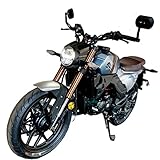
- Some assembly needed:Front wheel,battery,handlebar,and rearview mirrors.***Kindly be aware that the Manufacturer Statement of Origin (MSO) and Bill of Sale paperwork will be sent to you by separate mail.
- Advanced 200cc EFI engine, With featuring EFI system, the Lifan KPM 200 is able to perform well under any weather condition and at higher altitude
- Upgraded with tubeless 100/80-17 tires in the front and 130/70-17 in the back that grip the road very well.
- 6 Speed mannal transmission allows the engine to run at a lower RPM and save fuel,most effective at highway driving speeds.
Longer highway days
A fairing, cruise control, luggage and a larger tank reduce the number of accessories and stops you may need to plan for. The Low Rider ST lists all four of those advantages in its equipment or capacity figures. A Scout can be adapted for travel, but add the cost, mounting system, passenger accommodations and wind protection to the quote before deciding that a less expensive base motorcycle is equivalent.
Passenger use
Confirm that the exact motorcycle includes a passenger seat, footrests, grab points and a permissible load for your two-up plans. The cited pages do not provide a complete, comparable passenger-equipment table for every model. A comfortable solo configuration is not proof that a motorcycle is ready for regular two-up touring.
Technology and controls
If navigation, connected functions, cruise control or selectable ride modes are essential, identify the trim before comparing prices. On the Scout, those features vary between Standard, Limited and Limited+Tech. On the Low Rider ST, the listed equipment includes ride modes and cruise control. Ask to see the actual display, switchgear and phone-connectivity behavior on the motorcycle you would receive.
Do these 3 things before closing this tab:
1Fix the driver behind crashes, sound loss and screen glitches2Clear out junk files and repair common Windows errors3Scan for outdated or missing drivers - takes under a minuteA dealer visit that produces a fair comparison
- Write a fixed specification: list maximum price, solo or two-up use, highway frequency, minimum storage, preferred seat reach and required rider aids.
- Request matching quotes: ask each dealer for selling price, destination, setup, documentation, taxes, title, registration, accessories, financing rate and total amount financed as separate line items.
- Verify the build: record model year, trim, paint, seat, suspension, luggage, fairing, electronics and whether ABS or traction control is standard or optional.
- Measure fit in riding gear: sit with your normal boots, reach the bars and controls, lift the motorcycle from the side stand and perform slow-speed turns in a controlled area.
- Test the mission: evaluate the engine response, mirrors, wind exposure, brake feel, clutch reach and passenger arrangement on the exact model, not a similar showroom bike.
- Get ownership information: ask for scheduled-maintenance intervals, local service capacity, parts lead times, warranty terms and roadside assistance in writing.
- Price insurance separately: obtain a quote using the exact VIN or model and your address, riding history, coverage limits and deductible.
Costs and ownership questions the specifications cannot answer
No comparable brand-level reliability, resale-value or long-term ownership-cost result is established by the manufacturer specifications cited here. Avoid choosing a brand on an unsupported reputation. Instead, ask the dealer for the maintenance schedule and typical labor rates, then obtain an insurance quote before placing a deposit.
Warranty coverage also requires document-level comparison. Indian’s cited Sport Scout and Sport Scout Sixty pages list two years with unlimited miles. The material available for this comparison does not verify a matching Harley-Davidson term. Read exclusions, transfer rules, required maintenance, emissions coverage and any regional conditions for the motorcycle you are buying.
Advertised financing or dealer offers can change independently of MSRP. Compare annual percentage rate, term, down payment, fees and total repayment rather than focusing only on a monthly figure. Include the cost of a helmet and protective clothing, but do not let generic gear pricing obscure the motorcycle-specific comparison.
Common comparison mistakes
- Comparing a base Scout with a Low Rider ST as if they were rivals: their prices, mass, luggage, fairing and intended use differ substantially.
- Using seat height as the only fit test: Indian’s cited height is unladen and Harley-Davidson’s is laden; reach, suspension sag and total weight matter too.
- Treating starting MSRP as an out-the-door price: destination, setup, taxes, registration, dealer charges and accessories are excluded or variable.
- Assuming every Scout has the same electronics: cruise control, traction control, ride modes and the RIDE COMMAND display depend on trim.
- Assuming a model-page feature is confirmed for every 2026 bike: the Sport Chief page uses an older 2023 URL; verify the current build sheet.
- Declaring a reliability or resale winner without data: those outcomes require independent, comparable evidence that is not provided here.
- Buying for a passenger without checking the actual seat and footrests: confirm the two-up equipment and load limits on the exact motorcycle.
A simple decision guide
| Your priority | Models to investigate first | Why | What to verify |
|---|---|---|---|
| Lowest cited entry price | Sport Scout Sixty | $10,499 starting US MSRP; 999 cc engine | Final fees, insurance, output and desired electronics |
| Compact cruiser with more published output | Sport Scout | 1,250 cc, 105 hp, 547 lb running order | Unladen seat measurement, storage and trim equipment |
| Indian’s larger-engine family | Chief or Sport Chief | Thunderstroke 111/116 air-cooled V-twin family | Exact 2026 equipment, price, suspension and passenger setup |
| Highway-oriented standard equipment | Low Rider ST | Fairing, cruise control, 5-gallon tank and 2 cu. ft. luggage listed | 712-lb running order, laden seat height and total purchase cost |
| Harley-Davidson below Low Rider ST pricing | Street Bob, Super Glide or other listed model | Lower advertised starting prices within the 2026 range | Whether standard equipment meets your travel and passenger needs |
The strongest choice is the motorcycle whose standard specification already fits your body, route and budget. A Sport Scout Sixty can make sense for a cost-conscious rider who values a low seat and compact cruiser format. A Sport Scout adds displacement and published output without moving into the Low Rider ST’s weight and touring equipment. A Chief or Sport Chief changes the Indian comparison class. The Low Rider ST earns consideration when its fairing, luggage, cruise control, fuel capacity and higher-output engine justify the substantially higher starting price and 712-pound running-order weight.
Quick wins for a faster PC:
Repair Windows errors before they cause bigger problemsFix Now →Fix the driver behind crashes, sound loss and screen glitchesFind Drivers →Clear out junk files and repair common Windows errorsFree Scan →Take the exact motorcycles for a proper sit and ride, obtain itemized local quotes, and compare written warranty and service information. That process answers the question more reliably than choosing Indian Motorcycle or Harley-Davidson as a brand-wide winner.
Quick Recap
Product prices and availability are accurate as of the date/time indicated and are subject to change. Any price and availability information displayed on Amazon at the time of purchase will apply.




