Hypermiling means using driving habits and basic vehicle care to reduce fuel or energy use. The safest, most broadly useful moves are to accelerate and brake smoothly, drive at a sensible speed, avoid unnecessary idling, remove excess cargo, keep tires properly inflated, and maintain the vehicle. None guarantees a particular improvement: results depend on the vehicle, route, weather, traffic, and driving style.
What hypermiling means—and what it does not
Hypermiling is a collection of choices intended to use less fuel or energy for the same trip. It is not a reason to coast unsafely, impede traffic, follow another vehicle too closely, or ignore the owner’s manual. Keep safety and predictable driving ahead of a small efficiency gain.

For gasoline vehicles, efficiency is commonly discussed as fuel economy, such as miles per gallon. For an EV, focus instead on energy consumption and remaining range; driving style and conditions affect how far it can travel. Hybrids can often achieve better fuel economy in city driving because they can recapture some braking energy and reduce idling, as the U.S. EPA explains.
Driving habits that can reduce fuel or energy use
Accelerate and brake smoothly
Look ahead and leave enough space to respond gradually to traffic. Gentle acceleration and braking avoid repeated bursts of speed followed by hard stops. The EPA identifies aggressive driving and hard braking as factors that can reduce fuel economy, and recommends accelerating and braking gently. Smooth driving is not the same as driving slowly enough to disrupt traffic; maintain a safe following distance and adapt to road conditions.
What’s actually slowing this PC down?
Pick the symptom - the matching free tool is one click away.
#1 Best Overall
Choose a sensible speed
Higher speeds generally use more fuel. Drive within the posted limit and adjust for weather, visibility, traffic, and the road. There is no single best highway speed for every vehicle and trip, so avoid treating a specific number as a universal efficiency target. See the EPA’s fuel-economy guidance.
Avoid unnecessary idling
When you are stopped and do not need the engine running, avoid leaving it idling for an extended period. The EPA says unnecessary idling wastes fuel and causes excess engine wear; it also notes that modern vehicles do not need a winter warm-up before driving. Follow the vehicle manual and account for conditions where the engine needs to run, rather than applying an absolute shutoff rule. The agency’s anti-idling advice has more detail.
Use cruise control and eco mode when appropriate
Cruise control can help maintain a steady speed on suitable roads, and some vehicles offer an eco mode that adjusts vehicle responses to favor efficiency. These features are not right for every situation: remain attentive, use them only when conditions allow, and follow the owner’s manual.
Check tires and reduce avoidable weight and drag
Set tire pressure to the vehicle’s recommendation
Check all tires monthly when they are cold—NHTSA defines cold as not having been driven for at least three hours. Use the pressure shown on the driver-side vehicle information label or in the owner’s manual, not the maximum pressure molded on the tire sidewall. A pressure gauge makes the check straightforward; do not rely on a TPMS warning as a substitute for regular checks, since the warning activates only after significant underinflation. NHTSA’s TireWise guidance covers pressure and tire safety.
Free tools Windows power users keep installed
One-click scans. No signup required.
NHTSA estimates that proper inflation can save as much as 11 cents per gallon on fuel. That is an agency estimate, not a guaranteed saving for an individual driver; the retrieved page does not state a year for the figure. The same page estimates that a 10% reduction in tire rolling resistance results in a 1–2% improvement in vehicle fuel economy, also without a stated publication year.
Consider tire efficiency when replacement is due
Low-rolling-resistance tires reduce energy lost as the tires roll and can improve fuel economy. They are an option to consider when replacing tires, not a reason to discard tires that are still suitable. Preserve the vehicle’s required tire size and load rating, and weigh rolling resistance alongside wet and dry traction, durability, handling, comfort, and price. NHTSA notes that tire design involves these trade-offs in its tire guidance.
Rank #3

- Plug and Play: This automotive gauge is easy to install, requiring no complicated wiring or professional installation; it connects directly to the vehicle's system.
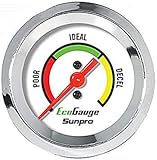
- Fuel Economy Monitoring: Designed to help track and optimize fuel consumption, allowing drivers to monitor vehicle efficiency and potentially reduce fuel costs.
- Portable Design: This compact and lightweight gauge can be easily moved between different vehicles or removed when not needed. This fuel economy monitor can easily fit into your armrest box.
- Universal Compatibility: Suitable for vehicles using gasoline, diesel, water, and lubricants, making it suitable for a wide range of automotive applications.
Remove excess cargo and unused roof equipment
Take out items you do not need for the trip and remove an unused roof rack when practical. Extra cargo, roof racks, and high accessory use can reduce MPG, according to the EPA. Keep necessary equipment and safety gear; the aim is to avoid carrying what is genuinely unnecessary, not to strip the vehicle of useful or required items.
Maintain the vehicle and plan trips
Follow the manufacturer’s maintenance schedule and use the motor oil recommended for the vehicle. Combine short errands when practical: several cold, short trips can use more fuel than one longer trip covering the same stops. The EPA recommends maintenance and trip combining in its mileage guidance and pollution-reduction advice.
Quick wins for a faster PC:
Scan for outdated or missing drivers - takes under a minuteDriver Scan →Repair Windows errors before they cause bigger problemsFix Now →Fix the driver behind crashes, sound loss and screen glitchesFind Drivers →How to tell whether a change is helping
Official fuel-economy figures come from standardized testing and are useful for comparing vehicles, but they do not promise the mileage a driver will get. Climate, driving behavior, road conditions, and vehicle care all affect real-world results, as the EPA explains in its testing FAQ.
Rank #4

- Adjusts speed limiter
- Read and erase trouble codes
- See instant fuel economy
- Customize gauges and set safety warnings
To estimate your own fuel economy, use a consistent fill-up method rather than relying on one short trip or the dashboard display alone:
- Fill the tank and record the odometer reading.
- Drive a substantial portion of the tank—EPA suggests preferably three-quarters to seven-eighths—under ordinary conditions.
- Refill and record how much fuel you added and the odometer reading. Do not top off after the pump first shuts off.
- Calculate miles driven divided by gallons added. Repeat across comparable routes, weather, traffic, and driving patterns to see whether a change is consistent.
Avoid extended idling while measuring, since it can skew the comparison. For an EV, compare energy consumption or range across similar trips and conditions rather than converting the result into MPG.
Quick Recap
Product prices and availability are accurate as of the date/time indicated and are subject to change. Any price and availability information displayed on Amazon at the time of purchase will apply.




