Vehicle-to-grid (V2G) can add battery cycling, but it does not automatically ruin an EV battery or void its warranty. Battery impact depends on state-of-charge limits, discharge depth, temperature, charging power and how often the vehicle exports energy. Warranty protection is a separate, vehicle-specific question: coverage depends on the exact model year, country, approved bidirectional charger, V2G program and the automaker’s written operating limits. Get those terms in writing before enrolling.
What vehicle-to-grid actually does
V2G allows electricity to flow in both directions: from the grid into an EV and from the EV’s battery back to the grid. A V2G installation needs a vehicle designed for bidirectional operation, an approved bidirectional charger or equivalent equipment, compatible communications and a utility or aggregator program that permits export. Government guidance distinguishes V2G from other charging modes. The Australian Department of Climate Change, Energy, the Environment and Water defines V2G and related terms.
As an Amazon Associate I earn from qualifying purchases.
| Mode | Energy flow | Typical purpose |
|---|---|---|
| V1G (managed charging) | Grid to vehicle only | Shifts charging to cheaper or lower-demand periods without exporting battery energy. |
| V2G | Grid to vehicle and vehicle to grid | Exports stored energy to support the grid or earn program payments. |
| V2H | Vehicle to home or building | Backs up household or business loads; it does not necessarily export to the public grid. |
| V2L | Vehicle to appliances or other loads | Powers equipment directly, often through an outlet or adapter. |
These distinctions matter for warranty discussions. A vehicle approved for V2L may not be approved for V2G, and a car that supports V2H may require different hardware or operating limits for grid export.
Do these 3 things before closing this tab:
1Repair Windows errors before they cause bigger problems2Fix the driver behind crashes, sound loss and screen glitches3Clear out junk files and repair common Windows errorsCommercial availability remains limited and changes over time. The International Energy Agency reported in 2026 that 22 vehicle models had V2G capability in production or commercial use, representing less than 1.5% of EV models at the time of its snapshot. Compatibility can also depend on the particular charger, utility, software and market. The same IEA analysis notes that ISO 15118-20 was published in 2022, but implementation is still inconsistent; standards support alone does not prove that a specific vehicle and charger will interoperate. See the IEA’s vehicle-to-grid analysis.
#1 Best Overall
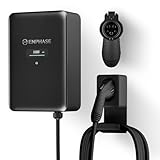
- 9× FASTER CHARGING: Get faster, smarter EV charging up to 11.5 kW (up to 46 miles/hour). Perfect for overnight charging or quick top-ups.
- REVENUE GRADE METER: Eligible for utility rebate programs with accurate, compliant energy monitoring.
- SOLAR CHARGING: Seamlessly connects with your home solar system so you can use more of your own clean energy.
- 5-YEAR WARRANTY: Backed by an industry-leading 5-year warranty for peace of mind.
- SECURE ACCESS: Prevent unauthorized use with app-based control or RFID card access for added safety.
How V2G changes battery aging
EV batteries age through two overlapping mechanisms: calendar aging, which occurs with time, and cyclic aging, which is associated with charging and discharging. The IEA says calendar aging is strongly affected by the battery’s average state of charge (SOC), while cyclic aging rises disproportionately with deeper cycles and operation near the upper and lower charge limits. The IEA explains these battery-aging mechanisms in its V2G report.
Extra throughput can add cyclic aging
Every V2G export adds discharge and recharge throughput beyond the energy used for driving. That additional throughput can contribute to cyclic aging. It is not possible to convert “one V2G event” into a universal amount of lost range, because the battery chemistry, temperature, power level, SOC window and time spent at high charge all change the result.
Managed operation can reduce some stress
Uncontrolled charging often starts as soon as the vehicle is plugged in and may leave the battery at a high SOC for long periods. A managed V1G or V2G schedule can keep the average SOC lower, avoid unnecessary time at the top of the pack and restrict discharge to a defined window. The IEA reports that recent testing and modelling find degradation can be limited effectively and that well-managed V2G can reduce capacity loss compared with unmanaged “charge as soon as possible” behavior. This is conditional evidence, not a guarantee that V2G improves every battery.
Depth and limits matter more than the label “V2G”
A shallow export within a middle SOC band is materially different from repeatedly taking a battery close to empty and then charging it to the maximum. Operation near the upper and lower limits, high temperatures and high power can increase stress. A program that limits export to a manufacturer-approved SOC window may therefore have a different battery impact from an unrestricted schedule, even if both are called V2G.
Rank #2

- AI-POWERED SMART CHARGING & APP CONTROL – This ev charger level 2 uses Autel’s AI-integrated smart app to schedule charging around time-of-use utility rates, helping lower your monthly bill while boosting station utilization. Start or stop sessions remotely, adjust current from low to high amps, view real-time energy data, and get alerts if anything looks off.
- ULTRAFAST 80A PERFORMANCE FOR HOME – Delivering up to 19.2 kW / 80A, this charger adds about 70 miles of range per hour and powers your EV up to 14x faster than a standard Level 1 outlet, so you can fully recharge overnight or between customer visits. This 80 amp ev charger is a high-power level 2 ev charger that future-proofs your setup for larger-battery EVs and busy households.
- BUILT FOR 24/7 RELIABILITY & THEFT PROTECTION – Engineered for a 10-year lifespan with internal temperature monitoring and a flame-retardant enclosure. Dual-network Wi-Fi + Wi-SUN keep your charger online with >99.9% uptime, so drivers always find a live station. Custom tamper-resistant screws plus remote locking provide double theft protection for both residential and commercial installs.
- FAST INSTALL & FLEXIBLE STATION MANAGEMENT – Hardwired design for maximum power and reliability (100A circuit recommended for full 80A output; professional electrician install suggested). One-click configuration lets installers set up a charging station in about 10 minutes, then you can easily manage pricing, access, and usage in the app.
- CSA CERTIFIED, REBATE READY & UNIVERSAL J1772 – UL certified by CSA and eligible for many U.S. rebates, incentives, and tax credits to help reduce your installation cost. The 25 ft SAE J1772 cable works with all EVs and PHEVs in North America and with Tesla vehicles when used with a NACS adapter (not included). Backed by a 5-year warranty, 24/7 expert support, and Autel’s proven EV charger technology for long-term peace of mind.
What the available technical evidence can—and cannot—say
A published SAE example illustrates why V2G results must be kept within their test conditions. Timilsina and colleagues’ 2024 paper describes a plug-in hybrid simulation and study using a 10 kW bidirectional charger. In the scenario, the vehicle discharged up to 20 kWh over two hours or down to 60% SOC, then charged to 90% SOC at a 1C rate. Those parameters describe that PHEV scenario; they are not a degradation forecast for every battery chemistry, climate, EV, charger or utility program. Read the SAE paper abstract and stated setup.
No cited source establishes one percentage of additional degradation or a fixed number of years lost for all V2G use. Vehicle design, battery chemistry, thermal management, ambient temperature, charging power, depth and frequency of cycling, SOC limits and time at high SOC all matter. Treat claims such as “V2G costs exactly X% of battery life” or “V2G has no effect” as unsupported unless they are tied to your specific vehicle and operating conditions.
For context, the IEA describes a broad EV warranty benchmark of 70% capacity retention after eight to 10 years or 160,000 km. That is a general description of typical warranty terms, not a promise for a particular car, country or V2G program. The benchmark appears in the IEA report.
The Tool Desk
Outbyte Driver Updater FREEScan for outdated or missing drivers - takes under a minuteDriver Scan →Outbyte PC Repair FREERepair Windows errors before they cause bigger problemsFix Now →Why warranty coverage is not a universal yes or no
Battery-defect coverage and approval to use a vehicle for grid export are different questions. A warranty may cover manufacturing defects or capacity falling below a stated threshold while excluding damage caused by unapproved equipment, misuse or failure to follow charging instructions. V2G approval must therefore be checked against the exact vehicle, model year, market, hardware and program.
Rank #3

- Charge with Confidence: ChargePoint builds reliable, flexible EV charging stations for home, business, and fleets. Get 24/7 support and access to hundreds of thousands of North American charging locations.
- Charge Smart: With the user-friendly ChargePoint Mobile App, you can control your electric car charger, manage reminders, connect to smart home devices, find stations, get data and charging info, and access the latest features. Note: WiFi is needed for certain functionalities and troubleshooting steps if connectivity issues arise.
- Vast Network: Wherever you go, ChargePoint’s network includes 274k+ stations across North America and Europe and 565k+ roaming partner stations.
- Safe & Durable: Rely on this UL-certified EV charger for safe home charging. It can be installed indoors or outdoors by an electrician and includes a cold-resistant cable.
- Fast & Powerful: This EV charger charges 9× faster than a 120V outlet, delivering up to 45 mi/hr., dependent upon your vehicle. It features a J1772 connector for all non-Tesla EVs and requires a 20A or 80A circuit. For Tesla EVs, this will require an adapter.
What the U.S. Department of Energy found
The U.S. Department of Energy’s January 2025 Vehicles-to-Grid Integration Assessment reported that two automakers allowed V2X use under warranty for specific vehicles and applications at the time of its assessment. The same report describes other automaker positions asserting that V2X use could nullify warranty coverage. This is a U.S.-focused assessment from January 2025, not a complete current list of approved brands or models worldwide. Read the DOE assessment report.
Tesla’s published warning about third-party hardware
Tesla’s Vehicle Warranty support page states: “Your vehicle’s limited warranty does not cover damage caused by third-party vehicle adaptors or chargers.” The same page says the warranty supplied with the individual vehicle is the authoritative source for coverage. This guidance should be read as Tesla’s published position on the equipment described; it does not establish a rule for every Tesla vehicle, every bidirectional system or any other manufacturer. Check Tesla’s Vehicle Warranty guidance.
Volkswagen UK shows why market terms matter
Volkswagen UK’s factory warranty terms state battery energy-content coverage for eight years or 100,000 miles, with energy-retention thresholds and exclusions that include failure to follow the manufacturer’s charging and care instructions. The published UK terms cannot be transferred automatically to a Volkswagen sold in another market and do not by themselves prove that V2G is approved. Read the Volkswagen UK warranty terms.
What “verified V2G” means in Australia
The Australian Department of Climate Change, Energy, the Environment and Water states: “An EV is only verified as capable of V2G when the automaker provides warranty and servicing support for the vehicle when used for V2G – assuring performance, safety and consumer protections for V2G operations.” That definition is specific to the Australian policy context, but it captures the practical test: warranty and servicing support must accompany the technical ability to export energy. See the department’s definitions page.
Rank #4
- 7× FASTER CHARGING: Get fast, reliable EV charging up to 9.6 kW (38 miles/hour) in a compact, flexible design that’s easy to use anywhere.
- REVENUE GRADE METER: Eligible for utility rebate programs with accurate, compliant energy monitoring.
- SOLAR CHARGING: Seamlessly connects with your home solar system so you can use more of your own clean energy.
- 5-YEAR WARRANTY: Backed by an industry-leading 5-year warranty for peace of mind.
- SECURE ACCESS: Prevent unauthorized use with app-based control or RFID card access for added safety.
How to verify coverage before joining a V2G program
Do not rely on a dealer’s informal assurance, a charger advertisement or a generic statement that a vehicle is “V2G-ready.” Ask for the applicable documents and save the answers.
- Identify the exact vehicle. Record make, model, battery version, model year, software version, country of sale and registration market.
- Ask whether V2G itself is approved. A vehicle may support V2L or V2H without approval for public-grid export. Request the automaker’s written V2G or V2X policy for your model.
- List the approved hardware. Confirm the charger or adapter manufacturer and model, required cable, communications protocol, installation requirements and whether third-party equipment is excluded.
- Obtain the program rules. Request the utility or aggregator’s description of export limits, dispatch frequency, minimum reserve SOC, emergency overrides and software updates.
- Check battery limits and measurement. Ask for permitted SOC range, maximum discharge power, daily or lifetime energy-throughput cap, temperature restrictions and how throughput is recorded.
- Read capacity coverage. Find the warranty’s capacity threshold, test procedure, time or mileage limit, exclusions and the party responsible for measuring capacity.
- Confirm participation effects. Ask whether enrolling, allowing remote dispatch or using a particular charger changes any warranty, service or roadside-assistance term.
- Get written confirmation. Keep the automaker response, charger certification, interconnection approval and program contract with the vehicle’s warranty documents. If the terms remain unclear, postpone enrollment rather than assuming ordinary battery coverage applies.
How to compare V2G options
Evaluate a complete vehicle–charger–program combination, not a vehicle or charger in isolation.
| Comparison area | Questions to answer | Why it affects the decision |
|---|---|---|
| Warranty status | Does the automaker explicitly support V2G for this model, year, country and application? | Technical capability without written support may leave damage or capacity claims disputed. |
| Battery operation | What SOC window, discharge depth, frequency, power and throughput cap does the program use? | These controls influence cyclic and calendar aging. |
| Compatibility | Are the vehicle, bidirectional charger, communications, utility interconnection and aggregator approved together? | ISO 15118-20 support or a “V2G-ready” label alone does not guarantee interoperability. |
| Economics | What revenue or bill savings are expected after equipment, installation, service, taxes and any battery-value loss? | The IEA says owners need clarity that V2G value exceeds degradation-related loss; no universal tariff or return applies. |
| Control and access | Can you set a departure time, reserve SOC and export schedule, and can you override dispatch? | A program that protects mobility needs may be preferable to one that maximizes export hours. |
Equipment prices, compensation and installation requirements vary by location and are not established as universal figures. Obtain a site-specific quote and program contract, then compare the recurring value with the equipment cost and the potential reduction in battery value.
Free tools Windows power users keep installed
One-click scans. No signup required.
Operating practices that can limit unnecessary wear
- Use the automaker’s recommended SOC range and departure-time settings rather than repeatedly charging to the maximum.
- Prefer programs that specify a reserve SOC, temperature protections and controlled power limits.
- Keep the vehicle connected only when the program’s dispatch rules and your mobility needs justify it; extra export is not automatically better.
- Follow the manufacturer’s charging, storage and thermal-management instructions. Warranty exclusions often turn on compliance with those instructions.
- Monitor battery-health reports, delivered energy and program dispatch logs so unusual cycling or temperature events can be documented.
- Stop participation and contact the provider if the vehicle reports charging faults, abnormal heat, isolation errors or unexplained range changes.
Common pitfalls and how to respond
“The connector fits, so the system is approved”
Physical fit is not approval. Ask for written compatibility among the vehicle, charger, software and utility program. If any party cannot identify the approved combination, do not assume warranty protection.
Best Value

- Dual Charging on a Single Circuit: Charge two EVs simultaneously with the HCS-D40’s dual-port design, delivering 32 Amps to one vehicle or 16 Amps to two vehicles, minimizing the need for costly electrical upgrades.
- Commercial-Grade Durability with Rugged Connector: Designed for heavy-duty use, the HCS-D40 features a rugged connector that withstands drops, rollovers, and harsh environments, perfect for high-traffic or commercial settings.
- Reliable Performance in All Weather Conditions: The HCS-D40 includes a NEMA 4-rated enclosure and a flexible cable that remains operational even in extreme cold, ensuring reliable charging in any climate.
- Fast and Efficient Charging for Two EVs: Charge one vehicle at 32 Amps or two vehicles at 16 Amps each, providing up to 31 miles of range per hour, ideal for EVs with up to 7.7kW acceptance rates.
- Safe, Long-Lasting Installation for High-Traffic Use: The HCS-D40 hardwired station offers a robust installation for homes and businesses, with safety certification to UL 2594 standards and a 5-year limited warranty for long-term reliability.
“A battery warranty means all V2G damage is covered”
Battery warranties commonly distinguish defects, capacity retention and damage caused by equipment or use. Read exclusions and obtain a V2G-specific answer from the automaker.
“More cycling always means a ruined battery”
Additional throughput can add cyclic aging, but managed SOC and shallow cycling can reduce stress relative to uncontrolled charging. The direction and magnitude cannot be reduced to a single universal percentage.
“A V2G payment is pure profit”
Subtract charger and installation costs, service charges, taxes where applicable and the possible loss of battery value. Compare the result with the mobility limits and inconvenience imposed by the program.
Quick wins for a faster PC:
Repair Windows errors before they cause bigger problemsFix Now →Fix the driver behind crashes, sound loss and screen glitchesFind Drivers →“A standard number proves compatibility”
ISO 15118-20 was published in 2022, yet implementation remains inconsistent. Confirm the actual certified pairing and local interconnection approval.
Bottom line for EV owners
V2G is best understood as a controlled battery-use program, not as a harmless software switch or an automatic battery killer. It adds cycling, but a schedule that avoids extreme SOC, limits depth and manages temperature may constrain degradation more effectively than unmanaged charging. There is no all-EV degradation penalty and no universal warranty rule.
Before enrolling, match the exact vehicle and market to a written automaker warranty statement, approved bidirectional hardware and program limits. If those documents do not clearly authorize V2G and explain capacity coverage, treat the system as unverified and do not rely on a generic battery warranty.
Quick Recap
Product prices and availability are accurate as of the date/time indicated and are subject to change. Any price and availability information displayed on Amazon at the time of purchase will apply.




