What’s actually slowing this PC down?
Pick the symptom - the matching free tool is one click away.
Do not ship or buy an overseas-market pickup until you verify three separate issues: federal safety eligibility, federal emissions compliance, and practical support after registration. The truck’s VIN alone cannot prove that it meets U.S. standards. You need the exact VIN, make, model, model year, manufacture date, engine and original sales market; the permanent U.S. Federal Motor Vehicle Safety Standards (FMVSS) certification label; written answers from the manufacturer; and confirmation from your destination state.
A truck can clear one gate and fail another. A vehicle that is 25 years old may qualify for NHTSA’s age-based safety exemption but still require separate EPA emissions analysis. A truck may be legally importable yet have no U.S. warranty or dependable parts channel. Use the sequence below before paying a seller, arranging transport or filing entry paperwork.

As an Amazon Associate I earn from qualifying purchases.
What you must verify before importing an overseas-market pickup
For a truck originally built for or sold outside the United States, treat these as independent decisions:
Recommended Free Tools
| Question | Evidence you need | Who controls the decision |
|---|---|---|
| Does it meet U.S. safety rules? | Permanent manufacturer certification label, or an exact make/model/model-year eligibility determination and a Registered Importer (RI) plan | National Highway Traffic Safety Administration (NHTSA) |
| Does it meet U.S. emissions rules? | Conforming emissions certification, or a qualified Independent Commercial Importer (ICI) arrangement or EPA-approved exemption | U.S. Environmental Protection Agency (EPA) |
| Will the warranty be honored? | Written confirmation tied to the VIN and original specification, including authorized U.S. repair locations | Manufacturer and its warranty process |
| Can you obtain parts and service? | VIN-, engine-code- and part-number-specific catalog checks, prices and lead times | Manufacturer, dealers and independent specialists |
| Can you title and register it? | Destination-state title, inspection, emissions and registration requirements | State DMV or equivalent agency |
Federal agencies do not guarantee warranty transfer, dealer support, parts availability or state registration. Those must be verified separately.
#1 Best Overall

- Step-by-step procedures written from a complete teardown and rebuild, giving you the confidence to tackle repairs at any skill level.
- Over 700+ clear photos and diagrams that simplify complex systems, helping you complete jobs faster and with fewer mistakes.
- Comprehensive troubleshooting and fault-finding guides to quickly diagnose problems and reduce costly downtime.
Can I legally import this truck into the United States?
Begin with identity, not a seller’s description. Ask for clear photographs of the VIN plate, the permanent certification label near the driver’s door area, the manufacture-date information and all title, registration and export documents. Record the make, model, model year, engine code, manufacture date, country or market of original sale and every VIN appearing on the truck and paperwork.
Why the VIN is not enough
NHTSA says a VIN or another identifying feature does not establish whether a vehicle was originally manufactured to comply with applicable FMVSS requirements. In NHTSA’s words, the only way the agency can tell that a particular vehicle was manufactured to those standards is when the manufacturer affixed a label certifying compliance with all applicable standards. A VIN decoder can reveal model information, but it is not a conformity certificate.
If the VIN contains a typographical error, ask the manufacturer to correct or confirm it. A seller’s explanation is not a substitute for manufacturer documentation. The VIN on the chassis, label, title, bill of sale and import documents should match exactly.
Do these 3 things before closing this tab:
1Scan for outdated or missing drivers - takes under a minute2Repair Windows errors before they cause bigger problems3Fix the driver behind crashes, sound loss and screen glitchesWhat the certification label proves
For a truck under 25 years old, an original permanent label stating that the vehicle conforms to all applicable U.S. safety standards is the normal evidence of conforming status. If the label is missing, damaged or written for another market, contact the manufacturer and ask for a written interpretation tied to that VIN. Do not infer U.S. conformity from a similar U.S. trim, shared platform, left-hand drive, or a claim that the differences are “only cosmetic.”
When an RI route is required
A nonconforming truck less than 25 years old generally must be listed by NHTSA as eligible for importation and brought into conformity through an RI, or by a person contracted with an RI. Check the current NHTSA make/model/model-year eligibility listing before the truck leaves its original country. Eligibility is exact; a different engine, body style, model year or market version may not be covered.
NHTSA’s described route uses a bond equal to 150 percent of the vehicle’s declared value and requires the modifications to be completed within 120 days. Confirm the current bond amount, forms, deadlines and applicability with NHTSA and the RI before committing money. Ask the RI for a written scope of work, expected completion date, itemized cost, testing plan and what happens if the truck cannot be made compliant.
Rank #2
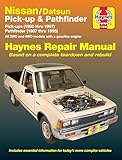
- Step-by-step procedures linked to over 700 easy-to-follow photos and illustrations
- Complete troubleshooting section helps identify specific problems
- Written from hand-on experience based on a vehicle teardown and rebuild using commonly available tools
- Tips give valuable short cuts to make the job easier and eliminate the need for special tools
- 700 b/w photos
NHTSA’s older import guideline explains that a vehicle without a certification label cannot be entered as a conforming vehicle. It also discusses the HS-7 declaration and bond paperwork. Because that guideline is dated 2013, use current NHTSA forms, current listings and current agency instructions for a live transaction.
The 25-year safety provision
NHTSA allows a vehicle at least 25 years old to be imported without regard to FMVSS compliance. The clock is measured from the vehicle’s manufacture date, not merely its model year or first registration. If the label does not show the date, retain reliable evidence such as factory records or other documentation accepted by the agencies.
This is only a safety rule. It does not automatically clear EPA emissions requirements, state title or inspection rules, warranty coverage, parts supply or insurance. Keep the safety, emissions and ownership decisions separate in your records.
How to check EPA emissions compliance separately
The Clean Air Act emissions requirements apply to imported vehicles whether they are new or used and whether they were built domestically or abroad. A truck can satisfy NHTSA and still be inadmissible under EPA rules.
Nonconforming vehicles
Before shipping a nonconforming truck, arrange for a qualified EPA Independent Commercial Importer (ICI) to modify, test and certify it, or obtain EPA pre-approval for an applicable exemption. EPA states that an arriving vehicle without the proper ICI arrangement or an applicable exemption may be seized or exported and may incur penalties. Ask the ICI to confirm in writing that it is qualified for the exact vehicle, engine and model year, and to describe the required work, testing, cost and timing.
The Tool Desk
Outbyte Driver Updater FREEScan for outdated or missing drivers - takes under a minuteDriver Scan →Outbyte PC Repair FREERepair Windows errors before they cause bigger problemsFix Now →Do not assume that an ICI qualified for one engine or model is qualified for another. Emissions certification is tied to the vehicle and engine configuration, not simply the badge on the grille.
Rank #3
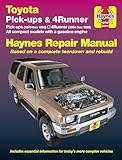
- Step-by-step procedures written from a complete teardown and rebuild, giving you the confidence to tackle repairs at any skill level.
- Over 700+ clear photos and diagrams that simplify complex systems, helping you complete jobs faster and with fewer mistakes.
- Comprehensive troubleshooting and fault-finding guides to quickly diagnose problems and reduce costly downtime.
EPA’s older-vehicle provision
EPA describes an over-21-year provision under which the engine must be identical to the originally installed engine in model and configuration. EPA encourages importers to contact its Imports Hotline to check equivalence. This 21-year emissions provision is distinct from NHTSA’s 25-year FMVSS provision; reaching one age threshold does not satisfy the other.
Entry paperwork
U.S. Customs and Border Protection says an importer must meet EPA and Department of Transportation requirements and file an HS-7 Declaration at entry. Coordinate the HS-7, EPA forms, bond documents and shipping records with the RI, ICI and any customs professional before the vehicle departs. The agencies’ requirements can change, so verify the current versions immediately before shipment.
Step-by-step verification workflow
1. Build an identity file
- Photograph the VIN plate, windshield VIN, door-area certification label, engine identification and odometer.
- Collect the purchase contract, foreign title or registration, export documents, service records and any conformity certificates.
- Write down the manufacture date, model year, exact model and trim, engine model and configuration, transmission, drivetrain and original sales market.
- Compare every VIN character across the truck and documents. Stop if any number differs.
- Send the VIN and label photographs to the manufacturer and request written confirmation of what the label means.
2. Decide whether the truck is conforming, eligible for an RI, or not yet cleared
- If the original label certifies U.S. FMVSS conformity, retain a high-resolution copy and ask the manufacturer to confirm the VIN in writing.
- If the truck is under 25 years old and lacks that label, search NHTSA’s current eligibility determination for the exact make, model and model year.
- If listed, obtain an RI’s written feasibility assessment, modification plan, bond calculation and 120-day completion schedule.
- If not listed, do not ship it until NHTSA explains an available pathway. A similar U.S. model or “same platform” argument is not an eligibility determination.
- If the truck is at least 25 years old, document the manufacture date for NHTSA’s age provision, then continue with the EPA, state, warranty and parts checks.
3. Clear the EPA gate
- Ask whether the truck has U.S. emissions certification for that exact engine and model year.
- If it does not, contact a qualified ICI before shipping and obtain written confirmation of eligibility, modifications, testing, certification and costs.
- If relying on a temporary-import or other exemption, obtain EPA pre-approval before shipment; do not treat a verbal assumption as approval.
- For an older-vehicle provision, verify that the engine is identical in model and configuration to the originally installed engine and check equivalence with EPA’s Imports Hotline.
- Keep the ICI or EPA approval with the entry documents and confirm the current EPA forms.
4. Get warranty terms in writing
Contact the manufacturer’s U.S. customer-care or warranty department, not only the overseas seller or a local salesperson. Send the VIN, original market, model year, engine and the warranty booklet you received. Ask for a written response to each question:
Quick wins for a faster PC:
Clear out junk files and repair common Windows errorsFree Scan →Scan for outdated or missing drivers - takes under a minuteDriver Scan →Repair Windows errors before they cause bigger problemsFix Now →- Does the new-vehicle warranty apply to this VIN in the United States?
- Which warranty booklet, market terms and start date govern the vehicle?
- What time, mileage, ownership, registration and maintenance conditions apply?
- Which U.S. facilities are authorized to perform warranty work?
- Can those facilities access the market-specific diagnostic software, technical service information and calibration files?
- Are emissions components covered under the applicable federal emissions warranty, and what is the claim procedure?
Federal guidance does not state that a generic imported pickup’s warranty transfers automatically. EPA’s warranty guidance directs owners to the manufacturer’s owner manual or warranty booklet. For an emissions-warranty claim, the vehicle generally must be presented to a manufacturer-authorized facility so it has an opportunity to diagnose and repair it.
What the 8-year/80,000-mile figure means
EPA identifies a limited federal warranty category covering specified major emissions-control components for 8 years or 80,000 miles, whichever occurs first. This figure, current in EPA’s transportation warranty FAQ accessed in 2026, is not a promise of bumper-to-bumper or general powertrain coverage for an imported truck. Component definitions, eligibility and the manufacturer’s claim process apply.
How to verify parts and service support
Parts support is a practical supply-chain question, not something the model name can answer. A truck sold under the same name in two markets may use different sensors, wiring, brake systems, body panels, software or emissions equipment.
Run a VIN-specific parts check
- Ask an authorized dealer to search the VIN, engine code, trim and original market in its parts catalogue.
- Ask an independent specialist familiar with the brand to repeat the search and identify any market-specific gaps.
- Check routine service items first: oil and air filters, fuel filters, belts, fluids, spark or glow plugs and brake components.
- Then check failure-prone or immobilizing parts: sensors, electronic control modules, body control units, instrument clusters, keys, turbochargers, steering components and emissions hardware.
- Check collision items such as lamps, glass, bumpers, fenders and body panels.
- For every part, record the exact part number, supersession, source country, price, stock status, estimated lead time and return policy.
Request confirmation that diagnostic software and technical service information support the imported specification. A part that physically fits may still have the wrong calibration or connector. Ask whether the supplier can obtain new parts, approved superseded parts or only used imports, and whether ordering requires a VIN from the original market.
Crashes, No Sound, or Screen Glitches?
Random freezes, missing sound and display glitches usually trace back to one bad driver. Find and replace yours safely.Free scan · under a minuteWindows Errors? Fix Them Before They Spread
Repair common Windows errors and clear accumulated junk for a smoother, more stable PC - no reinstall needed.Free scan · no reinstallBuild a support-risk list
- Low risk: common filters, fluids, tires and generic service items are locally stocked and confirmed by part number.
- Moderate risk: brake, suspension and sensor parts are available but normally special-order items with documented lead times.
- High risk: market-specific control modules, emissions components, body panels, glass, keys or software are unavailable, have no U.S. catalogue entry or require overseas ordering.
Do not buy the truck until you can afford the lead time and shipping exposure associated with the highest-risk items.
Independent reader supportYour contribution helps us test, update, and keep practical guides available for everyone.State title, inspection and registration checks
After federal import approval, contact the DMV or equivalent agency in the state where the truck will be titled and principally used. Ask about the exact vehicle and intended use, not a generic imported vehicle category.
- Required original documents, certified translations and customs releases
- VIN inspection or state law-enforcement inspection
- Safety inspection and equipment requirements
- State emissions testing, testing exemptions and diesel rules
- Odometer disclosure and reconstructed, salvage or foreign-title treatment
- Insurance requirements and limits on registration or road use
- Taxes, fees and deadlines after entry
State rules differ and can change. Obtain the agency’s instructions in writing before shipping to a state where the truck may not pass inspection or receive a title.
Comparing two candidate trucks
If you are choosing among imported pickups, score each candidate on the same evidence rather than on price or appearance.
Free tools Windows power users keep installed
One-click scans. No signup required.
| Comparison item | Truck A | Truck B |
|---|---|---|
| Original FMVSS label present and legible | Record yes/no and attach photograph | Record yes/no and attach photograph |
| NHTSA exact make/model/model-year status | Conforming, RI-eligible or unresolved | Conforming, RI-eligible or unresolved |
| RI bond and modification plan | Written amount, scope and timing | Written amount, scope and timing |
| EPA emissions status | Conforming, ICI plan or exemption | Conforming, ICI plan or exemption |
| Written U.S. warranty decision | VIN-specific terms and facility list | VIN-specific terms and facility list |
| Parts catalogue coverage | Part numbers, stock and lead times | Part numbers, stock and lead times |
| Destination-state path | Title, inspection and emissions requirements | Title, inspection and emissions requirements |
Mark an item “unresolved” until you have documentary evidence. The cheaper truck is not the better choice if its safety route, emissions certification or critical parts supply is uncertain.
Best Value

- Hundreds of photographs
- Step-by-step instructions
- Written from actual experience
Common mistakes and how to recover
“The VIN decoder says it is a U.S. truck.”
Recovery: obtain the permanent certification label and manufacturer confirmation. A decoder identifies the vehicle; it does not certify FMVSS conformity.
“It is the same model sold in America.”
Recovery: compare the exact model year, engine, trim, safety equipment, emissions hardware and original market. Check NHTSA’s exact eligibility listing and do not rely on platform similarity.
“It is over 25 years old, so everything is covered.”
Recovery: apply the 25-year rule only to NHTSA safety conformity. Complete EPA emissions, state registration, warranty and parts checks separately.
“The seller says the warranty is global.”
Recovery: request a VIN-specific written decision from the manufacturer’s U.S. warranty department, including authorized facilities and exclusions.
“A local dealer can order anything.”
Recovery: have the dealer search the VIN and individual part numbers, then obtain stock status and lead times for electronics, emissions parts and body components before purchase.
“I will sort out emissions after arrival.”
Recovery: stop shipment if possible. EPA requires arrangements or pre-approval before shipping a nonconforming vehicle; an improperly imported truck can be seized, exported or penalized.
Documents to keep in one file
- VIN and certification-label photographs
- Manufacturer correspondence confirming VIN, conformity and warranty terms
- NHTSA eligibility printout, RI contract, bond documents and modification records
- EPA or ICI approval, testing and certification records
- HS-7 declaration and CBP entry documents
- Foreign title, registration, purchase contract and export records
- VIN-specific parts quotes, lead times and diagnostic-support confirmations
- Destination-state DMV instructions, inspection results and registration documents
Keep copies permanently. Future buyers, insurers, inspectors and repairers may need to see why the truck was lawfully imported and how its market-specific equipment is supported.
Final decision rule
Proceed only when all five boxes are checked: NHTSA safety status is documented; EPA emissions compliance or an approved ICI/exemption is documented before shipment; the destination state confirms a title and registration path; the manufacturer confirms warranty treatment in writing; and local service providers confirm VIN-specific parts and diagnostic support. If any box remains unresolved, treat the truck as an import project with unknown cost and legal risk, not as a normal used pickup.
Quick Recap
Product prices and availability are accurate as of the date/time indicated and are subject to change. Any price and availability information displayed on Amazon at the time of purchase will apply.




