Recommended Free Tools
The most defensible way to value a classic car is to build a range from four pieces of evidence: the car’s exact specification, its real condition, verified history and originality, and recent completed sales of genuinely similar cars. A price-guide figure is a starting point, not a guaranteed selling price. When the decision involves substantial money or a formal valuation, have the car inspected and consider a specialist appraisal.
This method answers “How much is my classic car worth?” without confusing an optimistic asking price with what buyers actually paid.
As an Amazon Associate I earn from qualifying purchases.
What a classic-car value actually represents
“Value” depends on the question you are trying to answer. A seller usually wants a realistic market range; a buyer needs to know whether a particular car is fairly priced; and a formal written valuation may require a qualified professional and jurisdiction-specific standards. State the purpose before collecting numbers, because a personal attachment can make one car feel priceless without increasing what another buyer will pay.
Hagerty distinguishes market value from an individual’s “relative worth.” Nostalgia, a family connection or a memorable ownership story may justify paying more to one person, but that premium is not automatically transferable to the market. Treat those feelings as personal preferences, not as evidence of a universal price.
#1 Best Overall
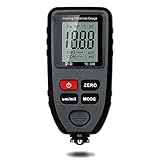
- Auto-Detection for Steel and Aluminum Coatings:This Coating Thickness Gauge utilizes advanced dual technology to automatically recognize ferrous and non-ferrous substrates, making it easy to measure coating thickness on both steel and aluminum without any guesswork
- Ideal for automotive paint inspection, powder coating checks, and metal surface finishing. Commonly used on used cars, anodized aluminum, bathroom fittings, bike frames, stadium seats, lockers, appliances, and more. (Note: Designed for metallic surfaces only.)
- A Must-Have for Used Car Buyers:Don't let hidden repairs catch you off guard. This tool lets you check the paint thickness on each car panel, helping you spot any previous accidents or repairs before buying a used vehicle
- Save Money on Used Car Purchases:When buying used cars, this paint thickness gauge helps you identify potential issues by ensuring the paint thickness is consistent across all panels. Great for detecting accident repairs and verifying if the car has been in a heavy crash
- Important Note: Please note that this gauge is specifically designed to measure coating thickness on metal substrates. It cannot be used on non-metallic materials such as plastic, fiberglass, or wood.
Geography matters as well. The available evidence behind common online guides is heavily United States-oriented, with a separate UK condition and pricing presentation. A result from one country may not transfer directly to another because buyer pools, taxes, transport costs, supply and accepted specifications differ. Use sales from the market in which you expect to buy or sell, and label any cross-border comparison clearly.
1. Define the exact car before looking for prices
A model name is not a sufficient valuation description. The same badge can cover different engines, transmissions, body styles and factory equipment, and those differences can move a car into a different group of comparables.
| Record | Why it belongs in the valuation file |
|---|---|
| Make, model and model year | Identifies the basic vehicle and prevents mixing substantially different generations or production years. |
| Body style | A coupe, convertible, sedan or other body can attract a different buyer pool and sale result. |
| Engine and transmission | Factory powertrain specification is a core comparison point; an engine or gearbox change must be disclosed. |
| Major factory options and equipment | Equipment can distinguish otherwise similar cars and should be matched against the comparable’s specification. |
| Mileage | Record the odometer reading and whether documentation supports it. |
| Market geography | Sales in the intended buying or selling region are usually more useful than distant results with different market conditions. |
| Purpose of the estimate | Clarifies whether you need a sale range, a purchase check or a formal written appraisal. |
Photograph the vehicle and preserve copies of the identification plate, serial numbers, title or registration records and major invoices. You are creating an evidence trail that lets another person understand exactly which car was valued.
2. Establish a guide-value baseline, then treat it as a baseline
Start with a current classic-car valuation guide for the closest specification and the condition grade used by that guide. Hagerty says its guide draws on auction results, asking prices and private-sale activity; its valuation tools also present past-sales research and vehicle histories. See Hagerty’s explanation of its condition system and the valuation tools overview.
Different guides collect data and define condition differently, so two published figures can diverge without either being an error. A guide is an informed starting point, not a promise that your car will sell for that number. It may combine transactions from different dates, regions and specifications, while your car has one exact identity and one present condition.
Write down the guide name, access date, market or currency, selected specification and selected condition grade. If a guide offers several versions of the model, do not choose the nearest-sounding entry merely to obtain a higher number; select the engine, transmission, body and equipment that the car actually has.
3. Translate condition labels into observable facts
Condition grades are not universal. The word “good” can describe materially different cars on different websites, so never compare the labels alone. Hagerty UK presents four grades—#4 Fair, #3 Good, #2 Excellent and #1 Concours—while other guides use different scales or definitions. The labels are guide-specific rather than an industry-wide standard.
The Tool Desk
Outbyte PC Repair FREERepair Windows errors before they cause bigger problemsFix Now →Outbyte Driver Updater FREEFix the driver behind crashes, sound loss and screen glitchesFind Drivers →Rank #2

- HIGH ACCURACY COATING THICKNESS MEASUREMENT – Digital paint thickness gauge for metal surfaces with 0.1 μm (0.01 mils) resolution and ±(3%+2 μm) accuracy, helping detect repainting, repairs, and uneven coating thickness during used car inspection, detailing work, and professional quality control. Suitable for checking doors, hood, roof, fenders, and other painted metal panels where accurate coating evaluation is required.
- EASY & FAST OPERATION — FACTORY CALIBRATED – Factory calibrated and ready to use right after installing batteries. Large backlit LCD with clear readings and simple buttons make this coating thickness meter easy for professionals and first-time users. Ideal for pre-purchase vehicle checks, car dealership inspections, trade-in evaluation, and mobile appraisers who need quick and convenient measurements without complicated setup.
- AUTOMATIC Fe / NFe SUBSTRATE DETECTION – Automatically detects Fe (steel/iron) and NFe (aluminum/copper) and selects the correct measuring method. Ideal for modern vehicles with mixed body materials and accurate results without manual switching. This helps users inspect steel doors, aluminum hoods, and other metal body parts with the correct measurement principle applied automatically.
- WIDE MEASURING RANGE FOR AUTOMOTIVE & INDUSTRIAL USE – Measuring range 0–1500 μm (0–59.1 mils) covers factory paint, repainting layers, and thicker coatings. Suitable for car body panels and industrial coated metal parts. Whether checking original automotive paint thickness or verifying thicker coating applications on metal components, the gauge provides a practical working range for many inspection scenarios.
- DUAL TECHNOLOGY: MAGNETIC INDUCTION + EDDY CURRENT – Uses magnetic induction for ferrous metals and eddy current technology for non-ferrous metals, providing stable, repeatable measurements across steel, iron, aluminum, and copper substrates. This dual-technology design allows one device to cover common automotive body metals without requiring separate meters or manual probe replacement.
In Hagerty’s US material, #4 Fair describes a usable daily driver with visible flaws, while #1 Concours denotes an example among the best. The grades between those poles represent progressively stronger condition within that particular system. Do not convert one guide’s grade into another guide’s grade without reading both definitions.
“There’s no substitute for a proper inspection of a car to determine its real condition.” — Hagerty, How to Value a Collector Car, page 2.
Inspect the body and structure
- Look for rust beneath paint rather than judging only the visible finish.
- Check for poor bodywork, uneven repairs and evidence that corrosion or damage has been covered rather than corrected.
- Examine the chassis for damage or repairs that do not match the seller’s description.
- Compare panels, paint and trim with the specification expected for the model year.
An automotive paint-thickness gauge can help identify inconsistent paintwork as an optional inspection aid. It is not a valuation device and cannot replace a knowledgeable body or mechanical inspection.
Check mechanical condition and components
- Listen for noisy mechanicals and record when the noise occurs.
- Identify components that are incorrect for the claimed model, year or specification.
- Do not rely on a short test drive alone; significant faults can remain hidden when a car is cold, driven briefly or presented under favorable conditions.
Have a qualified mechanic or classic-car inspector examine areas outside your expertise. A clean appearance can coexist with structural, mechanical or specification problems, and those problems should be reflected in the range you eventually report.
4. Verify history, originality and the seller’s claims
History adds value only when it is credible and relevant to the market. Request documentation for ownership, restoration work, mileage, build claims and unusual equipment. Check serial numbers and compare major components, paint and specification with the seller’s account and the details appropriate to that model year.
Questions to resolve
- Do the vehicle identification and major serial numbers match the records?
- Are the engine, transmission, body and other significant components original, period-correct replacements or later substitutions?
- Does the paint or restoration history support the claimed specification and quality of work?
- Can the stated mileage be followed through service, inspection or ownership records?
- Are the number of owners and any notable provenance documented rather than simply repeated in an advertisement?
Originality, equipment, mileage, ownership history and restoration documentation can all influence a comparison, but none should be treated as an automatic premium. A colorful story without supporting records is weaker evidence than a less dramatic history that can be verified.
5. Build a set of genuinely comparable sales
Completed sales are the strongest market evidence because they show what a buyer actually paid. Hagerty’s guide states: “Market value is typically established by past sales results, so reviewing the actual selling prices will tell you what cars are going for and where the market is headed.” — Hagerty, How to Value a Collector Car, page 3.
Rank #3
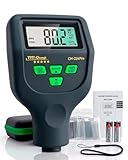
- AUTOMOTIVE PAINT THICKNESS GAUGE – CM-224PRO Designed for measuring coating thickness across vehicle panels during structured professional evaluation. Compare readings on doors, hood, roof and body panels to assess coating consistency and identify thickness variations that may indicate refinishing or prior repair. Suitable for dealerships and inspection professionals.
- 0–59.1 MILS RANGE WITH 0.01 MILS (0.1 µM) RESOLUTION – PROFESSIONAL CONSISTENCY Measures coatings from 0–59.1 mils (0–1500 µm) with stable resolution of 0.01 mils (0.1 µm), supporting consistent and repeatable comparison between factory coating and refinished surfaces during professional inspections.
- FE NFE AND ZINC AUTO DETECTION – AUTOMATIC SUBSTRATE RECOGNITION Automatically identifies steel (Fe), aluminum (NFe) and galvanized surfaces (Zn), supporting inspection of modern vehicles built with mixed body materials without manual switching or mode selection.
- PROFESSIONAL PROBE DESIGN – STABLE AND REPEATABLE CONTACT Engineered probe construction supports consistent surface engagement and repeatable readings during multi-point inspection routines in professional workshop environments.
- FAST PANEL-TO-PANEL MEASUREMENT FLOW – EFFICIENT FULL VEHICLE SCANNING Optimized for efficient professional workflow: place the probe vertically, read the value and continue across panels during dealership and workshop-based inspections.
Search auction archives and documented private transactions for cars matching the subject as closely as possible. A useful comparable should align on model, year or a clearly explained year difference, body style, engine, transmission, major equipment, condition, originality and provenance. A rare, high result for a better-equipped or freshly restored example is not automatically the value of an ordinary driver.
Do these 3 things before closing this tab:
1Clear out junk files and repair common Windows errors2Fix the driver behind crashes, sound loss and screen glitches3Repair Windows errors before they cause bigger problemsRecord each result in a consistent log
| Field | What to capture |
|---|---|
| Sale status | Completed auction or private sale, or an asking-price listing. |
| Sale date and location | Shows when and where the result occurred and helps expose changing market conditions. |
| Final result | Record the actual selling price when available, not just a headline estimate or bid. |
| Specification | Model, year, body, engine, transmission and equipment. |
| Condition and originality | Note visible flaws, restoration quality, mechanical state and whether components match the claimed specification. |
| History and documentation | Capture ownership, mileage and records that explain why the car performed at that level. |
Auction evidence is not perfect. Results can be incomplete, and the outcome may be affected by sale timing, weather, bidder competition and details unique to that car. Keep several relevant observations instead of allowing one exceptional result to become the benchmark for every example.
Use asking prices only as context
An advertised price shows what a seller hopes to obtain and how much similar supply is being offered; it does not prove what buyers will pay. Asking prices may be higher than completed selling prices. If a listing later records a sale, replace the asking figure with the confirmed result and preserve the original date for context.
| Evidence type | Best use | Limit |
|---|---|---|
| Completed auction result | Direct evidence of a buyer’s payment for a particular car at a stated time and place. | May omit details or reflect unusual bidding and sale conditions. |
| Documented private sale | Useful evidence where the transaction amount and specification are credible. | Private-sale information can be less visible or harder to verify. |
| Asking-price listing | Shows current supply and seller expectations. | It is not proof of a completed sale. |
| Price-guide entry | Provides a structured baseline and may link to transaction history. | Methods, condition definitions and market coverage differ by guide. |
6. Reconcile the evidence into a defensible range
Do not force the process to produce one precise number when the evidence supports a range. Place the subject car near the comparables that match it best, then explain why it belongs above, below or near them.
- Sort the comparables by similarity. Give the most weight to cars matching the subject’s specification, condition and documentation, and set aside superficially similar cars with major differences.
- Check the timing and geography. Note whether a result is old, from another region or exposed to different buyer competition.
- Explain each adjustment in words. Use observable differences—condition, originality, equipment, mileage, history and records—rather than an unsupported percentage.
- Set a range, not false precision. A narrower range is defensible when several recent, closely matched completed sales cluster together; a wider range is appropriate when evidence is sparse or the car’s specification is unusual.
- Document uncertainty. Identify facts that remain unverified and show how the range would change if those claims prove wrong.
Hagerty explicitly says there is no fixed percentage or dollar change for each condition rating. Avoid formulas such as “one grade equals 10 percent” unless a credible source specific to that vehicle and market supports the adjustment.
Quick wins for a faster PC:
Scan for outdated or missing drivers - takes under a minuteDriver Scan →Clear out junk files and repair common Windows errorsFree Scan →Fix the driver behind crashes, sound loss and screen glitchesFind Drivers →A practical comparison test
For every candidate comparable, answer five questions: Does the specification and originality match? Is the physical and mechanical condition equivalent? Are history and documents equally credible? Are the sale date and geography relevant? Is the number a completed sale or merely an asking price? A car that fails several tests should influence the range less than one that passes all five.
7. Know when an inspection or appraisal is worth the cost
A qualified mechanic’s pre-purchase inspection can verify seller claims and reveal faults that photographs and a brief drive miss. Arrange it before committing to a purchase, especially when the car is expensive, structurally complex or described as extensively restored.
Rank #4

- 【Auto-ID Dual Tech & Material Note】This paint depth gauge automatically identifies Fe/NFe substrates without manual switching. The device is specifically designed for metal substrates and is not suitable for plastic, carbon fiber, or wood. It is ideal for detecting heavy paint on car bodies, boat hulls, and industrial steel structures to ensure accurate readings.
- 【High Precision & Wide Range】Equipped with a wear-resistant probe, this coating thickness gauge delivers lab-grade stability across a 0-78.7 mils (0-2000μm) range. It features high resolution of 0.004 mil / 0.1μm for 0-3.9 mils (0-99.9μm) and 0.04 mil / 1μm for 3.9-78.7 mils (100-2000μm), accurately detecting minute changes in powder coatings or anodized layers. With a measurement accuracy of ≤ ±(3% H+ 2μm / 0.079mil), it ensures reliable results for professional tasks, from measuring paint on curved bumpers (min radius 5mm/197mils) to verifying films on machinery.
- 【Single/Continuous Scan Mode】This paint meter offers more than just single scans by displaying real-time statistics (Avg, Max, Min) of the last 10 measurements in continuous scanning mode. Users can quickly identify uneven spraying on hoods or thickness variations in industrial furniture powder coatings through statistical data. This method reflects overall process quality better than single-point measurements.
- 【Data Storage & USB Output】This digital thickness gauge features a "Data Hold" function to lock readings after measuring in deep engine bays or narrow gaps. It is equipped with a Type-C interface that supports exporting 30 sets of stored data to a PC for generating professional inspection reports. This capability is perfect for creating check reports for used car sales or quality control logs.
- 【Smart Calibration & Ergonomics】This mil thickness gauge comes with Fe/NFe calibration foils and substrates for zero-point and thickness calibration before work. Operators must ensure no dust, wrinkles, or irregularities exist between the thickness standard sheet and the substrate during use. Pressing the OK key allows users to clear historical calibration records easily.
A specialist appraiser is appropriate when you need a formal written valuation or when the car’s rarity, provenance or modifications exceed your ability to compare confidently. Choose someone with proven experience with similar vehicles, not simply a general vehicle inspector. An online estimate cannot substitute for a vehicle-specific inspection or a formal appraisal.
Because legal, tax and insurer appraisal requirements vary by jurisdiction, confirm the applicable rules locally before relying on a valuation for one of those purposes. The general method in this article establishes market evidence; it does not establish a legal standard in every country.
Free tools Windows power users keep installed
One-click scans. No signup required.
Common valuation mistakes and how to correct them
Using the highest auction result as the answer
Why it fails: The winning car may have superior originality, exceptional documentation, rare equipment or unusually strong bidding.
Correction: Keep it as one observation, then compare several completed sales and identify the specific features that produced the premium.
Trusting a condition word without reading its definition
Why it fails: “Good,” “excellent” and similar labels are not standardized.
Correction: Use the issuing guide’s definition and translate the grade into observable body, chassis, mechanical and component facts.
What’s actually slowing this PC down?
Pick the symptom - the matching free tool is one click away.
Confusing an asking price with a selling price
Why it fails: A listing records a seller’s expectation, which may exceed the eventual transaction.
Best Value

- (*^_^*) [Record Various Data] It can record the average value, maximum value, minimum value, dif at the same time, and supports up to 50 data for statistics, making the numerical data you measure more accurate and convenient. If the auto power off function is on and there is no for 3 minutes, the instrument will automatically shut down to save battery power.
- (*^_^*) [Multifunctional] Thickness gauges are used to measure the thickness of metal coatings and other coatings such as paint/enamel/chrome on steel, paint and anodized coatings on aluminum/copper. Automatic detection of substrate properties. It has small size and high precision battery level indicator. It also has automatic shutdown function, used for FE/NFE.
- (*^_^*) [Precision Integrated Probe] It is important to check the car paint to make sure the paint thickness is about the same on each panel and to determine if the car is in good condition with a car paint inspection thickness gauge when you buy the car. The instrument adopts the principles of electromagnetic induction (F probe) and eddy current effect (N probe) to automatically detect the properties of the substrate.
- (*^_^*) [What Can Be Read and Detect Paint Depth] The large LCD display of the paint depth gauge shows the metal type, operating mode, quantity, battery status and the reading in µm, mm or mils. The thickness gauge has a measurement range of 0-2000um, an accuracy of ±(3%+1um), and a resolution of 0um-999um (1um).
- (*^_^*) [Widely Uses] It is used to non-destructively measure the thickness of coatings and paints. It is an essential equipment for material surface treatment, widely used in manufacturing, metal processing industry, chemical industry, commodity inspection and other fields, and can also work stably in laboratories, workshops and outdoors. Suitable for automotive paints, powder coatings, anodized aluminum, bathroom accessories, bicycle frames, stadium seating, outdoor sheds, furniture, swings, c
Correction: Prefer completed sales and label every unconfirmed listing as an asking-price reference.
Accepting an undocumented provenance story
Why it fails: Ownership, restoration, mileage and build claims can affect value only when buyers can assess their credibility.
Correction: Request records, check serial numbers and compare components and paint with the claimed model-year specification.
Applying a universal adjustment formula
Why it fails: There is no source-backed fixed percentage or dollar change for each condition grade across all classic cars.
Correction: State the evidence for each above-or-below comparison and widen the range when the evidence is uncertain.
A repeatable classic-car valuation workflow
- Write a complete specification sheet for the exact car and state the intended market and purpose.
- Choose a current guide entry that matches the specification and record its condition definition and date.
- Inspect the car in person, or appoint a knowledgeable inspector, and document body, chassis, mechanical and component condition.
- Verify serial numbers, originality, mileage, ownership, restoration and equipment claims with records.
- Collect multiple recent completed sales and log their dates, locations, results and meaningful differences.
- Use asking prices only to understand supply and seller expectations.
- Reconcile the guide baseline and comparable results into a range, explaining every material difference without invented percentages.
- Obtain a specialist inspection or appraisal when the financial stakes, rarity or formal purpose justifies it.
The result should be a traceable estimate: another informed reader can see which facts were verified, which sales were truly comparable and why the subject car sits at its stated position in the range.
Quick Recap
Product prices and availability are accurate as of the date/time indicated and are subject to change. Any price and availability information displayed on Amazon at the time of purchase will apply.




