Yes, you can turn many Android tablets into Android Auto displays without replacing the factory stereo. The dependable method is to install an Android Auto receiver app—such as Headunit Reloaded Emulator or Open Headunit—on the tablet, then connect an Android Auto-capable Android phone.
The phone remains the Android Auto source: it runs navigation, music, calls, messages, and online services. The tablet acts as the receiving head unit, touchscreen display, and sometimes the audio output. Start with a wired USB-OTG connection. Wireless can provide a cleaner installation, but it is more sensitive to phone model, Wi-Fi configuration, battery restrictions, and recent Android Auto changes.
What this tablet conversion actually does
Android Auto is normally a phone-to-car or phone-to-compatible-stereo projection system, not an app that turns every Android tablet into a factory head unit. Google’s official documentation describes the phone projecting a driving-optimized interface to a compatible receiver. A receiver app emulates that receiving head unit on the tablet.
Android phone
├─ Runs Android Auto
├─ Provides apps, navigation, data, calls, and messages
└─ Connects to the tablet by USB or Wi-Fi

Android tablet
├─ Runs a receiver app
├─ Displays Android Auto
├─ Accepts touch input
└─ May provide media and navigation audio
In the normal setup, you install the receiver app on the tablet, not the ordinary Android Auto phone client on the tablet. The phone must still meet Google’s Android Auto requirements. See Google’s Android Auto platform overview and current compatibility requirements.
#1 Best Overall
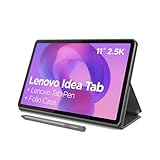
- POWER YOUR STUDY, FUEL YOUR PLAY – Discover smarter learning with the Lenovo Idea Tab. Stay campus-ready with all-day battery life, AI-powered apps to enhance your work, and sharp graphics for tv marathons with friends.
- SMOOTH, POWERFUL, IMMERSIVE – The MediaTek Dimensity 6300 processor is more powerful than ever, with the AI-enhanced multitasking you need to stay ahead.
- CIRCLE IT, SEARCH IT – Use your Lenovo Tab Pen or fingertip to circle items for instant search results or to translate other languages without switching apps. Circle to Search with Google ensures answers are only a circle away.
- SHARP VIEW, CLEAR SOUND – Experience sharp visuals and immersive sound for study sessions and streaming breaks. With 72% NTSC and quad Dolby Atmos-tuned speakers you can enjoy your study breaks with vivid videos and crystal-clear sound.
- LEVEL UP YOUR STUDY – Write, organize, sketch, and calculate with four learning apps built to match your flow. Lenovo AI Note, Squid, Nebo, and MyScript Calculator help you stay clear, focused, and ready for every study session.
Can any Android tablet run Android Auto?
No—not literally any tablet. The realistic answer is many Android tablets that can install and run a compatible receiver app. The tablet does not need to be officially certified as a car head unit, but it does need suitable USB, Wi-Fi, display, decoding, power, and Android compatibility.
The receiver apps publish low Android-version minimums. Headunit Reloaded’s publisher page and the Open Headunit Play listing advertise Android 4.1 or newer for the app itself. That is only an app-level minimum; it does not guarantee that an old tablet will run current Android Auto smoothly. Video decoding, Android build, Google Play availability, display resolution, and connection hardware matter more than an arbitrary RAM number.
Do not treat an Android Go tablet as a safe choice. Google says Android Auto is not available on Android Go devices. Tablets without USB host mode, Google Play services, or a usable Wi-Fi implementation are also poor candidates.
Tablet compatibility checklist
- Google Play Store and Play services: strongly preferred for installing and operating the receiver app.
- Android version: it must support the receiver app you choose, but a newer, well-supported Android build is preferable to the published bare minimum.
- USB host/OTG: required for the recommended wired method.
- Wi-Fi: required for wireless operation; 5 GHz support is useful.
- Touchscreen: capacitive touch and reliable landscape mode make the result much more usable.
- Video decoding: the tablet must be able to decode the projected video without black screens, artifacts, or severe lag.
- Microphone: important if you want voice commands to work through the tablet.
- Audio connection: a headphone jack, Bluetooth, or acceptable built-in speakers are needed to get sound where you want it.
- Power: the tablet should be able to run continuously from vehicle power without overheating.
There is no authoritative universal RAM threshold in the cited receiver-app documentation. Avoid buying or rejecting a tablet solely because a guide claims that a particular amount of RAM is required.
Phone requirements
For current Android Auto use on a car display, Google lists:
- Android 9 or newer.
- An active mobile data plan.
- A phone that is not running Android Go.
For official wireless Android Auto compatibility, Google’s general baseline is Android 11 or newer with 5 GHz Wi-Fi. A receiver app can have additional or different behavior, so the phone’s Android Auto version and manufacturer-specific network settings still matter.
Android Auto is integrated into current Android phones. The tablet normally does not need the official Android Auto phone app; it needs the receiver application. The phone supplies the Android Auto session, apps, and internet connection.
Choose the receiver app
Headunit Reloaded Emulator
Headunit Reloaded Emulator, commonly called HUR, is the established paid receiver option. Its publisher provides a trial for testing compatibility before you permanently mount the tablet. The cited U.S. Google Play listing shows a price of $4.99 and documents USB, Wi-Fi, and Self-Mode. Prices and availability can vary by country and change over time; check the current HUR Google Play listing and the publisher’s documentation.
The Tool Desk
Outbyte Driver Updater FREEFix the driver behind crashes, sound loss and screen glitchesFind Drivers →Outbyte PC Repair FREEClear out junk files and repair common Windows errorsFree Scan →HUR is a sensible first choice if you want a mature app and a trial-based compatibility check. Its current listing also notes that Android Auto 17.4 changed some third-party wireless launch methods, so wireless behavior is phone-dependent rather than guaranteed.
Open Headunit
Open Headunit is the current open-source alternative formerly branded Headunit Revived. Its Play distribution supports USB, Wi-Fi Direct, wireless networking, and Self-Mode. The cited U.S. listing shows $3.99 and specifically warns that Android Auto 17.4 and newer require the phone’s built-in Android Auto Headunit Server for wireless and Self-Mode connections in supported configurations. See the Open Headunit Google Play listing, source repository, and its wired and wireless guides.
Rank #2

- COMPACT SIZE, COMPACT FUN – The Lenovo Tab One is compact, efficient, and provides non-stop entertainment everywhere you go. It’s lightweight and has a long-lasting battery life so the fun never stops.
- SIMPLICITY IN HAND - Add a touch of style with a modern design that’s tailor-made to fit in your hand. It weighs less than a pound and has an 8.7” display that’s easy to tuck in a purse or backpack.
- NON-STOPPABLE FUN – Freedom never felt so sweet with all-day battery life and up to 12.5 hours of unplugged YouTube streaming. It’s designed to charge 15W faster than previous models so you can spend less time tethered to a power cable.
- PORTABLE MEDIA CENTER - Enjoy vibrant visuals, immersive sound, and endless entertainment anywhere you go. The HD display has 480 nits of brightness for realistic graphics and dual Dolby Atmos speakers that provide impressive sound depth.
- ELEVATED EFFICIENCY - Experience the MediaTek Helio G85 processor and 60Hz refresh rate that ensure fluid browsing, responsive gaming, and lag-free streaming.
Neither app is universally superior. Test the tablet and phone combination, particularly if wireless operation is important.
Wired USB-OTG setup: the best first method
USB is usually the easiest approach to diagnose and the most stable tablet method. Open Headunit’s current documentation calls wired USB its most stable connection method.
Recommended Free Tools
What you need
- An Android phone meeting Google’s Android Auto requirements.
- An Android tablet with USB host/OTG support.
- HUR or Open Headunit installed on the tablet.
- A USB data cable—not a charge-only cable.
- A USB-OTG adapter or cable if the tablet’s port does not directly accept the phone connection.
- A powered OTG hub or pass-through charging adapter if you want the tablet to charge while the phone is connected.
- A tablet mount and a vehicle USB charger or 12-volt adapter.
- Optional: an AUX cable or Bluetooth connection to the car stereo.
Test the complete arrangement before mounting the tablet. A tablet that works on a desk may still fail once it must charge, decode video, maintain Wi-Fi, and remain cool in a vehicle.
Step-by-step wired connection
- Park the car. Complete pairing and first-run setup while the vehicle is in Park. Google’s setup instructions also recommend having the car’s infotainment system on during setup.
- Install the receiver app on the tablet. Do not install HUR on both devices unless you are deliberately testing Self-Mode. For ordinary phone-to-tablet projection, the receiver belongs on the tablet.
- Open the receiver app and grant the permissions it requests.
- Connect the phone to the tablet using the data cable and OTG adapter. The tablet must be the USB host.
- If the phone shows a USB-choice prompt, choose the Android Auto or appropriate data/host option offered by that phone. Wording varies among Samsung, Google, Motorola, Xiaomi, and other manufacturers.
- In HUR, select the USB mode. In Open Headunit, press the USB button.
- When Android displays a USB permission prompt, select the phone and approve access. Open Headunit’s documented sequence is to connect the phone, select Android Auto or Host Mode if necessary, open the receiver, press USB, grant permission, select the phone, and wait for projection.
- Accept Android Auto’s first-run permissions and setup requests on the phone.
- Wait for the Android Auto interface to appear on the tablet.
- Before mounting anything, test Maps or Waze, music, touch input, voice input, incoming and outgoing calls, screen orientation, and audio output.
If the tablet cannot see the phone, disconnect both ends and retry with a known-good data cable and a different OTG adapter. Poor cables, unpowered hubs, incorrect host direction, and a dismissed USB permission dialog are common causes of failure. The Open Headunit wired guide provides the app-specific connection sequence.
Can the tablet charge while connected by USB?
Sometimes, but a simple OTG adapter may use the tablet’s only port for the phone and leave no way to charge the tablet. For continuous use, choose a powered OTG hub or a pass-through adapter that explicitly supports simultaneous data and charging. Confirm that the tablet actually charges under load; some devices report charging but still lose battery while the screen and decoder are active.
Wireless setup: cleaner, but more complicated
Wireless removes the USB cable between the phone and tablet, but it introduces Wi-Fi discovery, hotspot routing, battery-management, and Android Auto version issues. Treat it as the second setup to attempt—not the first.
Quick wins for a faster PC:
Repair Windows errors before they cause bigger problemsFix Now →Scan for outdated or missing drivers - takes under a minuteDriver Scan →Why old Wi-Fi Launcher instructions may fail
Many older guides recommend installing a Wi-Fi launcher or helper, starting a hotspot, and waiting for a third-party app to launch Android Auto. That workflow is no longer universally reliable.
Current Open Headunit documentation says Android Auto 17.4 and newer require the phone’s built-in Android Auto Headunit Server for wireless and Self-Mode connections in supported configurations. Its current listing warns that Wireless Helper alone can fail without that server, while USB remains functional. HUR’s current Play listing likewise notes that Android Auto 17.4 stopped some third-party wireless launch methods and that wireless support is phone-dependent. These are receiver-project findings rather than a broad consumer-facing Google changelog, so behavior can vary by phone and software version.
Enable the phone’s Headunit Server
Menu names vary slightly by manufacturer:
- Open Settings on the phone.
- Search Settings for Android Auto, or open Connected devices → Android Auto.
- Scroll to the bottom and tap Version or Version and permission info ten times.
- Open the three-dot menu.
- Select Start head unit server.
- Confirm that Android Auto shows a persistent notification indicating that the server is running.
Open Headunit documents the server connection on port 5277. You normally do not need to enter the port manually, but this detail can help when diagnosing a manual connection.
Wireless method 1: native or Headunit Server mode
- Start the Headunit Server on the phone.
- Connect the phone and tablet to the same Wi-Fi network, or use a supported hotspot arrangement.
- Open the receiver app on the tablet.
- Select its native, Headunit Server, Auto-Scan, or equivalent wireless mode.
- Allow the app to scan for the phone.
- Select the phone when it appears and wait for Android Auto projection.
Open Headunit’s Auto-Scan searches for phones running the native Android Auto Headunit Server. Its Manual Mode can scan or accept the phone’s IP address.
What’s actually slowing this PC down?
Pick the symptom - the matching free tool is one click away.
Rank #3

- 【Dual-Function 2-in-1 Tablet】URAO Android 16 Tablet is a game-changer with 2-in-1 professional work mode. The tablet is compatible with a Bluetooth keyboard, mouse, stylus, headset, and a convenient foldable case. The setup and connection process is straight forward, enabling you to effortlessly transform your tablet into either a laptop or a computer mode. Friendly Tips: Mouse does not come with batteries.
- 【Android 16 & Octa-Core Processor】URAO Android tablet features the latest operating system Android 16 and an 1.8 GHz octa-core processor ensure of excellent performance, seamless multitasking, getting rid of annoying ads, emphasizing privacy and security by designing enhanced app permissions, providing you complete management control.
- 【36GB (6+30GB) RAM 128GB ROM 】Our 11 inch tablet comes with 36GB (6+30GB) RAM 128GB ROM and maximun 1TB TF card ( not included )expandable ensures you of a fast APP launch and smooth gaming experience. URAO tablet also come with pre-installed Google Play Store, you can easily download any needed Apps such as Facebook, Twitter, Youtube, etc.
- 【7800mAh Battery with Fast Charge】The built-in large capacity and low consumption CPU enable our URAO 11 inch tablet to stand by for up to 3 days and allows you to enjoy up to 8 hours of mixed reading, watching TV shows, playing games, surfing the web. URAO tablet adopts fast-charging technology ,easily charge via the USB Type-C port and rest assured the battery will last. It is a good companion for you to play and study!
- 【Wi-Fi 6+Bluetooth5.4】URAO 11 inch android tablet adopts the lastest sixth generation WiFi technology and the upgraded bluetooth 5.4. Dual band integrated chips make the 5g WiFi and 2.4g WiFi more stable and the lastest bluetooth 5.4 connection supports all your favorite accessories, highly increased the speed of data transfer, improved network capacity and reduced network delays.
Wireless method 2: current Helper Mode
- Install the current receiver app on the tablet.
- If using Open Headunit, install its current Wireless Helper companion on the phone from the project’s documented source.
- Put the phone and tablet on the same Wi-Fi network or hotspot.
- Set the tablet receiver to Helper Mode.
- Start the helper service on the phone.
- If the phone runs Android Auto 17.4 or newer, ensure the phone’s Headunit Server is also running.
- Wait for discovery and projection.
Open Headunit describes Helper Mode as its recommended wireless method, but its current documentation still requires the Headunit Server for Android Auto 17.4 or newer. Do not assume that a helper-only tutorial written for an older Android Auto release will work today.
Wireless method 3: Wi-Fi Direct or P2P
Open Headunit supports Wi-Fi Direct/P2P on compatible devices. This can avoid a separate shared hotspot, but compatibility depends on the Wi-Fi chipsets and Android builds. Current user reports also describe some P2P connections as slow or unstable, so treat it as an alternative rather than a guaranteed improvement.
Wireless recovery steps
If wireless starts and then disconnects, work through these changes:
- Disable battery optimization for the receiver app and helper app.
- Disable phone features called Wi-Fi Assistant, Switch between networks, Avoid poor connections, or Network acceleration.
- Prefer 5 GHz Wi-Fi when both devices support it.
- Leave mobile data enabled on the phone.
- Try reversing the hotspot arrangement: tablet hotspot with phone as client, or phone hotspot with tablet as client.
- Check whether the phone and tablet are actually on the same subnet. Some hotspot configurations use 10.x.x.x networks that complicate discovery or routing.
- Avoid connecting both the phone and tablet to the car for Bluetooth media at the same time.
- Try Wi-Fi Direct/P2P if the shared hotspot path is unreliable.
- Fall back to USB if wireless remains inconsistent.
See Open Headunit’s current troubleshooting guide for battery, network-switching, hotspot, and Bluetooth conflict details.
Outdated Drivers Are Slowing You Down
One free scan finds every outdated or missing driver and matches the right update for your exact hardware.Free scan · exact hardware matchPC Slower Than It Used to Be?
A free scan shows the junk files, broken settings and background clutter dragging Windows down - then fixes them in one click.Free scan · Windows 10 & 11Audio: how does sound reach the car speakers?
The tablet is not automatically connected to the car’s speakers. Video projection and audio routing are separate decisions.
Tablet speaker
Phone → tablet receiver → tablet speakerThis is the simplest test arrangement. HUR documents an audio-transport option that can forward phone audio to the tablet, although phone-call audio may remain on the phone or use a Bluetooth hands-free path.
AUX cable
Phone → tablet receiver → tablet headphone jack → car AUX input → car speakersIf the tablet has a headphone jack and the car has AUX input, this is often the most predictable way to send music and navigation prompts through the factory stereo. Select AUX on the car stereo and control volume there or on the tablet. Steering-wheel controls are not guaranteed.
Bluetooth to the factory stereo
Phone → tablet receiver → tablet Bluetooth → car stereoPair the tablet with the car for media audio. Decide separately how calls should work. If the phone and tablet are both connected to the car for media, music may pause repeatedly or audio may jump between devices. Open Headunit’s troubleshooting guidance recommends disabling Bluetooth Media audio for the phone when necessary while leaving phone-call audio enabled if the car’s hands-free system is handling calls.
Calls and voice commands
Do not promise factory-style call behavior. HUR’s publisher documentation says phone-call audio can remain on the phone or on the Bluetooth hands-free path even when other audio is transported to the tablet. Depending on the combination of phone, tablet, receiver app, and car stereo, calls may use:
- The phone’s earpiece and microphone.
- The tablet’s speaker and microphone.
- The car’s Bluetooth hands-free microphone and speakers.
Test an incoming call, an outgoing call, and the microphone while parked. Voice commands likewise depend on microphone permissions, Android Auto’s version, and the selected audio route. Test the voice-assistant trigger before relying on it while driving.
Rank #4

- 【Android 16 OS & High-Performance CPU】 Evermyth GMS-certified tablet runs on the Android 16 operating system, allowing direct downloads of popular apps from the Play Store. Powered by a robust 5-core processor that hits speeds up to 1.8GHz, the android tablet is engineered to boost multitasking performance. Whether you’re working, watching videos, or gaming, this 5-core tablet pc operates seamlessly, delivering a fast, professional-grade experience.
- 【24GB RAM + 64GB ROM + 1TB Expandable Storage】 Our 10 inch electronics tablets comes with 24GB RAM (3GB physical + 21GB virtual), 64GB ROM, and supports up to 1TB of expandable storage via a TF card (not included). This ensures quick app launches and smooth gameplay.
- 【10 inch HD IPS In-Cell Display】 This tablet PC boasts a 1280×800 high-resolution IPS screen that delivers vibrant, true-to-life colors. Enjoy sharper, brighter visuals for a more immersive viewing experience. The 5MP front and 8MP rear camera can handle video calls and photo recording with ease. LCD touchscreen uses low-blue-light tech to cut down on eye strain from screen flicker and harsh blue light. Slim and lightweight, this 10-inch tablet amps up immersion for all your favorite activities.
- 【6000mAh Rechargeable Battery】 Electronics tablets Packed with a 6000mAh battery and a low-power-consuming CPU, Evermyth 10 inch tablet offers up to 3 days of standby time and up to 8 hours of mixed usage—perfect for reading, streaming, or web browsing. Charging is a breeze via the USB-C port, making the tablet an ideal companion for both entertainment and work!
- 【Wi-Fi 6 & Bluetooth 5.4】 Evermyth Android 16 tablet features the latest Wi-Fi 6 and upgraded Bluetooth 5.4. It supports dual-band (5GHz/2.4GHz) Wi-Fi connectivity for stable, high-speed transfers. Bluetooth 5.4 ensures seamless compatibility with all your favorite accessories.
Does the tablet need GPS, a SIM card, or internet?
GPS
In ordinary receiver mode, the phone supplies the navigation apps and location context. The tablet does not necessarily need its own GPS. HUR specifically mentions tablet GPS for an optional speed-based automatic-volume feature, not as a universal requirement for displaying phone-projected Android Auto.
Self-Mode and tablet-native navigation are different. If the tablet itself is running navigation apps, it may need its own location services, downloaded maps, or internet connection.
Do these 3 things before closing this tab:
1Fix the driver behind crashes, sound loss and screen glitches2Clear out junk files and repair common Windows errors3Scan for outdated or missing drivers - takes under a minuteSIM card and internet
The phone needs an active data plan for current Android Auto use. The tablet generally needs only the local USB or Wi-Fi connection to receive the session. It does not automatically need its own SIM card or cellular plan.
Tablet internet is still useful or necessary for installing apps, updates, map downloads, Self-Mode, and tablet-native applications. Do not confuse the phone’s mobile data requirement with a requirement that the tablet have cellular service.
Self-Mode: can the tablet run Android Auto without a phone?
Self-Mode means the receiver app and Android Auto run on the same Android device. HUR documents Self-Mode as requiring Android Auto to be installed on that same device.
This is not the normal solution for an arbitrary tablet. Google’s official documentation is centered on Android phones and compatible car receivers; a tablet may not be offered Android Auto through Google Play, may lack the necessary phone integration, or may require unsupported sideloading. On Android Auto 17.4 and newer, Open Headunit also says Self-Mode requires the phone’s Headunit Server or a supported native method.
Use receiver mode with a separate Android phone unless the particular tablet is known to support Android Auto itself. Self-Mode is better viewed as an option for a compatible large Android phone or a specifically supported device, not a promise that every tablet can operate independently.
Independent reader supportYour contribution helps us test, update, and keep practical guides available for everyone.Video, touch, and performance troubleshooting
| Symptom | Likely cause | First fixes |
|---|---|---|
| Tablet does not detect the phone | Bad cable, wrong OTG direction, missing USB host support, or poor hub | Use a known-good data cable, replace the OTG adapter, confirm tablet USB host mode, and avoid an unpowered hub. |
| No USB permission prompt | Permission dialog was dismissed or the receiver was not ready | Unplug and reconnect, open the receiver app before reconnecting, reboot both devices, and watch for the Android USB prompt. |
| Black screen but audio works | Hardware decoder or video initialization failure | Enable software decoding, select H.264, disable H.265/HEVC, lower projection resolution to 720p or 480p, and restart the receiver. |
| Green screen, artifacts, or pixelation | Codec or hardware-decoder incompatibility | Switch from H.265/HEVC to H.264, try software decoding, and lower resolution. |
| Projection freezes or is slow | Overloaded tablet, decoder problem, battery restrictions, USB instability, or heat | Lower resolution, close other apps, disable battery optimization, try wired USB, and improve ventilation. |
| Touch is offset | DPI or unusual screen layout | Set DPI/pixel density to Auto, try a lower DPI, and use landscape orientation. |
| Touch does not work in portrait | Receiver or Android Auto portrait-mode limitation | Test the basic setup in landscape before attempting portrait mode. |
| Wireless cannot find the phone | Different networks, missing Headunit Server, blocked discovery, or incompatible helper method | Start the Headunit Server, place both devices on the same network, try Auto-Scan or Manual Mode, and check the current receiver documentation. |
| Wireless connects and drops | Battery optimization, network switching, hotspot routing, or Bluetooth conflict | Disable battery and network optimizations, try 5 GHz or a reversed hotspot arrangement, and remove conflicting Bluetooth media connections. |
| Music or navigation audio stays on the phone | Audio sink or Bluetooth route is not configured | Enable the receiver’s audio-transport option, use AUX, or configure the tablet as the car’s Bluetooth media source. |
| Music repeatedly pauses | Phone and tablet are competing for Bluetooth media audio | Disable Bluetooth Media audio for the phone or tablet that should not handle media. |
| Calls do not use the tablet | Call audio follows a separate phone or hands-free route | Use the phone or car Bluetooth hands-free system, then test microphone and speaker behavior on the specific setup. |
| Tablet overheats or loses battery | Sun exposure, bright display, video decoding, Wi-Fi, and insufficient charging capacity | Use constant vehicle power, reduce brightness and resolution, improve airflow, shade the tablet, and remove it from the vehicle during extreme heat. |
For black or green video, change one setting at a time. Hardware decoding is usually worth trying first for performance, but software decoding may work around a broken or incompatible tablet decoder. Older Rockchip devices may be particularly slow with software decoding, according to HUR’s publisher documentation.
Power, heat, and mounting
A tablet used as a dashboard display can consume power continuously through its bright screen, Wi-Fi, video decoder, and audio hardware. Use a vehicle charger that can provide sustained power rather than assuming the tablet’s battery will last a trip.
Heat is a practical limitation even when compatibility is perfect. Direct sun can cause thermal throttling, charging problems, shutdowns, or a dangerously hot battery. Mount the tablet in shade where possible, allow airflow, reduce brightness when practical, and remove it from the vehicle during extreme heat.
Free tools Windows power users keep installed
One-click scans. No signup required.
Best Value

- Do what you love, uninterrupted — 25% faster performance than the previous generation and is ideal for seamless streaming, reading, and gaming.
- High-def entertainment — A 10.1" 1080p Full HD display brings brilliant color to all your shows and games. Binge watch longer with 13-hour battery, 3 or 4 GB RAM, 32 or 64 GB of storage, and up to 1 TB expandable storage with micro-SD card (sold separately).
- Thin, light, durable — Tap into entertainment from anywhere with a lightweight, durable design and strengthened glass made from aluminosilicate glass. As measured in a tumble test, Fire HD 10 is 2.7 times as durable as the Samsung Galaxy Tab A8 (2022).
- Stay up to speed — Use the 5 MP front-facing camera to Zoom with family and friends, or create content for social apps like Instagram and TikTok.
- Ready when inspiration strikes — With 4,096 levels of pressure sensitivity, the Made for Amazon Stylus Pen (sold separately) offers a natural writing experience that responds to your handwriting. Use it to write, sketch in apps like OneNote, and more.
Mount it so it does not obstruct the driver’s view, gauges, mirrors, controls, or an airbag deployment path. Secure USB and AUX cables away from the pedals, steering column, and shifter. Follow local laws for windshield mounts and electronic-device use. NHTSA’s guidance covers both distraction from interacting with navigation and entertainment systems and safe distance and placement around airbags.
Configure the system while parked. Android Auto may reduce distraction through voice commands and a simplified interface, but it does not make manual screen interaction safe while driving.
What a tablet receiver cannot replace
A tablet running an Android Auto receiver is a useful display workaround, but it is not the same as installing a vehicle-integrated head unit. Unless separately engineered, do not expect it to provide:
- The factory radio and amplifier interface.
- OEM reverse-camera switching.
- Parking-sensor display or vehicle settings.
- CAN-bus integration.
- Guaranteed steering-wheel buttons.
- Factory boot, sleep, ignition, and shutdown behavior.
- Guaranteed hands-free calling through the car.
- Reliable wireless pairing on every phone.
The tablet can display Android Auto and accept touch input, but vehicle integration depends on hardware interfaces that a generic tablet and receiver app do not automatically possess.
Do these 3 things before closing this tab:
1Fix the driver behind crashes, sound loss and screen glitches2Repair Windows errors before they cause bigger problems3Scan for outdated or missing drivers - takes under a minuteTablet versus other options
| Option | Advantages | Trade-offs |
|---|---|---|
| USB-OTG tablet receiver | Lowest-cost way to reuse an existing tablet; generally the most reliable tablet method. | Requires cables, OTG hardware, mounting, charging, and separate audio planning. |
| Wireless tablet receiver | Cleaner dashboard installation with no phone-to-tablet cable. | More difficult discovery and more sensitivity to Android Auto and Wi-Fi changes. |
| Phone mounted directly | Cheapest and simplest; no receiver app or second screen. | Smaller display and less convenient if the phone is needed elsewhere. |
| Portable Android Auto screen | Purpose-built display, power, mounting, and audio features. | Requires buying another device and may still have limited vehicle integration. |
| Aftermarket stereo | Best route for permanent installation, radio, camera, steering-wheel controls, and vehicle integration. | Higher cost and installation complexity; vehicle-specific adapters may be required. |
What about AAWireless or Motorola MA1?
A dedicated wireless Android Auto adapter is not a way to turn a generic tablet into a head unit. Products such as AAWireless and Motorola MA1 are designed for a car stereo or head unit that already supports wired Android Auto. They replace the phone’s cable with a wireless connection; they do not provide the tablet receiver software needed for this project.
Recommended setup order
- Check that the phone runs Android 9 or newer, has mobile data, and is not Android Go.
- Check that the tablet has Google Play, Wi-Fi, touch input, and USB host/OTG support.
- Install HUR or Open Headunit on the tablet.
- Test wired USB-OTG on a desk before buying mounts or routing cables.
- Configure audio through the tablet speaker, AUX, or Bluetooth.
- Test navigation, media, touch, voice input, and calls while parked.
- Add a powered OTG hub or pass-through charger if the tablet loses battery.
- Only then try wireless, beginning with the current Headunit Server method.
- Mount the tablet securely outside airbag deployment zones and away from controls.
- Keep USB as the fallback if wireless proves unreliable.
Frequently Asked Questions
Does the tablet need the Android Auto app installed?
Usually no. In the normal arrangement, Android Auto runs on the phone and the tablet runs a receiver app such as Headunit Reloaded Emulator or Open Headunit. Installing Android Auto on the tablet is relevant mainly to Self-Mode, which is device- and version-dependent.
Does the tablet need its own SIM card or GPS?
Not for ordinary phone-projected receiver mode. The phone supplies mobile data and normally supplies the navigation context. The tablet needs its own internet or location services only for tablet-native apps, updates, Self-Mode, or specific optional receiver features.
Which connection is better: wired or wireless?
Use wired USB-OTG first. It is generally easier to diagnose and is described by Open Headunit as the most stable connection method. Wireless is more convenient but depends on Wi-Fi, phone software, battery settings, and the Android Auto 17.4-and-newer Headunit Server requirement documented by current receiver projects.
Can Android Auto use the car’s original speakers?
Yes, but not automatically. Route tablet audio to the stereo through AUX or Bluetooth, or use the tablet’s speakers. Music and navigation audio can follow a different path from phone-call audio, so calls must be tested separately.
Why does wireless fail after Android Auto 17.4?
Current Open Headunit and HUR documentation report that Android Auto 17.4 changed or blocked some third-party wireless launch methods. On supported setups, the phone’s built-in Android Auto Headunit Server must be started from Android Auto’s developer settings. Wireless remains phone-dependent, so USB is the fallback.
Can I use an old Android tablet with only 1 GB or 2 GB of RAM?
It may work, but RAM alone does not determine compatibility. Decoder support, Android version, USB host mode, Wi-Fi, display resolution, battery condition, and heat are also important. Test the exact tablet with the receiver app before permanently installing it.
The Bottom Line
The practical answer is yes, but “any” means a compatible Android tablet—not every tablet. Install a receiver app on the tablet, keep Android Auto running on the phone, and begin with a data-capable USB-OTG connection. Move to wireless only after the wired setup works, and account for the Android Auto 17.4+ Headunit Server requirement documented by current receiver projects. Plan the audio route, simultaneous charging, heat control, and safe mounting before treating the tablet as a daily car display.
Quick Recap
Product prices and availability are accurate as of the date/time indicated and are subject to change. Any price and availability information displayed on Amazon at the time of purchase will apply.