Recommended Free Tools
The 20/4/10 rule says to put at least 20% down, finance a vehicle for no more than 48 months, and keep total monthly transportation costs at or below 10% of gross monthly income. It is a conservative budgeting guideline—not a law, lender requirement, or guarantee that a car is affordable. The important detail is that the 10% usually covers more than the loan payment: insurance, fuel or charging, maintenance, repairs, registration, taxes, parking and tolls may all belong in the calculation. Chase’s explanation of the rule uses gross income and includes these ownership costs.
In 2026, the rule is difficult to meet on an average new vehicle, but that does not make it obsolete. It is useful precisely because it exposes when a buyer needs a cheaper vehicle, a larger down payment, more time to save, or a different transportation plan. Calculate the budget from the vehicle’s written out-the-door price and your actual ownership costs—not from the dealer’s most attractive monthly payment.
What the 20/4/10 rule means
| Number | Guideline | What it is intended to do |
|---|---|---|
| 20 | Put at least 20% down. | Reduce the amount borrowed, interest charges and early negative-equity risk. |
| 4 | Finance the vehicle for 48 months or less. | Limit the time you owe money on a depreciating asset and reduce total interest. |
| 10 | Keep total monthly transportation costs at or below 10% of gross monthly income. | Prevent the vehicle from consuming too much of the household budget. |
This is a commonly cited U.S. personal-finance rule of thumb. It is not an official standard created by the Consumer Financial Protection Bureau, and its details are not perfectly standardized. In particular, some explanations focus on the payment while others include the broader cost of owning and operating the vehicle. The safest interpretation is the broader one.
The three numbers are not equally simple
20% down means usable equity, not necessarily 20% in cash
A cash down payment lowers the principal and gives the buyer some initial equity. A trade-in can serve the same purpose, but only its net equity counts:
Free tools Windows power users keep installed
One-click scans. No signup required.
#1 Best Overall
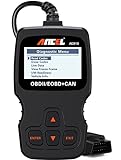
- CEL Doctor: The ANCEL AD310 is one of the best-selling OBD II scanners on the market and is recommended by Scotty Kilmer, a YouTuber and auto mechanic. It can easily determine the cause of the check engine light coming on. After repairing the vehicle's problems, it can quickly read and clear diagnostic trouble codes of emission system, read live data & hard memory data, view freeze frame, I/M monitor readiness and collect vehicle information
- Sturdy and Compact: Equipped with a 2.5 foot cable made of very thick, flexible insulation. It is important to have a sturdy scanner as it can easily fall to the ground when working in a car. The AD310 OBD2 scanner is a well-constructed mechanic tool with a sleek design. It weighs 12 ounces and measures 8.9 x 6.9 x 1.4 inches. Thanks to its compact design and light weight, transporting the device is not a problem. The buttons are clearly labelled and the screen is large and displays results clearly
- Accurate Fast and Easy to Use: The AD310 scanner can help you or your mechanic understand if your car is in good condition, provides exceptionally accurate and fast results, reads and clears engine trouble emission codes in seconds after you fixed the problem. This device will let you know immediately and fix the problem right away without any car knowledge. No need for batteries or a charger, get power directly from the OBDII Data Link Connector in your vehicle
- OBDII Protocols and Car Compatibility: Many cheap scan tools do not really support all OBD2 protocols. AD310 scanner as it can support all OBDII protocols such as KWP2000, J1850 VPW, ISO9141, J1850 PWM and CAN. This device also has extensive vehicle compatibility with 1996 US-based, 2000 EU-based and Asian cars, light trucks, SUVs, as well as newer OBD2 and CAN vehicles both domestic and foreign. Pls confirm with our customer service whether it is compatible with your vehicle before purchasing
- Home Necessity and Worthy to Own: This is an excellent code reader to travel or home with as it weighs less and it is compact in design. You can easily slide it in your backpack as you head to the garage, or put it on the dashboard, this will be a great fit for you. The AD310 is not only portable, but also accurate and fast in performance. Moreover, it covers various car brands and is suitable for people who just need a code reader to check their car
Trade-in value − lender payoff amount = usable trade-in equity
For example, a vehicle worth $18,000 with a $22,000 loan payoff does not provide an $18,000 down payment. It creates $4,000 of negative equity. The CFPB defines negative equity as owing more on the vehicle than it is worth. That $4,000 must be paid separately or added to the next loan, where it increases the amount financed.
Apply the 20% test to the out-the-door price, not just the advertised vehicle price. A complete figure can include the vehicle price, sales tax, title and registration charges, documentation and dealer fees, required equipment, selected add-ons, and any other amount being financed. Subtract rebates and trade-in credit. The CFPB notes that taxes, titles, fees and optional products can all increase the total loan amount.
Twenty percent down reduces the chance of being underwater; it does not guarantee that the loan will remain above the vehicle’s value. Depreciation, taxes and fees, dealer markups, rolled-in negative equity, a high APR and a rapidly depreciating model can consume that initial equity.
Crashes, No Sound, or Screen Glitches?
Random freezes, missing sound and display glitches usually trace back to one bad driver. Find and replace yours safely.Free scan · under a minutePC Slower Than It Used to Be?
A free scan shows the junk files, broken settings and background clutter dragging Windows down - then fixes them in one click.Free scan · Windows 10 & 114 means a 48-month maximum, not a payment target
A 48-month term generally produces a higher required payment than a 60-, 72- or 84-month term. In exchange, the buyer pays interest for less time and reaches a debt-free position sooner. A shorter loan also reduces the period in which the loan balance can exceed the car’s resale value. The CFPB advises comparing APR, amount financed, term, payment and total interest rather than judging an offer by the payment alone.
Using $24,000 financed at an illustrative 6.39% APR, the approximate comparison is:
| Term | Approximate payment | Approximate total interest |
|---|---|---|
| 48 months | $568 per month | $3,261 |
| 60 months | $468 per month | $4,101 |
| 72 months | $402 per month | $4,957 |
These are illustrations using the Q1 2026 average new-vehicle rate reported by Experian, not guaranteed offers. Individual APRs vary by credit history, vehicle, lender, loan amount and term. In Experian’s Q1 2026 credit-tier data, average new-car APRs ranged from 4.55% for super-prime borrowers to 16.01% for deep-subprime borrowers.
A longer term can be defensible in limited circumstances—for example, a genuine 0% promotional loan on a highly reliable vehicle that the buyer will keep long after it is paid off. Even then, the lower payment is not automatically a lower cost. Extending the term only to make an expensive vehicle appear affordable is usually solving a price problem with debt duration.
10% is a transportation budget, not just a car payment
The traditional version generally uses 10% of gross monthly income. Chase explicitly describes gross income as the denominator, while Capital One notes that the rule is not fully consistent about gross versus net income.
Use both tests:
- Traditional test: gross monthly income × 10%.
- Conservative test: monthly take-home pay × 10%.
If the purchase passes the gross-income test but fails the take-home test, treat the vehicle as financially tight. Gross income is useful for comparing households, but take-home pay is what actually pays the bills.
A complete monthly transportation budget may include:
- Loan or lease payment.
- Insurance, based on an actual quote for the driver, ZIP code, vehicle and coverage limits.
- Gasoline, electricity or public charging.
- Routine maintenance, tires and a repair reserve.
- Registration, inspection fees and vehicle taxes.
- Parking, tolls and recurring transportation fees.
- Required equipment, such as home-charging hardware where applicable.
There is a separate question about depreciation. Some interpretations treat the 10% as a monthly cash-flow test and leave depreciation out. That can be reasonable when deciding whether the bills can be paid. It is incomplete when comparing the economic cost of ownership: AAA’s 2025 ownership-cost analysis identified depreciation as the largest expense in its new-vehicle sample.
How to calculate your maximum affordable car price
Step 1: Establish a conservative income figure
For stable salary income:
Gross monthly income = annual gross income ÷ 12Traditional transportation cap = gross monthly income × 0.10
Rank #2

- Multi-Functions - Practical Multi-Functions OBD2 code reader features built-in OBD2 DTC lookup library, which help you to determine the cause of the engine light, read code, erase code, view freeze frame, I/M ready, vehicle information, data flow, real-time curve, get vehicle speed information, calculate load value, engine coolant temperature, get engine speed.
- Wide Capability - Supports 9 protocols compatible with most 1996 US-Based, 2000 EU-Based and Asian cars, and newer OBD II & CAN domestic or import vehicles. Supports 6 languages - English,German, Dutch, Spanish, French, Italian.
- 2.8" LCD Display - Designed with a clear display 2.8" Large LCD screen - white backlight and contrast adjustment. No need any battery or charger, OBD reader gets the power directly from your vehicle through the OBDII Data Link Connector.
- Compact Design - Car diagnostic scanner is equipped with a 2.5 feet long cable and made of a very thick flexible insulator.There are 6 buttons on OBD2 Scanner:scroll up/down,enter/exit and buttons that quick query VIN vehicle number& the DTC fault code.
- ABS / Airbag codes NOT Supported - It is able to read and clear check engine information which is part of OBDII system, but it cannot work with non-OBDII systems, including ABS / Airbag / Oil Service Light, etc.
For variable income, use a conservative average rather than the highest recent month. For a two-income household, count only income that is reliable and will continue after the purchase. Also decide whether the loan will be supported by one borrower’s income or by the household’s combined income.
Step 2: Get the out-the-door price in writing
Before negotiating financing, request a written out-the-door figure:
Vehicle price
+ sales tax
+ title and registration
+ dealer and documentation fees
+ required equipment
+ selected add-ons
− rebates
− trade-in credit
= out-the-door amount
The Federal Trade Commission recommends getting the out-the-door price in writing and obtaining financing preapproval before visiting the dealership. Keep the vehicle price, trade-in, financing and optional products as separate decisions. A low payment can hide a high price, a long term or financed add-ons.
Step 3: Estimate the non-loan costs
Use your own insurance quote and driving pattern. A basic fuel estimate is:
Monthly fuel cost = (annual miles ÷ vehicle MPG × fuel price per gallon) ÷ 12
For an EV, replace gasoline with home electricity and public-charging costs. Include home-charger installation or other required equipment when it is part of the purchase decision.
Quick wins for a faster PC:
Fix the driver behind crashes, sound loss and screen glitchesFind Drivers →Clear out junk files and repair common Windows errorsFree Scan →Set aside money each month for maintenance, tires and repairs, even for a vehicle under warranty. Warranty coverage does not eliminate tires, routine service, deductibles, registration or every possible repair. Older used cars may have a small payment but need a much larger repair reserve.
Step 4: Find the maximum payment
Subtract realistic non-loan costs from the transportation cap:
Maximum vehicle payment = 10% transportation cap
− insurance
− fuel or charging
− maintenance and repair reserve
− registration and vehicle taxes
− parking and tolls
If the result is $350, a lender’s approval for a $600 payment does not make $600 affordable under this framework.
Step 5: Convert the payment into a maximum financed amount
For a fixed-rate 48-month loan, the payment is calculated from the amount financed, APR and term:
Payment = principal × [monthly rate × (1 + monthly rate)^48] ÷ [(1 + monthly rate)^48 − 1]
Rank #3
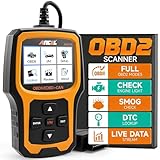
- Understand Your Check Engine Light – The ANCEL AD410 OBD2 scanner helps everyday drivers quickly read and clear engine-related fault codes, view code definitions, and understand why the check engine light is on before visiting a repair shop. With 42,000+ built-in DTC lookups, this car code reader helps reduce guesswork and makes basic vehicle diagnostics easier for beginners and DIY users
- Full OBD2 Diagnostics Made Simple – More than a basic engine code reader, this OBD2 scanner diagnostic tool supports key OBDII functions including reading/clearing codes, live data, freeze frame, I/M readiness, O2 sensor test, EVAP test, vehicle information, and MIL status. It helps you check your car’s condition, verify repairs after the issue is fixed, and communicate with mechanics more confidently
- Live Date & Real-time Vehicle Insights – View real-time engine data such as RPM, coolant temperature, fuel trim, oxygen sensor readings, and other available OBD2 parameters directly on the screen. These live data readings help you better understand how your vehicle is running, spot abnormal patterns, and make more informed repair decisions instead of relying only on a warning light
- Smog Check Readiness At A Glance – Use the I/M readiness function before a smog check or emissions inspection to see whether your vehicle’s monitors are ready. This OBD2 code scanner helps you confirm if recent repairs have brought the system back to a ready state, reducing the chance of failed inspections, retests, wasted trips, and unnecessary inspection fees
- Works With Most OBD2 Vehicles – Compatible with most 1996 and newer U.S.-based OBD2 cars, SUVs, and light trucks, as well as many 2000 and newer EU/Asian OBD2 vehicles. Supports major OBDII protocols including CAN, ISO9141, KWP2000, J1850 VPW, and J1850 PWM. This automotive diagnostic scanner is designed for wide vehicle coverage; please check compatibility with your vehicle before purchase
You do not need to calculate this manually. A reputable auto-loan calculator or spreadsheet’s PMT function can do it, provided you enter the actual APR and term. The amount financed should include financed taxes, fees, add-ons and rolled-in negative equity.
To reverse the calculation, first find the principal supported by your maximum payment. If the 20% down payment is exactly 20% of the out-the-door amount and there is no trade-in or negative equity, the rough maximum out-the-door price is:
Do these 3 things before closing this tab:
1Scan for outdated or missing drivers - takes under a minute2Repair Windows errors before they cause bigger problems3Fix the driver behind crashes, sound loss and screen glitchesMaximum out-the-door price = maximum supported loan principal ÷ 0.80
If you are using cash and trade equity, use:
Maximum out-the-door price = supported loan principal + cash down payment + net trade equity
Then verify that the cash and equity actually equal at least 20% of the out-the-door amount. A negative net trade-equity figure increases the amount that must be financed; it does not count as a down payment.
Worked example
Assume:
- Annual gross income: $100,000.
- Gross monthly income: $8,333.
- 10% gross-income transportation cap: approximately $833 per month.
- Out-the-door vehicle price: $30,000.
- Down payment: $6,000.
- Amount financed: $24,000.
- APR: 6.39%.
- Term: 48 months.
- Non-loan transportation costs: $250 per month.
The approximate loan payment is $568 per month. Add $250 for insurance, fuel, maintenance, repairs, registration and other operating costs, and the total is approximately $818 per month. That narrowly passes the 10% gross-income test of $833.
At $60,000 of annual gross income, the same $818 monthly cost would consume approximately 16.4% of gross monthly income. The identical vehicle and loan therefore fail the traditional rule for the lower-income buyer, even though the lender might approve both applications.
The $250 non-loan estimate is only illustrative. Replace it with actual insurance, annual mileage, fuel or charging prices, registration, parking, tolls and a maintenance-and-repair reserve.
Is 20/4/10 realistic in 2026?
For many buyers, not on the average new vehicle. The latest figures in the research are U.S. market averages and should not be mistaken for a quote or a recommended budget:
- In Q1 2026, the average new-vehicle loan was $43,925, the average payment was $770, the average APR was 6.39% and the average term was 69.48 months.
- The average used-vehicle loan was $27,070, with a $531 payment, 11.43% APR and 67.73-month term.
- Terms longer than six years represented 35.55% of new-vehicle loans and 31.54% of used-vehicle loans in Q1 2026.
These figures come from Experian’s Q1 2026 auto-finance report and its term-distribution report. A long loan is common in the market, but common does not mean financially safe.
The Tool Desk
Outbyte PC Repair FREERepair Windows errors before they cause bigger problemsFix Now →Outbyte Driver Updater FREEFix the driver behind crashes, sound loss and screen glitchesFind Drivers →Kelley Blue Book reported a $49,191 average new-vehicle transaction price in January 2026, compared with an average MSRP of $51,288. Its Cox Automotive data put the average used vehicle at $26,043 in December 2025.
Consider the new-vehicle transaction-price benchmark. A 20% down payment on $49,191 is about $9,838, leaving roughly $39,353 to finance. At 6.39% APR for 48 months, that produces an approximate payment of $931 per month before insurance, fuel, maintenance, repairs, taxes and parking. The payment alone exceeds 10% of gross monthly income for anyone earning less than approximately $111,750 per year. This is a simplified calculation based on an average price and average rate; an actual out-the-door price would usually be higher than the transaction-price figure after taxes and fees.
This gap helps explain why the average loan term is nearly 70 months and why more than one-third of new-vehicle loans extend beyond six years. It does not prove that the 20/4/10 rule is outdated. It shows that average vehicle prices and financing practices may be beyond what a conservative budget supports. The logical response may be a less expensive vehicle, a used vehicle, a larger down payment, a delayed purchase or an alternative to ownership.
Rank #4
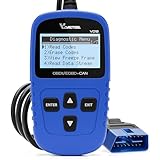
- 【A MUST-HAVE SCANNER TOOL FOR DIYERS】 - VDIAGTOOL VD10 car code reader is an incredibly useful, handheld obd2 scanner for each car owner or hobbyist, even for those with little to no experience when it comes to vehicle mechanics! Similar to a fixd car diagnostic tool, using this car diagnostic scanner is extremely easy. All you have to do is attach it to your car OBDII port and you can diagnose car problems in seconds! Read Codes (DTCs); Clear Codes; Live Data; View Freeze Frame; I/M Readiness; Vehicle Information.
- 【KEEP ENGINE IN GOOD STATUS】 - VDIAGTOOL check engine code reader brings a fast access to scan, read the car fault code, show its definition on the screen instantly, troubleshooting to find the root causes of problems, erase the engine fault code and turn off the MIL (Malfunction Indicator Light). Similar to a fixd car diagnostic tool, this car code reader helps ensure your engine stays in top condition.
- 【READ/CLEAR CODES & DTC LOOKUP】- No search online & saving your time, this vehicle car code reader retrieves generic (P0, P2, P3, and U0), manufacturer specific (P1, P3, and U1) codes, pending codes and displays DTC definitions based on the built-in database(more than 3000 codes) on the TFT screen, find out the root causes and clear the codes after fixed.
- 【ENHANCED OBD2 SCANNER WITH LIVE DATA & RETRIEVE FREEZE FRAME】 - This diagnostic scan tool for accurate diagnosis enables you to retrieve data from vehicle sensors, such as Engine RPM, Intake air temperature, Short/Long term fuel, Misfire data and etc. The freeze frame is stored in the PCM together with the diagnostic trouble code (DTC) related to the fault. Comparable to a fixd car diagnostic tool, the VD10 car code reader car scanner can be a valuable & practical diagnostic aid and also greatly help when diagnosing intermittent problems.
- 【I/M READINESS for THE S-nn-0-g CHECK】- OBDII vehicle may not pass the annual inspection unless the required monitors since reset are complete. So you should at least read the readiness monitors and make sure they are ready. This car obd2 scanner diagnostic tool is equipped with I/M readiness function to check the operations of the e-m-issi0n system on OBD2 compliant vehicles, run I/M monitor readiness test, checking if the pass vehicle s-m-0-g inspection.
AAA’s 2025 standardized study estimated average new-vehicle ownership and operating costs at $11,577 per year, or about $965 per month, using a five-year, 75,000-mile methodology. AAA’s methodology and cost-per-mile fact sheet make clear that this is not a universal household average; costs vary by vehicle type, location, mileage, insurance and driving conditions.
What’s actually slowing this PC down?
Pick the symptom - the matching free tool is one click away.
The prevalence of expensive vehicles and long terms should also not be treated as evidence that every buyer can safely carry the debt. The Federal Reserve’s discussion of recent consumer-delinquency dynamics is a reminder that elevated prices and loan terms exist alongside repayment risk.
Why the rule exists
Cars depreciate, require ongoing spending and usually do not produce income or investment returns for the owner. A large loan payment reduces flexibility at the same time that the asset may be losing value.
- Depreciation: The car can lose value faster than the loan balance falls.
- Interest: A larger principal or longer term increases the finance charge.
- Negative equity: An underwater loan can make it expensive to sell or trade before payoff.
- Payment-focused shopping: Dealers can make an expensive car appear affordable by extending the loan term or adding costs to the financing.
- Reduced resilience: A large fixed payment leaves less room for job loss, medical bills, repairs, housing changes or other priorities.
The rule is therefore best understood as a guardrail against buying the most expensive vehicle a lender will approve. Lenders evaluate repayment risk; they do not determine whether the purchase leaves enough for emergency savings, retirement contributions, childcare, debt reduction or your other goals.
Use two affordability tests, not one
1. Monthly cash-flow test
Can you pay the loan or lease, insurance, fuel or charging, maintenance, repairs, tires, registration, taxes, parking and tolls every month? Convert irregular costs into monthly reserves. For example, an annual registration bill, insurance renewal, tire purchase or deductible should not be treated as free simply because it does not arrive monthly.
Free tools Windows power users keep installed
One-click scans. No signup required.
2. Total-cost test
Is the vehicle economically sensible after including depreciation, interest, insurance, fuel, maintenance, repairs, registration and the opportunity cost of the cash used for the down payment? For a high-mileage driver, compare vehicles using:
Annual ownership cost ÷ annual miles driven = cost per mile
AAA provides vehicle ownership-cost estimates and a cost calculator. Use those figures as standardized comparisons, then substitute your own insurance, mileage, fuel, charging and repair assumptions.
When to follow the rule closely
Follow it conservatively when you have limited savings, unstable income, other debt, upcoming life changes or a vehicle that is expensive to insure or likely to depreciate quickly. It is especially valuable if you might need to sell or trade before the loan ends, or if you are tempted to use a 72- or 84-month loan merely to reach a payment target.
The Tool Desk
Outbyte Driver Updater FREEFix the driver behind crashes, sound loss and screen glitchesFind Drivers →Outbyte PC Repair FREEClear out junk files and repair common Windows errorsFree Scan →A modest deviation may be defensible when the vehicle is necessary to retain employment, your income is stable, you have substantial liquid reserves, the down payment does not drain your emergency fund, the APR is unusually low, or the vehicle has strong resale value and will be kept for many years. The justification must come from the full household budget, not from lender approval.
Independent reader supportYour contribution helps us test, update, and keep practical guides available for everyone.Important situations the basic rule does not handle well
Used cars
The rule applies to used vehicles, but the trade-offs change. Used cars may cost less and depreciate more slowly, yet financing can be more expensive and repairs can be less predictable. Experian reported an average used-car APR of 11.43% in Q1 2026, compared with 6.39% for new vehicles.
A 48-month loan on a very old vehicle may last longer than the vehicle’s useful life. Before buying from a dealer, obtain a vehicle-history report, but do not treat it as a substitute for an independent inspection. The FTC specifically warns that a history report cannot identify every mechanical problem. An optional OBD-II scanner can provide additional diagnostic information, but it cannot replace a qualified inspection or a careful evaluation of the vehicle’s service history.
Negative-equity trade-ins
Get the lender’s exact payoff amount, the dealer’s trade offer and a realistic private-party or market value. Then calculate the equity. Rolling negative equity into the next loan can leave you underwater again even when you bring a nominal 20% cash down payment, because the new loan begins with old debt attached. If possible, pay the shortfall separately, keep the current vehicle longer, or choose a less expensive replacement.
What’s actually slowing this PC down?
Pick the symptom - the matching free tool is one click away.
Best Value

- 【Diagnose Check Engine Light in Seconds – No Mechanic Needed】The FOXWELL NT301 OBD2 scanner instantly reads & clears engine fault codes (DTCs) with one click. Simply plug into the 16-pin DLC port, turn ignition on, and get accurate results within seconds—No prior car knowledge required. Save hundreds on dealership fees by knowing exactly what’s wrong before you visit a shop. The #1 choice car scanner for DIYers and car owners who want to take control of their vehicle’s health
- 【Clear & Reset CEL with Confidence】Unlike cheap code readers that just erase codes temporarily, NT301 works like all professional vehicle code readers: It clears the check engine light only after you’ve fixed the underlying issue. If the problem isn’t fully repaired, the fault code will reappear. So you’ll never get a false pass. Use the foxwell scanner to verify your repair work and drive with peace of mind
- 【Sm-og Check Helper – Know Your Pass/Fail Status Before the Test】With dedicated one-click I/M readiness hotkeys and a simple Red-Yellow-Green LED indicator, you’ll instantly know if your vehicle is ready for annual testing. Built-in speaker provides clear audio feedback. No guesswork—just confidence before you head to the test center. One less thing to worry about when inspection day comes
- 【Advanced OBDII Modes – O- 2 Sensor & EVAP Testing】NT301 go beyond basic code reading with enhanced OBD2 modes. Run an EVAP system check to assess fuel tank condition, and use the O- 2 sensor test to optimize air-fuel ratio, boosting fuel economy, cutting em- issions, and saving you money at the pump. The code reader for cars and trucks is like having a mini em-issions lab in your glove box
- 【Live Data Graphing – Spot Engine Issues in Real Time】View and log live sensor data in easy-to-read graphs with this OBD2 scanner diagnostic tool. Monitor ox- ygen sensors, fuel trims, coolant temperature, RPM, and more to spot suspicious values instantly. This obd scanner gives you professional-grade insight without the pro price tag—a feature you won’t find on basic $20 car code readers
0% financing
A genuine 0% APR offer removes or reduces interest, but it does not remove the purchase price, depreciation, insurance, fuel, maintenance, opportunity cost or negative-equity risk. Compare the cash price with the promotional-finance price, verify the contract terms and ensure that the payment works without relying on a future bonus or refinance. A longer 0% term can be reasonable if the overall budget works, but it is an exception to the usual interest argument—not permission to ignore affordability.
Leasing
The 20/4/10 rule is designed mainly for buying and financing. Analyze a lease separately by adding:
- Amount due at signing.
- Monthly payment.
- Acquisition and disposition fees.
- Allowed mileage and excess-mileage charges.
- Wear-and-tear charges.
- Insurance and maintenance obligations.
- Residual value and the end-of-lease buyout price.
Experian reported that 24.1% of new vehicles were leased in Q1 2026. The average lease payment was $619, compared with a $770 average new-car loan payment. The lower lease payment does not by itself prove that leasing is cheaper; compare the total cost for the period you expect to keep the vehicle.
Cash purchases
The 20% down payment and four-year loan tests matter less when you pay entirely with cash. Ask whether the purchase leaves an emergency reserve, what return or interest the money could have earned elsewhere, whether you can keep saving for the next replacement, and whether the vehicle is reliable enough to avoid a near-term repair or replacement.
Crashes, No Sound, or Screen Glitches?
Random freezes, missing sound and display glitches usually trace back to one bad driver. Find and replace yours safely.Free scan · under a minuteWindows Errors? Fix Them Before They Spread
Repair common Windows errors and clear accumulated junk for a smoother, more stable PC - no reinstall needed.Free scan · no reinstallCash avoids loan interest and negative-equity risk, but it does not avoid depreciation, insurance, fuel, maintenance or opportunity cost. A cash purchase that empties your savings is not automatically safer than a modest loan.
Variable income and multiple vehicles
Use a conservative income average for commissions, overtime, seasonal work or self-employment. Do not justify a fixed payment with an unusually strong month. If a household has two or more vehicles, apply the transportation cap to the combined cost of all vehicles—or allocate the shared budget explicitly—rather than applying 10% independently to each car.
Long commutes and electric vehicles
A long commute can make a more efficient or more reliable vehicle worthwhile, but higher fuel or charging mileage also raises the monthly cost. Calculate actual annual miles. For an EV, include home electricity, public charging and any charging equipment; for a gasoline vehicle, use realistic MPG and local fuel prices. Compare total cost per mile rather than assuming that a lower fuel bill automatically compensates for a higher purchase price.
A vehicle needed to keep a job
If a vehicle is necessary to retain employment, the decision may justify a carefully considered deviation from 20/4/10. First test cheaper used vehicles, repairs, carpooling, public transportation, temporary rentals or a delayed purchase if those options are feasible. If buying is necessary, preserve an emergency reserve and use the smallest reliable vehicle that meets the job requirement.
Poor credit
Poor credit can make the same vehicle dramatically more expensive. The Q1 2026 credit-tier data cited above shows how widely average APRs can vary. Seek preapproval, compare the APR and total finance charge, and avoid using a long term to hide a high rate. If the required payment is too high, changing the vehicle—not merely changing the term—is usually the safer solution.
No emergency fund
Do not drain your last cash to reach 20% down. The CFPB describes emergency savings as a reserve for surprises such as car repairs, medical bills and lost income. If a down payment leaves no money for those events, buy less car, save longer, repair the current vehicle or reconsider the timing.
Alternatives to 20/4/10
| Method | How it works | Best use |
|---|---|---|
| 20/3/8 | Put 20% down, pay off the loan within three years and keep car payments at or below 8% of gross income. | A stricter payment-and-term guardrail. This is the Money Guy framework, not an industry standard. |
| Personal cash-flow ceiling | Set the payment only after essential expenses, debt payments, savings, emergency-fund contributions and realistic vehicle costs are covered. | Households whose housing, childcare, medical or debt costs differ substantially from average households. |
| Total-cost-per-mile analysis | Compare depreciation, financing, insurance, fuel or charging, maintenance, tires, repairs, registration and parking divided by annual miles. | High-mileage drivers comparing efficient, older, newer or electric vehicles. |
| Delay or repair | Save more, repair the current vehicle or use temporary transportation rather than forcing an unaffordable loan. | Buyers who cannot preserve both a down payment and emergency savings. |
| Cash purchase | Avoid interest and financing risk while checking liquidity and opportunity cost. | Buyers with sufficient cash who will still retain a strong emergency reserve. |
The personal cash-flow ceiling is often more useful than any percentage. Two households with identical incomes can have radically different rent or mortgage, childcare, health, debt and commuting expenses.
A car-buying checklist based on 20/4/10
- Set a traditional 10% gross-income cap and a stricter take-home-pay comparison.
- List every current transportation expense, including other vehicles.
- Get insurance quotes for the exact vehicle and coverage you would carry.
- Estimate fuel or charging from actual annual miles.
- Set monthly reserves for maintenance, tires, repairs, registration and deductibles.
- Get lender preapproval before negotiating at the dealership.
- Request a written out-the-door price before discussing the monthly payment.
- Confirm the vehicle price, trade value, payoff amount, APR, term, amount financed, finance charge and total of payments.
- Price every optional add-on separately. The FTC identifies products such as GAP, service contracts and etching as costs that may be financed into the deal; do not accept them without understanding the price and usefulness.
- Check that cash down plus net trade equity is at least 20% of the out-the-door price if you are following the rule.
- For a used vehicle, obtain a history report and arrange an independent pre-purchase inspection.
- Ask whether the purchase preserves an emergency reserve and leaves room for your other financial goals.
Common mistakes that make the rule look easier than it is
- Counting only the payment: A $500 payment can become $800 or more after insurance, fuel, maintenance and registration.
- Using sticker price: Taxes, fees and add-ons can be financed even when they are absent from the advertised price.
- Stretching to 72 or 84 months: The payment falls, but total interest and negative-equity exposure generally rise.
- Confusing approval with affordability: The lender is assessing credit risk, not your entire financial plan.
- Assuming 20% prevents being underwater: Depreciation, fees and rolled-in debt can overwhelm the initial equity.
- Ignoring irregular costs: Tires, registration, deductibles and major repairs need monthly reserves.
- Draining emergency savings: A buyer can meet the down-payment test and still be financially fragile.
- Accepting unpriced add-ons: GAP, service contracts and other optional products can increase the amount financed.
- Using a generic insurance estimate: Driver, ZIP code, vehicle, deductible, coverage and claims history can change the quote substantially.
- Ignoring reliability: A low payment on an older car may be offset by repair bills; a newer car may have a higher payment but lower near-term repair risk.
Final decision framework
- Can you cover essential expenses, existing debt and savings goals after adding the vehicle?
- Will the purchase preserve an emergency reserve?
- Does the out-the-door price produce a manageable payment at 48 months and your actual APR?
- Does the payment plus all recurring transportation costs stay within 10% of gross income—and preferably within the stricter take-home-pay test?
- Is the vehicle reliable and appropriate for your mileage, climate, passengers and work requirements?
- Are you choosing the vehicle because it fits the budget, or stretching the budget until the vehicle appears to fit?
Frequently Asked Questions
Does the 20/4/10 rule use gross or net income?
The traditional U.S. interpretation usually uses gross monthly income, so 10% means gross monthly income multiplied by 0.10. Because the rule is not perfectly standardized, also calculate 10% of take-home pay as a stricter test. If the purchase passes gross income but fails take-home pay, consider it tight.
Does a trade-in count as the 20% down payment?
Only the trade-in’s net equity counts. Subtract the lender’s payoff from the trade-in value. Positive equity can contribute to the down payment; negative equity increases the amount that must be financed.
Is a 72-month car loan always a bad idea?
Not always. A low- or zero-interest loan on a reliable vehicle that you will keep long after payoff can be reasonable. But a longer term generally increases total interest and the time you risk owing more than the vehicle is worth. It should not be used solely to make an unaffordable car payment appear manageable.
Does 20/4/10 apply to leasing or buying a car with cash?
It is designed mainly for financed purchases. For a lease, compare the total cost, amount due at signing, mileage limits, fees, insurance and buyout terms. For a cash purchase, focus on liquidity, emergency savings, depreciation, operating cost and the opportunity cost of using the cash.
The Bottom Line
Use 20/4/10 as a warning system, not a commandment. Put 20% of the out-the-door price down when doing so will not exhaust your savings, keep the loan to 48 months when the payment is genuinely manageable, and count the full monthly cost of transportation—not just the advertised payment. If the numbers work only with a 72- or 84-month loan, the vehicle is probably too expensive for the budget. The responsible alternatives are usually a cheaper or used vehicle, more time to save, repairing the current car, or changing the transportation plan.
Quick Recap
Product prices and availability are accurate as of the date/time indicated and are subject to change. Any price and availability information displayed on Amazon at the time of purchase will apply.