Do these 3 things before closing this tab:
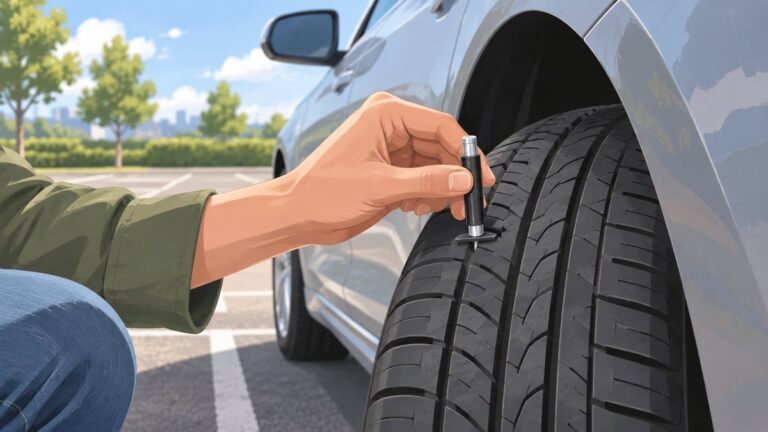
1Clear out junk files and repair common Windows errors2Scan for outdated or missing drivers - takes under a minute3Repair Windows errors before they cause bigger problemsA small soft magnet can help flag possible body filler on a used car: if it stops sticking to a panel that should attract it, filler may be underneath. That result is only a clue, not proof of a crash or a bad repair. Panel materials and the filler itself can make the test misleading, so use it to decide what deserves a closer look—not whether to buy.
What the magnet can—and cannot—tell you
Body filler is used to smooth repaired or uneven bodywork. On a steel panel, a magnet may stick to the surrounding area but not to a spot where nonmagnetic filler lies between the magnet and the metal. New Zealand’s Waka Kotahi NZ Transport Agency describes this limited check and cautions that filler containing iron dust can defeat it: used-car buying guidance.
A weak or absent attraction does not establish that the car was in a collision, when or why a repair was made, or whether the repair is safe. Consumer Reports notes another important limitation: plastic and fiberglass panels will not attract a magnet, whether or not they contain filler. Confirm that the area is a material that should attract a magnet before drawing any conclusion.
How to make a cautious check
- Bring a small soft magnet. NSW Government’s used-vehicle inspection checklist suggests a soft fridge magnet for checking panels for plastic body filler: vehicle inspection checklist.
- Compare like with like. Check similar areas on the same kind of panel, where the body material should attract the magnet. Do not interpret a result on a plastic or fiberglass panel as evidence of filler.
- Notice changes, not just a single spot. If attraction weakens unexpectedly in one area of an otherwise magnetic panel, treat that as a reason to inspect the panel more closely. Do not scrape or pry at the paint.
- Ask and verify. Ask the seller whether the panel has been repaired and request any available repair records. Have an independent inspector assess any concern before purchase.
Look for other clues, but treat them as clues
A magnet result is more useful when considered alongside visible signs of repair. NSW Government recommends checking for dark stains, dimpled paint, or bubbled paint in the boot, floor wells, doors, and lower sills. Consumer Reports also identifies mismatched panels, uneven gaps, paint overspray, and doors, hoods, or trunks that do not close or seal properly as reasons to look more closely.
The Tool Desk
Outbyte PC Repair FREERepair Windows errors before they cause bigger problemsFix Now →Outbyte Driver Updater FREEFix the driver behind crashes, sound loss and screen glitchesFind Drivers →#1 Best Overall
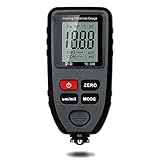
- Auto-Detection for Steel and Aluminum Coatings:This Coating Thickness Gauge utilizes advanced dual technology to automatically recognize ferrous and non-ferrous substrates, making it easy to measure coating thickness on both steel and aluminum without any guesswork
- Ideal for automotive paint inspection, powder coating checks, and metal surface finishing. Commonly used on used cars, anodized aluminum, bathroom fittings, bike frames, stadium seats, lockers, appliances, and more. (Note: Designed for metallic surfaces only.)
- A Must-Have for Used Car Buyers:Don't let hidden repairs catch you off guard. This tool lets you check the paint thickness on each car panel, helping you spot any previous accidents or repairs before buying a used vehicle
- Save Money on Used Car Purchases:When buying used cars, this paint thickness gauge helps you identify potential issues by ensuring the paint thickness is consistent across all panels. Great for detecting accident repairs and verifying if the car has been in a heavy crash
- Important Note: Please note that this gauge is specifically designed to measure coating thickness on metal substrates. It cannot be used on non-metallic materials such as plastic, fiberglass, or wood.
None of these observations alone diagnoses hidden damage or proves a repair is unsafe. A professional inspection is needed to assess the vehicle and the quality of any repair.
Cosmetic filler is not the same question as structural safety
Filler on a body panel may indicate past bodywork, but spotting it does not tell you whether a structural repair is sound. The UK MOT inspection manual says repairs to structural components should appear as strong as the original design, while noting that paint or underseal can make repair methods difficult to identify. Those are UK inspection standards, not a universal legal rule; the broader point for a buyer is that a surface check cannot establish structural integrity.
Rank #2

- 【Auto-ID Dual Tech & Material Note】This paint depth gauge automatically identifies Fe/NFe substrates without manual switching. The device is specifically designed for metal substrates and is not suitable for plastic, carbon fiber, or wood. It is ideal for detecting heavy paint on car bodies, boat hulls, and industrial steel structures to ensure accurate readings.
- 【High Precision & Wide Range】Equipped with a wear-resistant probe, this coating thickness gauge delivers lab-grade stability across a 0-78.7 mils (0-2000μm) range. It features high resolution of 0.004 mil / 0.1μm for 0-3.9 mils (0-99.9μm) and 0.04 mil / 1μm for 3.9-78.7 mils (100-2000μm), accurately detecting minute changes in powder coatings or anodized layers. With a measurement accuracy of ≤ ±(3% H+ 2μm / 0.079mil), it ensures reliable results for professional tasks, from measuring paint on curved bumpers (min radius 5mm/197mils) to verifying films on machinery.
- 【Single/Continuous Scan Mode】This paint meter offers more than just single scans by displaying real-time statistics (Avg, Max, Min) of the last 10 measurements in continuous scanning mode. Users can quickly identify uneven spraying on hoods or thickness variations in industrial furniture powder coatings through statistical data. This method reflects overall process quality better than single-point measurements.
- 【Data Storage & USB Output】This digital thickness gauge features a "Data Hold" function to lock readings after measuring in deep engine bays or narrow gaps. It is equipped with a Type-C interface that supports exporting 30 sets of stored data to a PC for generating professional inspection reports. This capability is perfect for creating check reports for used car sales or quality control logs.
- 【Smart Calibration & Ergonomics】This mil thickness gauge comes with Fe/NFe calibration foils and substrates for zero-point and thickness calibration before work. Operators must ensure no dust, wrinkles, or irregularities exist between the thickness standard sheet and the substrate during use. Pressing the OK key allows users to clear historical calibration records easily.
Why an independent inspection matters more
The magnet is a quick, material-dependent screening clue. An independent professional inspection can assess the car more broadly and provide a written report. Waka Kotahi advises buyers to insist on a full professional inspection before buying any used car. In the United States, the Federal Trade Commission likewise says a vehicle-history report is not a substitute for an independent mechanic’s inspection and recommends getting the inspection in writing: FTC guidance on buying a used car.
A history report can be useful background, but it cannot replace a physical inspection. If a magnet check or visible clue raises a concern, make the purchase decision only after an independent inspector has assessed it.
Quick Recap
Best Value

- (*^_^*) [Record Various Data] It can record the average value, maximum value, minimum value, dif at the same time, and supports up to 50 data for statistics, making the numerical data you measure more accurate and convenient. If the auto power off function is on and there is no for 3 minutes, the instrument will automatically shut down to save battery power.
- (*^_^*) [Multifunctional] Thickness gauges are used to measure the thickness of metal coatings and other coatings such as paint/enamel/chrome on steel, paint and anodized coatings on aluminum/copper. Automatic detection of substrate properties. It has small size and high precision battery level indicator. It also has automatic shutdown function, used for FE/NFE.
- (*^_^*) [Precision Integrated Probe] It is important to check the car paint to make sure the paint thickness is about the same on each panel and to determine if the car is in good condition with a car paint inspection thickness gauge when you buy the car. The instrument adopts the principles of electromagnetic induction (F probe) and eddy current effect (N probe) to automatically detect the properties of the substrate.
- (*^_^*) [What Can Be Read and Detect Paint Depth] The large LCD display of the paint depth gauge shows the metal type, operating mode, quantity, battery status and the reading in µm, mm or mils. The thickness gauge has a measurement range of 0-2000um, an accuracy of ±(3%+1um), and a resolution of 0um-999um (1um).
- (*^_^*) [Widely Uses] It is used to non-destructively measure the thickness of coatings and paints. It is an essential equipment for material surface treatment, widely used in manufacturing, metal processing industry, chemical industry, commodity inspection and other fields, and can also work stably in laboratories, workshops and outdoors. Suitable for automotive paints, powder coatings, anodized aluminum, bathroom accessories, bicycle frames, stadium seating, outdoor sheds, furniture, swings, c
Rank #4

- Accurate Paint Thickness Measurement: Quickly and precisely check your car’s paint thickness to detect any previous repairs or repainting, helping you make informed decisions when buying used vehicles.
- Magnetic Tip, No Batteries Needed: Designed with a magnetic tip, this paint thickness tester works reliably without batteries, perfect for outdoor use in any weather—even on dirty or wet surfaces.
- Micrometer-Level Precision: Equipped with a color-coded scale, this gauge lets you easily read the thickness of paint and filler layers for thorough vehicle inspections.
- Portable and Durable Design: Lightweight and pen-shaped, this gauge is easy to carry and made from high-quality materials, making it perfect for on-the-go inspections stored conveniently in your glove box or tool kit.
- Versatile Application: Whether you’re a professional appraiser, a used car buyer, or inspecting your own vehicle, this paint thickness tester is a must-have tool to detect hidden bodywork and ensure vehicle integrity.
Rank #3

- HIGH ACCURACY — READY TO USE FOR CAR INSPECTION: Professional paint thickness gauge with factory-calibrated accuracy for automotive inspection. Delivers precise measurements immediately after battery installation — no calibration required for car body checks. Resolution 0.1 μm (0.01 mils), range 0–1500 μm (0–59.1 mils).
- EASY & FAST OPERATION — NO SETUP REQUIRED: Automatic substrate detection and pre-set factory calibration allow instant use out of the box. Large backlit LCD and intuitive controls make this coating thickness meter ideal for both professionals and first-time users.
- AUTOMATIC Fe / NFe / Fe+Zn SUBSTRATE DETECTION: Automatically recognizes steel (Fe), aluminum (NFe), and galvanized steel (Fe+Zn). Fe+Zn detection helps identify replaced or non-original car body panels during used car inspection.
- DESIGNED SPECIFICALLY FOR AUTOMOTIVE INSPECTION: Accurately evaluates paint thickness, repainting, and filler presence on metal car panels. Ideal for used car buyers, vehicle appraisers, body shops, and detailing professionals.
- DUAL MEASURING TECHNOLOGY FOR METAL SURFACES: Uses magnetic induction for ferrous metals and eddy current technology for non-ferrous metals, ensuring stable and repeatable measurements on steel, aluminum, and copper substrates.
Product prices and availability are accurate as of the date/time indicated and are subject to change. Any price and availability information displayed on Amazon at the time of purchase will apply.