Outdated Drivers Are Slowing You Down
One free scan finds every outdated or missing driver and matches the right update for your exact hardware.Free scan · exact hardware matchPC Slower Than It Used to Be?
A free scan shows the junk files, broken settings and background clutter dragging Windows down - then fixes them in one click.Free scan · Windows 10 & 11The safest and most economical way to electrify a New South Wales business fleet is to replace vehicles in measured waves: map each vehicle’s duty cycle, compare whole-life cost, pilot battery-electric vehicles (BEVs) that fit the work, install charging around real shift patterns, then scale only after the data confirms range, payload, uptime and cost assumptions. NSW support can reduce vehicle and charger costs, but eligibility, allocations and closing dates change.
Why NSW businesses are moving fleet vehicles to electric
Electric fleet decisions are becoming a mainstream operating issue rather than a niche sustainability project. NSW Government reporting says electric vehicles represented 8.9% of new light-vehicle sales in 2025, up from less than 1% in 2020. The state retains a target for battery-electric vehicles to make up 50% of new car sales by 2030 and has expanded fleet-incentive eligibility to medium trucks up to 23 tonnes.
As an Amazon Associate I earn from qualifying purchases.
Commercial fleets account for more than half of new vehicle sales in Australia. That gives fleet operators influence over the used-vehicle market as ex-fleet vehicles are resold, while also exposing them to fuel-price volatility, maintenance scheduling and emissions requirements from customers and government contracts.
NSW Climate and Energy Action estimates that an average NSW fleet driver can save about $3,100 a year in running costs after switching to an EV. This is a government estimate, not a guaranteed saving: kilometres, electricity tariffs, charging efficiency, vehicle choice, maintenance practice and financing determine the result for a particular business.
#1 Best Overall

- Charge with Confidence: ChargePoint builds reliable, flexible EV charging stations for home, business, and fleets. Get 24/7 support and access to hundreds of thousands of North American charging locations.
- Charge Smart: With the user-friendly ChargePoint Mobile App, you can control your electric car charger, manage reminders, connect to smart home devices, find stations, get data and charging info, and access the latest features. Note: WiFi is needed for certain functionalities and troubleshooting steps if connectivity issues arise.
- Vast Network: Wherever you go, ChargePoint’s network includes 274k+ stations across North America and Europe and 565k+ roaming partner stations.
- Safe & Durable: Rely on this UL-certified EV charger for safe home charging. It can be installed indoors or outdoors by an electrician and includes a cold-resistant cable.
- Fast & Powerful: This EV charger charges 9× faster than a 120V outlet, delivering up to 45 mi/hr., dependent upon your vehicle. It features a J1772 connector for all non-Tesla EVs and requires a 20A or 80A circuit. For Tesla EVs, this will require an adapter.
What counts as an electric fleet vehicle in NSW programs
The NSW EV Fleets Incentive is focused on battery-electric vehicles (BEVs). Fuel-cell electric vehicles (FCEVs) and plug-in hybrid electric vehicles (PHEVs) are not eligible under the incentive. A funded BEV may replace an internal-combustion vehicle (ICEV), a conventional hybrid (HEV) or a PHEV, subject to the program rules.
Vehicle classes and weight limits matter. The published incentive bands cover eligible passenger and SUV vehicles, light commercial vehicles below 2.5 tonnes, light commercial vehicles from 2.5 to 3.5 tonnes, and eligible heavy vehicles up to 23 tonnes. Confirm that the exact make, model, variant, gross vehicle mass and registration category appear on the current NSW eligibility list before signing a purchase or lease contract.
A practical transition sequence
1. Build a vehicle-and-route inventory
Start with twelve months of operating data if it is available. For every vehicle, record:
- Vehicle type, gross vehicle mass, payload, towing requirement and replacement date.
- Typical and maximum daily kilometres, route elevation, traffic conditions and seasonal extremes.
- Departure and return times, time spent at depots, overnight parking location and number of shifts.
- Whether the vehicle routinely returns to base or needs public charging during a route.
- Idle time, refrigeration or auxiliary loads, and any equipment that draws energy while parked.
- Current fuel, servicing, tyre, registration, insurance and downtime costs.
Use the hardest realistic day, not the average day, when checking range. A van that completes 180 kilometres on a mild weekday may not have enough reserve for a 220-kilometre winter route carrying a full payload. Mark vehicles with predictable, return-to-base duty cycles as early pilot candidates.
2. Compare whole-life cost, not sticker price
NSW guidance notes that an EV can cost more to buy while costing less to operate over its holding period. Compare each BEV with the petrol or diesel vehicle it would replace using the same ownership or lease term. Include:
| Cost or risk | Questions to answer |
|---|---|
| Acquisition | What is the purchase price, lease payment, stamp duty, registration and financing cost after any eligible incentive? |
| Energy | What electricity tariff, charging loss and public-charging rate apply to the route? What fuel price and consumption baseline are you replacing? |
| Maintenance | How do scheduled services, consumables, tyres and brake wear differ? What does the local service network cover? |
| Infrastructure | What are the electrical-upgrade, charger, civil-works, software, metering and ongoing network costs? |
| Downtime | How long will charging, servicing or a failed charger keep a vehicle unavailable, and what is the cost of a substitute vehicle? |
| Residual value | What resale or end-of-lease assumption is defensible for the intended term, rather than an optimistic forecast? |
| Funding | Which vehicle and charger incentives apply, and what evidence, deadlines and reporting obligations attach to them? |
Run a conservative, expected and high-cost case. A fleet that only works financially under the lowest electricity tariff and highest resale value is not ready for a full conversion.
3. Pilot vehicles with compatible duty cycles
Choose a small pilot whose routes fit the available range and charging windows. Measure actual energy use, state of charge on return, payload, weather effects, driver acceptance, charger uptime and maintenance events. NSW’s kick-start pathway is intended for smaller eligible pilots; larger procurements generally move through competitive bidding.
The Tool Desk
Outbyte Driver Updater FREEScan for outdated or missing drivers - takes under a minuteDriver Scan →Outbyte PC Repair FREEClear out junk files and repair common Windows errorsFree Scan →Set a written go/no-go threshold before delivery. For example, require every pilot vehicle to complete its planned shift with an agreed reserve, charge within the scheduled window and maintain an uptime level comparable with the vehicle it replaces. Do not expand because drivers like the vehicles or because a grant is available; expand when operational data supports the business case.
Rank #2

- [Up to 9x Faster Charging Speed]: Provides up to 46 miles/hour charging speed via hardwired connection (48 amp - up to 9x faster than a standard wall outlet) or up to 38 miles/hour via the NEMA 14-50 plug (40 amp). Professional installation recommended for optimal safety and performance. [Install The Power Outlet Cord]: No smaller than 8AWG if charge 40-48A, we suggest 6AWG cord.(1.The input side is belongs to the electrician electric automobile regulation scope, need to use three 6AWG cable wires for 48A; 2.The charging cable belongs to the automotive connector certification standard, so the 8AWG cable can meet the 48A.)
- [DESIGNED WITH J1772 Connector for All North America j1772 Connector EVs/PHEVs. Not fits for Tesla/Nacs Connector Cars(j1772 to Tesla adapter needed)]: Compatible with Tesla cars (Adapter needed, not included), Ford, GM, Audi, Kia, Honda, Kia, Hyundai, Gmc, Chevrolet Bolt, VW ID 4, Nissan Leaf, Ford Mustang Mach-E, IONIQ 5 2024 and before, BMW i3, i4, iX, Jeep Wrangler 4xe, etc. [Not fits for Nac connector cars-Kia EV6 2025/EV9,Ariya 2025&2025 loniq 5(J1772 to Tesla adapter needed)]
- [Safety & Faster Charging with ETL, FCC, Energy Star Certified]: Meets the Safety Criteria Defined by: SAE J1772, UL2231-1/-2, UL 991, UL 2231, UL 2251, UL1998 and UL 2594. (ETL and FCC certified EV car charger with 3-year Warranty)
- [Plug-play Mode(The Default Setting), Smart Touch Screen, No APP Needed]: Clearly show the charging amperage, charging speed, input voltage, delay time, etc. For the touch buttons: 1. Pull out the charging gun before press the buttons, otherwise no respond; 2. Long press "Ⓐ" or "Time" button to enter the setting interface, then you can adjust the amperage from 16A to 48A freely or Set the charging start time; 3. You can do "factory reset" if doesn't charging.
- [Smart WIFI APP, You can Set the Charging Period]: By APP, you can wirelessly check the charging cost, history, fully-charged notification, track the charging status, during off-peak period, etc. [Wi-Fi Reset/Factory Reset Function, Add New Device Quickly]: If you can't find your device or you have replaced a new phone, just pull out the charging latches, simultaneously long press the Ⓐ button and time adjustment button on the product screen until it shows "Factory Reset", then wait 3-5 seconds and re-start your device.
4. Assess the depot and home-charging network
Obtain an electrical-capacity assessment before ordering hardware. The assessment should cover the incoming supply, switchboard capacity, spare capacity at peak demand, cable routes, parking layout, fire access, communications coverage, metering and the likely number of future chargers.
For vehicles parked overnight, AC charging is often the simplest arrangement. DC opportunity charging may be justified where vehicles have short turnaround times, high daily kilometres or multiple shifts. The correct mix depends on vehicle batteries, power supply and daily operations, so have a qualified installer design the system rather than selecting chargers from a catalogue alone.
5. Write procurement requirements around the job
Ask suppliers to respond to a common specification. Include:
- Usable battery capacity and a duty-cycle range margin under local conditions.
- Payload after any fixed charging or refrigeration equipment, towing rating and body configuration.
- AC and DC charge rates, connector type, charging curve and compatibility with the proposed software.
- Vehicle and battery warranty, roadside assistance, servicing locations, parts availability and repair turnaround.
- Safety ratings, driver-assistance systems, visibility, ergonomics and load restraint arrangements.
- Telematics access, state-of-charge data, application programming interface availability and data ownership.
- Whole-life cost, residual-value assumptions and the effect of grant conditions on the transaction.
6. Train, monitor and expand in waves
Drivers need practical instruction on efficient acceleration, regenerative braking, pre-conditioning, charging etiquette and what to do when a route changes. Maintenance staff need high-voltage isolation procedures, personal protective equipment requirements and a clear boundary between trained work and specialist repairs.
Track kilometres, kilowatt-hours, charging cost, charging duration, state of charge at departure and return, missed shifts, public-charging use, maintenance and driver feedback. Review the data monthly during the pilot and before each expansion wave.
NSW fleet funding available in 2026
Funding terms can change during a financial year. The following reflects the published FY26 information and should be checked on the relevant NSW Government pages immediately before an application or purchase.
| Pathway | Who it suits | Published scope and timing |
|---|---|---|
| Kick-start FY26 | Eligible ABN holders with an existing NSW fleet undertaking a smaller conversion or pilot | Up to 15 BEVs, with optional smart chargers. The FY26 page lists applications through 30 November 2026. The program overview states a $9 million allocation and that a waitlist is in place. |
| Competitive bid, round 7 | Larger fleets and leasing or aggregator applicants | Business.gov.au lists a requirement for at least 21 fleet vehicles and an application for at least 11 brand-new BEVs. The initial closing date for round 7 was 16 October 2026; confirm whether any extension or later round is available. |
The competitive-bid stream includes an aggregator option for leasing businesses. It is not a general invitation to claim support for any fleet size: the stated fleet and new-vehicle thresholds apply.
Free tools Windows power users keep installed
One-click scans. No signup required.
How much support can cover vehicles and chargers
Published vehicle incentive bands are:
| Eligible vehicle category | Published incentive |
|---|---|
| Passenger and SUV vehicles, and light commercial vehicles below 2.5 tonnes | $5,000 |
| Light commercial vehicles from 2.5 to 3.5 tonnes | $8,000 |
| Eligible heavy vehicles up to 23 tonnes | $10,000 to $50,000, depending on the vehicle class and program rules |
Charging support varies by vehicle class and by AC or DC charger type. The published material includes contributions of up to 50% for eligible DC chargers. Do not assume that a charger qualifies merely because the vehicle does; check the hardware, installation, site and evidence requirements for the specific stream.
Rank #3
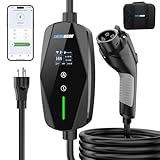
- 📱【2026 SMART CHARGING — FULL CONTROL, ZERO GUESSWORK】Built for modern EV owners, The Level 1 ev charger features adjustable current settings and intelligent scheduling via the mobile app. Easily set charging times, manage power output, and optimize energy usage—whether charging overnight or during off-peak hours. Smarter charging means lower costs, safer operation, and complete convenience on your schedule
- 🚗【ONE CHARGER, ALL J1772 EVs & PHEVs READY】Compatible with all SAE J1772 electric vehicles and plug-in hybrids. Designed to work seamlessly with most EV brands including Ford, GM, Nissan, Audi, BMW, Kia, Hyundai, Honda, Chevy, and more. Ideal for both home and on-the-road charging, this 16A portable Level 1 & Level 2 charger keeps your EV ready for every journey.
- 🔌🔌【LEVEL 1 & 2 PORTABLE EV CHARGER — CHARGE ANYWHERE】Designed for everyday flexibility, this portable EV charger supports both NEMA 5-15 outlets and NEMA 6-20 adapter. Charge at home, at a friend’s house, or while traveling. Level 2 (240V, 16A): up to 3.68kW, approx. 9–12 miles/hour Level 1 (120V): automatically limits current to 12A for safe household use,Smart current management protects your vehicle and your home’s electrical system.
- 🖥️📊【LCD SCREEN + SMART APP — REAL-TIME CHARGING INSIGHT】Unlike basic chargers that hide key data, this portable EV charger features a clear LCD screen and smart app control. Instantly view voltage, current, charging power, energy usage, and temperature—on the charger or remotely from your phone. One glance gives you full confidence and control over every charge.
- 🛡️【BUILT FOR SAFETY, DESIGNED TO LAST】Engineered with multiple safety protections—including over-temperature, over-current, over-voltage, and short-circuit protection. The intelligent control box continuously monitors charging status in real time. Rated IP65 for water resistance and built with flame-retardant materials, this charger is ready for daily use in any environment
Eligibility checks before you commit
Kick-start generally requires at least three existing NSW vehicles, unless the applicant uses a stated licensed taxi or truck pathway. The fleet must have operated for at least six months and be expected to continue for three to four years. Incentivised vehicles must be registered and used predominantly in NSW.
Check these conditions before placing a non-refundable order:
- The applicant’s ABN, business structure and NSW operating presence meet the current program definition.
- The existing-fleet count and operating history can be evidenced.
- The proposed BEV is in an eligible category and is replacing an allowed vehicle type.
- The vehicle will be registered, garaged and used predominantly in NSW for the required period.
- The purchase, lease, registration, charger installation and reporting dates fall within the program timetable.
- You can retain registration certificates, invoices, contracts, charger specifications and payment records.
A historical NSW purchase-rebate page records a 2023 closing period. It should not be treated as a current open rebate.
Designing depot, home and public charging
Depot charging
Map parking bays against shift departures so a vehicle is not blocked by another vehicle that has finished charging. Decide whether each bay needs dedicated charging, shared power, or a scheduled rotation. Smart load management can reduce the need for a larger supply upgrade by allocating available power across vehicles according to departure time and required state of charge.
Employee-home charging
Home charging can make sense for take-home vehicles, but the business needs a documented reimbursement method. Agree who owns the charger, who pays for installation, how electricity use is measured, what happens when an employee moves house and how a charger is removed or transferred. A fixed allowance without a defensible usage basis can hide the real energy cost.
Public charging as resilience
Public charging should be treated as planned operational capacity, not an emergency assumption. Identify compatible sites on regular routes, opening hours, payment method, maximum dwell time and alternatives if a charger is occupied or offline. Keep a route-specific fallback plan for long-distance or multi-shift work.
Hardware and compliance questions
Before accepting a proposal, confirm connector compatibility, power rating, communications, software access, user authentication, metering, warranty, service response and Australian electrical compliance. Require commissioning records and an escalation contact for both the charger and the energy-management platform.
Operating procedures and safety
Daily charging procedure
- At vehicle return, record odometer, state of charge, damage and any warning message.
- Connect the approved cable, verify that charging has started and check the scheduled departure in the charging system.
- Report a failed session immediately rather than leaving the vehicle overnight without confirmation.
- Before departure, confirm state of charge against the route plan and disconnect safely.
- Use the nominated public-charging fallback when the depot cannot deliver the required energy.
Incident response
Write procedures for collision damage, water exposure, smoke, unusual heat, isolation of a damaged vehicle and escalation to emergency services and the manufacturer. Drivers should not open battery enclosures or attempt high-voltage repairs. Mark parking and isolation areas so a damaged vehicle can be separated from the operating fleet.
Rank #4

- WORKS WITH EVERY NON-TESLA EV: Standard J1772 connector plugs straight into Ford, Chevrolet, Hyundai, Kia, Nissan, BMW, Volkswagen, Audi, Rivian, Lucid and every other EV or plug-in hybrid sold with a J1772 port - no adapter needed. Tesla drivers can charge too, using the J1772 adapter that comes with the car.
- PLUG IN, NO HARDWIRING: Level 2 charger delivers up to 40A to fully charge most EVs overnight. Plugs into a 240V, 4-prong NEMA 14-50 outlet (the RV/range type - NOT a dryer outlet) on a dedicated 50A circuit. The extra-long 25 ft cable easily reaches across a garage or driveway. Before ordering, check your car's port type and that you have the right outlet.
- CONTROL & SAVE FROM YOUR PHONE: A stronger built-in antenna keeps the charger online even in a garage or basement. Use the free app to start/stop charging, set speed (6-40A), get reminders, and track energy use and cost. Schedule off-peak overnight charging to cut your electric bill. Requires 2.4 GHz WiFi.
- SAFETY-CERTIFIED & WEATHERPROOF: Independently tested and certified (UL, ETL, FCC, Energy Star). A fully sealed IP66 / NEMA 4 housing stands up to rain, snow, heat and dust indoors or out, and internal steel shielding protects the electronics for years of reliable use.
- GLOW-IN-THE-DARK HOLSTER: The included high-visibility holster glows in the dark so you can find and dock the plug easily at night. Holds the connector securely when not in use.
Maintenance planning
EVs still require tyres, suspension, steering, brakes, cabin filters, inspections and software updates. Regenerative braking may change brake-wear patterns, but it does not remove inspection requirements. Confirm which work your own technicians can perform and which tasks require an authorised high-voltage technician.
Common failure modes and fixes
The vehicle runs short of range
Check payload, speed, weather, heating or cooling loads, tyre pressure, route elevation and traffic before concluding that the battery is undersized. Add a route reserve, adjust charging times or select a vehicle with more usable capacity. Do not solve a small number of exceptional routes by over-specifying every vehicle.
The depot cannot charge all vehicles overnight
Measure actual arrival state of charge and departure requirements, then model simultaneous demand. Smart scheduling, staggered departures, additional connection capacity or a mix of AC and DC chargers may solve the constraint. A qualified electrical assessment should precede any switchboard or supply upgrade.
Do these 3 things before closing this tab:
1Scan for outdated or missing drivers - takes under a minute2Repair Windows errors before they cause bigger problems3Fix the driver behind crashes, sound loss and screen glitchesChargers are installed but drivers avoid them
Investigate bay access, cable length, authentication steps, unclear ownership and vehicles arriving in the wrong order. Assign responsibility for moving fully charged vehicles and publish a simple fault-reporting path. Monitor successful sessions rather than relying on charger nameplate power.
The grant claim is rejected or delayed
Typical causes include an ineligible vehicle variant, a purchase outside the approved window, missing registration evidence, incomplete charger invoices or failure to meet reporting obligations. Keep a grant file for each vehicle and charger, and obtain written confirmation before making assumptions about eligibility.
A staged implementation plan
| Stage | Key output | Decision to make |
|---|---|---|
| Weeks 1–4 | Vehicle inventory, route data, replacement schedule and baseline costs | Which duty cycles are technically suitable for a pilot? |
| Weeks 5–8 | Vehicle shortlist, whole-life cost cases and funding pre-check | Which vehicles meet payload, range, safety and financial thresholds? |
| Weeks 6–12 | Electrical assessment, charger design, home-charging policy and public fallback map | Can the site deliver the required energy without unacceptable upgrade cost? |
| Months 3–6 | Pilot vehicles, trained drivers, maintenance procedures and baseline dashboard | Do real-world uptime, energy use and route completion support expansion? |
| Each expansion wave | Updated procurement, charger capacity and operating data | Which vehicle group should be converted next, and what must change first? |
What a robust business case should contain
Present management with the route evidence, not only a sustainability target. Include the replacement list, duty-cycle suitability, vehicle and charger quotes, electricity assumptions, maintenance and downtime costs, incentive scenario, financing or lease treatment, residual-value assumption, electrical-upgrade risk and a contingency for public charging.
Separate facts from assumptions. Label the $3,100 NSW running-cost figure as a government estimate and replace it with your own measured energy and maintenance data as soon as the pilot begins. Show what happens if electricity prices rise, a charger is unavailable, a vehicle needs an unscheduled repair or a route gains additional payload.
What’s actually slowing this PC down?
Pick the symptom - the matching free tool is one click away.
The strongest NSW fleet programs therefore combine three disciplines: a route-level engineering decision about whether a BEV can do the work, a financial decision based on whole-life cost, and an implementation decision that protects uptime while charging infrastructure is expanded. Apply for the appropriate NSW pathway only after those three decisions are documented, and recheck the current program pages for waitlists, eligible models, charger rules and dates before committing funds.
Quick Recap
Product prices and availability are accurate as of the date/time indicated and are subject to change. Any price and availability information displayed on Amazon at the time of purchase will apply.




