The best track-day setup starts with a healthy, street-reliable car, not a long list of performance parts. Confirm the organizer’s rules, inspect the car, prepare tires and brakes for heat, document a sensible alignment, secure loose items, and bring approved safety equipment. Only then should you consider suspension, seats or power upgrades.
There is no universal track-day tire pressure, camber setting or brake specification. The correct values depend on your chassis, tire, weather, circuit and event format. Use the manufacturer’s limits and your event’s technical rules as the boundaries, then make small, recorded changes based on what the car and tires are doing.
As an Amazon Associate I earn from qualifying purchases.
What a lightweight sports car actually needs for a track day
A lightweight sports car already has useful advantages: lower mass reduces brake and tire load, and a responsive chassis makes it easier to learn a circuit. Those advantages disappear if the car overheats, loses brake pedal, runs on damaged tires or arrives with unsecured equipment.
Quick wins for a faster PC:
Scan for outdated or missing drivers - takes under a minuteDriver Scan →Clear out junk files and repair common Windows errorsFree Scan →For a first event, reliability and heat management are worth more than extra horsepower. Tires, brake pads and fluid are consumables; choose them for the car, the weather and the circuit rather than buying the most aggressive option. Alignment is usually the highest-impact chassis adjustment, but it must be set for your specific suspension and intended use.
#1 Best Overall

- Accurate, Dependable Readings: Factory‑calibrated to ±1 PSI, so you can confidently match your vehicle’s recommended PSI (check the door jamb sticker). Ideal for monthly checks and road trips — consistent results every time, cold or warm.
- Bright Backlit Display & Nozzle Light: The illuminated nozzle helps you find the valve stem in the dark, while the backlit LCD makes readings crystal clear in dim garages or at night. No more squinting or holding a flashlight.
- 4 Measurement Units, One Button: Quickly switch among PSI, Bar, Kgf/cm², and KPA with a single press. No complex settings — just press and cycle to your preferred unit. Perfect for drivers who need multiple scales.
- Broad Compatibility for Everyday Vehicles: 0–150 PSI covers cars, SUVs, motorcycles, and spare tires (often 60 PSI). Fits standard Schrader valves; just press on for a reading.
- Auto‑Off to Extend Battery Life: The gauge automatically powers down after 30 seconds of inactivity, so the included 2*AAA batteries last longer. Always ready for your monthly checks without surprise dead batteries.
Sports Car Club of America onboarding guidance puts the minimum plainly: “Truly, all you are required to have is your driver’s license, your car in good working order, and a helmet.” That is a minimum to participate, not a substitute for a careful inspection or for additional equipment required by a particular organizer.
Confirm the event rules before changing the car
“Track day” can mean a relaxed instructional session, a high-performance driving education (HPDE) event, a time trial or a wheel-to-wheel race. The technical requirements and risk level are different. Download the current event rules and technical inspection form before you order parts.
Rules that commonly change your preparation
- Helmet standard: Confirm the exact certification accepted and whether an expiration date or current-label requirement applies.
- Sound limits: Some circuits measure drive-by or static noise. An exhaust that is acceptable on the road may fail the circuit’s limit.
- Passing procedure: Learn where passing is allowed, which side is used and what signals are required.
- Open-car requirements: Convertibles may need a compliant rollover structure, arm restraints or a roof-up policy.
- Restraints and fire systems: Competition classes can require harnesses, roll protection, a fire-suppression system or other equipment that a casual HPDE does not.
- Vehicle classification: Time-trial and race categories may impose tire, aerodynamic, engine or interior rules.
SCCA’s nationally run Track Night program has hosted events at more than 30 tracks between March and October according to its program page. The schedule and individual track rules can change, so verify the current event listing rather than assuming one program’s requirements apply everywhere.
Inspect the car before spending on upgrades
Begin with a cold car on level ground. A professional inspection is sensible if you do not routinely service your own vehicle; a track session exposes weaknesses that ordinary commuting may never reveal.
Fluids, leaks and basic operation
- Look for engine-oil, coolant, fuel, power-steering and brake-fluid leaks. Clean the underside if necessary so a fresh leak is visible.
- Check engine-oil and coolant levels using the procedures in the owner’s manual. Do not overfill either system.
- Verify that brake lights, headlights, turn signals and hazard lights work. Instructors and following drivers rely on them.
- Inspect belts, hoses, radiator condition and the coolant reservoir for cracks or signs of pressure loss.
- Check that the battery is securely clamped and that terminals are tight.
Brakes, steering and suspension
- Measure brake-pad thickness on every wheel, not just the easiest wheel to see. Uneven wear can indicate a sticking caliper or another fault.
- Inspect rotors for deep grooves, cracks, a pronounced lip or heat damage. Replace parts that are outside the vehicle manufacturer’s service limits.
- Examine flexible brake hoses for cracking, bulges or abrasion and check hard lines for corrosion.
- Check wheel bearings for play or roughness, and inspect ball joints, tie-rod ends, bushings and dampers.
- Look for bent wheels, damaged springs and leaking shock absorbers.
- With the car safely lifted, turn the steering through its range and check for binding. Never work under a car supported only by a jack.
SCCA vehicle guidance for competition-level participation requires brakes, steering and suspension to be in good working order. Treat that as a useful baseline even when your event is not a race.
Rank #2

- PRO ACCURACY - mechanic recommended, performance tested, & calibrated accurate to professional ANSI 2A standards - with dual pressure sensors certified to ±0.50% FS (0.50 PSI), offering reliable readings up to 100 PSI w/ precise readout resolution of 0.10 PSI - so you can now maintain your tires with a shop-grade mechanic trusted tool
- STRONG & RUGGED - feels solid in the hand & built to last from 100% solid brass & steel parts shielded by our shock-resistant gear-style protective guard to protect against drops & impact. Features ultra soft & strong 10" fully rotational, leak-proof HybridFlex air hose w/ 360 swivel angled air chuck that can be swapped out w/ any 1/4" NPT chuck
- ADVANCED ENGINEERING - all readings lock-on to the display until the "ON" button is pressed once to reset to zero. Features built-in air bleeder valve that bleeds pressure in real time without needing to reset the display - ideal for cars, trucks, motorcycles, bikes, RV & trailers, spare tires, and much more
- SMART DISPLAY - features high-resolution digital 2.5 inch LCD display screen w/ battery life indicator & bright LED backlight for high visibility in the dark. Gauge is programmed to auto shut-off after 150 seconds of inactivity to save battery (2x AAA batteries included)
- 100% Lifetime Warranty by JACO - serving the automotive industry for 35+ years. Enjoy longer-lasting tires, improved fuel economy, and superior vehicle performance & handling with properly inflated tires.
Wheels, tires and fasteners
- Check tire age, tread, sidewalls and speed rating. Replace tires with cuts, bulges, exposed cords or questionable history.
- Inspect the inside shoulder; it often wears out first when a street car is driven hard.
- Clean mating surfaces and torque wheel fasteners to the vehicle manufacturer’s specification with a calibrated torque wrench.
- Recheck torque after the first session or whenever a wheel has been removed.
Choose tires for the car, weather and circuit
A tire that is quick for one driver and track may be frustrating in cold rain or on a short session. Compare the characteristics that affect your actual event instead of treating treadwear as a complete performance ranking.
| Characteristic | Street-performance tire | 200-treadwear track-oriented tire |
|---|---|---|
| Wet performance | Usually the stronger compromise for rain and standing water, depending on the model and condition. | Can be less forgiving in heavy rain; confirm the manufacturer’s wet-weather guidance. |
| Warm-up behavior | Generally reaches useful grip across a wider range of road temperatures. | May need more heat before delivering its best response. |
| Heat tolerance | Suitable for moderate track use but can overheat when pushed continuously. | Often designed to tolerate more track heat, but still has a finite operating range. |
| Tread life | Usually better for mixed road and track mileage. | Typically wears faster under repeated track sessions. |
| Event legality | Accepted by most HPDE events. | May be restricted or assigned to a particular class in time trial or race rules. |
| Cost impact | Lower replacement frequency can matter for a dual-purpose car. | Higher consumption is part of the track budget. |
Use the tire manufacturer’s load, speed and pressure limits and the vehicle manufacturer’s fitment requirements. Never lower pressure below those limits because a forum post recommends a particular number.
Recommended Free Tools
Use a repeatable pressure routine
- Record each tire’s cold pressure before the first session, along with ambient temperature, tire model and date.
- Drive a moderate opening session rather than trying to find the limit immediately.
- Measure pressures as soon as you return to the paddock. Friction raises tire temperature and pressure, so a reading taken after the tires cool is not equivalent.
- Adjust in small steps, keeping the car within the tire and vehicle manufacturer’s limits. Change only one variable at a time when possible.
- Record the hot reading, the adjustment and how the car felt. Use the pattern across several sessions rather than chasing one number.
A reliable digital tire-pressure gauge is one of the most useful first purchases. A tread or infrared temperature check can add information, but it does not replace pressure records or a visual inspection for rollover and shoulder wear.
Prepare the brake system for repeated heat
Track braking turns stored chemical and mechanical energy into heat repeatedly. A road setup may have adequate stopping power yet still suffer fluid boil, pad fade or rotor damage after several hard laps.
Select pads by operating range and behavior
Compare pad temperature range, cold bite, modulation, rotor wear, dust, noise and compatibility with your calipers. A pad designed for very high temperatures can feel weak on the road before it warms up; an aggressive pad can increase dust and rotor wear. Make sure the pad is approved for your vehicle and has enough material for the event.
Rank #3

- PROCESS LEVEL ACCURACY: Each ETENWOLF’s digital tire pressure gauge is calibrated manually to ANSI B40.7 Grade 2A(plus-minus 1 PSI).Presta valve adapter not included, if used for bicycles, it must be purchased separately
- ACCURACY IN EXTREME PRESSURE RANGE: Whether tire pressure is below 12 PSI or above 140 PSI, ETENWOLF’s digital tire gauge is accurate as well
- ACCURACY IN EXTREME WEATHER: Built-in AI chip with thermal compensation inside, ETENWOLF’s tire gauge works normally even in extreme cold or hot weather(-4°F-130°F/-20°C-54°C)
- PRESSURE RANGE 3-200 PSI : ETENWOLF’s digital tire pressure gauge can measure pressure of all types of vehicles
- REPLACEABLE AAA BATTERIES: Batteries are easy to replace and helps to extend the tire pressure gauge’s life span, with LED light to illuminate dark areas for easy tire pressure reading
Refresh and bleed fluid when appropriate
Old fluid absorbs moisture and lowers the margin against boiling. Replace it when its age or condition is uncertain, after a long storage period, or when the manufacturer or inspection reveals contamination. Use a high-temperature fluid compatible with the car’s seals and the event’s requirements. An SCCA inspection form calls for clean, clear brake fluid and recommends DOT 4. Follow the fluid maker’s mixing and bleeding instructions; do not combine incompatible products casually.
Bed new pads correctly
New pads need the bedding procedure specified by their manufacturer before the event. Bedding transfers an even friction layer to the rotor and stabilizes the pad. Skipping it can produce uneven deposits, vibration or early fade. Do not improvise a procedure that conflicts with the pad instructions.
Inspect between sessions
- Check pedal feel and investigate any increase in travel immediately.
- Look for fluid leaks, cracked dust boots and abnormal pad wear.
- Do not spray water on hot brakes; rapid cooling can damage components.
- Use a cool-down lap with smooth braking before parking, unless an emergency requires an immediate stop.
Set alignment for the way you will use the car
A street car needs a compromise between road manners, tire wear and track response. Track use generally benefits from more negative front camber because the outside tire stays more upright during cornering, but too much can reduce braking contact or accelerate inner-edge road wear.
Understand the main alignment effects
- Camber: More negative camber can support cornering, while excessive negative camber can sacrifice braking contact and wear the inside shoulder.
- Toe: Front toe-out can sharpen initial turn-in; toe-in generally adds straight-line stability. Either choice affects tire scrub and wear.
- Caster: Additional positive caster can improve straight-line stability and create useful dynamic camber, but the available range depends on the chassis.
- Thrust angle: A rear alignment that is not centered can make the car feel as if it steers from the rear and can complicate tire-temperature readings.
SCCA Club Spec guidance emphasizes that alignment choices depend on intended use, with more negative front camber commonly selected for track work. It also notes the stability effect of toe-in and the sharper turn-in associated with front toe-out. Those are directional principles, not universal specifications.
Have the work measured and documented
- Choose a shop familiar with performance alignment and your chassis.
- Tell the technician how much road driving the car must retain, what tires you use and whether the event is HPDE, time trial or racing.
- Request a before-and-after printout showing camber, caster, toe and thrust angle.
- Confirm that steering-wheel centering and ride height are correct after adjustment.
- Keep the street and track settings recorded if your car uses adjustable hardware.
After the first event, inspect inner and outer shoulders and report any uneven wear to the shop. Tire evidence is more useful than copying another car’s alignment sheet.
Crashes, No Sound, or Screen Glitches?
Random freezes, missing sound and display glitches usually trace back to one bad driver. Find and replace yours safely.Free scan · under a minuteWindows Errors? Fix Them Before They Spread
Repair common Windows errors and clear accumulated junk for a smoother, more stable PC - no reinstall needed.Free scan · no reinstallRank #4
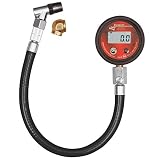
- This digital air gauge features a 2" face and includes a shock-resistant, protective bumper for long life and extra durability
- The pressure reading is always active with this digital air gauge, as it does not hold pressure and is user switchable to metric
- Features a 14" flexible hose and includes both an angle and ball chuck for added convenience and easy access to the tire valve from any angle
- The digital tire gauge contains an air pressure release button to drop your pressure to your desired level and reduce pressure in overinflated tires
- Properly inflated tires save fuel, last longer, and increase the handling and performance of your street car, race car, truck, motorcycle, or bike
Control weight and remove loose objects
Empty the cabin, glove box and trunk before technical inspection. A phone, tool, floor mat or water bottle becomes a projectile during hard braking or an off-course excursion. Remove detachable racks and accessories that the organizer does not permit.
Bring a sturdy tub or tarp for belongings, because many venues require the paddock and passenger compartment to be empty during inspection. Keep heavy tools and spare parts secured in the paddock rather than loose in the car. Do not remove safety-critical interior components unless the rules and a qualified installer support the change.
Choose safety equipment that fits the event
Helmet
Buy or borrow an event-approved helmet only after checking the organizer’s current certification list. Fit matters: the helmet should sit level, stay secure when you move your head and provide adequate field of view without pressure points. Ventilation is valuable in a closed car, but certification and fit come first.
Additional restraints and protection
Competition formats may require a racing harness, arm restraints in an open car, roll protection or a fire-suppression system. A harness is not a simple belt upgrade: it must be compatible with the seat, anchor points, rollover structure and, where applicable, a head-and-neck restraint. Improperly installed equipment can reduce safety. Follow the event rulebook and use an installer who understands the relevant standards.
Driver essentials
- Wear snug clothing and closed-toe shoes with thin, flexible soles.
- Bring water, sun protection and a way to stay cool between sessions.
- Carry your license, event confirmation and any required medical or vehicle documents.
Pack a practical paddock kit
A small, organized kit prevents minor issues from ending the day. Include a calibrated torque wrench and the correct socket, a reliable pressure gauge, spare fluids that match the car, basic hand tools, a flashlight, gloves, rags, zip ties and a way to record pressures and observations. Bring a jack and stands only if they are rated for the vehicle and you know how to use them safely.
Best Value

- 【Accuracy】The digital tire pressure gauge has 4 different measurement units: PSI, KPA, BAR, KG/CM². It reads within 1% of the exact tire pressure, with a resolution of 0.1 PSI and the measuring range is 3-250 PSI (0.2-17.2 Bar; 20-1724 Kpa; 0.2-17.5 kg/cm^2)
- 【Durability】The tire inflator gauge is made of heavy-duty stainless steel and corrosion-resistant brass components, equipped with a sturdy rubber hose and a gear-type rubber dial, which is reliable and durable. The high-definition digital LCD display also has a light mode for use at night
- 【3-in-1】The tire pressure gauge includes inflation, deflation, and tire pressure checking functions. Connect it to your air compressor to inflate; press the built-in deflation valve to deflate the tire; press the power button to check tire pressure
- 【Compatibility】The inflation gun can be used with ½” and ¼” NPT air compressors to inflate tires. And it is very suitable for various vehicle tires, including trucks, cars, SUVs, RVs, motorcycles etc. Suitable as a gift for men and women
- 【Safety】Excessive tire pressure will cause blowouts, while insufficient tire pressure will cause excessive wear. A tire pressure gauge for cars can help you reduce the possibility of blowouts, explosions, and wear, improve your MPG, and save fuel costs
Pack food and water separately from fluids and tools. Leave space for removed street items, and check venue rules for fuel storage, jacking and waste disposal.
Use a measured track-day workflow
Before leaving home
- Confirm the event schedule, weather policy, sound limit and technical inspection requirements.
- Complete the fluid, leak, fastener, tire, brake, steering and suspension inspection.
- Set and record cold tire pressures, then verify wheel torque.
- Remove loose objects and pack the helmet, tools, water and documents.
- Fill the fuel tank enough for the plan without carrying unnecessary weight; account for the circuit’s fuel availability.
At technical inspection
Tell the inspector about recent work, unusual noises or warning lights. Resolve a failed item before driving rather than relying on a waiver or hoping it will not matter. A warning light, fluid leak or loose wheel is a reason to stop and diagnose.
During the first sessions
- Start at a moderate pace and learn the line, braking references and passing zones.
- Build speed gradually while keeping steering and braking inputs smooth.
- Use the mirrors and follow the organizer’s passing signals; do not create your own passing rule.
- Finish with a cool-down lap when the event procedure permits, using gentle braking to move heat through the system.
- In the paddock, measure pressures promptly, inspect for leaks and abnormal wear, and check for loose hardware.
Stop for these warning signs
- Long or inconsistent brake pedal.
- Steam, smoke, fluid smell or a visible leak.
- New vibration, steering pull, wheel wobble or a clunk.
- A tire bulge, exposed cord or severe shoulder rollover.
- Any engine, coolant or oil-pressure warning light.
Park safely, let components cool as appropriate and seek the organizer’s or a qualified mechanic’s help. Continuing can turn a repairable issue into a failure at speed.
Free tools Windows power users keep installed
One-click scans. No signup required.
Choose upgrades in an order that protects the day
| Priority | Upgrade or task | Why it comes first |
|---|---|---|
| 1 | Inspection and overdue maintenance | Prevents leaks, failures and unsafe handling before modifications add complexity. |
| 2 | Approved helmet and tire-pressure gauge | These are practical requirements or tools for making informed adjustments. |
| 3 | Quality tires, fresh compatible fluid and suitable pads | They directly determine grip and braking consistency and are consumed by track use. |
| 4 | Measured alignment | It can transform response without sacrificing reliability through unnecessary hardware changes. |
| 5 | Cooling improvements | Consider them when repeated sessions reveal temperature problems, not as a substitute for maintenance. |
| 6 | Seats, harnesses, roll protection or fire systems | Add only when rules, vehicle design and professional installation justify them. |
| 7 | Power, aero and major suspension changes | These can increase heat, tire load and setup complexity; make them after the fundamentals work. |
Diagnose common problems instead of guessing
| Symptom | Likely areas to inspect | First response |
|---|---|---|
| Brake pedal becomes long | Fluid temperature, air, pad condition or a leak | Stop, inspect for leaks and bleed or repair before driving again. |
| Car pushes wide at corner exit | Front tire temperature, pressure, camber, throttle application or balance | Record pressures and tire wear; change one variable only after checking mechanical condition. |
| Rear feels unstable on straights | Rear toe, tire pressure, loose hardware or a damaged tire | Check torque, tires and alignment before altering driving technique. |
| Steering wheel vibrates under braking | Uneven pad deposits, rotor damage, wheel issue or suspension play | Inspect the brake and wheel assemblies; do not assume rotor replacement is the only cure. |
| Inner tire shoulder wears rapidly on the road | Excessive negative camber or toe | Have alignment measured and choose a road/track compromise. |
| Tires feel greasy after several laps | Overheating, excessive sliding or an unsuitable tire | Use a cool-down lap, review pressure trends and reassess tire choice for the circuit. |
After the event
Let the car cool, then inspect it again before a long drive home. Check wheel torque, tire condition, pad thickness, fluid levels, leaks and any new noises. Wash off corrosive track debris when practical, but do not hide a leak under a layer of cleaner. Save your pressure, weather, alignment and symptom notes with the date and tire mileage.
Replace consumables based on measured condition and the manufacturer’s limits, not on an arbitrary number of events. If the car developed a warning sign, repair it before the next session. A lightweight sports car is ready for more track days when it remains predictable, its safety systems meet the event rules and its wear patterns are understood.
Quick Recap
Product prices and availability are accurate as of the date/time indicated and are subject to change. Any price and availability information displayed on Amazon at the time of purchase will apply.




