What’s actually slowing this PC down?
Pick the symptom - the matching free tool is one click away.
If you see flames, smoke, or smell burning after a crash, stay calm but move immediately: stop when safe, turn off the engine, release the belts, get everyone out through the exit with the least smoke and heat, move at least 100 feet away and call 911. Never open a hood or trunk that may contain fire, never return for belongings, and do not try to extinguish the vehicle yourself.
What to do in the first seconds
A post-collision fire can grow faster than an occupant can assess every detail. Treat smoke, flames, a strong burning odor, hissing, or leaking fluid as an evacuation signal. Your priorities are separation from the vehicle and traffic, not identifying the exact ignition source.
As an Amazon Associate I earn from qualifying purchases.
- Stop as soon as it is safe. If the vehicle is moving, signal, steer out of the travel lane or onto a shoulder when possible, and avoid stopping where traffic will strike the car. If the car cannot be moved, leave it where it is as soon as an exit is usable and move away from traffic.
- Turn off the engine. Once stopped, switch the ignition off or press the engine-stop control. Do not delay evacuation while searching for a perfect parking position or attempting to diagnose the fire.
- Release every seat belt. Unbuckle yourself and direct other occupants to unbuckle. Cut a belt only if its latch is jammed and a reachable cutter is available.
- Use the safest working exit. Try a normal door first. If it is jammed, use a functioning side window or another door. Choose the route with the least smoke, heat and flame, even if it is not the usual exit.
- Move away immediately. Gather people only if doing so does not expose you to fire or traffic. Move at least 100 feet from the vehicle and away from the roadway.
- Call 911 from a safe position. Give the location, direction of travel or nearest landmark, the number of occupants, whether anyone is trapped or injured, and whether the vehicle is electric, hybrid, compressed-gas or fuel-cell powered if you know.
The National Fire Protection Association’s car-fire guidance is blunt: “GET everyone out of the car. Never return to a burning car for anything.” That includes phones, luggage, documents, child seats and other personal items.
Why you should remain buckled until the crash is over
A fire myth says an occupant should avoid a seat belt in case the belt traps them. The safer sequence is the opposite: remain restrained during the collision, then unbuckle after impact when you are ready to evacuate. A belt helps keep you inside the protective space of the vehicle during the crash and reduces the chance that you will be knocked unconscious or thrown into another occupant.
#1 Best Overall

- 2-in-1 emergency-escape tool provides a window hammer and seat-belt cutter; 2-pack
- Tungsten double-head hammer: 1800HV hardness, 3 times stronger than common carbon steel – for instant car-door window breakage
- Sharp blade for easily cutting through a seat belt; bright-orange plastic handle provides a secure grip
- Designed to help escape from a sinking, over-turned, crashed, or burning car
- Protective bracket included for safe storage; store in center console or driver-side door pocket
The National Highway Traffic Safety Administration reported a 91.3% U.S. seat-belt-use rate in 2025 and estimated that belts saved 14,955 lives in 2017. NHTSA also reported that 48% of passenger-vehicle occupants killed in 2024 were unrestrained. Those figures are national context rather than a prediction about an individual crash, but they explain why abandoning a belt before impact creates a greater immediate risk.
If the buckle will not release
- Press the release button firmly while pulling the tongue away from the latch.
- If the latch is crushed, twisted or blocked, use a belt cutter that you can reach from your seated position.
- Do not spend time searching through a bag or opening the trunk for a tool. A cutter that cannot be reached while buckled is not an emergency escape tool.
- After freeing yourself, help direct other occupants toward an exit without climbing over flames, dense smoke or sharp wreckage.
Choosing a door or window when the car is damaged
Smoke and heat can make one side of a vehicle much more dangerous than another. Look briefly, then choose the opening with the clearest, coolest path. Do not wait for every door to work.
Try a normal door first
Pull the handle once and push the door outward. A door may open only when the vehicle’s weight is no longer pressing against it, so try again after releasing the belt and shifting your body. If the door opens into traffic, use it only if that route is safer than remaining inside; move immediately beyond the traffic side of the vehicle.
Recommended Free Tools
Use a functioning side window if a door is jammed
Lower a powered window if electrical controls still respond. If power is lost, use a window that can be opened manually or break a side window with an escape tool designed for that glass. Keep your face turned away, protect your eyes with an arm or clothing, and clear the frame before climbing through. Broken glass, deployed airbags and distorted metal can cause serious cuts, so use the least damaged opening.
Do not assume every window can be broken
Automotive glass may be tempered or laminated. AAA testing in 2019 found that the tested consumer escape tools broke tempered glass but did not penetrate laminated glass. AAA also reported that one in three 2018 vehicle models had laminated side windows. Laminated glass is designed to remain attached to its plastic layer after impact, so a hammer that works on tempered glass may only crack or star the laminate.
Rank #2
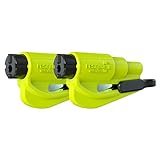
- The original 2-in-1 lifesaving compact car safety tool: this emergency keychain hammer provides peace of mind in case of car entrapment. Can be used in various situations: rollover, electrical system failure, car fire, floods, sinking car accident.
- Jammed seatbelt cutter: the razor-sharp, stainless-steel blade allows to cut a jammed seat belt in no time. Slice the seat belt diagonally for a quick and clean cut. Can be used multiple times.
- Tempered glass window breaker: the solid, heavy-duty, stainless-steel spike easily breaks tempered glass car side windows. Hit preferably one of the corners of the window. Spring-loaded mechanism and resets after each use. Reusable multiple times.
- Made in USA. We pride ourselves in offering efficient and reliable, made in the US, safety tools for the last 20 years.
- Trusted by first responders, Law Enforcement and EMTs and carried by more than 15 million motorists worldwide. The resqme seat belt cutter and window breaker saves a life on average every 15 days. Tested and certified by TUV, a German certification.
Check the glass markings printed in a corner of each window and consult the owner’s manual before an emergency. The marking identifies the construction, but the exact location and capability of an escape tool still matter. A tool should be secured within reach of the driver’s and passengers’ seating positions—not in the trunk, which may be inaccessible after a collision.
What an escape tool can—and cannot—do
An emergency hammer with an integrated belt cutter is a backup for a jammed latch or an unusable door. It is not a guarantee of escape, and it does not make entering a burning vehicle safe.
Quick wins for a faster PC:
Clear out junk files and repair common Windows errorsFree Scan →Scan for outdated or missing drivers - takes under a minuteDriver Scan →Repair Windows errors before they cause bigger problemsFix Now →| Evaluation point | What to look for | Important limitation |
|---|---|---|
| Belt cutter | A protected, exposed cutter that can be reached and operated with one hand from each seating position. | It helps only when the cutter is inside the passenger compartment and not buried in a console, bag or trunk. |
| Tempered-glass performance | A tool specifically intended to fracture automotive tempered side glass. | Performance varies by design and strike location; practice and a clear escape route still matter. |
| Laminated-glass limitation | Know which windows in your vehicle are laminated before relying on a tool. | AAA’s 2019 testing found the tested tools did not penetrate laminated glass. |
| Reachability | Mount one where the driver can reach it while belted and consider access for other seating positions. | A tool mounted behind a seat or in the cargo area may be unreachable after impact. |
| Secure mounting | Use the supplied holder or another rigid mount that keeps the tool from becoming a projectile. | Loose tools can disappear under a seat or injure an occupant during the collision. |
| Ease under stress | Choose a simple design with a visible cutter and an obvious striking end; learn the motion in advance. | Smoke, darkness, injuries and panic reduce dexterity. Do not assume you will read instructions during a fire. |
| Vehicle-glass match | Match the tool’s stated capability to the glass markings and window layout in your vehicle. | No consumer tool guarantees that every vehicle window will open an escape path. |
Japan’s Ministry of Land, Infrastructure, Transport and Tourism advises keeping a cutter-equipped emergency hammer secured within reach and learning how to use it beforehand. Treat that advice as preparation, not a reason to delay evacuation.
How to use a hammer on tempered glass
- Stay belted until the vehicle has stopped, then release the belt or cut it if necessary.
- Select the nearest usable side window that is not visibly laminated, if you have a choice.
- Hold the tool firmly and strike the glass as directed by its manufacturer, keeping your face and hands away from the impact point.
- After the glass fractures, clear loose shards from the opening with the tool or a protected arm, then exit feet first if possible.
- Move away from the vehicle and traffic; do not remain beside the broken window.
If the window only cracks, stays attached or will not give way, stop striking and reassess another door or window. Repeated blows can waste the seconds you need to escape.
Why opening the hood or trunk can make the fire worse
If flames or smoke may be under the hood or trunk, leave the compartment closed. The United States Fire Administration warns that opening it can feed the fire and cause it to grow by supplying oxygen. A closed hood or trunk may also contain heat, flames or pressurized components that erupt when exposed.
Rank #3
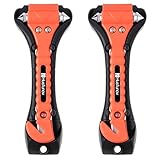
- Life-saving 2-in-1 tool:This Car Safety Hammer is a must-have for every car! It combines a window glass hammer breaker and a seat belt cutter, providing you with essential tools for emergency escape situations.Designed to break car windows in case of emergencies, our Car Safety Hammer has a sharp hammerhead that can easily shatter the glass. The built-in seat belt cutter blade ensures quick and safe seat belt release.
- Premium Material:High-grade carbon steel double-headed makes the hammer extremely sturdy, easy to break windows and save lives. The Razor-sharp blade mounted in a safe curved hook is made of high quality steel that can cut the seat belt quite easily.
- Well Designed:The bright color makes it easy to find in the dark or in a state of panic. It combines a protective bracket for safe storage. Anti-slip handle and light weight make it easy to control.
- Applicable Scenarios:Car accidents and emergencies,Be prepared for unforeseen situations on the road. Our Car Safety Hammer helps you escape from a vehicle quickly and safely in case of accidents or emergencies.In the unfortunate event of a car sinking in water, our Car Safety Hammer allows you to break the windows and swim to safety.
- Suitable for people:Whether you are a new driver or an experienced one, it is crucial to have a Car Safety Hammer within reach to ensure your own safety and the safety of others on the road.Protect your loved ones by equipping your family vehicles with this Emergency Escape Tool. Provide them with peace of mind and a reliable means of escape during emergencies.
- Do not pull the hood release to investigate.
- Do not open the trunk to retrieve a tool, luggage or a child-safety item.
- Do not crawl under the vehicle or reach into the engine bay.
- Do not pour water or another substance on a burning vehicle.
USFA also says not to try to fight a vehicle fire yourself. A small flame can involve fuel, wiring, airbags, tires or pressurized components in moments. Firefighters have protective equipment, breathing apparatus and the procedures needed to manage those hazards.
Electric, hybrid and alternative-fuel vehicles
Assume any crash-damaged vehicle is hazardous, and be especially cautious with electric, hybrid, compressed-gas and fuel-cell vehicles. A vehicle can be quiet after impact and still contain energized high-voltage equipment, damaged battery cells or stored fuel pressure.
- Do not touch orange high-voltage cables, battery packs, damaged electrical components or leaking fluids.
- Do not stand over, enter or lean against a damaged battery enclosure.
- Move at least 100 feet away as with any vehicle fire, and remain upwind if you can do so without moving toward traffic.
- Tell the 911 dispatcher and arriving responders the vehicle type, propulsion system and any visible warning labels if known.
- After evacuation, do not return because a fire appears to be out. Battery damage can produce delayed heating or re-ignition, and responders must decide when the vehicle is safe.
NHTSA maintains manufacturer emergency-response guides and rescue sheets for covered electric-powered vehicles. These documents address hazards such as fire, fluid leakage, towing and storage, but they are written for trained responders. Occupants should evacuate and provide the vehicle information rather than attempt high-voltage isolation or battery work.
Helping passengers without becoming another casualty
Tell 911 how many people are out, how many remain, whether anyone is trapped, and exactly where the vehicle is. If a passenger is conscious and able to move, give short directions: release the belt, use the clearest exit and move away from the road.
Children and injured occupants
Help a child or injured passenger only when you can do so without entering flames, dense smoke or moving traffic. If you can reach the person from a safe side of the vehicle, release or cut the belt and guide them through the safest opening. Do not return inside after you have escaped, even if someone left behind is calling for help; tell dispatchers and arriving firefighters where that person is.
The Tool Desk
Outbyte PC Repair FREEClear out junk files and repair common Windows errorsFree Scan →Outbyte Driver Updater FREEFix the driver behind crashes, sound loss and screen glitchesFind Drivers →Rank #4

- 🚔ESSENTIAL SAFETY TOOL - One end is a stainless steel seat belt cutter for cutting seatbelt, and the other end is the car window breaker tool with two hardened sharp and heavy carbon steel points, which allows you to leave the vehicle quickly in an emergency.Glass breaker and seatbelt cutter
- 🚔HIGH PERFORMANCE & DURABLE - The double-headed hammer is made of high-grade carbon steel and engineering plastics which make this car hammer very sharp and easy to break out the window for life-saving. The razor-sharp stainless steel seatbelt cutter makes cut the seatbelt in the shortest time,even underwater
- 🚔ERGONOMIC DESIGN - The anti-skid handle is long enough is approximately 5.9 inches, making it easy to control. It's compact and portable which allows it to be placed anywhere you can get in the car. The bright red for high visibility, you can find without any difficulty.
- 🚔2-PACK SAFETY HAMMERS - 2-Pack safety hammers that can be placed in different parts of your car, ready to be picked up by drivers and passengers in case of an emergency, which Increasing driving safety and can also be given to your family and friends as a surprising gift.Car window breaker tool for tesla.
- 🚔DEDICATED CUSTOMER SERVICE - We offer 90-day returns and free lifetime customer service. If you have any questions, please feel free to contact us, we will try our best to provide you with 100% satisfactory service.
People who cannot walk
If an occupant is trapped by the wreckage, do not attempt a complicated lift through fire or unstable metal. Move people who can walk first, then point responders to the trapped occupant, the side of the vehicle involved and any hazards such as leaking fuel, smoke from the battery area or deployed airbags.
After everyone is outside
- Keep the group together at least 100 feet away and out of traffic lanes.
- Do not stand between the vehicle and approaching emergency vehicles.
- Do not go back for phones, medication, documents, luggage or child equipment.
- Do not approach leaking fluids, fallen wires or a smoking battery.
- Wait for firefighters and paramedics to perform extrication and medical checks.
Preparation before a collision
Preparation cannot prevent every fire, but it removes decisions that are difficult under smoke, darkness and injury.
- Learn your vehicle’s exits. Sit in each occupied position and identify the door handle, window controls, manual releases and any windows marked as laminated.
- Install an escape tool within reach. Secure a cutter-equipped hammer where a belted occupant can reach it. Do not store it in the trunk or a loose cup holder.
- Read the owner’s manual. Note the vehicle’s propulsion type, high-voltage warnings, manual door or window procedures and recommended emergency information.
- Tell regular passengers the plan. Explain that belts stay on during the crash, the first usable exit is preferred, and everyone moves away rather than collecting belongings.
- Keep aisles and footwells clear. Loose bags can block an exit or become projectiles. Secure cargo and keep access to the tool unobstructed.
- Practice without striking glass. Rehearse releasing the belt, locating the tool and identifying exits. Never test a hammer on an installed window or practice in a way that damages the vehicle.
Common mistakes that cost escape time
Waiting to confirm the fire
Smoke, a burning odor or visible flame is enough to start evacuating. A post-crash fire can begin beneath a hood, floor or battery enclosure where occupants cannot see it.
Staying inside to call for help
Call 911 after reaching a safe distance. A phone call from inside does not compensate for the rapidly changing heat and smoke environment.
Do these 3 things before closing this tab:
1Repair Windows errors before they cause bigger problems2Scan for outdated or missing drivers - takes under a minute3Clear out junk files and repair common Windows errorsOpening a compartment
Opening a hood or trunk can add oxygen and expose you to the fire. Leave both closed when fire may be inside.
Best Value

- Vehicle Window Breaker: This smosun 2-in-1 safehammer glass breaker has a built-in high-pressure spring and a sturdy tungsten steel blade with a hardness of 55. Along with a 20KGF impact force can break the solid window glass in an instant. Note: Metal Tip Stays Inside The Tool - Only Springs Out When Breaking Glass.
- Seat Belt Cutter: The seat belt cutter features a built-in stainless steel cutter with a U-shaped hidden knife edge design, ensuring safety and preventing hand injuries. Simply align the U-shaped mouth of the cutter with the seat belt, push it forward swiftly, and get out of the vehicle easily and quickly.
- Upgraded anti-slip: smosun safety hammer comes with 8 ergonomically designed anti-slip devices made of silicone, which can upgrade your window breaker to an anti-slip handle, making it more comfortable to hold and easy to use. It is an essential safety tool for car emergencies.
- Fashionable & Portable: This escape tool is only 3.6 inches, lightweight, and powerful. It is easy to carry and can be hung on your keychain or on your vehicle's center console using Velcro tape. You can buy two, one in the front row and one in the rear row.
- Widely Used: This glass breaker is suitable for rescue, disaster response, escape, lifesaving, and any unexpected situations. Important Note: Only the tempered glass of the side windows of the car can be broken, and the laminated glass such as the front and rear windshield sunroofs cannot be broken. It's absolutely worth it.
Relying on one window-breaking tool
A tool may work on tempered glass yet fail on laminated glass. Know the glass layout and identify more than one possible exit.
Returning after escape
People often go back for a phone or to retrieve an item. Fire, traffic, toxic smoke and delayed battery re-ignition make re-entry unsafe; responders must handle rescue and recovery.
Fighting the fire
USFA’s guidance is not to fight a vehicle fire yourself. Evacuation and distance are the occupant’s job; suppression and overhaul belong to trained firefighters.
Free tools Windows power users keep installed
One-click scans. No signup required.
What to tell 911 and arriving responders
Use the clearest description you can provide from a safe location:
- Road, direction of travel, lane, exit number or nearby landmark.
- Number of occupants, number outside, and anyone trapped or injured.
- Visible flames or smoke location, such as the engine bay, cabin, underside or battery area.
- Vehicle make, model, color and license plate if known.
- Propulsion type: gasoline or diesel, hybrid, battery-electric, compressed gas or fuel cell.
- Any leaking fuel, high-voltage warning, damaged charging equipment or other immediate hazard.
Stay on the line if the dispatcher asks questions, but never move closer to the vehicle to gather details. When responders arrive, point out the last known location of each occupant and any person who may still be inside.
How the evidence supports the escape priorities
The central instructions are consistent across fire and transportation guidance: restraints protect occupants during the collision; evacuation must happen through the safest available opening; distance reduces exposure to heat, smoke and traffic; and responders—not occupants—should manage the burning vehicle. NHTSA’s restraint figures address crash survival, not the likelihood of a fire. No published statistic establishes how often post-collision vehicle fires occur, so a precise frequency should not be assumed.
Window construction is a practical limitation rather than a reason to delay. AAA’s 2019 tests demonstrated the difference between tempered and laminated glass, while the reported presence of laminated side windows in one-third of 2018 vehicle models shows why checking your own vehicle matters. A reachable, secured tool can improve options, but the safest plan remains immediate evacuation through any usable door or window.
Quick Recap
Product prices and availability are accurate as of the date/time indicated and are subject to change. Any price and availability information displayed on Amazon at the time of purchase will apply.




