Quick wins for a faster PC:
Clear out junk files and repair common Windows errorsFree Scan →Fix the driver behind crashes, sound loss and screen glitchesFind Drivers →Ride only a scooter-and-sidecar combination that both manufacturers confirm is suitable. Before moving, verify the attachment, alignment, brakes, tyres, suspension, lights, load limits and local road rules. A sidecar changes steering, braking, acceleration and cornering, so practise the actual outfit in an empty, controlled area before joining traffic. Keep speed low before turns, load the sidecar securely and evenly, and use the passenger and licensing rules that apply where you ride.
Can I put a sidecar on my scooter?
Not automatically. The fact that sidecars have been fitted to some scooters and mopeds does not prove that a particular scooter can safely carry one. The scooter frame, attachment points, suspension, tyres, brakes, engine output and electrical system all have to cope with the added mass and altered forces.
As an Amazon Associate I earn from qualifying purchases.
Start with written confirmation from the scooter manufacturer and the sidecar manufacturer that the pairing is approved. The UK Driver and Vehicle Standards Agency (DVSA) riding standard expects a rider to know how to determine suitability, confirm that the sidecar is correctly coupled and aligned, follow the manufacturer’s handbook and ensure the outfit is road legal. If either maker cannot provide fitment information, treat the combination as unapproved rather than guessing.
Information to obtain before installation
- The scooter models and model years covered by the sidecar maker’s fitting instructions.
- The approved mounting points, brackets, fasteners and torque or adjustment instructions.
- Any required suspension, wheel, tyre, brake or steering modifications.
- Maximum sidecar, passenger and luggage weights, including any separate limit for the scooter.
- Whether the scooter may be ridden solo after the sidecar is removed, and what must be restored or adjusted.
- Documents needed to register, inspect or insure the modified vehicle in your jurisdiction.
Do not assume that a universal-looking clamp or bracket is safe. A competent installer should be able to show how the coupling and alignment meet the maker’s instructions. Ask whether alignment must be checked again after the first rides, after carrying a different load or after any work on the suspension or wheels. Keep the fitting instructions, adjustment measurements and receipts with the vehicle records so a later owner, inspector or insurer can identify the approved configuration.
#1 Best Overall

- 【DOT Certified & High-Impact Protection】 This full face motorcycle helmet meets or exceeds DOT FMVSS-218 standards, ensuring professional-grade safety. Built with a rugged ABS shell and energy-absorbing EPS, these motorcycle helmets dot approved provide ultimate defense for street bikes, cruisers, and sport bikes
- 【Optimized Airflow for All-Weather Riding】 Experience superior ventilation with 4 strategically placed air intakes and exhaust vents. This full face helmet design minimizes wind resistance and fogging, keeping you cool during summer rides and providing a reliable full face helmet adult option for rainy or cold weather
- 【Quick-Release Dual Visor System】 Adapt to any light condition with ease. Our full face helmet motorcycle features a tool-free quick-release system. Each order includes a pre-installed tinted shield plus a bonus clear visor, making these full face motorcycle helmets for men and women versatile for both bright days and night riding
- 【Washable Lining & Comfort Fit】 Maintain freshness on every journey with our fully removable and machine-washable interior. The moisture-wicking sponge padding makes these motorcycle helmets for adults incredibly comfortable for long-distance trips, ensuring a snug fit for these full face motorcycle helmets dot certified
- 【Complete Bundle & Perfect Sizing】 We include a premium carrying bag for easy storage and scratch protection. Whether you are searching for motorcycle helmets for women or men, TRIANGLE offers 4 sizes (S-XL) to ensure a secure fit. Please measure your head circumference to find the perfect full face motorcycle helmet for women or men
How a sidecar changes scooter handling
A sidecar outfit is not a two-wheel scooter with an extra seat. Its three-wheel layout changes the steering and braking loads and removes the ability to balance through a turn in the same way as a solo machine. The DVSA standard specifically requires riders to understand the altered braking, steering and overall dynamics and to adapt their control.
| Control or situation | What changes | Safe response |
|---|---|---|
| Steering | The sidecar resists or assists directional changes differently from a solo scooter. | Use smooth inputs and learn the response of your own outfit at low speed. |
| Braking | An unbraked sidecar can affect stopping distance and handling. | Practise progressive stops and leave more room until you know the outfit’s behaviour. |
| Acceleration | Drive forces can pull the combination away from a straight line. | Accelerate gently and practise the correction required by your setup. |
| Right turns | A fast or sharp right turn can lift the sidecar wheel, especially when it is empty or lightly loaded. | Reduce speed before the turn and keep weight toward the sidecar. |
| Left turns | A sharp or fast left turn can lift the motorcycle’s rear wheel or cause the sidecar nose to contact the pavement. | Enter slowly, keep the turn smooth and stay within the outfit’s limits. |
Purpose-built combinations may use different suspension or tyres from the original scooter. Those changes are evidence that the outfit needs its own setup; they are not a reason to copy another combination’s settings. The scooter may feel reluctant to change direction one way and may require a different steering effort the other way. Learn those tendencies on the exact road surface and with the exact load you intend to carry.
Braking and directional corrections
The Georgia Department of Driver Services Motorcycle Operators Manual (2023–2024) states: “Your stopping distance and handling will be affected if your sidecar is not equipped with brakes.” During braking, its guidance says the rider may need to steer slightly toward the sidecar; during acceleration, slightly away from it. These are training points for the specific rig, not universal steering commands. Test them gradually in a safe area and follow the manufacturer’s instructions if they differ.
Free tools Windows power users keep installed
One-click scans. No signup required.
Use both brakes as the maker specifies and apply them progressively rather than snatching at a control. Practise stopping on a straight path first, then repeat with the intended passenger or cargo. Leave a larger following gap until you have established the outfit’s stopping behaviour, especially downhill or on a surface with less grip. If the rig pulls more strongly than it did during practice, stop and investigate tyre pressures, alignment, brake operation and load placement instead of compensating indefinitely at the handlebar.
Pre-ride setup and inspection
Use a fixed inspection sequence every time the outfit has been moved, serviced, loaded or left outside. The DVSA standard calls for correct coupling and alignment, manufacturer-advised adjustments, even load distribution and secure loading. The Sidecar Operator Manual (edition 2003.2) adds practical inspection topics such as tyres, wheels and bearings, the front end and outfit equipment. That older manual is useful supplementary context, not current legal authority.
Coupling and alignment
- Confirm that every mounting point is attached as specified by the manufacturers; look for missing, loose, damaged or distorted hardware.
- Check that the sidecar frame and body have not shifted relative to the scooter since the last inspection.
- Verify alignment using the maker’s method. Do not substitute a visual guess for the specified procedure.
- Check that steering moves freely from lock to lock without cables, bodywork or suspension parts binding.
- Confirm that any required suspension or steering adjustment is set as instructed for the current load.
Check fasteners for the condition and security specified by the installer; do not alter brackets, drill new holes or add spacers unless the manufacturer approves the change. Look underneath for contact marks that could indicate the sidecar nose, frame or exhaust has been touching the ground. Recheck alignment after a hard impact, a kerb strike or any symptom of new pulling or wandering.
Rank #2

- 2 Visors Included: Clear + Smoked and 1 Neck Scarf for Winter Use
- Streamlined Aerodynamic Design Reduces Wind Noise and Drag
- Advanced and Lightweight Durable ABS Shell
- Quick Release Clasp and Strap and Removable Inner Lining Pads
- Meets or Exceeds FMVSS-218 and DOT Safety Standards
Wheels, tyres and suspension
- Inspect all tyres for damage, abnormal wear and adequate condition; include the sidecar tyre.
- Check wheels, axles and bearings for looseness, damage or unusual play.
- Look for leaking or damaged suspension components and confirm that the outfit sits as intended.
- Use the scooter and sidecar makers’ specified inflation pressures and load ratings rather than a solo-scooter setting.
Measure pressures when tyres are cold and repeat the check after a load change. A sidecar tyre, scooter tyre and spare (if fitted) may have different ratings. Confirm that mudguards, valves and wheel weights cannot foul the body or suspension throughout the steering and suspension movement.
What’s actually slowing this PC down?
Pick the symptom - the matching free tool is one click away.
Brakes, lights and equipment
- Test every brake control and confirm that the brakes release fully after application.
- Check brake components and any sidecar brake system for damage or leaks.
- Test the headlamp, rear lamp, brake lamp, indicators and reflectors required for your location.
- Ensure the sidecar body, mudguard and any passenger restraints or steps are secure.
- Carry only equipment permitted by the manufacturers and local roadworthiness rules.
Make sure the controls remain accessible with the sidecar fitted and that no luggage blocks a lamp, reflector or number plate. A brake that feels spongy, drags or changes its feel during a short test is a reason to stop, not a condition to monitor in traffic.
How to learn the outfit before traffic
Sidecar-specific practice is essential because the controls and dynamics differ from solo riding. The Sidecar Operator Manual describes distinct exercises and a skill test; that does not make a particular course legally mandatory everywhere, but it illustrates the level of separate practice involved.
- Choose a controlled area. Use a private, open surface with good grip, no pedestrians and enough room for the sidecar to move without striking an object. Comply with any permission requirement for using the area.
- Begin with straight-line starts. Practise gentle launches and stops while keeping both hands steady and observing any pull during acceleration or braking.
- Build braking distance gradually. Use progressive pressure, repeat from several low speeds and note how much room the loaded outfit needs. Do not practise emergency manoeuvres at traffic speed.
- Practise wide turns in both directions. Reduce speed before the turn, maintain a smooth throttle and observe how the outfit tracks.
- Progress to tighter turns only when stable. Keep the sidecar lightly loaded or loaded exactly as the manufacturer permits, and stop if a wheel begins to lift or the body approaches the ground.
- Repeat with the intended passenger or cargo arrangement. Added weight changes acceleration, braking and cornering; the empty outfit is not a substitute for a loaded rehearsal.
- Have an experienced sidecar instructor observe you where possible. A specialist can identify coupling, steering or weight-transfer problems that are difficult to detect from the seat.
Include starts on a slight incline, controlled stops at a marked point and smooth changes of direction once the basic exercises are repeatable. Practise looking through the turn rather than at the sidecar wheel, and keep enough space for the outfit’s full width. Repeat the session whenever the sidecar is refitted, the suspension is adjusted, tyres are changed or the usual passenger and luggage arrangement changes.
How do you turn with a sidecar?
Right turns
Set your speed before entering the turn. A sharp or fast right turn can lift the sidecar wheel, and the risk is greater when the sidecar is empty or lightly loaded. The Georgia manual recommends shifting weight toward the sidecar while slowing before the turn. Keep the steering and throttle smooth; do not try to correct a wheel lift with a sudden input. If the wheel rises, reduce the cornering demand and regain stability before continuing.
The Tool Desk
Outbyte Driver Updater FREEFix the driver behind crashes, sound loss and screen glitchesFind Drivers →Outbyte PC Repair FREERepair Windows errors before they cause bigger problemsFix Now →Left turns
Approach left turns slowly and avoid abrupt steering or acceleration. The Georgia manual warns that a sharp or fast left turn can lift the motorcycle’s rear wheel or bring the sidecar nose into contact with the pavement. Leave enough clearance for the sidecar body and keep the combination within the ground-clearance and turning limits specified by the maker.
Rank #3
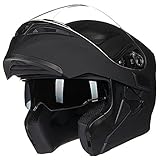
- High Resistance ABS Shell With Micrometrically Adjustable Strap
- Meets or Exceeds FMVSS-218 and DOT Safety Standards
- Helmet Liner / Cheek Pads are Lightweight, Soft and Easily Removable and Washable
- Sleek and Lightweight Design Reduces Wind Noise
- Modular Flip-Up Function Anti-Scratch, Anti-Fog and Wide View Clear Visor
Uneven or changing loads
Cornering behaviour can change when a passenger enters, luggage is removed or cargo shifts. Recheck the load before riding and take the first turns at reduced speed. Never treat a previous familiar route as proof that the outfit will respond identically after a load change.
Passengers and cargo
Weight placement is a handling issue, not merely a comfort choice. The Georgia manual recommends putting a passenger in the sidecar and warns against carrying a passenger behind the rider while leaving the sidecar empty because that arrangement may increase tip-over risk. Follow the actual scooter and sidecar capacity instructions, even when a seat appears to have room.
Loading method
- Keep cargo low to reduce the height of the centre of mass.
- Place it centrally and over the sidecar axle where the manufacturer’s instructions call for that position.
- Secure every item so it cannot slide, bounce or fall into the wheel, suspension or steering area.
- Distribute weight evenly and stay below the separate limits for the sidecar, scooter and total outfit.
- After loading, recheck suspension position, tyre condition, lights and the operation of the sidecar lid or door.
Account for the extra mass when starting, stopping and turning. A load that is legal by weight can still be unsafe if it is high, off-centre or unsecured. Do not use a passenger’s body position as a substitute for approved ballast or exceed a sidecar’s stated capacity to make the rig feel more stable.
Passenger briefing
Explain how to enter and leave only when the outfit is stationary and secure. The passenger should remain seated as instructed, avoid sudden leaning or movement, and keep hands and feet clear of wheels, suspension and hot components. In the United States, the Georgia manual says passengers must wear DOT-compliant helmets. Helmet specifications and passenger requirements differ elsewhere, so use the standard required by the jurisdiction where you ride.
Tell the passenger to wait for your signal before boarding or dismounting, keep any restraint fastened as directed and report discomfort or a loose item immediately. Check that the passenger’s clothing, luggage and footwear cannot reach moving parts. A child or other vulnerable passenger may be subject to additional age, seating or restraint rules, so confirm those requirements locally before carrying one.
Comparing scooter-and-sidecar combinations
If you are choosing between outfits, compare the complete approved systems rather than judging a sidecar by appearance or price. Check manufacturer-confirmed compatibility for the exact scooter model and year; the attachment and alignment method; whether the sidecar has its own brake; permitted passenger, sidecar and total loads; required suspension or tyre changes; and the availability of clear fitting and adjustment instructions. Also compare the inspection and licensing path in the place where you will register and ride it. A combination with more equipment is not automatically safer if its maker cannot document the installation or support correct servicing.
Rank #4

- Advanced Safety Design: Combines a lightweight ABS outer shell.
- DOT Approved, Clear Vision: Meets DOT standards, with a scratch-resistant, anti-fog lens for optimal visibility.
- Easy Quick Release: Convenient quick-release chin strap with adjustable features for effortless and speedy helmet adjustments and removal.
- Comfort System: Designed for superior comfort, the helmet’s interior features a moisture-wicking lining that ensures a cool and dry experience during your ride.
- Sun Visor for Added Protection: Built-in pull-down sun visor system provides effective sun protection, ensuring a comfortable and shaded ride.
Road legality, licensing and insurance
There is no single worldwide rule for scooter-and-sidecar outfits. Check the law where the combination will be registered and ridden, including licensing category, vehicle modification approval, inspection, insurance, helmet use, passenger age or seating rules and required lighting or equipment.
The UK DVSA national riding standard treats correct coupling, alignment, adjustments, load security and road legality as rider responsibilities. Separate UK DVSA training guidance says a learner with a disability may ride a motorcycle/sidecar combination and that the resulting DL196 is restricted to motorcycle/sidecar combinations and motor-tricycles. That is a narrowly scoped UK rule, not a licensing model for other countries.
Ask the licensing or inspection authority whether the modified vehicle needs a new registration description, inspection certificate or insurance endorsement. Confirm that your licence permits the outfit before a test ride, and check whether removing the sidecar changes the category or the vehicle’s approved configuration. Keep the manufacturer’s fitment documentation and any inspection or approval paperwork with the vehicle records. Legal requirements can change, so confirm them with the relevant licensing or inspection authority before riding on public roads.
Independent reader supportYour contribution helps us test, update, and keep practical guides available for everyone.Common unsafe assumptions and their fixes
| Assumption | Why it fails | Correction |
|---|---|---|
| “Any scooter can take a sidecar.” | Frame, mounting, braking and suspension suitability are model-specific. | Obtain confirmation from both manufacturers before fitting. |
| “It rides like my scooter without the sidecar.” | Steering, braking, acceleration and cornering dynamics change. | Complete sidecar-specific practice and repeat it after major load or setup changes. |
| “An empty sidecar is always safer.” | An empty or lightly loaded sidecar is more prone to lifting in a fast right turn. | Slow before the turn and use the maker-approved loading arrangement. |
| “A passenger can sit behind me while the sidecar stays empty.” | The Georgia manual warns this may increase tip-over risk. | Use the sidecar passenger position recommended by the manual and respect capacity limits. |
| “A visual look is enough to check alignment.” | Small coupling or alignment errors can alter tracking and handling. | Use the manufacturer’s specified alignment method. |
| “A rule from another country applies here.” | Licensing, helmets and roadworthiness requirements are jurisdiction-specific. | Verify the rules for the place of registration and use. |
| “More ballast always fixes handling.” | Unapproved or high ballast can overload the sidecar or shift its centre of mass. | Use only the loading arrangement and limits specified by the maker. |
| “If it feels normal after fitting, it needs no further checks.” | Fasteners, alignment and loads can change after service or a bump. | Repeat the full inspection after work, impacts and load changes. |
A practical first-road sequence
- Confirm written compatibility and legal approval for the exact scooter, sidecar and location.
- Complete the coupling, alignment, tyre, wheel, suspension, brake, light and load inspection.
- Ride the empty outfit slowly in a controlled area and practise starts, stops and both directions of turn.
- Repeat the exercises with the intended passenger or cargo arrangement.
- Increase route complexity gradually, keeping speed low before every corner and leaving additional stopping room.
- Stop riding if the outfit pulls unexpectedly, a wheel lifts, steering binds, cargo shifts, a brake feels abnormal or any attachment becomes loose. Correct the cause and recheck the complete setup before continuing.
Choose an initial public route with good visibility, few complex junctions and a surface you already know. Avoid carrying a new passenger, riding at night or entering heavy traffic on the first outing. Build those conditions one at a time so a handling change can be traced to a single cause.
A safe sidecar ride comes from a verified pairing, correct alignment, disciplined loading and practice on the actual outfit. If the manufacturers cannot establish compatibility or the local authority cannot confirm road legality, do not take the combination into traffic.
Recommended Free Tools
Frequently Asked Questions
How do I ride a scooter with a sidecar safely?
Confirm that the scooter and sidecar are an approved pairing, check coupling and alignment, inspect tyres, wheels, suspension, brakes and lights, load low and securely, and practise starts, stops and turns in a controlled area. Slow before every corner and follow local licensing, helmet and passenger rules.
Best Value
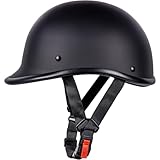
- DOT Approved Motorcycle Helmet:Built with rugged ABS shell and impact-absorbing EPS liner for solid on-road protection. Ready for daily cruising, city commuting, and weekend runs.
- Low Profile Beanie Helmet Design:Sits close without the mushroom look. Gives a clean, compact skull cap silhouette that cruiser and bobber riders want — covers critical areas without adding bulk.
- Vintage-Style Look:With classic biker lines and a fresh finish that feels bold, not dated. Pairs with old-school choppers, café racers, and modern cruisers for a half helmet with real character.
- Quick-Release Buckle: Let you gear up and go instantly. Just click in and ride. A simple convenience that saves time on daily commutes and quick trips around town.
- Lightweight with Removable Inner Padding: Cuts neck fatigue on long rides. The washable, breathable liner keeps things fresh through hot summer days, all-day comfort lasts.
Can I put any sidecar on my scooter?
No. Compatibility is model-specific. Obtain written confirmation from both manufacturers, including approved mounting points, required modifications and load limits. Do not rely on a universal clamp or a visual inspection.
How do you turn with a sidecar?
Reduce speed before the turn and use smooth steering and throttle. A fast right turn can lift an empty or lightly loaded sidecar wheel; a fast left turn can lift the scooter’s rear wheel or make the sidecar nose contact the ground. Practise both directions on the actual outfit.
Should the sidecar be loaded or empty?
Follow the manufacturer’s approved loading arrangement. An empty or lightly loaded sidecar is more prone to lifting in a sharp right turn, while unapproved ballast can overload the outfit. Keep cargo low, centered over the sidecar axle and firmly secured.
Outdated Drivers Are Slowing You Down
One free scan finds every outdated or missing driver and matches the right update for your exact hardware.Free scan · exact hardware matchPC Slower Than It Used to Be?
A free scan shows the junk files, broken settings and background clutter dragging Windows down - then fixes them in one click.Free scan · Windows 10 & 11Can a passenger sit behind the rider with an empty sidecar?
The Georgia Department of Driver Services manual warns that this arrangement may increase tip-over risk and recommends placing the passenger in the sidecar. Confirm the passenger positions and capacity limits for your specific outfit and jurisdiction.
Do I need a special licence or inspection?
Rules vary by location. Check licensing category, modification approval, inspection, insurance, helmet standards, passenger rules and required equipment with the authority where the outfit is registered and used. UK rules, including the restricted DL196 example, do not apply worldwide.
The Bottom Line
Ride only a manufacturer-approved, correctly aligned and road-legal outfit. Inspect it before every ride, load it low and securely, practise its altered braking and steering in a controlled area, and slow before turns—especially with an empty sidecar.
Quick Recap
Product prices and availability are accurate as of the date/time indicated and are subject to change. Any price and availability information displayed on Amazon at the time of purchase will apply.




