Do these 3 things before closing this tab:
1Scan for outdated or missing drivers - takes under a minute2Repair Windows errors before they cause bigger problems3Fix the driver behind crashes, sound loss and screen glitchesStart by finding out what your electricity bill actually charges for: energy used (kWh), peak demand (kW), time of use, or some combination. Then compare the tariff with vehicle schedules and the facility’s load. Shift flexible charging to cheaper hours and stagger or control charger power without compromising vehicles’ next assignments. Savings depend on the utility tariff, site load, fleet duty cycle, and equipment; there is no universal percentage.
What makes commercial EV charging expensive?
Commercial electricity bills can combine charges for the energy consumed and charges for the site’s peak power draw. The U.S. Department of Energy (DOE) describes an energy charge as commonly priced per kilowatt-hour (kWh); some utilities vary that price by time of use (TOU). A demand charge may be based on the highest power draw during a billing period and priced per kilowatt (kW). The specific tariff determines how these charges are calculated, so check your utility’s rate schedule and bill rather than assuming that charging overnight will necessarily lower the total.
If several vehicles charge at once while other facility equipment is already running, the combined load may set a new peak. That can increase demand charges even if the fleet uses the same total monthly kWh. Unmanaged charging may also overlap with higher-priced hours or exceed the site’s available electrical capacity.
How to find where the money is going
- Read the tariff and bills. Identify the energy price by hour, any demand-charge calculation, billing-period rules, and the relevant meter. Ask the utility to explain unfamiliar billing determinants.
- Gather load and fleet data. Collect interval meter data if available, charger session records, vehicle arrival and departure times, energy use, and the charge each vehicle needs before its next assignment.
- Compare the timelines. Plot charging needs against TOU price periods and the facility’s load profile. Mark which sessions can move, how much energy must be delivered by each departure, and how much power the site can support.
- Identify the constraint. Decide whether the main opportunity is moving kWh into cheaper hours, avoiding a site peak, limiting total charger power, or addressing more than one of these at once.
DOE recommends evaluating facility demand over the billing period and working with the utility and equipment providers to align fleet electricity needs with charging times.
The Tool Desk
Outbyte PC Repair FREEClear out junk files and repair common Windows errorsFree Scan →Outbyte Driver Updater FREEScan for outdated or missing drivers - takes under a minuteDriver Scan →#1 Best Overall

- Earn Revenue with Every Charge: Set custom pricing and idle fees. Monthly payouts and usage reports included.
- Fleet and Public Use Ready: Control access with RFID , or app. Great for apartments, hotels, or commercial fleets.
- Fleet and Public Use Ready: Control access with RFID, or app. Great for apartments, hotels, or commercial fleets.
- Commercial EV charging station. Great for Hotels, Retail, Restaurants, Rentals, Workplaces, Apartment Buildings, Resorts, Destinations and more...Commercial EV charging station. Great for Hotels, Retail, Restaurants, Rentals, Workplaces, Apartment Buildings, Resorts, Destinations and more...
- Commercial EV Charging Station – OCPP-Compliant, Revenue-Generating Charger with Driver Pay App – Compatible with Level 2 and DC Fast Charging – Powered by EV Range Software
When should company vehicles charge to save money?
Shift flexible sessions into lower-priced periods
If the tariff has lower off-peak energy prices, schedule vehicles that can wait to charge during those hours. Vehicle or charger scheduling is a straightforward starting point, but static schedules need updating when rates, operating hours, or assignments change. A later start can reduce the energy charge where the tariff rewards off-peak use; it does not guarantee a lower overall bill if the charging creates a new demand peak or leaves a vehicle short of the energy it needs.
Stagger charging to control the site peak
Staggering start times can reduce the number of chargers drawing power simultaneously. Networked smart charge management can go further by changing charging power or session timing as building loads, vehicle schedules, equipment limits, and rates change. A practical objective is to set a power ceiling across chargers and reduce overlap with the facility’s existing peak while still delivering each vehicle’s required energy in time.
Rank #2

- AI-POWERED SMART CHARGING & APP CONTROL – This ev charger level 2 uses Autel’s AI-integrated smart app to schedule charging around time-of-use utility rates, helping lower your monthly bill while boosting station utilization. Start or stop sessions remotely, adjust current from low to high amps, view real-time energy data, and get alerts if anything looks off.
- ULTRAFAST 80A PERFORMANCE FOR HOME – Delivering up to 19.2 kW / 80A, this charger adds about 70 miles of range per hour and powers your EV up to 14x faster than a standard Level 1 outlet, so you can fully recharge overnight or between customer visits. This 80 amp ev charger is a high-power level 2 ev charger that future-proofs your setup for larger-battery EVs and busy households.
- BUILT FOR 24/7 RELIABILITY & THEFT PROTECTION – Engineered for a 10-year lifespan with internal temperature monitoring and a flame-retardant enclosure. Dual-network Wi-Fi + Wi-SUN keep your charger online with >99.9% uptime, so drivers always find a live station. Custom tamper-resistant screws plus remote locking provide double theft protection for both residential and commercial installs.
- FAST INSTALL & FLEXIBLE STATION MANAGEMENT – Hardwired design for maximum power and reliability (100A circuit recommended for full 80A output; professional electrician install suggested). One-click configuration lets installers set up a charging station in about 10 minutes, then you can easily manage pricing, access, and usage in the app.
- CSA CERTIFIED, REBATE READY & UNIVERSAL J1772 – UL certified by CSA and eligible for many U.S. rebates, incentives, and tax credits to help reduce your installation cost. The 25 ft SAE J1772 cable works with all EVs and PHEVs in North America and with Tesla vehicles when used with a NACS adapter (not included). Backed by a 5-year warranty, 24/7 expert support, and Autel’s proven EV charger technology for long-term peace of mind.
Managed charging can reduce coincident peak load and may help avoid or defer some electrical upgrades. Whether it reduces costs—and by how much—must be checked against the actual tariff and operating constraints.
What should a fleet ask its utility?
Contact the serving utility early, before committing to an electrical upgrade, storage system, or bidirectional charging project. Availability and eligibility vary by service territory. Ask:
Rank #3

- Freestanding EV Charger Pedestal – Securely mount your Wallbox Pulsar Plus chargers with this durable, space-saving stand, perfect for home or commercial EV charging setups.
- Built for Stability & Durability – Constructed from high-quality, weather-resistant materials, ensuring a sturdy and reliable charging station in any environment.
- Seamless Compatibility – Designed exclusively for Wallbox Pulsar Plus chargers, providing a perfect fit and clean installation for a professional look.
- Ideal for Indoor & Outdoor Use – The rugged, weatherproof design makes it suitable for garages, driveways, parking lots, workplaces, and commercial charging stations.
- Easy to Install & Maintain – Comes with all necessary mounting hardware for a quick, hassle-free setup, making it easy to install and maintain over time.
- Is a fleet-specific or alternative rate available, and how would it change energy and demand charges?
- What meter, interval data, or other requirements apply to that rate?
- Are demand-response or other grid-service programs available to this site and fleet?
- Can the utility support charging infrastructure planning or provide infrastructure assistance?
- What conditions, costs, and operating commitments apply?
Get rates, incentives, and program terms confirmed for your site rather than assuming a discount or support is available.
How to assess chargers and charge-management options
A networked commercial EV charger can give a fleet monitoring and analysis tools and support scheduled smart charging. The U.S. Department of Energy’s Alternative Fuels Data Center (AFDC) recommends considering Open Charge Point Protocol (OCPP) 1.6 or higher as an interoperability factor; it can make switching charge-network providers easier without expensive equipment upgrades. Confirm that the charger, network, vehicles, and management system work together for your intended use.
Rank #4
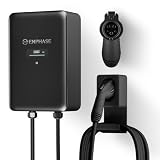
- 15× FASTER CHARGING: Deliver up to 88 miles of range per hour (22.1 kW / 80 A) to keep fleets, workplaces, and commercial sites moving with less downtime.
- BUILT-IN CELLULAR CONNECTIVITY: Built-in 4G LTE cellular connectivity keeps chargers online—no on-site Wi-Fi required. Ideal for sites with limited or unreliable network infrastructure.
- OPEN PLATFORM INTEGRATION: Native OCPP 1.6J and OCPP 2.0.1 support enables seamless integration with any Charging Station Management System (CSMS).
- API + LOCAL EMS READY: Integrate with building EMS, fleet platforms, and custom dashboards. Local EMS control supports load management and demand response during cloud interruptions.
- REVENUE GRADE METER: Accurate utility-grade energy measurement supports billing, cost allocation, and eligibility for applicable rebate programs.
Compare options on the factors that affect the bill and fleet operations:
- Tariff fit: Does the option address the energy price, demand charges, or both under your utility’s actual rate?
- Operational readiness: Can every vehicle receive enough charge for its next deployment, including changes to schedules and duty cycles?
- Peak and capacity effect: Can the system control aggregate site power or reduce coincident peaks? Could that change the need or timing for an electrical upgrade?
- Integration: Can it use fleet schedules, charger data, facility loads, and utility rates?
- Total cost and measured results: Include equipment, installation, software or network, utility, and maintenance costs. Compare them with results from the site’s own metered data.
When solar, batteries, or bidirectional charging make sense
Solar and stationary batteries may help a site use more locally generated energy or manage peak-related costs, but their value depends on the site’s load, tariff, equipment, controls, and economics. A bidirectional EV can potentially support demand response or TOU energy shifting, but it requires a compatible vehicle and EVSE, utility arrangements, and coordination with fleet needs. Assess installation, interconnection, operating limits, and whole-site economics before treating any of these options as a bill-saving measure.
Free tools Windows power users keep installed
One-click scans. No signup required.
Best Value
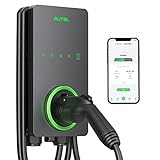
- 【Trusted Brand】Autel has been making automotive intelligent diagnostic, inspection, and analysis products since 2004. The MaxiCharger AC Home was developed over 2 years from a full team of designers and engineers to bring you the safest, smartest, and one of the best looking chargers on the market.
- 【High speed Charging】With 12kW up to 50A charging, speed will never be an issue. Add 37 miles per charging hour. Don't waste time waiting on your EV to fully charge with slower chargers. An updated 25-Foot durable cable is flexible no matter how cold the season is so you can charge with confidence in even the coldest of temperatures(-40℃).
- 【CSA Certified & NEMA Type 4】Eligible for the Federal rebate program. With NEMA Type 4 you are protected in any type of weather including snow, rain, hail, and sleet. Hang it up outside your house or inside a garage and it will operate efficiently. Fire resistant, over current, over voltage, and over temperature protection. Your level 2 charger will run better and last longer, saving you money in the long term.
- 【Smart APP Control】Use Autel Charge APP to control your charger and manage charge times, schedule charging while you're away, and optimize your charging to take advantage of off peak electricity. Bluetooth enabled, Wi-Fi connectivity, and Ethernet access make sure your automatic over the air (OTA) remote firmware updates keep you connected at the times you need.
- 【High Reliability】The MaxiCharger is easy for any electrician to install. A 3-year warranty, APP automatic updates, and around-the-clock support from Autel's service team means you'll never have to worry about quality and service.
What the published figures do—and do not—show
A 2024 National Renewable Energy Laboratory (NREL) account of a U.S. smart charge management review reported that researchers reviewed more than 100 managed charging programs and conducted over 40 interviews. Those numbers describe the review’s scope, not a forecast of commercial-fleet savings. Separately, the Joint Office of Energy and Transportation reported a potential 30% reduction in utility investments from managed charging in a multi-state transportation electrification impact study. That is a utility-investment finding, not a claim that a fleet’s electricity bill will fall by 30%.
NREL’s September 30, 2024 account also quoted Lawrence Berkeley National Laboratory report lead Doug Black: “EV adoption rates are rising nationally, but we’re seeing considerable differences in readiness levels among utilities.” That variation is one reason to check local rates, programs, and infrastructure conditions. No tariff-specific savings percentage for a commercial fleet is established by these figures.
A practical order of operations
- Determine how the current tariff prices energy and peak demand.
- Match facility load and fleet charging needs by time, including required departure charge.
- Try off-peak scheduling and staggered charging where operations allow.
- Evaluate networked management against a site power ceiling and actual vehicle requirements.
- Ask the utility about rates, meters, programs, and infrastructure support.
- Assess solar, storage, or bidirectional charging only where site and fleet economics justify them.
- Measure the bill and site load after changes; use the results to revise schedules and controls.
The cited guidance is primarily U.S.-focused. Tariffs, program availability, and utility rules are local; fleets elsewhere should apply the same bill-and-load analysis to their own jurisdiction.
Quick Recap
Product prices and availability are accurate as of the date/time indicated and are subject to change. Any price and availability information displayed on Amazon at the time of purchase will apply.




