What’s actually slowing this PC down?
Pick the symptom - the matching free tool is one click away.
The safest recording is the one you set up before the ride. Start the camera while parked, keep your hands and attention on riding, and use the footage only after you have created distance and reached a safe place. Do not chase, confront, gesture at, brake-check, or follow an aggressive driver to improve a clip. Illinois State Police guidance is explicit: “Do not chase the aggressive driver.” If a driver follows you, go to a police station when possible, or a well-lit populated location, and call 911.
What to do first: create distance, not better footage
Road rage can turn a traffic dispute into a crash or assault within seconds. A motorcycle offers less physical protection than a passenger vehicle, so the rider’s first task is to preserve an escape route. A dash cam is a passive witness; it is not a reason to stay beside a hostile vehicle, make a risky pass, or reach for a control.
As an Amazon Associate I earn from qualifying purchases.
Keep both hands available for steering and braking. Maintain a buffer around your motorcycle, obey signals and speed limits, and avoid movements that could be interpreted as a challenge. If the other driver is beside you, let the vehicle go ahead rather than trying to establish eye contact or capture a closer view. A plate, face, or perfect angle is never worth losing control.
Do these 3 things before closing this tab:
1Clear out junk files and repair common Windows errors2Fix the driver behind crashes, sound loss and screen glitches3Repair Windows errors before they cause bigger problemsNational Highway Traffic Safety Administration (NHTSA) guidance says to ride defensively, leave room around other vehicles, obey traffic controls, and wear a DOT-compliant helmet and protective clothing. NHTSA recorded 6,228 motorcyclists killed in 2024, 16% of all traffic fatalities; that statistic describes overall motorcycle risk, not road-rage incidents or dash-camera performance. NHTSA also reports 74% DOT-compliant motorcycle-helmet use in 2023.
#1 Best Overall
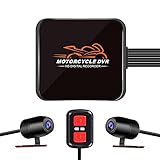
- 【Dual 1080P Cameras Recording and Starlight Night Vision】: Well made 1080P motorcycle dual cameras system can help you get relatively clear video in low light conditions and ensure your driving safety
- 【Wired Controller】: The LED indicator can indicate the recording status of the recorder. Short press any button of wired controller to record the emergency video; Long press it to reset the WiFi password. Note: The file name of the emergency video starts with KEY. The file name of normally recorded video starts with REC. The functions of the two buttons are the same. When saved video file of each camera exceeds together 10 KEY-XXX videos, the system will delete the earliest one.
- 【WiFi Connection】: By connecting to the WiFi of the recorder, you can view the video on the mobile APP "WiFi Camera", no phone data required and don't need pull out memory card, you can view real-time video, download, edit, and share the video to your phone. The APP supports both iOS & Android systems.
- 【Professional Waterproof Motorbike Cameras】: Waterproof resistant for front and rear cameras. On rainy days, the excellent water resistance of the dash cameras will increase your cycling comfort and make your riding more convenient
- 【Loop Recording and Emergency Recording】: The driver can choose to record video at 1/2/3/5 minutes. When the SD card is full, the new video will overwrite the oldest recorded video. When the built-in G-sensor detects that the motorcycle is collided, the recorder record emergency lock video. Special designed for motorcycle. Recording road situation and accident proof, protecting riders’ safe.
Set up the camera before entering traffic
Every adjustment that can be made while parked should be made while parked. The goal is a system that records continuously without requiring a moving rider to touch a camera, phone, or menu.
1. Choose a mounting position that does not compromise control
- Mount the camera according to the manufacturer’s motorcycle instructions. Confirm that the bracket is secure and that vibration does not loosen it.
- Check the complete view from the normal riding position. The lens should include the roadway and relevant approaches without being blocked by a windscreen, fairing, mirror, cable, or clothing.
- Turn the handlebars fully left and right, operate every control, and check that the mount, cable, and camera cannot interfere with steering, braking, throttle movement, switches, helmet movement, or visibility.
- Look for reflections, glare, and excessive sky in the preview. A centered horizon and enough road ahead are more useful than an extreme close-up of the motorcycle.
- Confirm that the installation remains secure over the surfaces and speeds for which the manufacturer rates it. General camera-selection guidance does not establish a particular camera’s resistance to motorcycle weather or vibration.
2. Configure recording while stationary
- Insert a storage card that the camera supports and format it using the camera’s own menu unless the manufacturer specifies another procedure.
- Set the date and time, then verify the time zone and daylight-saving setting if the device uses one. An incorrect timestamp can complicate a later report.
- Enable the camera’s normal continuous or loop-recording mode if that is the intended use. Confirm how the device handles full storage; loop behavior varies by product and must be checked in its manual.
- Set the widest useful field of view that still preserves recognizable detail. A very wide view can show an approaching vehicle but may make distant plates smaller or distort the edges.
- Choose a resolution and frame rate that the camera can sustain without unexpectedly stopping. Higher settings can increase storage and power use; the manufacturer’s specifications control the actual limits.
- Decide whether audio is needed. A microphone may capture useful context, but recording conversations or publishing sound can be regulated differently from video in your jurisdiction.
- Test the start-and-stop behavior. Some systems begin recording when powered; others require a button, app, or separate remote. Do not choose a workflow that requires handling the device in moving traffic.
3. Verify power and endurance
Check the battery before each ride and confirm that any external power lead is routed away from hot, moving, or wet components. The National Institute of Justice (NIJ) identifies battery life and recording limits as key camera-selection factors, but it does not certify a particular motorcycle installation. A camera that shuts down after a short internal-battery period cannot document an event that occurs later in the ride.
Run a stationary test for at least the length of a typical trip segment. Confirm that the file is actually being written, that the indicator means recording rather than standby, and that the camera continues after the motorcycle starts. Review a sample file on a computer or phone before relying on the setup.
How to evaluate a motorcycle dash-camera system
There is no universal “best” camera for every motorcycle. Compare the system against the conditions in which you ride, and verify current specifications with the manufacturer. The NIJ camera primer, published in September 2012 and written for wearable cameras, is useful for general selection dimensions; it is not evidence that a modern motorcycle camera will perform to any particular standard.
| Feature | What it affects | What to verify before buying or mounting |
|---|---|---|
| Field of view | How much roadway, approach, and departure appear in one frame | Whether the view covers the relevant lanes without unusable edge distortion |
| Image quality | Whether signs, vehicle features, and event detail remain discernible | Resolution, frame rate, stabilization behavior, and sample footage in comparable conditions |
| Low-light or night recording | Visibility at dusk, at night, and under street lighting | Manufacturer specifications and independent examples from the conditions you actually ride in |
| Battery and recording limits | How long the system can record and whether it stops unexpectedly | Runtime with your selected settings, charging method, and what happens when storage fills |
| Mounting and placement | Stability, visibility, and whether the camera can distract or obstruct | Motorcycle-specific mounting instructions, secure hardware, cable routing, and weather or vibration ratings |
| Audio | Ambient sound or spoken context captured with video | Microphone behavior, wind noise, disable controls, and local rules for recording or sharing sound |
| Storage and export | How quickly you can preserve an original clip after an incident | Supported card type and capacity, file protection, export method, and whether metadata survives copying |
Do not assume that a wide-angle image proves a plate is readable, or that a camera marketed for cars is suitable for exposed motorcycle mounting. No model ranking or plate-capture success rate is established here. Select a motorcycle dash camera system only after checking the current product documentation for your exact installation.
What to do while an aggressive encounter is happening
Use this sequence only as far as it can be performed without increasing danger:
Rank #2

- 【1080P+ 1080P Dual Recording for Motorcycle】Record every ride in stunning clarity with true 1080P+1080P front and rear dual recording. This motorcycle dash cam eliminates blind spots by simultaneously recording high-definition footage from both angles. 120° front camera and 90° rear camera wide angle, Whether you are commuting or touring, this camera for motorcycle ensures you never miss a critical detail on the road, providing reliable evidence for any incident
- 【Support GPS & WiFi & App Control】Never lose track of your route with a GPS module that logs your speed and location. Connect via WiFi to the dedicated App for real-time viewing, downloading, and sharing of your rides. Easily adjust settings on your smartphone without fiddling with tiny buttons. It is the ultimate motorcycle dash cam front and rear with smart connectivity for today's tech-savvy riders
- 【IP65 Waterproof & 4 Display Mode】Built to withstand harsh weather, this motorbike camera features an IP65 waterproof rating, ensuring reliable operation in rain or shine. The Waterproof motorcycle dash cam offers 4 display modes (Front/Rear/Split/PIP), allowing you to view exactly what you need. A perfect Dashcam for Motorbike that combines durability with versatile viewing options
- 【Enhanced Night Vision & HDR】Ride safely at any hour with enhanced night vision and HDR technology. This camara para moto automatically balances over-exposed highlights and dark shadows, delivering clear, detailed footage even in low-light conditions. Unlike standard cameras, our advanced sensor ensures that night rides are recorded with exceptional clarity, making it a reliable motorcycle camera for 24/7 protection
- 【G-Sensor & Loop Recording】Featuring a sensitive G-Sensor, this motorbike DVR system automatically locks and protects emergency footage upon impact. With seamless loop recording, you never need to manually delete old files, the 3 inch IPS screen dash cam support add a memory card up to 64GB[memory card NOT included]
- Recognize the behavior. Tailgating, repeated close passes, blocking, threats, sudden braking, and attempts to force you toward a shoulder are warning signs. You do not need to determine the driver’s motive before creating space.
- Reduce interaction. Do not return gestures, make eye contact, shout, accelerate to escape into a dangerous gap, or brake-check. Keep a predictable line and leave room to maneuver.
- Let the vehicle separate. If safe, allow the driver to pass. Do not follow to obtain a plate or a clearer recording. Illinois State Police specifically advises not chasing an aggressive driver.
- Keep recording passive. Do not reach for a camera, phone, remote, or mount while moving. Do not turn your head or change lane position merely to improve framing.
- Move toward safety. Choose a route to a police department when possible, or to a busy, well-lit location with people and working businesses. Avoid going directly home if you believe you are being followed.
- Call 911 when there is an immediate threat. Give your location, direction of travel, a description of the vehicle and driver, and the behavior you observed. Follow the dispatcher’s instructions and do not attempt to resolve the encounter yourself.
If the driver is following you
Do not stop on an isolated shoulder, in a driveway, or at your home. Continue toward a police department when feasible. If that is not practical, use a populated, well-lit place and remain on the phone with emergency services. Keep moving only when doing so is safer and lawful; do not run red lights, ride onto sidewalks, or create a second hazard to escape the first.
Windows Errors? Fix Them Before They Spread
Repair common Windows errors and clear accumulated junk for a smoother, more stable PC - no reinstall needed.Free scan · no reinstallCrashes, No Sound, or Screen Glitches?
Random freezes, missing sound and display glitches usually trace back to one bad driver. Find and replace yours safely.Free scan · under a minuteTell the dispatcher that you are on a motorcycle and being followed, then describe the vehicle’s color, body style, distinguishing accessories or stickers, plate number if you saw it, and any visible damage. Those details come from Illinois State Police guidance. Give only information you actually observed; do not guess at a plate character or identify a driver based solely on appearance.
If a collision occurs
Prioritize immediate medical needs and move out of traffic only if you can do so safely. Call emergency services, request medical help when needed, and follow the responding officers’ instructions. A recording may document part of the sequence, but it does not automatically establish fault or show what happened outside the lens. Avoid arguing about the footage at the scene.
If a passenger is riding with you
A passenger may record or note vehicle details only if doing so is safe and does not distract the passenger from holding on or protecting themselves. Illinois State Police presents passenger recording or observation as conditional on possibility. Do not hand a passenger a phone while the motorcycle is moving if that creates a control or balance risk.
Preserve the evidence after you reach safety
Evidence handling begins after the immediate danger has ended. Keep the original file unchanged and make a separate working copy before trimming, annotating, or converting anything.
Quick wins for a faster PC:
Fix the driver behind crashes, sound loss and screen glitchesFind Drivers →Repair Windows errors before they cause bigger problemsFix Now →Scan for outdated or missing drivers - takes under a minuteDriver Scan →- Stop and secure the camera. Once parked safely, stop recording using the normal control. If the camera uses loop recording, protect or copy the relevant file promptly so it is not overwritten.
- Record your own account. Write the date, approximate time, location, direction of travel, lane, weather or lighting, and a concise chronological description while memory is fresh. Separate what you saw from what you infer.
- List identifying details. Note the vehicle’s color, make or body style if known, accessories, stickers, plate characters, damage, and the driver’s actions. Mark uncertain characters as uncertain rather than filling gaps.
- Make an untouched copy. Copy the original file to secure storage and retain the camera’s native file and metadata. Use a clearly named working copy for any clip you need to shorten. Do not overwrite the card until you have confirmed the copy opens and plays.
- Preserve the surrounding minutes. Keep enough footage before and after the central event to show traffic position, signals, approach, and departure. A short excerpt can remove context.
- Provide it through the appropriate channel. If there was a threat, collision, or suspected crime, contact law enforcement and ask how it wants the file delivered. Keep a note of when and how you supplied it.
Do not claim that a camera proves more than it captured. A blocked view, glare, low light, missing audio, or a recording that starts after the first exchange can leave important gaps. Tell investigators what the file shows and what it does not show.
Rank #3
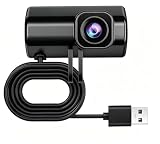
- 1. 1080P 200W HD Clear Recording: Equipped with premium 200W high-definition front lens, this DM01 cycling dash cam delivers sharp 1080P full HD video quality. It clearly captures road conditions, traffic signs, vehicles and pedestrian details during daytime riding. Restoring real scene colors and fine details, it provides reliable and clear video evidence for daily commutes, road emergencies and traffic disputes, fully guarding your riding safety all the way.
- 2. Superior Starlight Night Vision: Adopts upgraded starlight night vision technology to enhance low-light shooting performance significantly. The dash cam intelligently adjusts exposure, reduces image noise and brightens dark environments. It captures smooth and identifiable videos even under dim street lights, dusk or dark night conditions. No more blurry, grainy night footage, perfectly solving night riding recording problems for all two-wheel vehicle users.
- 3. IP66 Professional Waterproof Protection: Featured with IP66 waterproof rating, this bike recorder effectively resists daily rain splashes, road water spray, dust, sand and humid fog. It works stably in most complex outdoor weather without frequent disassembly and storage. Durable waterproof and dustproof structure prevents internal component damage, greatly extending the service life of the camera for long-term outdoor cycling use.
- 4. Scientific Vibration Resistance & Stability: Built with optimized anti-shake structural design to effectively buffer and offset strong vibration from bumpy roads, potholes and speed bumps. It avoids jittery, distorted and blurry videos caused by riding jolts. The recorded videos remain smooth, stable and high-definition at all times, ensuring consistent excellent recording effects on both flat urban roads and rough rural gravel roads.
- 5. Universal 5V USB Wide Compatibility: Adopts standard 5V USB power supply design, compatible with power banks, vehicle USB ports and other universal USB power sources. It perfectly fits all common two-wheel vehicles including bicycles, electric bikes, scooters and motorcycles. Plug and play with no complicated wiring or special adapters, supporting long-time continuous recording for various daily and long-distance riding scenarios.
Privacy, audio, and publishing decisions
Recording and sharing are separate decisions. Rules for private recordings, consent, audio, faces, plates, and online publication vary by location. Check the law where the recording was made and where you plan to publish it before uploading identifiable footage or sound.
The Bureau of Justice Assistance (BJA) material commonly cited on camera privacy concerns addresses law-enforcement body-worn cameras. It does not settle the rules for a private motorcyclist’s dash cam. Treat it as context for why privacy questions matter, not as a legal answer for your jurisdiction.
If you need advice about a specific incident, ask local law enforcement or a qualified lawyer. Do not rely on a social-media audience to decide whether a recording is lawful, admissible, or fair to publish. Blur or remove identifying details when publication is not necessary for a legitimate safety purpose, and retain the unedited original privately.
The Tool Desk
Outbyte Driver Updater FREEFix the driver behind crashes, sound loss and screen glitchesFind Drivers →Outbyte PC Repair FREEClear out junk files and repair common Windows errorsFree Scan →Common mistakes and how to correct them
Trying to capture a closer plate
Why it fails: Closing distance removes your escape route and can turn observation into pursuit. Correction: maintain space, note the plate or vehicle description only when naturally visible, and let the vehicle go.
Touching the camera in traffic
Why it fails: Looking down or reaching for a control compromises steering and hazard awareness. Correction: configure automatic or easy-to-confirm recording before departure and leave the device alone while moving.
Using a mount that vibrates or blocks the view
Why it fails: A loose bracket can produce unusable footage or interfere with controls. Correction: inspect the mount, cable, and full steering range while parked; confirm motorcycle suitability with the manufacturer.
Rank #4

- 【Dual Dash Camera & Split Screen Display】 This budget-friendly motorcycle dash cam features dual front and rear cameras with a 3-inch HD split-screen display. The front camera records in 720P at 120°, while the rear camera captures 480P at 90°, giving you basic coverage of what's happening in front of and behind your motorcycle
- 【IP67 Waterproof & All-Weather Reliability】Rated IP67 waterproof, the main unit operates reliably in temperatures from -20°C to +50°C (-4°F to 122°F). Whether you are commuting in summer rain or touring in winter cold, this motorcycle dash camera is built to withstand real-world riding conditions year-round
- 【24/7 Parking Mode & G-Sensor】Includes a hardwire kit for continuous parking monitoring. The built-in G-sensor automatically locks footage upon impact, while loop recording ensures you never run out of space. Motion detection activates recording when someone approaches your bike, keeping it protected 24/7
- 【Loop Recording & 64GB Card Included】This camera for motorcycle captures clear video evidence with synchronized front and rear recording. It comes with a 64GB MicroSD card and features seamless loop recording, which automatically overwrites the oldest files when the storage is full.e
- 【Universal Fit & Plug-and-Play Installation】Designed to fit any handlebar with the included adjustable bracket—compatible with sportbikes, cruisers, scooters, and touring bikes. Features simple wiring with a 12-24V to 5V step-down cable. Package includes the main unit, dual cameras, mounting accessories, and user manual
Relying on an empty battery or full card
Why it fails: The camera may appear installed but stop before the incident. Correction: check power and available storage before every ride, test recording, and understand the device’s recording-limit and loop behavior.
Assuming audio is automatically lawful
Why it fails: Audio rules can differ from video rules and vary by jurisdiction. Correction: check local requirements and disable audio when appropriate.
Posting before preserving the original
Why it fails: Editing, transcoding, or platform processing can remove metadata and context. Correction: make a verified original copy first, then create any edited version separately.
Practical ride and incident checklists
Before leaving
- Camera and mount are secure and outside the rider’s control and visibility paths.
- Lens is clean; the view is unobstructed; date and time are correct.
- Battery or external power is ready for the planned ride.
- Storage has room, and the card is compatible with the camera.
- Recording starts as expected without touching the device in motion.
- Helmet is DOT-compliant, protective clothing is worn, and the motorcycle’s normal safety checks are complete.
During an encounter
- Keep both hands and attention on riding.
- Create space and maintain a predictable path.
- Do not chase, confront, gesture back, brake-check, or follow.
- Do not handle a camera or phone to improve the recording.
- Head to a police department or a well-lit populated place if followed.
- Call 911 for an immediate threat and provide observed vehicle details.
After reaching safety
- Protect the relevant file from loop overwrite.
- Save the original and make a separate working copy.
- Write the time, place, direction, sequence, and identifying observations.
- Contact law enforcement after a threat or collision and follow its evidence instructions.
- Check privacy and audio rules before sharing anything publicly.
What the camera can—and cannot—establish
A well-configured camera can preserve a view of traffic, relative positions, signals, maneuvers, and portions of an encounter. Its usefulness depends on the lens view, light, vibration, distance, frame timing, storage continuity, and whether the relevant event occurred in front of it. The NIJ’s general selection factors—image quality, field of view, battery life, recording limits, night recording, audio, and placement—help organize those checks, but the September 2012 body-worn-camera primer is not a current motorcycle-product test.
Footage may not show what happened behind the rider, what was said outside the microphone’s range, or what occurred before recording began. A plate may be present in a frame yet unreadable because of distance, glare, motion, or compression. Preserve these limitations when describing the file to police, an insurer, or a court.
The best road-rage recording strategy is therefore defensive: prepare the equipment, leave it untouched during the encounter, escape the interaction, and preserve what the camera captured only after you are safe. The recording supports your account; it never outranks your safety.
Quick Recap
Product prices and availability are accurate as of the date/time indicated and are subject to change. Any price and availability information displayed on Amazon at the time of purchase will apply.




