Do these 3 things before closing this tab:
1Scan for outdated or missing drivers - takes under a minute2Clear out junk files and repair common Windows errors3Fix the driver behind crashes, sound loss and screen glitchesIf a vehicle catches fire, your priority is evacuation, not the battery. Stop as soon as it is safe, switch off the engine, get everyone out, move at least 100 feet away and away from traffic, and call 911 in the United States. Do not open a burning hood or trunk, return for belongings, or try to extinguish the fire.
“Car battery” can mean a conventional 12-volt battery, an EV or hybrid’s 12-volt accessory battery, or a high-voltage traction battery. Those systems have different failure modes and safe actions. This guide separates them, explains prevention, and shows when a jump-start is reasonable—and when it is dangerous.
As an Amazon Associate I earn from qualifying purchases.
First, identify which battery you are dealing with
Vehicle owners often use one phrase for several electrical systems. Correctly identifying the system prevents a harmless dead-battery procedure from being applied to a damaged high-voltage pack.
The Tool Desk
Outbyte PC Repair FREERepair Windows errors before they cause bigger problemsFix Now →Outbyte Driver Updater FREEScan for outdated or missing drivers - takes under a minuteDriver Scan →| System | What it powers | Can an owner jump-start it? | Main emergency concern |
|---|---|---|---|
| Conventional 12-volt battery | Starter motor, lights, electronics and other low-voltage equipment in gasoline and diesel vehicles | Sometimes, if the battery is intact and the owner’s manual permits it | Sparks, battery gas, acid exposure, short circuits and fire from damaged wiring or connections |
| EV or hybrid 12-volt accessory battery | Low-voltage computers, locks, lights and control systems | Model-specific; use only the procedure and connection points in the manual | Incorrect connections can damage electronics; the separate high-voltage system may still be energized |
| High-voltage traction battery | Propulsion motors and, depending on design, high-voltage charging and climate-control components | No. A traction battery cannot be jump-started | Electric shock, toxic or flammable vapor, immediate fire, and delayed fire after crash or water damage |
EV and hybrid designs vary. The owner’s manual is the authority for owner-level actions. Vehicle-specific emergency response guides and rescue sheets are intended to help trained responders identify high-voltage components and disable systems under controlled procedures.
#1 Best Overall
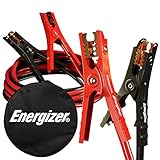
- ENERGIZER 16 FEET JUMPER CABLES - 6 Gauge, 16 FT booster battery jumper cables for jump starting a dead or weak battery. Ideal for trucks, SUVs, full-size cars, mid-size cars and small/compact cars
- THICK VINYL COATING - Includes a strong spring and a comfortable handle for secure placement and easy positioning. Thick vinyl coating for protection against rust and corrosion.
- CARRYING CASE INCLUDED - Our Energizer jumper cables come with a high-grade travel bag for easy transport and compact storage.
- TANGLE FREE CCA BOOSTER CABLES - 16 Foot length makes it easy to reach from one car battery to another. Copper clad aluminum cables remains flexible even at -40°C.
- THE BRAND NAME YOU CAN TRUST - We are here to power your car battery and truck with our booster jumper cables. We keep you going and going!
What to do if your vehicle catches fire
U.S. Fire Administration vehicle-fire guidance applies the same basic life-safety sequence whether the vehicle is gasoline-powered, hybrid or electric.
- Pull over when it is safe. Move out of travel lanes if possible without driving through smoke, flames or debris.
- Turn off the engine or vehicle. Use the normal shut-down control; do not delay evacuation to investigate.
- Evacuate everyone immediately. Take children, passengers and service animals. Do not stop to collect luggage or disconnect charging equipment.
- Move at least 100 feet away. Go farther if smoke, heat, traffic, terrain or emergency personnel direct you to. Position yourself away from moving traffic and upwind when practical.
- Call 911. Tell the dispatcher the vehicle’s location, whether anyone is trapped or injured, and whether it is an EV or hybrid if you know.
- Stay out. Do not return for phones, documents or other property, and do not approach the vehicle to take photos.
Do not open a burning hood or trunk
If you think there is a fire under the hood or trunk, do not open it. Opening the compartment can admit oxygen and intensify the fire. Keep doors, hood and trunk closed unless firefighters direct otherwise.
Do not attempt a DIY vehicle-fire attack
Do not use a household extinguisher as a substitute for evacuation and firefighters. A small visible flame can conceal burning wiring, fuel, battery cells or hot components. EV and hybrid traction-battery fires may produce high-voltage hazards and can reignite after appearing to be out. The U.S. Fire Administration states that evidence and tactics for EV incidents are still evolving and that there is no universally accepted, scientifically validated method that extinguishes every EV fire.
How to prevent vehicle and battery fires
Keep the vehicle maintained
Have routine service performed by a trained mechanic. Ask for damaged wiring, loose connections, leaking fluids, corroded terminals, worn insulation and signs of overheating to be addressed rather than concealed. A battery that is cracked, swollen, leaking or repeatedly overheating should not be used until a qualified professional evaluates it.
After a collision, do not assume a vehicle is safe because there is no flame. Hidden damage to wiring, battery enclosures or fuel systems can create a later fire. Follow the manufacturer’s post-crash instructions and have the vehicle inspected before charging or driving it.
Charge an EV or plug-in hybrid correctly
Charging is considered safe when the equipment is appropriate, certified and installed correctly. Use this checklist:
Rank #2
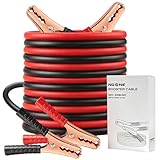
- UNIVERSAL FITMENTS :NOONE 10 FT car jumper cables support 200A peak current for jumping start 12/24V car battery. So NOONE booster cables are suitable for your vehicles with up to 3.0 L Gas Engines
- SUPERB PERFORMANCE :With rubber covered, NOONE battery booster cables can provide you insulated protection to prevent leakage current. Equipped with superb conductivity, our copper-clad aluminum cables conductors work well even in extreme temperatures(-40°F to 140°F)
- HIGH QUALITY CLIPS :Super strong bite, tight crimping and more conductive. Extra thick PVC sheath at the handle, can be fireproof flower, higher safety
- JUMPER CABLES KIT :The package includes a Jumper Cables, and is a quality choice for family cars
- THE BRAND NAME YOU CAN TRUST : Our NOONE automotive battery jumper cables provide a 2-year products service. If you encounter any problems, please do not hesitate to contact us via Email
- Use charging equipment certified by a nationally recognized testing laboratory.
- Follow both the vehicle maker’s and charger maker’s instructions, including connector, amperage and installation requirements.
- Have a dedicated circuit installed by a qualified electrician when the vehicle or charger requires one.
- Plug a Level I charger directly into a suitable outlet. Do not use an extension cord or multiplug adapter.
- Stop using a charger, cord, plug or outlet that is cracked, frayed, melted, discolored, wet or otherwise visibly damaged.
- Keep the charging area clear of combustible clutter and make sure ventilation and weather protection match the equipment instructions.
Never improvise a high-voltage repair or bypass a damaged connector. Arrange professional service through the vehicle maker, an authorized repair facility or emergency services as appropriate.
Do not treat battery work as casual maintenance
Battery charging and changing can release flammable gas and create ignition hazards. OSHA regulation 29 CFR 1917.157 addresses marine-terminal workplace operations, not every private vehicle owner, but its safety principles are useful: battery charging belongs in a designated area, away from ignition sources, with adequate ventilation, and should be performed by designated, trained personnel. The vehicle, battery and charger instructions control consumer procedures.
Recognizing a damaged or overheating lithium-ion battery
A high-voltage battery can be dangerous without visible flames. The U.S. Fire Administration identifies these warning signs of lithium-ion battery damage or thermal runaway:
- Cracking, crushing or other collision damage to the battery area
- Bulging or deformation
- Popping, hissing or unusual venting sounds
- Visible gas, vapor or smoke
- A battery or vehicle that is rapidly becoming hot
- Fire, sparks or a chemical odor
Flooding is another serious warning. Water intrusion can create high-voltage shock and fire hazards, even after the vehicle has been moved out of the water. A vehicle involved in a crash or flood should be kept away from buildings and other vehicles when feasible, and assessed by trained personnel.
What to do when an EV battery may be damaged
- Stop using the vehicle and, if it is safe, move people away from it.
- Keep others from touching the vehicle, orange high-voltage cables, exposed components, leaking liquid or damaged battery areas.
- Do not plug in the vehicle, attempt to drive it, remove panels or disconnect the high-voltage battery.
- Call 911 for smoke, heat, fire, injury or immediate danger. For non-emergency damage, contact the vehicle maker or a qualified high-voltage service provider.
- Tell responders about the crash, flooding, charging status and any symptoms such as hissing, heat or vapor.
Assume the high-voltage system remains energized. NHTSA guidance warns that damaged EVs can release toxic or flammable gases and can ignite immediately or later. Absence of flame does not make an exposed pack safe to touch.
Can you jump-start a car battery safely?
A jumper-cable set is a preparedness item for a permitted 12-volt jump-start—not fire protection. Jump-start only when the battery is the correct low-voltage system, the vehicle manual allows it, and the battery and cables appear undamaged.
Rank #3

- Strong And Safe Clamps: The TOPDC Jumper Cables booster cable has four giant alligator clamps with strong jagged teeth and springs for excellent grip force. The jaws are strong and make connections easy. And the High Peak Jumper Cables has insulating rubber material to prevent electric shock and protect the safety of users. The clamps are engineered with reinforced structure and well-designed jaws that provide a firm, secure grip on both top-post and side-terminal batteries, ensuring long-lasting durability and ease of use.
- 20 Feet Jumper Cables: The TOPDC 20 Feet Jumper Cables has an extremely long usage distance, which is suitable for use with SUVs, full-size cars, mid-size cars, and compact cars. The Jumper Cables adopts insulating material to prevent rust, corrosion so effective insulation. The 20 Feet Jumper Cables are suitable for various car models and are powerful helper in emergency situations. Made from high-quality Copper Clad Aluminum (CCA), the thick-gauge cables offer excellent conductivity and maintain flexibility even in extreme cold, providing reliable performance when you need it most.
- UL-Listed & qualified quality: The TOPDC Jumper Cables surface is made with premium PVC which is resistant to freezing, cracking & folding and won’t tangle. Each jumper clamp has undergone rigorous testing and successfully passed UL certification, which is exhibiting excellent performance under extreme temperature conditions (-40 °F to 140 °F). The thick vinyl coating is built to resist wear, prevent tearing, and protect the internal wire from exposure, enhancing safety and durability over time.
- Convenient storage and carrying: The TOPDC Jumper Cables will give a Carry Bag. When you need to use Jumper Cables, you can always carry it in your bag. When you don't need to use Jumper Cables, you can pack it in a bag and store it in any place. Convenient storage and carrying are truly essential items at home. The included 600D Oxford fabric storage bag is tough, spacious, and features a smooth zipper for easy access—perfect for neatly organizing cables and accessories without the hassle.
- Quality Assurance: TOPDC provides a 5-year quality guarantee and full after-sales support, reflecting our commitment to excellence and customer satisfaction. Every product undergoes strict quality inspection to ensure superior performance, consistent reliability, and long-lasting durability. The included clearly labeled step-by-step guide makes operation simple even for first-time users. With robust design, dependable construction, and a focus on user experience, TOPDC jumper cables are built to deliver confidence in any emergency situation—whether at home, on the road, or in extreme weather conditions.
Do not jump-start when any of these conditions apply
- The battery case is cracked, leaking, swollen, bulging or frozen.
- You see smoke, sparks, melted insulation, exposed conductors or signs of a short circuit.
- The vehicle has been in a collision or flood and its electrical condition is unknown.
- You are dealing with an EV or hybrid traction battery rather than the 12-volt system.
- You cannot identify the correct terminals or approved ground point from the manual.
- The cable set, donor vehicle or charging equipment is damaged.
Stop and request professional roadside assistance if you are unsure. A wrong connection can create a spark near battery gas, damage control modules or start a fire.
Use the owner’s manual for the exact connection order
Connection order and approved grounding points vary by vehicle. Some vehicles provide remote terminals instead of direct battery posts, and some prohibit using another vehicle as a donor. Follow the manual rather than a universal diagram.
AAA’s general safety guidance says to inspect for cracks or bulges and place the final negative clamp on bare, unpainted metal away from the dead battery. This reduces the chance that a connection spark will occur next to battery gas. The manual’s specified ground point takes priority.
Free tools Windows power users keep installed
One-click scans. No signup required.
- Park vehicles as directed by their manuals, set the parking brakes, switch off accessories and keep cables away from moving parts.
- Confirm the voltage and terminal identification for both vehicles.
- Connect the positive and negative clamps in the manual’s stated order. Keep the final negative connection away from the dead battery when the manual specifies a remote metal ground.
- Start the donor vehicle only if the manual permits it, then attempt to start the disabled vehicle.
- If the vehicle does not start promptly, stop rather than repeatedly cranking or repositioning live clamps.
- Switch off both vehicles before removing cables, and remove them in the reverse order specified by the manual.
- Have the battery and charging system tested. A jump-start may mask a failed battery, alternator, DC-to-DC converter or parasitic electrical drain.
For an EV or hybrid, this procedure—when allowed at all—applies only to the 12-volt accessory battery. It cannot charge or restart the high-voltage traction battery.
Independent reader supportYour contribution helps us test, update, and keep practical guides available for everyone.What drivers should know about EV and hybrid fires
High voltage can remain after a crash
High-voltage components may remain energized after the vehicle is switched off, airbags deploy or the 12-volt battery is disconnected. Orange cables and damaged battery enclosures should be treated as live. Do not cut, pull, probe or move them.
Delayed ignition is possible
Cells damaged by impact, heat or water can develop internal problems that lead to later gas release, heating or fire. A vehicle that was involved in a severe crash or submerged event should not be stored in an enclosed garage until qualified personnel and the manufacturer’s procedures establish that it is safe.
Rank #4

- Strong, Secure Clamps: Four insulated, serrated clamps give jumper cables a firm grip on top-post and side-terminal batteries.
- 12-Foot Copper-Clad Aluminum Jumper Cables: Flexible cables provide reliable conductivity and extended reach for cars, SUVs, and trucks.
- Reliable Quality: Jumper cables feature UL-listed clamps and a durable PVC jacket that stays flexible from -40°F to 140°F.
- Convenient Storage: Jumper cables include a durable 600D Oxford fabric carry bag with a smooth zipper for neat organization.
- Quality Assurance: TOPDC jumper cables include a 2-year guarantee, full after-sales support, and a clear step-by-step guide.
Responder tactics are not owner instructions
NHTSA interim guidance for trained responders includes vehicle identification, approaching from the sides and controlled procedures for 12-volt disconnection when local protocols, training and equipment permit. Those instructions do not authorize a driver to open battery compartments or disconnect high-voltage systems. Drivers should evacuate and provide information; firefighters and other trained responders decide how to stabilize, cool, move or monitor the vehicle.
Recommended Free Tools
Roadside preparedness that actually helps
Preparedness should support evacuation and communication, not encourage risky battery intervention.
- Carry a charged phone and keep roadside-assistance details accessible.
- Keep a flashlight, reflective vest or warning device and basic first-aid supplies where they can be reached without entering a burning vehicle.
- If your manual permits 12-volt jump-starting, carry correctly rated jumper cables and read the procedure before an emergency.
- Know whether your EV or hybrid has a separate 12-volt battery and where the manufacturer places approved service terminals; do not infer this from another model.
- Save the vehicle identification number and emergency contact information in a safe location outside the vehicle.
Jumper cables cannot prevent, suppress or make safe a vehicle fire. They are useful only for an appropriate, undamaged 12-volt system and do not replace inspection or roadside assistance.
Common mistakes and the safer alternative
| Mistake | Why it is dangerous | Safer action |
|---|---|---|
| Opening the hood to look for flames | Extra oxygen can intensify a concealed fire | Leave the hood and trunk closed; evacuate and call 911 |
| Trying to save belongings | Smoke, heat and rapid fire growth can trap occupants | Take people and service animals only, then move away |
| Touching orange cables or a damaged EV pack | The high-voltage system may remain energized | Keep away and wait for trained responders |
| Using an extension cord or multiplug adapter for Level I charging | Improper loading or damaged connections can overheat | Use a suitable outlet directly and follow installation guidance |
| Jump-starting a swollen or leaking battery | A spark can ignite gas or worsen an internal fault | Stop and obtain professional assistance |
| Assuming no flame means no danger after a crash or flood | Delayed gas release, shock or ignition can occur | Keep people away and arrange qualified assessment |
| Applying responder procedures yourself | Disconnecting or cutting the wrong component can cause shock or fire | Use the owner’s manual for minor owner tasks; leave high-voltage response to trained personnel |
After firefighters or technicians respond
Do not move or recharge a fire-damaged, crash-damaged or flooded EV unless emergency personnel and the manufacturer’s procedure say it is safe. Ask responders what hazards remain, whether the vehicle must be isolated, and which service organization should inspect it. Keep children and bystanders away from the vehicle and any leaked liquid or damaged components.
For a conventional 12-volt incident, have the battery, cables, fuses, starter, alternator and surrounding wiring inspected before driving again. Replacing only the visibly damaged battery may leave an overheated cable or charging fault unresolved.
Quick Recap
Key takeaways for drivers
- A burning vehicle is an evacuation emergency: stop safely, shut down, get out, move at least 100 feet away and call 911.
- Never open a suspected burning hood or trunk and never return for property.
- Prevent fires with trained maintenance and, for EV charging, certified equipment, correct installation and no extension cords or multiplug adapters.
- Separate the EV or hybrid 12-volt accessory battery from its high-voltage traction battery. Only the former may be eligible for a model-specific jump-start.
- Crashes, flooding, bulging, hissing, venting and rising temperature are reasons to keep away and seek trained help, even without visible flames.
- Assume a damaged high-voltage system is energized and potentially capable of delayed fire.
Product prices and availability are accurate as of the date/time indicated and are subject to change. Any price and availability information displayed on Amazon at the time of purchase will apply.




