Do these 3 things before closing this tab:
1Scan for outdated or missing drivers - takes under a minute2Repair Windows errors before they cause bigger problems3Fix the driver behind crashes, sound loss and screen glitchesA first track day does not require a race car. A mostly stock, road-legal car can be suitable for an instructor-led HPDE (high-performance driver education) event when its tires, wheels, brakes, fluids, steering, suspension, battery, restraints and safety equipment pass the organizer’s current inspection. The controlling document is the event’s own tech form and email—not a generic internet checklist.
Start by choosing a novice group, reading that organizer’s rules, and arranging an honest mechanical inspection. Then prepare the driver: use the required helmet and clothing, remove loose items, attend the mandatory meeting, learn flags and passing procedures, and drive at the instructor’s pace. The steps below follow that order and identify which requirements are event-specific.
As an Amazon Associate I earn from qualifying purchases.
1. Confirm that your car and event are compatible before you register
Choose an instructor-led novice group
Book a beginner or novice HPDE group rather than an open lapping session or a competitive race class. HPDE is instruction, not wheel-to-wheel racing, and novice groups normally include classroom guidance and an instructor in or near the car. If your vehicle has unusual modifications, a convertible roof, an aftermarket harness, electronic driving aids, or an uncertain rollover configuration, contact the organizer before paying. A guide from SpeedSF says a mostly stock, roadworthy car can be a good starting point, but that is not a promise that every model or configuration will be accepted.
What’s actually slowing this PC down?
Pick the symptom - the matching free tool is one click away.
Read the event’s current documents
Download the exact tech form, driver instructions and schedule for your date. NASA Southern California, a Porsche Club of America regional event and SpeedSF use different forms, helmet policies, numbering rules and inspection procedures. Older checklist pages can therefore be wrong for your event. Save the organizer’s latest email on your phone and print the forms if the event requires signatures.
#1 Best Overall

- Snell SA2025 Certified, made of Fiber Reinforce Plastic(FRP) shell, Double D-ring equipped, more lightweight and higher safety.
- Compatible with HANS/HNR M6 Threaded Inserts(not included), convenient for you to install Head&Neck Support devices to protect head and neck from getting hurt in auto racing sports.
- 40 MM sunshade film on the top of the visor helps to reduce giddiness caused by the sun/light while doing car racing acclivities.
- High density Expanded Polystyrene (EPS) fire retardant inner pads enhances comfort and safety.
- Tear-off posts button on the visor allows to install tear-off posts on the visor so as to ensure a clear view.
Schedule a mechanical check early
Book a qualified shop or an experienced mechanic several weeks ahead if you cannot inspect the car confidently. That leaves time to replace worn parts and recheck the work. SpeedSF specifically recommends qualified-shop advice when you are uncertain about brake products or tire condition. Do not wait until the morning of the event to discover a loose ball joint, damaged tire or leaking hose.
2. What tech inspection is designed to find
Inspectors are looking for failures that could cause a loss of control, a fluid spill or a part coming loose. Use the event form as the final authority; the repeated categories below appear on NASA, PCA and SCDA/The LIST forms.
| Area | Checks to perform | What to do if it fails |
|---|---|---|
| Tires and wheels | Look for adequate tread, cuts, bulges, cords, uneven wear and age-related damage. Check wheel condition, lug-nut security and the tire’s suitability for the expected weather. | Replace damaged or unsuitable tires; repair wheel or stud problems. Torque lugs to the vehicle maker’s specification unless the event states another procedure. |
| Brakes | Confirm a firm pedal, correct fluid level, intact lines and hoses, usable pad material, sound rotors and working brake lights. | Repair leaks, a soft pedal, damaged lines or critically worn pads and rotors before driving. Have a qualified shop select any track-oriented pad or fluid for your specific car. |
| Fluids and leaks | Check engine oil, coolant, brake fluid and—where fitted—power-steering fluid at the manufacturer’s level. Inspect the engine bay, underbody and parking area for fresh leaks. | Find and repair the source, clean the residue and recheck after a road test. Do not cover a leak with absorbent material. |
| Steering and suspension | Check for play, damaged boots, loose fasteners, leaking dampers and insecure components. Verify that the steering returns normally and the car tracks straight. | Repair worn or loose parts and obtain a fresh alignment if a repair changes suspension geometry. |
| Battery and electrical | Make sure the battery is firmly mounted with the correct hold-down; terminals must not be able to short. Check headlights, brake lights and other required lighting. | Install the proper hold-down and repair lighting or wiring faults. |
| Restraints | Inspect factory belts or approved harnesses for fraying, damage, correct latching and proper installation. Follow the event’s rules for seats, harness bars and airbags. | Replace damaged belts and have harnesses installed and inspected by someone familiar with that system and the organizer’s requirements. |
| Body and underbody | Look for loose trim, loose aero parts, exposed wiring, damaged wheel-well liners and anything that could detach. | Secure or remove the part before inspection. |
Passing a check is not a guarantee that the car is safe for every session. PCA’s 2025 final inspection form states: “No warranties or guarantees are implied or expressed by the passing of the inspection performed.” Continue monitoring the car after each run.
The Tool Desk
Outbyte PC Repair FREEClear out junk files and repair common Windows errorsFree Scan →Outbyte Driver Updater FREEScan for outdated or missing drivers - takes under a minuteDriver Scan →3. Tires and wheels: the highest-priority preparation
Inspect condition, not just tread depth
Use a bright light to examine every tire, including the inner shoulder. Search for puncture repairs, sidewall bubbles, cracks, cords, severe heat damage and irregular wear. Check that the tire’s load and speed ratings suit the car and that all four tires are compatible with the weather forecast. A tire that is acceptable for commuting can be unsafe after repeated high-temperature laps if it is old, damaged or already near the wear indicators.
Understand event-specific tread rules
There is no universal HPDE tread-depth number. NASA’s form checks tire condition and all lug nuts without establishing one blanket minimum in the guidance summarized here. The SCDA/The LIST form specifies a 3/32-inch minimum for street tires at that event. Treat that figure as a local rule, not a national standard. Measure where the organizer instructs and bring the form if an inspector asks how you verified it.
Secure the wheels
Inspect studs or wheel bolts for damaged threads, clean mating surfaces and confirm that the correct lug hardware is installed. Torque the lugs with a calibrated torque wrench in the vehicle’s specified sequence. PCA forms explicitly check wheel torque, while NASA forms check all lug nuts. Recheck torque after the first session if the organizer permits and your vehicle maker’s procedure calls for it.
Do not invent a universal cold-pressure setting. Start with the vehicle maker’s recommended cold pressure unless the organizer or your instructor gives a vehicle-specific adjustment, and record pressures before and after sessions so you can spot an abnormal change.
Rank #2

- 【DOT Certified & High-Impact Protection】 This full face motorcycle helmet meets or exceeds DOT FMVSS-218 standards, ensuring professional-grade safety. Built with a rugged ABS shell and energy-absorbing EPS, these motorcycle helmets dot approved provide ultimate defense for street bikes, cruisers, and sport bikes
- 【Optimized Airflow for All-Weather Riding】 Experience superior ventilation with 4 strategically placed air intakes and exhaust vents. This full face helmet design minimizes wind resistance and fogging, keeping you cool during summer rides and providing a reliable full face helmet adult option for rainy or cold weather
- 【Quick-Release Dual Visor System】 Adapt to any light condition with ease. Our full face helmet motorcycle features a tool-free quick-release system. Each order includes a pre-installed tinted shield plus a bonus clear visor, making these full face motorcycle helmets for men and women versatile for both bright days and night riding
- 【Washable Lining & Comfort Fit】 Maintain freshness on every journey with our fully removable and machine-washable interior. The moisture-wicking sponge padding makes these motorcycle helmets for adults incredibly comfortable for long-distance trips, ensuring a snug fit for these full face motorcycle helmets dot certified
- 【Complete Bundle & Perfect Sizing】 We include a premium carrying bag for easy storage and scratch protection. Whether you are searching for motorcycle helmets for women or men, TRIANGLE offers 4 sizes (S-XL) to ensure a secure fit. Please measure your head circumference to find the perfect full face motorcycle helmet for women or men
4. Brakes: verify health before considering upgrades
Perform a basic brake inspection
- With the engine running, press the pedal firmly. It should not sink slowly or feel spongy.
- Check the reservoir level and fluid appearance, then inspect every visible line, hose and caliper for wetness or damage.
- Measure pad material and inspect rotors for deep scoring, cracks or severe lips. Confirm that the brake lights illuminate.
- On a quiet road, perform several controlled stops and investigate pulling, vibration, noise or a change in pedal height.
NASA’s inspection form covers pedal pressure, fluid level, lines and brake lights. The LIST form calls out pad inspection and tells drivers to pit in if a soft pedal develops. If the pedal becomes soft on track, slow safely, signal, leave the racing line when instructed and report it; do not continue to “see if it clears.”
Choose consumables for your car, not by internet folklore
Some first-timers benefit from fresh fluid or pads with a higher temperature range, while others have enough margin with healthy factory parts. SpeedSF recommends considering track-suitable pads and fluid with qualified-shop advice for the particular vehicle. No source here establishes one pad compound, fluid specification or replacement interval for every car, so do not buy a product solely because it is marketed for racing. Confirm compatibility with your calipers, seals, ABS system and street use.
5. Fluids, cooling and leak control
Check engine oil and coolant at the manufacturer’s level on a level surface, with the engine at the condition specified in the owner’s manual. Inspect radiator and heater hoses, clamps, the expansion tank, oil filter area, drain plug and the ground beneath the car. Include brake and, where fitted, power-steering fluid in the inspection. A small seep can become a track-closing spill when temperatures and pressure rise.
Do not use a universal “change the oil every X laps” rule; the available event guidance does not establish one. Follow the vehicle maker’s maintenance schedule and shorten it only when a qualified technician identifies a reason. Bring the correct top-up fluids in sealed containers if the organizer allows them, but never open a hot pressurized cooling system.
Windows Errors? Fix Them Before They Spread
Repair common Windows errors and clear accumulated junk for a smoother, more stable PC - no reinstall needed.Free scan · no reinstallOutdated Drivers Are Slowing You Down
One free scan finds every outdated or missing driver and matches the right update for your exact hardware.Free scan · exact hardware match6. Steering, suspension, battery and restraints
Find play before the inspector does
With the car safely supported, check for movement at the wheels and inspect ball joints, tie rods, control-arm bushes, wheel bearings and damper mounts. Look for torn boots, leaking dampers and missing fasteners. A road test should show predictable steering, no clunks and no pull under braking. Any uncertainty warrants a shop inspection.
Secure the battery correctly
The battery must be held by the vehicle’s proper clamp or an approved equivalent; a loose battery can become a heavy projectile or short the electrical system. Check both terminals, the hold-down and nearby wiring. Do not substitute an improvised strap that can loosen or contact a terminal.
Use restraints the way the event allows
Factory three-point belts are often acceptable in novice HPDE, but the organizer controls the rule. Aftermarket harnesses may require a compatible seat, harness bar or roll structure and can conflict with airbags. Inspect webbing, buckles and mounting hardware, and ask the organizer before changing the restraint system.
Rank #3
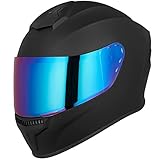
- 【Lightweight】Ultra Lightweight and Durable ABS Shell + Multi-Density EPS liner to meet or exceed FMVSS-218 and DOT Safety Standards
- 【Ventilated】Multiple vents for optimum ventilation and quick release metal buckle offer solid protection
- 【Removable & Washable】Equipped with fully removable, washable, and replaceable inner liners that are breathable and absorb sweat
- 【Protective】The helmet comes with One tinted shield which is on the helmet, beautiful glossy UV protective finish
- 【Detachable】The nose protector on the helmet can be removed if you needn't it
7. Convertibles, rollover protection and electronic driver aids
Convertibles need an explicit answer from the organizer
Convertible policies differ. Some events require factory rollover protection; others require an approved roll bar or impose additional top-down or top-up conditions. Central Indiana Region PCA publishes its own rollover requirements, while SpeedSF tells convertible owners to ask before booking. Send the organizer the exact year, model and roof configuration and get the answer in writing.
Disable driver aids only when instructed
PCA’s 2025 form directs drivers of cars equipped with emergency automatic braking or lane-drift systems to switch those systems off on track and understand whether they reactivate. That is an event-specific instruction, not permission to disable every stability or safety system in every car. Read the owner’s manual, ask the organizer which settings are required, and confirm the system remains in the expected mode after cycling the ignition.
Numbers, tow points and cameras
Some events require car numbers and identify exact placement. One PCA regional form specifies numbers 8 inches high on the sides, 4 inches high on the rear and 8 inches high on the front hood (or the windshield position stated on that form). Those dimensions are not a universal standard. Ask whether temporary magnetic or painter’s-tape numbers are allowed, and confirm any required tow point or marker.
Mount cameras and phones so they cannot detach or interfere with controls. Follow the organizer’s rule for suction cups, roll-bar mounts and recording devices; remove anything not expressly permitted.
8. Helmet, clothing and personal safety equipment
Confirm the accepted helmet certification with the event, because standards and rental policies differ. NASA Southern California says helmets may be rented at its event if available; SpeedSF lists its own accepted standards and rental option; PCA’s 2025 grid form has its own requirement. Availability is not guaranteed, so reserve a compliant helmet or bring one that the organizer has approved.
Ask about clothing, shoes, eye protection and any fire-resistant requirement. NASA Southern California’s preparation guidance specifically lists eye protection. Closed-toe, secure footwear that lets you modulate pedals is a practical baseline, but the event’s written rule controls. Remove scarves, loose jewelry and anything that can catch on the steering wheel or shifter.
Independent reader supportYour contribution helps us test, update, and keep practical guides available for everyone.9. Empty the car and prepare the driver
Remove every loose object
Empty the cabin, door pockets, glove box and trunk. Take out floor mats, tools, bottles, shopping bags, spare parts and anything that can move under a pedal or strike an occupant. NASA Southern California specifically tells novices to remove loose items. Secure only equipment the organizer permits, such as a properly mounted camera.
Rank #4

- Snell SA2025 Certified, made of Fiber Reinforce Plastic(GFRP) composite shell, Double D-ring equipped, more lightweight, and higher safety.
- Compatible with HANS/HNR M6 Threaded Inserts(not included), convenient for you to install Head&Neck Support devices to protect your head and neck from getting hurt when participating in auto racing sports.
- 40 MM sunshade film on the top of the visor helps to reduce giddiness and dizziness caused by the sun/light while doing car racing acclivities.
- High-density Expanded Polystyrene (EPS) fire retardant inner pads enhance comfort and safety when it happens to an accident.
- Tear-off posts button on the visor allows installing tear-off posts on the visor so to ensure a clear view according to the racer’s needs.
Bring what keeps you functional
- Water and food or snacks for the full day.
- Sunscreen and weather-appropriate layers.
- Event paperwork, waiver confirmation, license and any required medical or membership information.
- An approved helmet and required clothing or eye protection.
- A tire-pressure gauge; a torque wrench and correct socket if you know how to use them safely.
- Basic personal medication and a way to protect your phone and keys from heat.
NASA Southern California lists water, snacks, sunscreen and eye protection among novice essentials. Check whether your venue permits a canopy, jack, fuel container or tools before bringing them.
10. Arrival, inspection and the drivers’ meeting
Arrive with time to spare
Allow enough time for parking, waivers, tech inspection, number placement and the classroom session. Inspection may happen before registration, at a designated paddock lane or during a published window. Ask the organizer where to queue and what happens if the car needs a recheck.
Attend the mandatory meeting
NASA Southern California’s March 27, 2026 preparation page states: “There is a mandatory drivers’ meeting in the morning.” Treat that as a model for the seriousness of the briefing, not a rule for every organizer. The meeting normally covers flags, pit entry and exit, blend lines, passing zones, point-by signals, emergency procedures and session format. Missing it can mean losing track access.
Drive to the instruction, not the stopwatch
Central Indiana Region PCA advises novices to learn blend lines, flags, corner-worker functions and basic car control before focusing on speed. Follow the local passing rule; that organization uses designated zones and a point-by signal. Keep predictable lines, give the required signal, and never pass where the rules prohibit it. Your instructor’s pace is the limit for the session, even if the car feels capable of more.
11. Insurance and financial risk
Track use can fall outside a normal personal auto policy. Ask your insurer in writing whether your specific policy covers an HPDE event, collision damage and liability at that venue. Optional HPDE policies, where available, have their own event eligibility, exclusions, deductibles, limits and rules for track-property coverage. Verify current terms directly; there is no reliable universal price or coverage level to quote. Even a careful novice can damage a car or a facility, so decide what loss you could absorb before driving.
12. Session-by-session checks and troubleshooting
Before the first green flag
- Walk around the car and look for fresh fluid, a low tire, loose trim or a changed wheel position.
- Check tire pressures and wheel-lug security according to the organizer’s procedure.
- Confirm belts, helmet strap, mirrors, seat position and the required electronic settings.
- Remove the pit-lane items you do not need and verify the radio or instructor communication method.
After every session
- Inspect for leaks, smoke, tire damage, rubbing and loose fasteners.
- Check pedal feel before leaving the paddock. A soft pedal, vibration, warning light or unusual noise means stop and seek the organizer’s or instructor’s help.
- Record tire pressures and temperatures only if you have the correct equipment and understand the readings; do not chase a target supplied for another vehicle.
- Let the car cool as directed. Do not apply the parking brake to extremely hot brakes if the vehicle maker or organizer warns against it.
If the car fails inspection
Ask the inspector to identify the exact failed item and whether a documented repair or reinspection is permitted. Do not argue a generic rule when the event’s form is stricter. If the problem is structural, a leak, damaged tire, insecure battery, defective restraint or brake fault, withdraw rather than improvising a trackside fix.
Quick wins for a faster PC:
Fix the driver behind crashes, sound loss and screen glitchesFind Drivers →Repair Windows errors before they cause bigger problemsFix Now →Scan for outdated or missing drivers - takes under a minuteDriver Scan →Quick Recap
13. A practical preparation timeline
Several weeks before
- Select a novice HPDE and read its current form.
- Ask about convertibles, numbers, helmets, clothing, tow points, electronic aids and insurance.
- Book a mechanical inspection and order only parts confirmed for your car.
One week before
- Complete repairs, road-test the car and recheck for leaks.
- Confirm the helmet and personal equipment, paperwork and arrival time.
- Study the track map, flags, pit entry and blend line.
The evening before
- Remove loose objects and install permitted numbers or mounts.
- Check fluids, tire condition, lug torque and battery security.
- Pack water, food, sunscreen, eye protection, gauge and required documents.
Event morning
- Arrive early, complete waivers and inspection, and attend the meeting.
- Ask questions before the first session rather than guessing on track.
- Drive smoothly, leave margin and report any symptom immediately.
Product prices and availability are accurate as of the date/time indicated and are subject to change. Any price and availability information displayed on Amazon at the time of purchase will apply.




