Do these 3 things before closing this tab:
1Fix the driver behind crashes, sound loss and screen glitches2Clear out junk files and repair common Windows errors3Scan for outdated or missing drivers - takes under a minutePrepare before the warning: check the battery, tires, coolant, wipers, lights, heater and other cold-sensitive systems; load a complete winter survival kit; and remove every bit of snow and ice from the vehicle before moving. Check the forecast and road reports before leaving. Postpone nonessential travel during a Winter Storm Warning, and do not drive during a Blizzard Warning unless the trip is an emergency. If travel is unavoidable, tell someone your route and arrival time, use main roads in daylight when possible, and be ready to stay with the vehicle if you become stranded.
The National Weather Service (NWS) reports that more than 5,000 people are killed and more than 418,000 injured in weather-related vehicle crashes in an average year; the page does not state the underlying data year. Its concise rule is: “TAKE IT SLOW IN THE SNOW.”
As an Amazon Associate I earn from qualifying purchases.
Start before the storm warning
A heavy-snow forecast is not the time to discover a weak battery, bald tires or a heater that cannot keep the windshield clear. The NWS recommends checking and winterizing the vehicle before winter, then repeating the most important checks before a long trip. Use the NWS winter-preparation checklist as your baseline.
The Tool Desk
Outbyte Driver Updater FREEScan for outdated or missing drivers - takes under a minuteDriver Scan →Outbyte PC Repair FREERepair Windows errors before they cause bigger problemsFix Now →Battery and starting system
- Have the battery tested if it is old, slow to crank or showing corrosion. Cold temperatures reduce available starting power, while snow-related delays may require repeated starts.
- Inspect battery terminals and cables for looseness or corrosion, and make sure the charging system is working.
- Carry booster cables and know where the battery terminals are located. Some vehicles require manufacturer-specified jump points rather than direct access to the battery.
Tires, pressure and tread
- Check inflation when the tires are cold and follow the pressure listed on the driver’s-door placard or owner’s manual, not the number molded into the tire sidewall.
- Inspect tread and look for uneven wear, cracks, bulges or embedded damage. The NWS specifically calls for good tread before winter travel.
- Ask a qualified tire dealer whether winter tires are appropriate for your vehicle and local climate. Four-wheel drive can help a vehicle move in some conditions, but it does not guarantee traction or shorter stopping distances.
Coolant and other fluids
- Confirm the coolant level and freeze protection are suitable for the expected temperatures. A cooling-system leak can leave you without cabin heat and damage the engine.
- Top up windshield-washer fluid with a winter-rated formulation. Do not dilute it with plain water when freezing weather is expected.
- Check engine oil, brake fluid and other fluid levels according to the owner’s manual, and repair leaks before the trip.
Wipers, defroster, lights and heater
- Replace streaking or torn wiper blades. Verify that the front and rear washers spray and that the nozzles are not frozen or blocked.
- Turn on the front defroster, rear defogger and heater. A strong airflow and clear windshield are essential for visibility.
- Test headlights, tail lights, brake lights, turn signals, hazard lights and license-plate lights. Snow and road spray can obscure lamps that worked normally in dry weather.
Cold-sensitive equipment
Inspect belts, hoses, door seals and any system that has previously behaved poorly in cold weather. Keep the fuel level comfortably above empty so an unexpected delay does not become a second emergency. Finish repairs before the forecast worsens; parts, service appointments and roadside assistance may be harder to obtain once roads deteriorate.
#1 Best Overall

- Premium Roadside Emergency Kit: This winter safety kit includes 86 essential items, featuring 12 ft 8 Gauge jumper cables, and a 73-item first aid kit, preparing you for any roadside crisis
- Winter Car Tools: Stay safe during winter travel with our detachable snow shovel and car snow brush, specifically designed to clear snow and ice from your vehicle quickly. Ideal for drivers in snowy regions who want peace of mind on wintry roads
- Car Essential Safety Accessories: Equipped with a tire repair kit, ice scraper, safety hammer, tow rope, warning triangle, flashlight, gloves, and more, this kit ensures you're prepared for unexpected situations, snow kit for car perfect for long trips or daily commutes
- Practical Gift for Drivers: This snow travel car kit is a thoughtful gift for new drivers, parents, or frequent travelers. Show you care about their safety with a comprehensive set designed to keep them prepared for any road situation
- Compact & Easy to Store: All items are neatly organized in a durable kit bag for easy storage in your trunk. Keep your emergency tools accessible and ready to use. If you have any questions, feel free to contact us. We'll do our best to help
What should I keep in my car for a snowstorm?
Keep the kit in the passenger compartment or another place you can reach without unloading the vehicle into blowing snow. The NWS lists the following supplies in its winter safety guidance and winter-preparation guidance.
| Need | Items to carry | Why it matters |
|---|---|---|
| Communication and navigation | Charged mobile phone, vehicle charger, spare batteries, paper maps and a compass | Cell coverage and battery life can be unreliable; a paper route remains usable when electronics fail. |
| Warmth | Blankets or sleeping bags, extra dry clothing, hats, gloves and sturdy footwear | Wet clothing and long waits in a cold vehicle accelerate heat loss. |
| Light and signaling | Flashlight with spare batteries, reflective or brightly colored cloth and a whistle if available | Helps rescuers locate you and lets you work outside briefly when necessary. |
| Food and water | High-calorie, nonperishable food and a water container | Provides energy during a delay. Replace supplies that expire or become damaged. |
| First aid and sanitation | First-aid kit, essential medicines, tissues, wipes, toilet supplies and a small amount of sanitation material | Supports routine medical and hygiene needs while you wait for help. |
| Snow removal | Windshield scraper and brush, plus a shovel | Clears windows, door areas and the exhaust outlet; a shovel also helps remove packed snow around the tires. |
| Traction and recovery | Bag of sand or cat litter, booster cables, tow rope and a basic tool kit | Improves tire grip on a short, controlled maneuver and supports a battery or recovery problem. |
| Personal needs | Child supplies, pet food and water, leashes or carriers, and any equipment specific to occupants | A commercial kit rarely matches every passenger’s needs. |
Check the kit at the beginning of winter and again before a major trip. Recharge the phone and flashlight, replace expired food and medicines, and make sure the shovel, scraper and cables are still present. The official list is a baseline, not a guarantee that a packaged kit contains everything your household requires.
Packaged kit or individual items?
| Approach | Advantages | Limitations and what to check |
|---|---|---|
| Packaged winter emergency kit | One purchase, organized storage and a quick way to cover common categories. | Contents vary. Compare the package item by item with the NWS list, then add missing food, water, medicines, child supplies, pet supplies, clothing or tools. |
| Assemble items individually | Best fit for your vehicle, climate, occupants and medical needs; you can select a full-size tool where a small bundled item would be inadequate. | Requires more planning and storage organization. Use a written checklist so communication, traction, warmth and first-aid items are not overlooked. |
Choose the shovel for the job
A compact shovel fits more easily in a trunk and is useful for clearing packed snow around a tire or exhaust pipe. A full-size shovel moves more snow with less bending and is preferable when your vehicle has enough cargo space. Whichever style you choose, keep it accessible and practice using it without blocking the road or exposing yourself to traffic.
Quick wins for a faster PC:
Clear out junk files and repair common Windows errorsFree Scan →Scan for outdated or missing drivers - takes under a minuteDriver Scan →Repair Windows errors before they cause bigger problemsFix Now →Rank #2
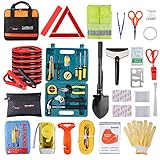
- ESSENTIAL RESOURCES: Packed with practical supplies from jumper cables, reflective triangle and vest to tow rope, and tire presure gauge, we've got everything you need to stay safe during an roadside emergency. But that's not all - it also includes rarely used but essential items like safety hammer, emergency blanket, and survival whistle. With these, you'll be prepared for almost everything the road throws your way.
- RELIABLE JUMPER CABLES: Say goodbye to uncoated jumper cable clamps! Our clamps are fully covered with premium PVC material to protect you from electrical shocks and make sure you can use them safely. The four giant alligator clamps are equipped with strong jagged teeth and springs for an excellent grip force. With a 6 gauge thick inner core, our cables are reliable even in cold winter weather.
- FOLDABLE SURVIVAL SHOVEL: At 16.5 inches, it's a portable size and comes with a carrying pouch. Its versatile design allows for shoveling, digging, hoeing, sawing, and chopping, making it the perfect tool to get you out of any tight situation.
- CAR REPAIR TOOL SET: This handy kit contains all the necessary tools for emergency vehicle repairs and basic household DIY projects, including hammer, wrench, plier, tape measure, PVC tape, digital display test pen, 3 screwdrivers, and 5 hex key. Each tool is neatly organized in a handy case for easy storage and portability.
Make the go-or-no-go decision
Check both the forecast and current road conditions immediately before departure. In the United States, NWS guidance points drivers to their state’s 511 road-information service; local alert definitions and road closures vary by jurisdiction. Conditions can change faster than a forecast app updates, so check again if the trip is delayed.
What a warning means for your trip
| Situation | Decision | If travel cannot wait |
|---|---|---|
| Routine snowfall with passable roads and no severe alert | Travel only if the vehicle and driver are prepared, and allow extra time. | Use the driving practices below and keep the survival kit in the cabin. |
| Winter Storm Warning | Postpone nonessential driving. A warning signals hazardous conditions that may make travel dangerous. | Confirm closures and conditions, tell someone your route and expected arrival, and use main roads in daylight if an emergency trip is unavoidable. |
| Blizzard Warning | Do not drive except for an emergency. Blowing snow, whiteout conditions and rapid disorientation can overwhelm even a prepared vehicle. | Follow local emergency instructions. If already on the road, seek a safe place to stop before visibility collapses. |
Before leaving, send a trusted person your route, destination, vehicle description and expected arrival time. Agree on when they should call for help if you do not check in. Do not rely on four-wheel drive or an SUV as permission to ignore a warning: those systems help transmit engine power, but they do not prevent sliding on ice or packed snow.
Prepare the vehicle immediately before departure
Allow enough time to remove snow and ice completely. Do not clear only a small viewing hole or rely on the defroster to melt a thick layer while you drive.
Rank #3

- The Road Guardian- The portable roadside assistance kit is designed and hand picked by a group of experienced veterans and experts to provide every essential tools you need in roadside emergencies. The automotive safety bag contains accessories such as repair cable ties, bungee cords, electrical tape, space blanket, rain poncho, reflective warning triangle, glass breaker, seatbelt cutter, safety gloves, tow rope and more to get your vehicle back on the road and continue your travel.
- Top-Notch Digital Auto Tire Inflator- lightweight and compact air compressor can inflate your standard vehicles tire in seconds. With auto shutoff function, simply plug it into the 12v power outlet and attach the stem to the tire valve, preset the tire pressure and press the power button. The compressor starts the inflating process and stop once your tire reaches at your preset level. This cool gadget also has led light for winter nighttime and three extra nozzles for inflammable bed, others
- Copper-Clad Aluminum 12 Feet 8 Gauge Jumper Cable- A durable battery starter cable is a must-have for your trip. Unlike other kits on the market, our jumper cable has reasonable length to get your cars connected. 8 gauge wires and 300 amp output is more than enough to get your standard vehicle started. UL listed heavy-duty battery jumper cables make you physically and environmentally safer and more reliable.
- Completed 108 Pieces First Aid Kit- By having a completed first aid kit, provide you and your family proper basic wound/hygiene treatment before it possibly get worsened during your road trip. Our kit includes alcohol pads, bandages, cotton tips, knuckle bandages, butterfly bandages, wound pad, sting relief pads, gloves, tape, dressing, PBT bandage, CPR mask, tweezer, safety pins, soap wipe, disinfect wipe, adhesive wound pad, triangular bandage, finger bandage.
- Veteran Owned Company 5-Star Customer Support- Everlit is committed into providing the most comprehensive customer service. We proudly offer the exclusive 60-days hassle-free return among all products. We stand behind the quality of our inventory; all original Everlit products are covered with a 1-year satisfaction warranty.
- Clear the roof first. Push loose snow off the entire roof, including the area above the windshield and rear hatch. NWS Chicago warns that roof snow can fly off while the car is moving and endanger drivers behind you; see its winter preparedness guidance.
- Free every window. Scrape the windshield, side windows, rear window and mirrors. Remove ice from wiper blades and make sure the blades are not frozen to the glass before switching them on.
- Uncover all lighting. Brush snow and ice from headlights, tail lights, brake lights, turn signals and hazard lights. Clean license-plate illumination if it is obscured.
- Clear cameras and sensors. Wipe forward-facing driver-assistance sensors and the backup camera lens. A snow-covered camera or radar sensor can give a false view or disable a safety function; do not assume an electronic warning means the system is still operating normally.
- Open and inspect the vehicle. Remove snow from door seams, the hood intake area and the hatch. Check that doors latch and that no exhaust outlet is blocked by a drift.
- Load the kit where it is reachable. Keep the scraper, brush, shovel, phone charger, flashlight, blankets and first-aid supplies available from inside the cabin. Secure loose cargo so it cannot become a projectile in a stop.
Never pour boiling water on glass; the sudden temperature change can crack it, and refreezing water can create a larger hazard. Use a scraper, the vehicle’s defroster and an appropriate de-icer instead.
Recommended Free Tools
Driving when an unavoidable trip begins
Start only after checking the latest road report and confirming that your vehicle can maintain visibility. Buckle every occupant, turn off cruise control and drive below the speed that would be normal on dry pavement.
- Increase following distance. Leave substantially more room for braking because snow and ice reduce tire grip. Look farther ahead so you can ease off the accelerator rather than brake abruptly.
- Use smooth controls. Avoid sudden acceleration, abrupt braking and sharp steering. Make turns gradually and keep both hands available for steering.
- Do not use cruise control. It can encourage excessive speed and may cause unwanted throttle input when tires lose traction.
- Give snowplows room. Stay well behind active plows, do not pass them in a cloud of blowing snow, and remember that the road ahead of a plow may be worse than the cleared lane behind it.
- Use main roads and daylight when possible. They are more likely to receive priority treatment and easier for responders to reach, but they can still close without notice.
- Stop if visibility collapses. Pull completely off the travel lane at a safe location, use hazard lights and reassess conditions. Do not stop where a plow or emergency vehicle cannot pass.
The NWS summarizes the approach as “TAKE IT SLOW IN THE SNOW.” Four-wheel drive may help you get moving, but it does not make braking, cornering or a whiteout safe.
Rank #4

- KEEP PEACE OF MIND WHEN YOU NEED IT: Have you ever stopped car on the road and desperately waiting for help? This ideal car emergency kit for every driver on the road, just stash this automobile emergency kit in your vehicle, enable you can get your vehicle back to the roadside safely, solve variety of roadside emergencies issues
- STURDY AND PREMIUM AUTO ROADSIDE EMERGENCY KIT: Different from other 300 Amp jumper cables in the market, our 6 Gauge thick 500 Amp jumper cables is covered with premium PVC to ensure stability even in winter.Upgarded car emergency roadside asisstance automobile emergency kit include practical accessories --set of 16 car repair tool kit, snow/garden shovel, tow rope, hand cranlight, warning triangle, first aid kit,anti-slip gloves,also contain snow/garden shovel
- UNIVERSAL CAR ROADSIDE ASSISTANCE KIT: Universal car emergency kit is perfect for automobile, trunk, vehicle, motorcycle, SUV and RV. The first aid kit in package also can be use for the home daily, workplace, cars, it also includes preparedness survival tools for outdoor activities like camping, hiking, hunting
- PERFECT FOR CAR OWNERS: Our winter auto emergency kit is must have TRAVEL COMPANION for road trippers, commuters, and families, and makes an ideal car safety travel kit for women, men and new driver. With our all-inclusive emergency survival kit and car tool kit emergency, keep yourself and your loved person safe on the way
- ROADSIDE EMERGENCY CAR KIT: This car emergency kit is premium, light, compact . It can fit auto, vehicle, trunk or even in your spare tire compartment, can handle many things
What to do if you become stranded
Stay with the vehicle unless a safe, very close shelter is plainly visible and reachable. Wind-driven snow can erase tracks and disorient a person within minutes. A vehicle is easier for rescuers to find and provides protection from wind.
Immediate actions
- Call for help. Give your location, direction of travel, road name or mile marker, number of people in the vehicle and any medical needs. Send a text if a voice call will not connect, and conserve phone battery after the message is delivered.
- Make the vehicle visible. Turn on hazard lights. Tie a bright cloth to an antenna, mirror or door handle where it will not interfere with traffic. At night, use the interior light only while the engine is running to avoid draining the battery.
- Check the exhaust pipe immediately. Clear snow away from the outlet before starting the engine and repeat the check whenever drifting snow is present. A blocked exhaust can force carbon monoxide into the cabin.
- Run the engine intermittently for heat. NWS guidance recommends running it for about 10 minutes each hour, not continuously. Open a window slightly while it runs to reduce carbon-monoxide danger, and keep the exhaust outlet clear throughout the cycle.
- Layer clothing and use blankets. Keep dry clothing on, cover heads and hands, and share food and water in measured amounts. Do not consume alcohol as a warming strategy; it increases heat loss and impairs judgment.
- Monitor occupants. Watch for uncontrollable shivering, confusion, unusual sleepiness, headache, nausea or weakness. Treat these as possible cold exposure or carbon-monoxide emergencies and tell rescuers immediately.
Why carbon monoxide precautions are non-negotiable
Carbon monoxide has no reliable smell or color warning. Snow can plug an exhaust outlet even when the vehicle appears clear from the driver’s seat. The slightly open window, intermittent engine schedule and repeated exhaust checks are required together; one precaution does not compensate for skipping another. If anyone develops symptoms, shut off the engine, move to fresh air only if doing so is safe, call emergency services and report the possibility of carbon-monoxide exposure.
When leaving the vehicle may be justified
Leaving is generally more dangerous than waiting. Consider it only when a clearly visible, nearby building or staffed shelter is close enough to reach without losing the vehicle, and only if authorities or rescuers direct you. Do not walk into blowing snow to search for help. If you must move, leave a written note with your direction and time, take a phone and essential medication, and stay together.
Best Value

- Superior Thermal Retention: Crafted from advanced aluminized Mylar, these foil emergency blankets are designed to retain up to 90% of body heat, providing crucial warmth in survival situations. A trusted addition to your survival gear and supplies.
- Multi-Purpose Survival Tool: Ideal for various emergency scenarios, including camping, hiking, and natural disasters. Can be used as ground cover, shelter, or to prevent hypothermia and shock. A good addition for camping or prepper gear and supplies.
- Compact & Lightweight Design: Each survival space blanket measures 82" x 52" when unfolded yet folds down to a compact size, making it easy to store in bug out bags, backpacks, cars, emergency kit, survival kit, or apocalypse gear without adding bulk
- Durable & Reusable Material: Made with tear-resistant Mylar, these blankets are not only durable but also reusable, ensuring long-term reliability for multiple emergency uses. Add them to you tornado shelter supplies and bug out bag supplies.
- Essential Emergency Preparedness: A must-have for any emergency kit. Space emergency blankets are perfect for use as emergency camping blankets, hiking, car safety kits, and disaster preparedness, offering peace of mind in unpredictable situations.
After conditions improve
Before resuming travel, clear fresh snow from the roof, lights, windows, sensors, camera and exhaust again. Check for damage from ice or drifting snow, confirm that the vehicle starts normally and verify the latest road status rather than assuming a closed route has reopened. Replace used kit supplies and recharge batteries when you reach a safe destination.
Choosing tires for your local winter
The choice between all-season and winter tires depends on the vehicle, temperatures, snowfall, ice, hills and how often you must drive. All-season tires can be adequate for some moderate climates, while winter tires are designed for better cold-weather grip; neither option overrides a road closure or severe-weather warning. Tire size, wheel clearance, pressure-monitoring requirements and local regulations are vehicle-specific. Ask a qualified tire professional for fitment advice, and use the same tread and pressure checks described earlier.
Quick Recap
| Comparison point | All-season tires | Winter tires |
|---|---|---|
| Typical fit | One set for drivers who encounter mixed conditions and limited severe winter weather. | Separate seasonal set for drivers who regularly face low temperatures, snow or ice. |
| Decision factors | Local climate, vehicle suitability, tread condition and the driver’s ability to postpone trips. | Cold-weather frequency, snow and ice exposure, storage for the off-season set and professional fitment. |
| What neither guarantees | No tire makes speeding, sudden maneuvers, a blizzard or a closed road safe. Traction remains limited by surface conditions. | |
A one-page departure checklist
- Forecast, warnings and state 511 road report checked immediately before departure.
- Nonessential trip postponed during a Winter Storm Warning; no travel during a Blizzard Warning except an emergency.
- Route, destination and expected arrival shared with a contact.
- Battery, tires and tread, coolant, washer fluid, wipers, lights, heater and defrosters checked.
- Roof, windows, mirrors, lights, sensors, backup camera and exhaust outlet fully clear.
- Phone, charger, batteries, blankets, dry clothing, food, water, first aid, medicines, flashlight, shovel, scraper, brush, tools, tow rope, booster cables, traction material, maps and personal supplies loaded.
- Cruise control off; speed reduced; following distance increased; no abrupt braking or sharp turns.
- If stranded: stay with the vehicle, signal, clear the exhaust, run the engine about 10 minutes per hour with a window slightly open, and contact rescuers.
Product prices and availability are accurate as of the date/time indicated and are subject to change. Any price and availability information displayed on Amazon at the time of purchase will apply.




