Free tools Windows power users keep installed
One-click scans. No signup required.
Plan a Tesla Semi route as an energy-and-dwell schedule, not as a simple miles-per-charge calculation. Start with the truck’s trim, payload, trailer, speed, weather and terrain; use Tesla’s Trip Planner to propose charging stops; then independently confirm that each stop is compatible, operating and reachable with a conservative arrival state of charge. Treat Tesla’s range and charging figures as estimates under stated test conditions, and budget the entire stop—including access, queues, breaks and freight work—not only the time electricity is flowing.
Start with the numbers Tesla actually publishes
Tesla lists two U.S. Semi configurations. The Standard Range is estimated at 325 miles, while the Long Range is estimated at 500 miles. Both are listed at 1.7 kWh per mile and an 82,000-pound gross combination weight (GCW). Tesla says those estimates assume 55 mph, 20°C (68°F), flat ground, a tandem-axle aerodynamic kit and a CARB-compliant dry-van semi-trailer. They are manufacturer estimates, not a dispatch guarantee.
As an Amazon Associate I earn from qualifying purchases.
| U.S. Semi trim | Tesla estimated range | Published consumption | Curb weight | Gross combination weight |
|---|---|---|---|---|
| Standard Range | 325 miles (estimate) | 1.7 kWh/mile (under Tesla’s stated test assumptions) | Below 20,000 lb | 82,000 lb |
| Long Range | 500 miles (estimate) | 1.7 kWh/mile (under Tesla’s stated test assumptions) | 23,000 lb | 82,000 lb |
Both trims are listed with up to 800 kW of drive power and up to 25 kW of ePTO. The range and consumption figures use Tesla’s internal simulations and the conditions above. A route with higher speeds, grades, cold weather, congestion, a different trailer or a heavy payload can require materially more energy. Do not turn 325 or 500 miles into a minimum arrival-distance promise.
Collect the operating inputs before opening the route planner
A reliable plan begins with the actual duty cycle your fleet must cover. Record the following for each route or lane:
#1 Best Overall
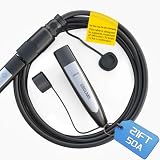
- ⚠️【For AC Charging Only-NOT for Superchargers】This nacs extension cable for tesla charger is designed for compatible Tesla/NACS Level 1 and Level 2 AC charging. It is NOT compatible with Tesla Superchargers or DC fast-charging stations. The button on the tesla charger extension cord does not open the Tesla charge-port door; open the port through your vehicle or Tesla App before connection
- ✅【21ft Extension Cord to Extend Your Tesla Charger】This NACS extension cord can add 21 feet of extra reach to your Tesla/NACS AC charger and charge where your original cable cannot reach. Ideal for garages, driveways, parking spaces, apartments, workplaces and travel. No need to reposition your charger just to reach your vehicle
- ✅【Up to 50A, 240V & 12KW High-Power Charging】Built for high-power AC charging, this NACS extension cable supports up to 50A, 240V and 12KW when used with a compatible EV charger and vehicle (For 48Amp Wall Connectors, please lower the output to 40Amps)
- ✅【Compatible with Tesla Charger】-This tesla charger extension cable is compatible with tesla level 1 or level 2 Wall Connectors, all generations of Destination Chargers, and 16A/32A tesla mobile chargers. (Use only with Tesla chargers rated at or below 50A and 240V AC,not compatible with Tesla Superchargers)
- ✅【Robust & IP66 EV Extension Cable】The SEGUMA tesla extension cord is built with high-strength TPE material (compliant with UL 94 V-0 ), along with 5-micron silver-plated copper, offering exceptional durability for everyday use. Its waterproof design (IP66 rated) allowing you to use this cable confidently in any weather condition, whether indoor or outdoor
- Truck: Standard Range or Long Range, software configuration and any fleet-specific operating limits.
- Load: expected payload, axle distribution and the planned GCW. Tesla’s published range assumption is the full 82,000-pound GCW.
- Trailer: body type, height, refrigeration or other auxiliary equipment, and whether the tandem-axle aerodynamic equipment used in Tesla’s assumption is installed.
- Speed policy: governed speed, expected average speed and whether the route includes long high-speed interstate sections.
- Environment: elevation changes, prevailing temperatures, wind exposure, precipitation and seasonal extremes.
- Work pattern: legal driving limits, mandated breaks, loading windows, appointment times, parking constraints and the required state of charge for the next shift.
- Energy loads: ePTO, refrigeration, HVAC and other accessories that draw power while the truck is moving or stopped.
Use the published Tesla figure as a reference point tied to its assumptions. It is safer to set an internal dispatch threshold below the estimated usable distance than to schedule the truck to arrive at a charger with no reserve.
Use Tesla Trip Planner, then validate every proposed stop
Tesla says the Semi’s Trip Planner adds charging stops to a route. That is a useful first pass, but it is not a substitute for dispatch verification. Tesla has not published a guaranteed minimum arrival state of charge, a live occupancy or queue feed, or a complete method for handling every truck restriction.
- Enter the actual origin, destination, trailer and operating conditions available in your fleet system.
- Let Trip Planner generate its suggested charging sequence.
- For each stop, confirm that the equipment is intended for the Semi, the site is open for your planned arrival, the approach accommodates a tractor-trailer and the charging connector and power configuration are compatible.
- Check opening hours, access restrictions, payment or account requirements, parking rules and any height, weight or turning limitations.
- Record a backup stop or alternate route before dispatch. A stop shown in software is not proof that a post will be available when the truck arrives.
- Recheck status shortly before departure and again if the truck is delayed enough to change its arrival time.
Do not treat a planned network as an operating network. On April 20, 2026, Pilot and Tesla announced selected travel-center locations expected to open in summer 2026. The initial announcement covered I-5, I-10 and other freight corridors in California, Georgia, Nevada, New Mexico and Texas, with four to eight stalls per site and up to 1.2 MW per stall. Those are announced expectations, not a live, authoritative list of open sites or a guarantee of availability at a particular hour.
Model energy by segment instead of by total route miles
Break the trip at every realistic charging opportunity. For each segment, estimate energy as distance multiplied by an operating consumption assumption, then add a reserve appropriate to the route risk. Tesla’s 1.7 kWh/mile number is tied to 55 mph, 20°C, flat terrain and its specified trailer configuration; it should not be linearly extrapolated to every speed or season.
Rank #2

- Not Supercharger Compatible & Not Charging Port: This NACS extension cord will not work with Superchargers. The button on the ev charging cable does NOT control the door on the NACS charging port
- Extended Cable: Extend your Tesla charger extension cable reach by 21 FT! Solve the problem of outlets being too far from your parked Model 3/Y/S/X/Cybertruck. This tesla extension cord gives you the freedom to charge in any corner of your garage, driveway, or at public Level 1/2 stations without ever needing to reposition your car
- High-Power Charging with Zero Speed Loss: Engineered with premium materials, this NACS extension cable fully supports up to 50A, 240V, and 12KW, delivering full power to your Tesla. It ensures seamless integration as a tesla charging cable extension for all Tesla Wall Connectors, Mobile Chargers, and Destination Chargers
- All-Weather Durability & Safety Built to Last: Built for all conditions with an IPX5 waterproof rating and an extreme temperature range (-30°C to +50°C). This robust tesla extension charging cable is your reliable charging partner outdoors in rain or snow, and indoors year-round, ensuring safety and durability with every use
- Universal Plug-and-Play Compatibility: Enjoy universal compatibility designed for the Tesla ecosystem. This tesla charger extension cord works seamlessly with all Model 3, Y, S, X, and Cybertruck. Simply connect your existing Tesla charger to this extension and plug into your car
Independent engineering work illustrates why speed matters. An Electric Power Research Institute (EPRI) analysis modeled full-load tractor-trailer scenarios at:
| Modeled speed | EPRI modeled consumption | How to use the number |
|---|---|---|
| 60 mph | 1.99 kWh/mile | Illustrates a modeled speed case, not Tesla fleet data |
| 70 mph | 2.26 kWh/mile | Illustrates higher consumption at a faster cruise |
| 80 mph | 2.58 kWh/mile | Illustrates the sensitivity of energy use to speed |
EPRI says these are idealized estimates and omit variable traffic, weather and other real-world conditions. They are useful for sensitivity analysis, not as a replacement for Tesla’s specification or a prediction for a particular Semi.
Account for the variables that change consumption
- Speed and traffic: aerodynamic losses rise with speed, while stop-and-go traffic changes both energy use and travel time.
- Grade: sustained climbs can consume reserve quickly; regenerative braking on descents does not necessarily recover all energy spent climbing.
- Temperature and weather: cold batteries, heating, rain, snow and headwinds can reduce effective range or increase auxiliary demand.
- Mass and aerodynamics: payload, trailer design, crosswinds and equipment mounted on the tractor affect the work required to move the combination.
- Charging access: a detour, queue or restricted entrance can consume time and energy before charging begins.
- Battery condition: usable energy and charging speed can vary with battery temperature, state of charge and battery health.
For a simple planning worksheet, create one row per segment with distance, assumed kWh/mile, estimated kWh, starting state of charge, planned arrival reserve, charger, expected charge energy and departure state of charge. Keep the assumption visible so a dispatcher can change it for winter, a mountain crossing or a heavier load.
The Tool Desk
Outbyte PC Repair FREERepair Windows errors before they cause bigger problemsFix Now →Outbyte Driver Updater FREEScan for outdated or missing drivers - takes under a minuteDriver Scan →Illustrative calculation
If a 300-mile segment is evaluated at 1.7 kWh/mile, the arithmetic is 510 kWh before adding a reserve. That result is only a planning calculation based on Tesla’s stated assumption; it does not establish the Semi’s battery capacity, usable-energy window or the segment’s actual consumption. If the same segment is stress-tested with a higher modeled consumption, the energy requirement rises accordingly. Use the exercise to test margin, not to claim a measured truck result.
Rank #3

- NACS STANDARD COMPATIBILITY. Engineered for SAE J3400 (NACS) Level 2 charging infrastructure and NACS-equipped electric vehicles; rated for 48A continuous operation. Not compatible with Tesla Wall Connectors or Tesla's proprietary charging infrastructure.
- SAFE, RELIABLE PERFORMANCE. Silver-plated copper conductors reduce resistance and heat buildup, supporting fast and reliable charging at up to 11.5 kW.
- HEAVY DUTY AND WEATHERPROOF. A 20-foot (6.1 m) TPU-jacketed cable that resists impact, pressure, and abrasion, and is IP67-rated for safe use both indoors and outdoors.
- INSTALLATION-FRIENDLY DESIGN. Pre-labeled open-wire leads allow quick identification and connection of each conductor, simplifying cable replacement on NACS-compatible EV charging stations. Professional installation by a certified electrician is required.
- UL-CERTIFIED QUALITY. Independently tested to meet strict UL safety standards; built for 10,000+ mating cycles for long-lasting, dependable performance.
Separate charging time from total stop time
Tesla advertises two charging products for different dwell patterns:
| Product | Published power | Published recovery claim | Operational role |
|---|---|---|---|
| Megacharger | Up to 1.2 MW | Up to 60% of range in 30 minutes | Quick-stop corridor charging |
| Basecharger | 120 kW | Up to 60% of range in four hours | Depot, longer dwell and overnight charging |
The 30-minute and four-hour figures describe Tesla’s headline charging or range-recovery capability. They are not complete arrival-to-departure dwell times. A dispatch schedule should include separate allowances for:
- detour time from the planned freight route;
- site entry, maneuvering and exit;
- queueing or a post being occupied;
- connecting and disconnecting;
- the driver’s legally required break;
- loading, paperwork, security checks or trailer work; and
- an inspection or fault-recovery margin.
A 30-minute charging claim therefore should not be entered as a 30-minute door-to-door stop. It may fit inside a longer break, but that alignment must be verified for the specific route and site.
Windows Errors? Fix Them Before They Spread
Repair common Windows errors and clear accumulated junk for a smoother, more stable PC - no reinstall needed.Free scan · no reinstallCrashes, No Sound, or Screen Glitches?
Random freezes, missing sound and display glitches usually trace back to one bad driver. Find and replace yours safely.Free scan · under a minuteMatch the charging plan to the shift and depot
Use Megacharger stops when the route and site support a short corridor dwell, but schedule enough energy to reach the next verified opportunity rather than automatically charging to a headline percentage. A shorter stop can be operationally preferable if it avoids a detour or queue; a longer stop can be preferable if it covers a mandated break and protects the next appointment.
Rank #4

- Extra Length, Zero Hassle: Extending your charging reach for Tesla EVs. The 40 ft EV charger extension cable gives you the freedom to charge from almost any angle, even if your outlet is far from your EV port
- Works with Most Tesla AC Chargers: This EV charger extension cord is compatible with the Tesla wall connector, mobile connector, and destination charger for flexible home or travel charging. It is not compatible with Tesla Superchargers
- Built to Handle Real Conditions: The EV extension charging cable is engineered with fire-resistant materials and IP66 waterproof protection. It works safely from -22℉ (-30℃) to 122℉ (50℃), rain or shine, summer or winter
- Durable & User-Friendly Design: Built with high-grade copper TPE and sturdy PC + ABS, this EV charging cable extension provides long-lasting strength. Ergonomic grip makes plugging and unplugging smooth and effortless
- Comes Ready to Go: Our EV extension cable includes a carrying bag for neat storage, a cleaning cloth to keep connectors dust-free, and a cable tie for easy cord management—everything you need, in one kit
Basecharger is positioned for depot and overnight use. Before relying on it, confirm electrical service, site layout, permitting, installation schedule, stall sharing and the time available between shifts. Tesla’s commercial materials list MCS 3.2 for both charger products and describe up to 1,200 kW of cabinet output shared by two posts. They estimate commercial charger deliveries will begin in early 2027. That delivery estimate is not a site-energization date, so obtain a written project schedule for the depot.
If the truck returns with insufficient time for a full overnight charge, define the next-shift minimum state of charge and arrange a compatible corridor top-up. Do not assume that a depot charger can cover an unexpected late return until its power allocation and operating status are confirmed.
Independent reader supportYour contribution helps us test, update, and keep practical guides available for everyone.Build a downtime plan that is separate from energy planning
Charging availability and truck availability are different risks. Tesla says its distribution centers carry a full range of parts to support minimal downtime. Its business-charging materials also describe network operations, preventive maintenance and driver support for purchased charger sites, and advertise up to 97% or higher charger uptime for that full-service package. That is a Tesla statement about charging service, not a measured Semi fleet-availability figure.
Tesla’s published information does not quantify repair duration, fleet reliability, route resilience or a guaranteed recovery time after a truck fault. Plan those unknowns explicitly:
Best Value
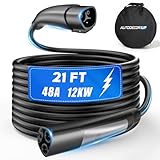
- Not Compatible: This Tesla extension cord is designed for Level 1 & Level 2 home or wall charging, not suitable for Tesla Supercharger. The button on the handle of the EV charger extension cable plug cannot control the Tesla charging port. Please ensure you have a Tesla charger to use with this product
- Wide Tesla Compatibility: The 21ft 48A extension cord for Tesla charger works seamlessly with Tesla wall connectors, mobile connectors, and destination chargers. It is a perfect fit for Tesla Model 3, X, Y, S, and Cybertruck, ensuring reliable charging every time. Places like campsites, hotels, some shopping centers, public chargers
- Durable & Safe Build: Constructed with 5-micron silver-plated copper wiring and a robust thermoplastic exterior (UL certified), this for Tesla mobile charger extension cord resists bending, heat, and corrosion. The IP66 waterproof design (when the interface is plugged in) ensures safe outdoor EV charging, even in rain or snow
- 21FT & 48A High Power: EV charging extension cord range with a full 21ft Tesla extension charging cable supporting up to 48Amp 240V, delivering extra long Tesla charging cable performance. Keeps your Tesla powered quickly and efficiently at home or on the road. This works great for level 2 charging
- Portable: Designed as a Tesla charger extension cord with a carrying bag. Removes the hassle of juggling cars in and out of the garage...the extension allows cars in the driveway to charge. If you encounter any issues during use, please contact us. Package Contents: 1 EV extension cord, 1 carrying bag, 1 instruction manual
- Keep a dispatch contact and escalation path for the truck, charging site and roadside provider.
- Identify a second compatible charging location before the truck leaves the depot.
- Define the state-of-charge threshold at which the driver must divert rather than continue to the planned stop.
- Reserve tractor or driver capacity for a missed appointment, charger outage or service event.
- Record trailer, load and appointment constraints that make a substitute tractor impractical.
- After each trip, compare predicted and actual energy, dwell and delay so the lane’s assumptions improve over time.
For a new fleet, start with conservative lanes that have multiple charging options and forgiving appointment windows. Expand to longer or more remote lanes only after actual operating data demonstrates that the reserve and recovery plan work.
Consider deployment timing when choosing a lane
Tesla’s Q4 2025 update deck said Semi production was beginning in 2026, showed manufacturing capacity as not yet determined, with status “Tooling,” and described North American production-ramp preparations continuing for the first half of 2026. Those statements provide context about deployment uncertainty; they do not confirm a current production rate or truck availability. A route plan is only useful if the fleet can obtain the trucks and charging equipment on the required schedule.
For procurement and network planning, separate three dates: truck delivery, charger delivery and charger commissioning. A corridor announcement or a manufacturer production plan does not replace confirmation from the site operator and your fleet supplier.
Quick wins for a faster PC:
Repair Windows errors before they cause bigger problemsFix Now →Fix the driver behind crashes, sound loss and screen glitchesFind Drivers →Compare the two trims on operations, not brochure range
The Long Range trim’s 500-mile estimate can reduce charging-stop frequency relative to the Standard Range trim’s 325-mile estimate, but that is only one decision factor. Compare each trim using the same actual route, load and schedule:
| Decision factor | Questions to answer |
|---|---|
| Usable distance | What reserve remains at the worst seasonal speed, grade and payload on this lane? |
| Charging frequency | How many verified stops are required, and how much detour or queue exposure does each add? |
| Depot fit | Can the available Basecharger capacity restore the truck before the next shift? |
| Payload | How does the listed curb-weight difference affect legal payload under the fleet’s axle and GCW limits? |
| Schedule resilience | Which trim still reaches an alternate charger after a delay, weather event or occupied post? |
Do the same for routes. The faster-looking route may lose its advantage if it has one charging site, a long detour or severe grades. Compare total driving time plus charging and access dwell, compatible-site availability, terrain and weather exposure, and the reliability of overnight charging. Range alone is not a route score.
A dispatch checklist for each trip
- Confirm trim, trailer, payload, GCW, speed policy and planned ePTO or auxiliary loads.
- Review weather, wind, temperature, grades and traffic for the departure window.
- Run Tesla Trip Planner and export every proposed stop into the dispatch record.
- Verify each site’s operating status, Semi compatibility, access and account requirements.
- Calculate segment energy with a documented assumption and a reserve; stress-test a higher-consumption case.
- Add detour, entry, queue, connection, break, freight and inspection time to charging time.
- Confirm the next shift’s required state of charge and the depot’s available overnight power.
- List a primary and alternate charger, plus the diversion threshold for the driver.
- Give the driver contacts for dispatch, site support and service escalation.
- Capture actual arrival state of charge, charging energy, total dwell and delay for the lane history.
What the published figures do—and do not—tell you
Tesla’s 325-mile and 500-mile figures answer the brochure-level question “How far can the Semi go under the stated assumptions?” They do not answer whether a specific truck can cover your lane in winter, at your governed speed, with your trailer and payload. Tesla’s 1.2 MW and 30-minute Megacharger claim answers a capability question; it does not promise that every stop will deliver that power or that the complete stop will last only 30 minutes. EPRI’s speed scenarios explain the direction and scale of consumption sensitivity, but they are modeled engineering estimates rather than observed Tesla fleet trips.
The practical answer is a controlled process: model the real lane, verify the physical charging network on the day, schedule total dwell, and maintain a recovery option. That approach turns uncertain range and charging claims into an auditable operating plan without pretending that a manufacturer estimate is a route guarantee.
Recommended Free Tools
Quick Recap
Product prices and availability are accurate as of the date/time indicated and are subject to change. Any price and availability information displayed on Amazon at the time of purchase will apply.




