The safest way to maintain an electric dirt bike is to combine a simple owner routine with the current manual for your exact model, year, market and drivetrain. Keep the battery from being run completely flat, use only the approved charging equipment and storage instructions, lubricate a chain-driven bike, clean without high-pressure water, and use the manufacturer or an authorized service provider for model-specific adjustments and repairs.
There is no single charging percentage, chain-slack measurement or service interval that applies to every electric dirt bike. A Talaria Sting L1E manual, for example, gives storage guidance that should not be transferred to another Talaria model or another brand. Treat the procedures below as a practical framework, then confirm every specification in your own documentation.
As an Amazon Associate I earn from qualifying purchases.
Identify the exact bike before servicing it
Write down the brand, model, model year, market or road-homologation version and drivetrain layout before you begin. The same model name can cover different batteries, controllers, belt systems, chain sizes and legal equipment in different regions. A procedure that is correct for an off-road version may be wrong for an L1E road-legal version.
Download the latest documentation rather than relying on a forum post or an old video. Talaria’s official owner-manual library lists manuals by product and region and says its files are updated. Sur-Ron’s downloads page lists owner and service manuals, torque information, model operating manuals, warranty forms, belt-maintenance material and a belt-replacement video. Stark Future’s support page provides model documentation, dealer search, technical tutorials and service information.
#1 Best Overall

- For best performance, follow the manufacturer's recommendations in your vehicle owner’s manual
Keep the manual open while working. Record the document revision or download date in your maintenance log. If a manual conflicts with a generic instruction in this guide, the current model manual wins.
What to confirm in the manual
- Approved charger, charging sequence, indicator meanings and any temperature limits.
- Permitted battery storage state of charge, storage duration and inspection requirements.
- Whether the bike uses a chain, belt or another reduction-drive arrangement.
- Chain slack, axle torque, adjuster procedure, belt tension and inspection limits.
- Which covers, connectors and panels an owner may remove without affecting safety or warranty.
- Cleaning restrictions, lubrication points and the required service intervals.
- Dealer-only procedures, diagnostic codes and high-voltage or battery-pack warnings.
Prepare a safe maintenance area
Work with the bike switched off, the key or isolation device removed and the drive system unable to turn unexpectedly. Support the bike securely before rotating a wheel. Keep the charger disconnected while cleaning or servicing the drivetrain unless the manual specifically requires a powered diagnostic procedure.
- Use eye protection when brushing dirt from a chain or belt and wear gloves suitable for the cleaner and lubricant.
- Keep solvents, fuel, sparks and open flames away from the battery and charger.
- Use a clean, dry area with enough ventilation for charging and enough room to inspect both sides of the bike.
- Do not open a battery pack, bypass a fuse, modify charge wiring or probe high-voltage connectors as a home experiment.
- Stop immediately if the battery is swollen, cracked, leaking, unusually hot, smoking, making a hissing sound or giving off a strong chemical odor. Isolate the bike outdoors away from buildings and contact the manufacturer or dealer for instructions.
Battery care: charging, storage and inspection
Use the approved charging setup
Use the charger specified for your exact battery and market. Do not substitute a charger because its plug fits or its voltage appears similar. Follow the manual’s order for connecting the charger, switching on the bike or charger, and disconnecting after charging; those sequences are not universal.
Place the charger and bike on a dry, stable, nonflammable surface with ventilation. Keep the charger’s vents clear. Do not charge through a wet connector, after water has entered a compartment, or while the battery is abnormally hot or cold unless the manual explicitly permits it. If the charger reports a fault, the battery will not begin charging, or the indicator behaves differently from the manual, stop and use the manufacturer’s diagnostic path instead of repeatedly reconnecting it.
Do not run the battery completely flat
Sur-Ron’s “Looking after your Surron” article, dated October 28, 2020, tells owners to keep the battery charged between uses and warns that a complete discharge could cause irreparable damage. That is brand guidance for Sur-Ron, not a universal storage rule for every electric dirt bike. Avoid deliberately riding until the bike shuts down, and recharge according to the exact manual before the next ride.
A low-battery display is not a laboratory measurement of remaining energy. Terrain, temperature, rider load and battery age can change the reading. Plan a reserve for the return trip rather than treating the last displayed percentage as usable range.
Rank #2

- No fling-off and O-Ring Safe
- Dirt-resistant dry lubricant
- Contains Teflon and Moly for wear protection
- Water resistant and Non-staining
Follow model-specific storage instructions
Storage state of charge, maximum storage duration and periodic inspection vary by battery and model. A 2023 Talaria Sting L1E owner-manual excerpt hosted by a third party gives an approximately 50% charge level for long-term storage, but that number is an example for that model and must be checked against the current manual for the exact bike. The document is available at this manual copy; confirm it with Talaria before relying on it.
Do not apply the 50% figure to another Talaria, a different year, a road-legal variant or another brand. If your manual does not state a storage level, ask the manufacturer or dealer rather than guessing. During a long storage period, follow the documented inspection and recharge interval, keep the bike in the temperature and humidity range specified by the manual, and protect the battery from moisture and direct heat.
Inspect before and after charging
- Check the battery case, mounts, latch and wiring for cracks, looseness, abrasion or water intrusion.
- Inspect charger leads and connectors for bent contacts, discoloration, melted plastic or damaged insulation.
- Confirm that connectors are clean and fully dry before mating them. Never force a connector or remove a seal to make it fit.
- After charging, note unusual heat, smell, noise, charge time or an error code in your log.
- If damage, swelling or repeated charging faults appear, do not continue riding or charging until the manufacturer or a qualified service provider has assessed it.
Determine whether your drivetrain uses a chain or belt
Electric dirt bikes do not share one drivetrain layout. Some use a chain between the motor reduction and rear wheel; others use a toothed belt or a combination of components. Sur-Ron’s downloads library includes a primary-belt maintenance document and a belt-replacement video, demonstrating that belt service applies to some configurations. Do not put chain lubricant on a belt, and do not assume a chain-adjustment procedure applies to a belt-driven bike.
Identify the drive component visually and confirm it in the parts diagram or manual. If you cannot tell whether a cover hides a belt or chain, ask a dealer before spraying, tensioning or removing anything.
Chain-drive maintenance
Clean gently after contamination
Sur-Ron advises periodic washing or cleaning to remove salt water, harsh compounds and gravel from areas including the primary drive. Clean more promptly after riding through salty spray, muddy water or abrasive grit. Rinse with low-pressure water or a damp cloth, then use a soft brush and a drivetrain-safe cleaner approved by the chain or bike manufacturer. Keep water away from open electrical connectors and do not direct spray into bearings, seals or the motor area.
What’s actually slowing this PC down?
Pick the symptom - the matching free tool is one click away.
Lubricate the chain correctly
Sur-Ron states: “Firstly, all chain drives need to be kept lubricated to preserve the life and performance of your chain.” Apply a motorcycle chain lubricant that is compatible with your chain and follow the lubricant and bike instructions. A clean, dry chain accepts lubricant more evenly than a gritty one.
Rank #3
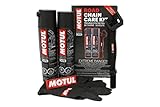
- All-in-one package to clean and maintain your chain
- Includes chain clean, chain lube road, chain brush, motul gloves and decal
- C1 Chain Clean is perfect for removing residue, sand, dirt, and oil.
- C2 Chain Lube Road is a product of MOTUL's racing history, protecting your chain while reducing drag.
- MOTUL gloves and chain brush help remove deposits without creating a mess.
- Switch the bike off, secure it, and make sure the rear wheel cannot start unexpectedly.
- Brush or wipe away loose grit. If the manual permits wheel rotation during cleaning, rotate it only by hand and keep fingers clear of pinch points.
- Apply lubricant to the chain’s roller and side-plate area while turning the wheel slowly by hand, keeping spray away from brake discs, pads, tires and electrical parts.
- Allow the product to penetrate for the time stated on its label, then wipe off excess. A wet, over-lubricated chain attracts abrasive dust.
- Inspect the chain again for stiff links, rust, damaged rollers or abnormal tight spots before riding.
The available manufacturer guidance does not establish one lubricant brand, viscosity, chain-slack value or lubrication interval for all electric dirt bikes. Use the model manual and the product label for those details.
Check chain condition and alignment
With the bike supported as the manual requires, inspect the chain along its full run. Look for hooked or sharply pointed sprocket teeth, missing rollers, side-plate damage, corrosion, kinks and uneven tension as the wheel turns. Check that the rear wheel is centered and that both adjusters show the same reference position. A chain that is too tight can load bearings and suspension movement; one that is too loose can derail or strike the swingarm.
Measure slack only at the location and in the position specified by the manual. Suspension compression changes chain distance, so a measurement taken at the wrong point can be misleading. Do not invent a torque value for the axle or adjuster locknuts; use the current service document. If the chain repeatedly loosens, the wheel will not align, or sprocket wear is severe, have a qualified technician inspect the mounts, bearings and drivetrain.
Free tools Windows power users keep installed
One-click scans. No signup required.
Belt-drive maintenance
A belt requires a different inspection strategy. Keep it free of stones, mud and oil, and inspect the teeth, edges, cords and pulleys for fraying, glazing, cracks, missing teeth or embedded debris. Do not apply chain lubricant or solvent unless the belt manufacturer expressly approves it.
Use the belt-tension method and measurement specified for your model. Some systems require a dedicated gauge, a particular belt position or a service-mode procedure. Over-tensioning can damage bearings; under-tensioning can cause tooth skipping. If the belt is damaged or tension falls outside the documented range, replace or adjust it using the manufacturer’s procedure rather than relying on a generic chain guide.
Sur-Ron’s downloads page provides belt-maintenance material for applicable bikes. Save the document for your model and confirm that the belt part and pulley arrangement match your machine before starting.
Rank #4

- PREMIUM LUBRICATION: Muc-Off Motorcycle All-Weather Chain Lube is a premium synthetic formulation that ensures first-class performance.
Wash the bike without damaging electrical parts
Sur-Ron describes its bikes as weatherproof but explicitly warns against pressure washers and other high-pressure systems because they can damage electrical connections and force water past important seals. That warning is especially important around battery interfaces, motor connectors, wheel bearings, suspension pivots and control switches.
Recommended Free Tools
- Switch off the bike, remove the key or isolation device and disconnect the charger.
- Allow hot components to cool. Cover or protect connectors only in the manner allowed by the manual; do not trap moisture inside a sealed cover.
- Remove loose mud with a soft brush or a gentle, low-pressure rinse. Never aim a jet directly at seals, connectors, bearings, the motor or the battery compartment.
- Use a mild bike-safe cleaner on a cloth or soft sponge. Keep degreaser on the chain only, away from brake friction surfaces and rubber components.
- Rinse gently, wipe the bike dry and move the suspension and wheels carefully to help expose trapped water.
- Inspect connectors and the battery area for moisture before charging. Let everything dry fully, then apply chain lubricant if the bike is chain-driven.
After a deep-water crossing or an unusually wet ride, inspect sooner than your normal routine. If water reached the battery compartment or an electrical fault appears, stop using the bike and follow the manual’s drying and service instructions.
A practical, trigger-based maintenance routine
The table below is an owner checklist, not a replacement for a model-specific schedule. Use the manual’s intervals whenever they are different or more demanding.
| Trigger | Owner checks | What controls the exact requirement |
|---|---|---|
| Before every ride | Battery case and mount; charge indication; visible cable and connector damage; chain or belt condition; brake and wheel clearance. | Exact inspection points and safety warnings in the owner manual. |
| After mud, salt or wet riding | Gentle cleaning; remove grit from the primary drive; dry connectors and battery area; lubricate a chain after it is clean and dry. | Manufacturer cleaning restrictions and lubricant instructions. |
| After several rides or when symptoms appear | Check chain or belt alignment, tension, sprocket or pulley wear, fastener security and unusual noises. | Manual-specified measurement points, tools and torque values. |
| Before long-term storage | Clean and dry the bike; charge or discharge to the documented storage level; protect it from temperature and moisture extremes; record the date. | Exact battery storage percentage, maximum interval and inspection procedure for the model. |
| At the manual’s service interval | Complete scheduled drivetrain, electrical, suspension and bearing inspections, or book an authorized service. | Current service manual and local warranty requirements. |
Model-specific documentation and service boundaries
Use the source that matches your bike and region rather than combining instructions from different brands.
| Bike or manufacturer | Useful official material | Important limitation |
|---|---|---|
| Talaria | Owner-manual library organized by product and region, including newer model files. | Charge and storage instructions can differ by model and market; verify the current file for your bike. |
| Sur-Ron | Care guidance plus the downloads library with owner/service manuals, torque information and belt documents. | The care article is dated October 28, 2020 and its battery advice is brand guidance, not a universal rule. |
| Stark Future | Support, dealer search and technical tutorials. | Stark says additional maintenance and repair information beyond its listed support is restricted to service centers, independent vehicle service operators and vehicle testing services. |
Dealer or service-center help is appropriate when the job involves battery-pack opening, high-voltage diagnosis, controller programming, sealed motor work, structural damage, repeated water intrusion, or a measurement you cannot make with the specified tool. Ask what parts, firmware, tests and warranty records will be used, and keep the work order with your maintenance log.
Do these 3 things before closing this tab:
1Fix the driver behind crashes, sound loss and screen glitches2Repair Windows errors before they cause bigger problems3Scan for outdated or missing drivers - takes under a minuteTroubleshoot by symptom instead of guessing
The bike will not charge
- Confirm the charger is the approved unit and is connected exactly as the manual shows.
- Check for wet, dirty, loose or damaged connectors without probing them.
- Read the charger and bike indicators against the manual’s fault table.
- If the fault persists, stop cycling the connector and contact the manufacturer or dealer.
Range suddenly falls or the battery indicator drops quickly
Record temperature, terrain, rider load, riding mode and the displayed charge. Compare several rides rather than judging from one trip. A sudden change accompanied by heat, swelling, odor, an error code or a charging fault requires immediate service, not a deeper discharge test.
Best Value

- Precision Brush Applicator for Clean Application: Designed with an integrated brush tip for accurate and controlled application, helping ensure even coverage on the chain while reducing mess, overspray, and product waste.
- Long-Lasting Lubrication and Protection: Provides durable lubrication that adheres to the chain surface, helping reduce wear, friction, and elongation while maintaining smooth drivetrain operation over extended use.
- Compatible with Modern Chain Types: Suitable for use on O-ring, X-ring, and Z-ring chains, helping preserve seal integrity while delivering effective lubrication and protection.
- Reduces Friction and Wear: Helps minimize metal-to-metal contact between chain links and sprockets, supporting smoother power transfer and extending the lifespan of drivetrain components.
- Ideal for Street and Performance Riding: Well suited for daily riding, sport use, and touring applications where consistent lubrication, clean application, and reliable protection are required.
The chain is noisy, jumping or repeatedly loosening
Stop riding until you inspect alignment, slack, stiff links, sprocket teeth, axle security and debris. Use only the manual’s measurement and torque values. Persistent problems can indicate worn sprockets, bearings, adjusters or mounts and should be assessed by a technician.
The belt squeals, skips or shows edge damage
Stop and inspect for stones, oil contamination, frayed cords, missing teeth and incorrect tension. Do not spray chain lube on it. Follow the model’s belt procedure or book service if the belt or pulley is damaged.
An electrical fault appears after washing
Switch off, disconnect the charger and allow the bike to dry in the manner specified by the manual. Do not use a heat gun or force water out with compressed air. If the fault, warning light or abnormal heat remains, keep the bike out of service until it has been checked.
PC Slower Than It Used to Be?
A free scan shows the junk files, broken settings and background clutter dragging Windows down - then fixes them in one click.Free scan · Windows 10 & 11Outdated Drivers Are Slowing You Down
One free scan finds every outdated or missing driver and matches the right update for your exact hardware.Free scan · exact hardware matchKeep records that make maintenance easier
A simple log prevents missed service and helps a dealer diagnose changes. Record the date, odometer or ride hours if available, model and manual revision, charge or storage action, cleaning performed, chain or belt observations, error codes, parts fitted and the name of the service provider. Photograph unusual wear before replacing a part.
Store the charger model, battery serial number and purchase documents with the log. If the manufacturer issues a manual revision or service bulletin, note when you checked it and update your routine. This is particularly useful when a bike changes owners or moves to a different market.
A routine that protects both battery and drivetrain
Battery longevity starts with using the correct charger, avoiding complete discharge and following the exact storage instruction for the model. Drivetrain life depends on identifying whether the bike uses a chain or belt, removing abrasive contamination, applying only the appropriate lubricant and tension procedure, and keeping high-pressure water away from seals and electrical connections. Whenever a specification is not printed in the current manual, treat it as unknown rather than borrowing a number from another bike.
Quick Recap
Product prices and availability are accurate as of the date/time indicated and are subject to change. Any price and availability information displayed on Amazon at the time of purchase will apply.
The Tool Desk
Outbyte PC Repair FREEClear out junk files and repair common Windows errorsFree Scan →Outbyte Driver Updater FREEFix the driver behind crashes, sound loss and screen glitchesFind Drivers →



