Short trips do not automatically ruin a diesel particulate filter (DPF), but repeated cold, low-speed journeys can leave the filter without the time and exhaust conditions its regeneration strategy needs. The practical answer is to follow your vehicle’s owner manual, let an automatic regeneration finish when the vehicle begins one, and use a manufacturer-approved driver-commanded regeneration only when your vehicle provides that function. If a warning persists, flashes, appears with a fault message, or is accompanied by reduced power, stop improvising and arrange qualified service.
There is no universal “DPF drive” speed, engine speed, duration, additive, or forced-regeneration trick. The figures often quoted online belong to particular vehicles and markets. Ford’s 2026 Super Duty manual and Toyota Kirloskar Motor’s 2021 India DPF information illustrate why your own manual must take precedence.
As an Amazon Associate I earn from qualifying purchases.
Why short trips can clog a DPF
A DPF traps soot in the exhaust so it is not released in the same form from the tailpipe. The trapped material has to be burned off in a process called regeneration. Under suitable conditions, a vehicle may regenerate automatically while you drive. If the engine is repeatedly started, driven a short distance, and switched off before it is fully warm, the exhaust may not stay in the conditions required for passive or active regeneration. Soot then accumulates faster than the system can remove it.
Recommended Free Tools
Low average speeds, frequent stops, and repeated ignition cycles make the problem more likely. A warning after a few short journeys does not by itself prove that the filter is permanently damaged; it means the vehicle is asking for the operating conditions or service procedure specified for that system.
#1 Best Overall

- CEL Doctor: The ANCEL AD310 is one of the best-selling OBD II scanners on the market and is recommended by Scotty Kilmer, a YouTuber and auto mechanic. It can easily determine the cause of the check engine light coming on. After repairing the vehicle's problems, it can quickly read and clear diagnostic trouble codes of emission system, read live data & hard memory data, view freeze frame, I/M monitor readiness and collect vehicle information
- Sturdy and Compact: Equipped with a 2.5 foot cable made of very thick, flexible insulation. It is important to have a sturdy scanner as it can easily fall to the ground when working in a car. The AD310 OBD2 scanner is a well-constructed mechanic tool with a sleek design. It weighs 12 ounces and measures 8.9 x 6.9 x 1.4 inches. Thanks to its compact design and light weight, transporting the device is not a problem. The buttons are clearly labelled and the screen is large and displays results clearly
- Accurate Fast and Easy to Use: The AD310 scanner can help you or your mechanic understand if your car is in good condition, provides exceptionally accurate and fast results, reads and clears engine trouble emission codes in seconds after you fixed the problem. This device will let you know immediately and fix the problem right away without any car knowledge. No need for batteries or a charger, get power directly from the OBDII Data Link Connector in your vehicle
- OBDII Protocols and Car Compatibility: Many cheap scan tools do not really support all OBD2 protocols. AD310 scanner as it can support all OBDII protocols such as KWP2000, J1850 VPW, ISO9141, J1850 PWM and CAN. This device also has extensive vehicle compatibility with 1996 US-based, 2000 EU-based and Asian cars, light trucks, SUVs, as well as newer OBD2 and CAN vehicles both domestic and foreign. Pls confirm with our customer service whether it is compatible with your vehicle before purchasing
- Home Necessity and Worthy to Own: This is an excellent code reader to travel or home with as it weighs less and it is compact in design. You can easily slide it in your backpack as you head to the garage, or put it on the dashboard, this will be a great fit for you. The AD310 is not only portable, but also accurate and fast in performance. Moreover, it covers various car brands and is suitable for people who just need a code reader to check their car
Ford Motor Company states in its 2026 Super Duty Owner’s Manual: “The diesel particulate filter on your vehicle requires periodic regeneration to maintain its correct function.” That statement describes the requirement, not a universal recipe. Regeneration controls, warning thresholds, and driver procedures differ by engine, calibration, transmission, body style, and market.
What regeneration does
Passive regeneration
Passive regeneration uses the exhaust conditions produced during suitable driving to oxidize soot while the vehicle is moving. The driver may not receive a special instruction when this occurs. Short urban runs can interrupt the conditions before enough soot is removed, so a vehicle that otherwise works correctly may eventually request a more obvious regeneration event.
Active regeneration
Active regeneration is controlled by the vehicle. When the system decides that the filter needs cleaning and the required conditions are available, it manages engine and exhaust operation to raise the temperature needed for soot removal. The exact strategy is manufacturer-specific. Switching the ignition off, stopping repeatedly, or driving in a way that prevents the process from completing can leave the request unresolved.
Free tools Windows power users keep installed
One-click scans. No signup required.
Driver-commanded stationary regeneration
Some vehicles include a switch or menu command that lets the driver start a stationary regeneration. This is not the same as leaving the engine idling. It is a prescribed sequence with interlocks, a defined duration, and hot-exhaust hazards. Use it only when your owner manual explicitly provides it and says that the current warning state permits it.
What to do if most of your driving is short
1. Read the warning and the manual before changing your routine
Identify the exact message, telltale, and any accompanying power limitation. The manual should say whether the warning calls for continued driving, a switch-initiated regeneration, or immediate service. A steady DPF request is different from a flashing warning or a DPF message combined with an engine fault.
Rank #2

- 【Diagnose Check Engine Light in Seconds – No Mechanic Needed】The FOXWELL NT301 OBD2 scanner instantly reads & clears engine fault codes (DTCs) with one click. Simply plug into the 16-pin DLC port, turn ignition on, and get accurate results within seconds—No prior car knowledge required. Save hundreds on dealership fees by knowing exactly what’s wrong before you visit a shop. The #1 choice car scanner for DIYers and car owners who want to take control of their vehicle’s health
- 【Clear & Reset CEL with Confidence】Unlike cheap code readers that just erase codes temporarily, NT301 works like all professional vehicle code readers: It clears the check engine light only after you’ve fixed the underlying issue. If the problem isn’t fully repaired, the fault code will reappear. So you’ll never get a false pass. Use the foxwell scanner to verify your repair work and drive with peace of mind
- 【Sm-og Check Helper – Know Your Pass/Fail Status Before the Test】With dedicated one-click I/M readiness hotkeys and a simple Red-Yellow-Green LED indicator, you’ll instantly know if your vehicle is ready for annual testing. Built-in speaker provides clear audio feedback. No guesswork—just confidence before you head to the test center. One less thing to worry about when inspection day comes
- 【Advanced OBDII Modes – O- 2 Sensor & EVAP Testing】NT301 go beyond basic code reading with enhanced OBD2 modes. Run an EVAP system check to assess fuel tank condition, and use the O- 2 sensor test to optimize air-fuel ratio, boosting fuel economy, cutting em- issions, and saving you money at the pump. The code reader for cars and trucks is like having a mini em-issions lab in your glove box
- 【Live Data Graphing – Spot Engine Issues in Real Time】View and log live sensor data in easy-to-read graphs with this OBD2 scanner diagnostic tool. Monitor ox- ygen sensors, fuel trims, coolant temperature, RPM, and more to spot suspicious values instantly. This obd scanner gives you professional-grade insight without the pro price tag—a feature you won’t find on basic $20 car code readers
2. Combine trips when it is practical
Instead of making several cold starts for errands, combine them into one journey. Choose a route that allows uninterrupted driving after the engine has warmed, while obeying speed limits and traffic conditions. This gives the vehicle’s own regeneration strategy a better opportunity to complete. Do not create an unnecessary journey solely to chase a generic rpm target.
3. Let an in-progress regeneration finish
If the vehicle indicates that regeneration is underway, avoid stopping the engine unless safety or an emergency requires it. Follow the manual’s instructions about gear selection, road type, and duration. Prolonged idling is not a substitute for the manufacturer’s regeneration procedure.
What’s actually slowing this PC down?
Pick the symptom - the matching free tool is one click away.
4. Keep the vehicle in its normal operating condition
Do not remove, bypass, or alter the emissions equipment. Ford warns that exhaust modifications can reduce the system’s effectiveness and may damage the exhaust or engine. A change that appears to improve short-term drivability can create a fault, prevent regeneration, or violate emissions requirements.
5. Record recurring warnings
Note the date, approximate trip pattern, warning wording, and whether power changed. This information helps a qualified technician distinguish an interrupted regeneration request from a sensor, exhaust, or saturation fault. Do not repeatedly clear a warning without finding its cause.
How long should you drive to regenerate the DPF?
The correct answer is vehicle-specific. The following manufacturer instructions are useful examples, not a universal rule:
Rank #3
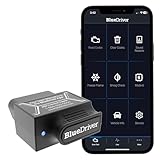
- [Diagnose Like a Pro] BlueDriver Pro is a professional OBD2 scanner and diagnostic tool that helps you scan, understand, and clear vehicle trouble codes with confidence. Turn your phone into a powerful car diagnostic scanner—no guesswork, no unnecessary repairs.
- [Read and Clear More Codes Than Ever] Read and clear more codes than basic car code readers. Access enhanced diagnostics for Check Engine, ABS, SRS, Airbag, TPMS, Transmission.
- [Verified Fixes and Real-Time Data] Get unlimited, technician-verified repair reports matched to your VIN, with definitions, causes, and confirmed fixes. Monitor live vehicle data as you drive, view freeze frames, check smog readiness, and analyze Mode 6 test results.
- [Wireless & Bluetooth Enabled] - Say goodbye to wires. BlueDriver connects with Bluetooth via your phone/tablet to a sensor that plugs into your car's OBDII port. Get all of the capabilities of an expensive code reader & scan tool without any annoying wires.
- [Broad Make & Model Coverage] Strong support for GM, Ford, Stellantis (RAM, Jeep, Chrysler), Toyota, Honda, Nissan, Mazda, Subaru, Hyundai, Mercedes-Benz, BMW, and VW.
| Manufacturer and document | Driving guidance described | Important qualification |
|---|---|---|
| Ford, 2026 Super Duty Owner’s Manual | For vehicles used with short-distance driving, frequent ignition cycling, or high acceleration/deceleration, occasionally drive in favorable higher-speed conditions on a main road or freeway for at least 20 minutes. The manual says an engine speed between 1,500 and 3,000 rpm is ideal for the described drive. | This applies to the named 2026 Super Duty guidance. It also says to avoid prolonged idling and not to switch the ignition off during the process. It is not an all-diesel instruction. |
| Toyota Kirloskar Motor, India DPF System Driver Information, 2021 | For the described Toyota system, continuous driving at around 60 km/h for 20–30 minutes may help clear the request. | The figure is for that vehicle information and market. Toyota notes that the warning may remain in heavy traffic and directs the driver to the vehicle’s specified manual procedure if it does not clear. |
These numbers are manufacturer procedure figures, not independent statistics about clogging or a guarantee that every filter will clean in that time. A road that cannot provide continuous, legal, and safe travel is not suitable merely because it reaches a quoted speed. If your manual gives a different speed, gear, duration, or warning response, use that instruction instead.
Automatic on-road regeneration versus stationary regeneration
| Question | Automatic on-road regeneration | Manufacturer-provided stationary regeneration |
|---|---|---|
| Who starts it? | The vehicle’s control system decides when conditions and soot loading call for it. | The driver starts it with a switch or menu command, but only when the vehicle allows the command. |
| Where does it occur? | While driving in the conditions specified by the manual. | Parked in a safe location with the engine running and the required controls engaged. |
| How long? | Vehicle-specific; do not substitute a generic time. | Toyota’s 2021 India information describes around 30–40 minutes for its switch-initiated procedure. |
| Main interruption risk | Stopping the engine or repeatedly interrupting the drive before the system completes. | Starting it with an impermissible warning state, unsafe surroundings, or an unmet prerequisite. |
| When to stop improvising | A warning remains, flashes, or is joined by a fault or power limitation. | The vehicle refuses the command, reports oversaturation, or the manual directs service. |
A stationary procedure is not evidence that arbitrary idling works. The control system may raise exhaust temperatures in ways that make the surroundings hazardous, and the vehicle may block the command when soot loading is beyond a permitted threshold.
Using the Ford 2026 Super Duty guidance correctly
Ford’s example is often reduced to “drive at a particular rpm,” but the manual describes a complete set of conditions. It is aimed at owners whose use includes short distances, frequent ignition cycling, or frequent acceleration and deceleration. When traffic and local law allow, Ford says to take the vehicle onto a main road or freeway for a favorable drive of at least 20 minutes. It identifies 1,500–3,000 rpm as the ideal engine-speed range for that described drive.
- Confirm that the owner manual’s DPF message calls for continued driving rather than immediate service.
- Plan a route with continuous, legal travel and enough time to avoid switching the ignition off during the process.
- Use the gear or drive mode that keeps the engine in the manual’s stated range without unsafe speed or harsh operation.
- Avoid prolonged idling and do not treat a stationary vehicle as equivalent to the prescribed road drive.
- If the message remains or a fault appears, have the DPF system checked instead of repeating increasingly aggressive drives.
Those steps apply to the Ford guidance cited here. They should not be copied to another diesel merely because the engine also has a DPF.
Using Toyota’s 2021 India information correctly
Toyota Kirloskar Motor’s India DPF driver information describes continuous driving at around 60 km/h for 20–30 minutes for its system. It also notes that heavy traffic can prevent the warning from clearing. If the request remains, the described vehicle may have a DPF switch for manual regeneration.
Rank #4

- Understand Your Check Engine Light – The ANCEL AD410 OBD2 scanner helps everyday drivers quickly read and clear engine-related fault codes, view code definitions, and understand why the check engine light is on before visiting a repair shop. With 42,000+ built-in DTC lookups, this car code reader helps reduce guesswork and makes basic vehicle diagnostics easier for beginners and DIY users
- Full OBD2 Diagnostics Made Simple – More than a basic engine code reader, this OBD2 scanner diagnostic tool supports key OBDII functions including reading/clearing codes, live data, freeze frame, I/M readiness, O2 sensor test, EVAP test, vehicle information, and MIL status. It helps you check your car’s condition, verify repairs after the issue is fixed, and communicate with mechanics more confidently
- Live Date & Real-time Vehicle Insights – View real-time engine data such as RPM, coolant temperature, fuel trim, oxygen sensor readings, and other available OBD2 parameters directly on the screen. These live data readings help you better understand how your vehicle is running, spot abnormal patterns, and make more informed repair decisions instead of relying only on a warning light
- Smog Check Readiness At A Glance – Use the I/M readiness function before a smog check or emissions inspection to see whether your vehicle’s monitors are ready. This OBD2 code scanner helps you confirm if recent repairs have brought the system back to a ready state, reducing the chance of failed inspections, retests, wasted trips, and unnecessary inspection fees
- Works With Most OBD2 Vehicles – Compatible with most 1996 and newer U.S.-based OBD2 cars, SUVs, and light trucks, as well as many 2000 and newer EU/Asian OBD2 vehicles. Supports major OBDII protocols including CAN, ISO9141, KWP2000, J1850 VPW, and J1850 PWM. This automotive diagnostic scanner is designed for wide vehicle coverage; please check compatibility with your vehicle before purchase
The same information describes a stationary regeneration taking around 30–40 minutes when initiated with the switch. The driver must use a safe location, apply the parking brake, keep the engine running, and keep flammable materials away from the exhaust. These are not optional conveniences: regeneration produces very hot exhaust conditions. The exact switch position, dashboard sequence, prerequisites, and cancellation method must come from the manual for your vehicle and market.
Independent reader supportYour contribution helps us test, update, and keep practical guides available for everyone.What different warning states mean for your next decision
Steady DPF request with normal power
Read the manual and, if it permits continued driving, provide the specified conditions without interruption. A steady request is not permission to invent a speed or to hold the engine at high revs in an unsuitable gear.
Warning that does not clear after the prescribed drive
Stop repeating the same attempt. Toyota’s information says the warning may persist in heavy traffic and provides a model-specific manual-regeneration path where equipped. If the approved path does not clear the message, arrange qualified diagnosis.
Flashing warning, fault message, or reduced power
These signs require more caution than a routine regeneration request. Ford warns that DPF-system faults and oversaturation should be checked promptly. Some load thresholds prevent manual regeneration, and oversaturation can disable both active and manual regeneration. Continuing to force the vehicle through repeated high-load drives can make the situation worse.
The vehicle refuses a manual regeneration
Do not bypass the interlock. A refusal can indicate that prerequisites are not met or that the filter load is beyond the range in which the vehicle permits a driver-commanded event. Have the system assessed by a qualified diesel emissions or DPF service provider.
Best Value

- [Easy to Use—Work Out of the Box] + [FOXWELL 2026 New Version] FOXWELL NT604 Elite scan tool is the 2026 new version from FOXWELL, designed for car owners who want to figure out the cause of issues before fixing car problems by scanning common systems like ABS, SRS, engine, and transmission. The NT604 Elite obd2 scanner diagnostic tool comes with the latest software—no need to waste time downloading software first. Plug the scanner into the OBDII port with OBDII cable to start the diagnosis.
- [Affordable] + [Reliable Car Health Monitor] Will you be confused what happens when the warning light of ABS/SRS/transmission/check engine flashes? Instead of taking your cars to dealership, this FOXWELL scanner will help you do a thorough scanning and detection for your cars and pinpoint the root cause. Note:The device is a diagnostic tool, not a repair tool. To turn off a warning light, you must first physically repair the issue causing it. Only then can the scanner be used to clear the corresponding fault code.
- [5 in 1 Car Diagnostic Scanner] Compared with obd scanners (50-100), NT604 Elite code scanner not only includes their OBDII diagnosis but also serves as ABS/SRS scanner, transmission and check engine code reader. When it’s an odb2 scanner, you can use it to check if your car is ready for annual test through I/M readiness menu. In addition, live data stream, built-in DTC library, data play back and print, all these features are a big plus for it. Note: doesn't support maintenance functions like reset or relearn. For the SRS system, NT604 Elite can read and clear common fault codes not caused by a crash, but crash/collision data cannot be cleared.
- [Fantastic AUTOVIN] + [No extra software fee] Through the AUTOVIN menu, this NT604 Elite car scanner allows you to get your V-IN and vehicle info rapidly, no need to take time to find your V-IN and input one by one. What's more, the NT604 Elite ABS SRS scanner supports 60+ car brands from worldwide (America/Asia/Europe). You don’t need to pay extra software fee. AUTOVIN may not work on some older vehicles or certain vehicle brands. If AUTOVIN fails, please input the vin code manually or go to the Diagnostic Menu to select your vehicle model.
- [Solid protective case KO plastic carrying bag] + [Lifetime update] Almost all same price-level car scanner diagnostic tool only offers plastic bag to hold the scanner.However, NT604 Elite automotive scanner is equipped with solid protective case, preventing your obd2 scanner from damage. Then you don’t need to pay extra money to buy a solid toolbox.
Safety rules for any regeneration
- Follow the owner manual’s location and control requirements exactly.
- For a stationary procedure, park on a suitable surface, apply the parking brake, and remain clear of the exhaust area.
- Keep dry grass, paper, fuel, solvents, and other flammable materials away from the exhaust system. Toyota specifically warns about this hazard.
- Never perform a stationary regeneration in an enclosed garage or another place where exhaust gases can accumulate.
- Do not touch exhaust components during or immediately after regeneration; they can remain extremely hot.
- Do not leave the vehicle unattended if the manual requires supervision.
- Cancel the procedure and seek help if the vehicle behaves abnormally, a warning changes, or the surroundings become unsafe.
Common approaches that do not solve the underlying problem
“Italian tune-up” driving
Aggressive acceleration or holding an arbitrary high rpm is not a manufacturer procedure. It can breach speed limits, increase mechanical stress, and fail to provide the control conditions required by the DPF strategy. Use the gear, road, and engine-speed guidance in your manual only.
Long idling
Idling for a long period is not a general substitute for on-road regeneration. Toyota distinguishes its prescribed switch-initiated stationary process from ordinary idling, and Ford specifically advises avoiding prolonged idling in the described Super Duty guidance.
Fuel or exhaust additives
The evidence here does not establish an additive as a way to prevent short-trip clogging. Do not assume a product can replace the vehicle’s regeneration strategy or qualified diagnosis. Use only fluids and maintenance items approved in your owner manual.
Crashes, No Sound, or Screen Glitches?
Random freezes, missing sound and display glitches usually trace back to one bad driver. Find and replace yours safely.Free scan · under a minuteWindows Errors? Fix Them Before They Spread
Repair common Windows errors and clear accumulated junk for a smoother, more stable PC - no reinstall needed.Free scan · no reinstallAftermarket exhaust changes or DPF removal
Removing or altering the filter can reduce emissions-system effectiveness and may damage the exhaust or engine. Ford expressly warns against modifications that have those effects. It can also create legal and inspection problems, depending on where the vehicle is operated.
Clearing the warning with a generic scan tool
A generic OBD-II scanner may be useful as an optional diagnostic aid, but it is not a DPF-prevention device or a regeneration tool. Compatibility and access to manufacturer-specific codes vary. Clearing a code without correcting the cause can erase useful information while the saturation or fault remains.
When professional service is the right next step
Arrange qualified service promptly when any of these conditions applies:
- The warning remains after the exact drive or stationary procedure in the manual.
- The warning flashes, is accompanied by an engine or emissions fault, or appears with reduced power.
- The vehicle reports that regeneration is unavailable, inhibited, or required immediately.
- A manual regeneration is refused or repeatedly aborts.
- You suspect a sensor, exhaust, or control-system fault rather than simple interrupted trips.
Tell the technician how the vehicle is used, including typical trip length, traffic, cold starts, towing or load if relevant to the manual, and the sequence of warnings. Ask for the stored fault information and the reason regeneration was inhibited before approving a procedure. If the filter is oversaturated, the vehicle may no longer permit active or manual regeneration; attempting to force it without diagnosis is not a safe recovery strategy.
Do these 3 things before closing this tab:
1Fix the driver behind crashes, sound loss and screen glitches2Clear out junk files and repair common Windows errors3Scan for outdated or missing drivers - takes under a minuteA short-trip routine you can actually follow
- Before driving: Check the dashboard message and consult the DPF section of the owner manual. Confirm whether the vehicle is asking for normal driving, a commanded stationary event, or service.
- When planning errands: Combine trips where practical and reserve an uninterrupted, legal stretch of driving after the engine has warmed.
- During an indicated regeneration: Follow the specified road, gear, speed, and duration. Avoid switching off the ignition or interrupting the process unless safety requires it.
- For a stationary command: Use it only if the vehicle provides the function and the manual authorizes it for the current warning state. Park safely, apply the parking brake, keep the engine running, and clear flammable materials from the exhaust area.
- Afterward: Check whether the message has cleared as the manual describes. Do not assume success merely because the engine ran for a while.
- If it persists: Stop experimenting, record the warning and driving conditions, and book qualified diagnosis.
Bottom line for drivers who rarely take long trips
You do not need a universal “DPF treatment.” You need to give the vehicle’s own regeneration strategy a chance to complete and respond to its warnings in the order the manufacturer specifies. Combining short errands, avoiding unnecessary idling, and taking an occasional suitable continuous drive can help some vehicles, but the exact 20-minute, 1,500–3,000-rpm Ford example and the around-60-km/h, 20–30-minute Toyota example belong to those named systems. A persistent, flashing, fault-linked, or power-limited warning is a service issue—not an invitation to drive harder.
Quick Recap
Product prices and availability are accurate as of the date/time indicated and are subject to change. Any price and availability information displayed on Amazon at the time of purchase will apply.




