Inspect a used Toyota in this order: verify the vehicle’s identity and transferability, check Toyota’s campaign records by VIN, examine the body and cabin in daylight, assess the engine, underbody, tyres and controls, reconcile mileage with dated records, then pay for an independent inspection and written report. Complete the ownership transfer through VAHAN and update the insurance record before treating the car as yours.
Why the inspection order matters
A clean-looking Toyota can still have accident repairs, flood damage, worn suspension, altered mileage, an unresolved loan or paperwork that prevents a legal transfer. Start with identity and documents because a mechanically sound car that cannot be transferred is not a safe purchase. Then inspect condition, because a genuine registration and complete file do not prove that the car is structurally sound.
As an Amazon Associate I earn from qualifying purchases.
Ahmedabad’s heat, dust, monsoon water and traffic can expose weaknesses in air-conditioning, cooling, tyres, brakes, suspension and electrical systems. Those conditions are reasons to inspect carefully, not evidence of a Toyota-specific failure pattern. No authoritative Ahmedabad-specific Toyota failure-rate study or fixed inspection price is established here, so base your decision on the exact car’s evidence.
Recommended Free Tools
What to request before you visit
Ask the seller to send clear photographs or scans before arranging a viewing. Request the registration number, VIN or frame number, engine number, Registration Certificate (RC), current insurance certificate, Pollution Under Control (PUC) certificate, service book, service invoices and any lender closure or no-objection certificate (NOC) if a hypothecation is recorded. Ask whether the seller is the registered owner and how many ownership transfers appear in the records.
#1 Best Overall
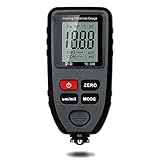
- Auto-Detection for Steel and Aluminum Coatings:This Coating Thickness Gauge utilizes advanced dual technology to automatically recognize ferrous and non-ferrous substrates, making it easy to measure coating thickness on both steel and aluminum without any guesswork
- Ideal for automotive paint inspection, powder coating checks, and metal surface finishing. Commonly used on used cars, anodized aluminum, bathroom fittings, bike frames, stadium seats, lockers, appliances, and more. (Note: Designed for metallic surfaces only.)
- A Must-Have for Used Car Buyers:Don't let hidden repairs catch you off guard. This tool lets you check the paint thickness on each car panel, helping you spot any previous accidents or repairs before buying a used vehicle
- Save Money on Used Car Purchases:When buying used cars, this paint thickness gauge helps you identify potential issues by ensuring the paint thickness is consistent across all panels. Great for detecting accident repairs and verifying if the car has been in a heavy crash
- Important Note: Please note that this gauge is specifically designed to measure coating thickness on metal substrates. It cannot be used on non-metallic materials such as plastic, fiberglass, or wood.
- Registration and identity: registration number, RC, VIN/frame number and engine number.
- Road-use documents: current insurance and PUC certificate.
- Maintenance evidence: dated invoices, dealer job cards and the service book, not just a verbal service claim.
- Finance evidence: lender NOC or hypothecation-termination proof where applicable.
- Seller authority: identification and an explanation of any difference between the person selling the car and the registered owner.
Do not send a large advance merely because documents are promised later. Tell the seller that you will compare every identifier on the vehicle with the RC before agreeing to buy.
Step 1: Establish identity and legal transferability
Match the physical identifiers
At the car, locate the VIN or chassis/frame number and engine number in the positions specified for that Toyota model. Compare the characters letter by letter with the RC, service invoices and insurance documents. Look for disturbed fasteners, fresh paint, grinding marks or an altered plate around an identifier. A mismatch is a stop sign until the registering authority or an authorised Toyota service centre explains it in writing.
Confirm the seller, owner and loan status
The seller should be able to establish authority to sell and should cooperate with the registered-owner details shown on the RC. Check ownership history and whether a hypothecation is still recorded. Toyota U Trust’s buyer guide advises checking the original RC and insurance and obtaining an NOC where hypothecation exists. An NOC alone is not the same as a completed record update; verify that the finance entry can be terminated through the relevant government process.
Use government vehicle services
The Ministry of Road Transport and Highways’ VAHAN 4.0 Citizen Services portal provides vehicle details and services for ownership transfer and hypothecation-related work. Use the registration details to check the record and note the application or transaction status. Requirements, fees and RTO handling can vary by the vehicle’s registration and current state rules, so confirm the process for that exact registration rather than relying on an old checklist.
| Document or check | What to compare | Warning sign | Action |
|---|---|---|---|
| RC | Registration number, VIN/frame number, engine number, owner and hypothecation | Any character, owner or finance mismatch | Pause payment and resolve through the RTO/VAHAN process |
| Insurance | Registration number, policy period and owner details | Expired policy or seller cannot explain the policyholder | Verify with the insurer and arrange transfer or a new policy |
| Service invoices | VIN, dates, odometer readings and work performed | Missing chronology or readings that move backward | Ask for original invoices and obtain a diagnostic inspection |
| Finance records | Hypothecation entry and lender closure/NOC | Loan shown as active or only an informal promise of closure | Require documented closure and record termination before completion |
Step 2: Check Toyota campaigns by VIN
Use Toyota India’s Recall, Special Service & Other Campaigns lookup with the VIN or frame number. Toyota states that the number can be found on the RC, sales invoice or service invoice. Save a screenshot or printout of the result with the date of the check.
If a recall or special-service campaign appears, ask an authorised Toyota service centre whether the repair is outstanding or completed. Request documentary confirmation, including the repair date and vehicle identifier. Do not assume that a completed campaign means the car has no accident, flood, maintenance or structural issue. Conversely, a clean campaign lookup is only evidence about campaigns; it is not a service-history, odometer or overall-condition certificate.
Rank #2

- HIGH ACCURACY COATING THICKNESS MEASUREMENT – Digital paint thickness gauge for metal surfaces with 0.1 μm (0.01 mils) resolution and ±(3%+2 μm) accuracy, helping detect repainting, repairs, and uneven coating thickness during used car inspection, detailing work, and professional quality control. Suitable for checking doors, hood, roof, fenders, and other painted metal panels where accurate coating evaluation is required.
- EASY & FAST OPERATION — FACTORY CALIBRATED – Factory calibrated and ready to use right after installing batteries. Large backlit LCD with clear readings and simple buttons make this coating thickness meter easy for professionals and first-time users. Ideal for pre-purchase vehicle checks, car dealership inspections, trade-in evaluation, and mobile appraisers who need quick and convenient measurements without complicated setup.
- AUTOMATIC Fe / NFe SUBSTRATE DETECTION – Automatically detects Fe (steel/iron) and NFe (aluminum/copper) and selects the correct measuring method. Ideal for modern vehicles with mixed body materials and accurate results without manual switching. This helps users inspect steel doors, aluminum hoods, and other metal body parts with the correct measurement principle applied automatically.
- WIDE MEASURING RANGE FOR AUTOMOTIVE & INDUSTRIAL USE – Measuring range 0–1500 μm (0–59.1 mils) covers factory paint, repainting layers, and thicker coatings. Suitable for car body panels and industrial coated metal parts. Whether checking original automotive paint thickness or verifying thicker coating applications on metal components, the gauge provides a practical working range for many inspection scenarios.
- DUAL TECHNOLOGY: MAGNETIC INDUCTION + EDDY CURRENT – Uses magnetic induction for ferrous metals and eddy current technology for non-ferrous metals, providing stable, repeatable measurements across steel, iron, aluminum, and copper substrates. This dual-technology design allows one device to cover common automotive body metals without requiring separate meters or manual probe replacement.
Step 3: Inspect the exterior and structure in daylight
Compare paint and panel alignment
Inspect outdoors in strong, even daylight after washing the car if possible. View each side from a low angle and compare the colour and gloss of adjacent panels. Look for overspray on rubber trim, masking lines, ripples, sanding marks, orange peel that differs from the rest of the car and panels that look newer than their neighbours. Check bonnet, boot, doors, fenders, roof and bumpers separately; a replacement bumper can be cosmetic, while inconsistent alignment at structural panels deserves closer investigation.
Run your eyes along panel gaps and seams. Uneven gaps, doors that sit high or low, a bonnet that does not close evenly, or a boot lid that needs force may indicate prior repair or poor reassembly. Inspect seam sealer inside the boot, around door openings and at visible joints. Factory-applied sealant usually follows a consistent pattern; disturbed, brush-marked or missing sealant is a reason for a professional structural check, not proof by itself of a crash.
Check common water and rust entry points
Lift the boot floor and inspect the spare-wheel well for rust, staining, dampness, mud residue or a musty smell. Check door sills, carpet edges and the lower dashboard for corrosion or water marks. Look under the car, without placing yourself beneath an unsupported vehicle, for bent members, fresh underseal, weld marks, scraped protection, corrosion and fluid stains. Flood evidence can be hidden under carpets and in connectors, so a dry surface on the day of viewing does not eliminate water damage.
Use a paint-thickness gauge only as supporting evidence
A paint-thickness gauge can compare readings panel by panel and identify areas that may contain filler or repaint. Treat a reading as a screening clue: factory thickness varies by panel and a gauge cannot tell you whether a repaired area is structurally safe. A technician must inspect seams, inner panels and chassis alignment before you accept or reject the car.
Step 4: Check the cabin, safety equipment and electronics
Turn the ignition on before starting the engine and confirm that warning lamps illuminate for their self-check and then go out after start-up. A warning lamp that never appears may have been disabled; one that remains lit needs diagnosis. Compare seat-bolster, steering-wheel, pedal and switch wear with the claimed mileage. Heavy wear is not proof of an altered odometer, but it needs an explanation alongside the records.
The Tool Desk
Outbyte Driver Updater FREEFix the driver behind crashes, sound loss and screen glitchesFind Drivers →Outbyte PC Repair FREEClear out junk files and repair common Windows errorsFree Scan →- Operate the air-conditioner through every fan speed and temperature setting; check cooling from the vents and listen for compressor or blower noise.
- Test every window, central lock, mirror adjustment, seat function, interior light, infotainment feature and charging socket.
- Check both front airbags’ indicator behaviour, seat-belt operation and any visible safety-system warning.
- Test all exterior lights, indicators, brake lights, reverse lights, horn and wipers, including washer spray.
- Look for damp carpets, loose trim, non-factory wiring, cracked screens and water marks around the roof, doors and boot.
Make a written list of defects and photograph them. A seller who refuses ordinary electrical checks or will not allow the car to be scanned should not receive a non-refundable payment.
Rank #3
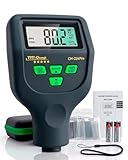
- AUTOMOTIVE PAINT THICKNESS GAUGE – CM-224PRO Designed for measuring coating thickness across vehicle panels during structured professional evaluation. Compare readings on doors, hood, roof and body panels to assess coating consistency and identify thickness variations that may indicate refinishing or prior repair. Suitable for dealerships and inspection professionals.
- 0–59.1 MILS RANGE WITH 0.01 MILS (0.1 µM) RESOLUTION – PROFESSIONAL CONSISTENCY Measures coatings from 0–59.1 mils (0–1500 µm) with stable resolution of 0.01 mils (0.1 µm), supporting consistent and repeatable comparison between factory coating and refinished surfaces during professional inspections.
- FE NFE AND ZINC AUTO DETECTION – AUTOMATIC SUBSTRATE RECOGNITION Automatically identifies steel (Fe), aluminum (NFe) and galvanized surfaces (Zn), supporting inspection of modern vehicles built with mixed body materials without manual switching or mode selection.
- PROFESSIONAL PROBE DESIGN – STABLE AND REPEATABLE CONTACT Engineered probe construction supports consistent surface engagement and repeatable readings during multi-point inspection routines in professional workshop environments.
- FAST PANEL-TO-PANEL MEASUREMENT FLOW – EFFICIENT FULL VEHICLE SCANNING Optimized for efficient professional workflow: place the probe vertically, read the value and continue across panels during dealership and workshop-based inspections.
Step 5: Inspect the engine bay and underside safely
Start with a cold engine
Ask the seller not to warm the car before you arrive. A cold start can reveal difficult starting, excessive smoke, rattling or unstable idle that may disappear after warm-up. Never open a hot cooling system. Check coolant only when the engine is cold and follow the level marks; do not remove a pressurised cap.
Look for leaks, corrosion and disturbed repairs
Inspect engine oil and brake-fluid condition, coolant level and colour, battery condition, exposed wiring, hose damage and visible corrosion. Look for fresh oil, coolant or brake-fluid stains on the engine, transmission and ground. Freshly cleaned surfaces can conceal a leak, so ask to see the car after it has stood. Check for bent brackets, missing clips, non-matching fasteners and paint or sealant that appears newer than surrounding components.
Listen for unusual tapping, knocking, belt noise or exhaust smoke. Do not diagnose a fault from sound alone; record the symptom and have a qualified mechanic confirm its cause and likely repair cost.
Step 6: Inspect tyres, suspension, brakes and steering
Examine all five tyres
Inspect the four fitted tyres and the spare. Check tread depth, sidewall cuts, bulges, cracking, puncture repairs and the date code. Compare brands, sizes and wear patterns. Uneven wear on one edge can point to alignment, suspension or accident-related geometry problems. Tyres that are old but unworn still require replacement planning; include that cost in your offer.
Road-test the car safely
Choose a legal, familiar route with smooth and uneven surfaces, low-speed turns and a safe braking area. Confirm that:
- the car tracks straight without constant steering correction;
- the steering has consistent assistance and no excessive play;
- braking is progressive and does not pull, pulsate or produce grinding noise;
- the suspension does not clunk, rebound excessively or bottom out over bumps;
- the gearbox engages drive and reverse smoothly and changes gear without flare, harsh impact or delay;
- the engine accelerates without hesitation, overheating or warning lights; and
- the clutch, if fitted, engages without slipping or juddering.
Test the car from cold and, if possible, after it reaches operating temperature. Do not let a seller pressure you into unsafe speeds or a drive without valid insurance and permission.
Rank #4

- 【Auto-ID Dual Tech & Material Note】This paint depth gauge automatically identifies Fe/NFe substrates without manual switching. The device is specifically designed for metal substrates and is not suitable for plastic, carbon fiber, or wood. It is ideal for detecting heavy paint on car bodies, boat hulls, and industrial steel structures to ensure accurate readings.
- 【High Precision & Wide Range】Equipped with a wear-resistant probe, this coating thickness gauge delivers lab-grade stability across a 0-78.7 mils (0-2000μm) range. It features high resolution of 0.004 mil / 0.1μm for 0-3.9 mils (0-99.9μm) and 0.04 mil / 1μm for 3.9-78.7 mils (100-2000μm), accurately detecting minute changes in powder coatings or anodized layers. With a measurement accuracy of ≤ ±(3% H+ 2μm / 0.079mil), it ensures reliable results for professional tasks, from measuring paint on curved bumpers (min radius 5mm/197mils) to verifying films on machinery.
- 【Single/Continuous Scan Mode】This paint meter offers more than just single scans by displaying real-time statistics (Avg, Max, Min) of the last 10 measurements in continuous scanning mode. Users can quickly identify uneven spraying on hoods or thickness variations in industrial furniture powder coatings through statistical data. This method reflects overall process quality better than single-point measurements.
- 【Data Storage & USB Output】This digital thickness gauge features a "Data Hold" function to lock readings after measuring in deep engine bays or narrow gaps. It is equipped with a Type-C interface that supports exporting 30 sets of stored data to a PC for generating professional inspection reports. This capability is perfect for creating check reports for used car sales or quality control logs.
- 【Smart Calibration & Ergonomics】This mil thickness gauge comes with Fe/NFe calibration foils and substrates for zero-point and thickness calibration before work. Operators must ensure no dust, wrinkles, or irregularities exist between the thickness standard sheet and the substrate during use. Pressing the OK key allows users to clear historical calibration records easily.
VAHAN fitness guidance identifies compliant tyres, working lights, mirrors, wipers, horn and emissions among roadworthiness checks. Use those items as a minimum checklist, while recognising that a roadworthiness item list is not a substitute for a complete mechanical diagnosis.
Step 7: Verify mileage and service chronology
Write down the odometer reading and compare it with every dated service entry, job card and invoice. The sequence should move forward plausibly. Check whether the VIN or registration number appears on the documents and whether the listed work matches the vehicle’s age and mileage.
Request invoices rather than relying solely on a stamped booklet. Look for recurring maintenance, tyre and battery replacement dates, major repairs and long gaps. An implausibly low reading, a missing interval or a chronology that moves backward is a warning to investigate, not proof that the odometer was tampered with. Ask the seller to explain discrepancies and let an independent technician scan available modules and assess wear before you make a decision.
Independent reader supportYour contribution helps us test, update, and keep practical guides available for everyone.Step 8: Commission an independent inspection in Ahmedabad
A pre-purchase inspection should be independent of the seller and produce a written report. Ask for a technician who will inspect body structure, paint, engine, transmission, suspension, brakes, electrical systems, underbody, tyres and diagnostic fault codes. Request photographs, severity ratings and an estimate of immediate, near-term and optional repairs.
CarVaidya advertises used Toyota inspection and valuation in Ahmedabad, describing coverage of exterior, interior, engine, electrical and mechanical systems plus service-history and mileage review. These are provider claims. Before booking, confirm availability for the vehicle’s location, the exact checklist, technician qualifications, diagnostic-scan method, independence from the seller, report format, turnaround time and price. Do not treat any price or duration stated on a provider page as a fixed Ahmedabad market rate.
Free tools Windows power users keep installed
One-click scans. No signup required.
Give the inspector the documents and ask for the VIN to be included on the report. Keep the report, photographs and seller responses with the sale file. If the seller will not allow an independent inspection, consider that refusal a material risk and be prepared to walk away.
Best Value

- (*^_^*) [Record Various Data] It can record the average value, maximum value, minimum value, dif at the same time, and supports up to 50 data for statistics, making the numerical data you measure more accurate and convenient. If the auto power off function is on and there is no for 3 minutes, the instrument will automatically shut down to save battery power.
- (*^_^*) [Multifunctional] Thickness gauges are used to measure the thickness of metal coatings and other coatings such as paint/enamel/chrome on steel, paint and anodized coatings on aluminum/copper. Automatic detection of substrate properties. It has small size and high precision battery level indicator. It also has automatic shutdown function, used for FE/NFE.
- (*^_^*) [Precision Integrated Probe] It is important to check the car paint to make sure the paint thickness is about the same on each panel and to determine if the car is in good condition with a car paint inspection thickness gauge when you buy the car. The instrument adopts the principles of electromagnetic induction (F probe) and eddy current effect (N probe) to automatically detect the properties of the substrate.
- (*^_^*) [What Can Be Read and Detect Paint Depth] The large LCD display of the paint depth gauge shows the metal type, operating mode, quantity, battery status and the reading in µm, mm or mils. The thickness gauge has a measurement range of 0-2000um, an accuracy of ±(3%+1um), and a resolution of 0um-999um (1um).
- (*^_^*) [Widely Uses] It is used to non-destructively measure the thickness of coatings and paints. It is an essential equipment for material surface treatment, widely used in manufacturing, metal processing industry, chemical industry, commodity inspection and other fields, and can also work stably in laboratories, workshops and outdoors. Suitable for automotive paints, powder coatings, anodized aluminum, bathroom accessories, bicycle frames, stadium seating, outdoor sheds, furniture, swings, c
How to compare two Toyota candidates
Score both cars against the same evidence instead of choosing by model reputation or the lowest odometer reading. Use written findings and calculate the purchase price plus repairs needed immediately after delivery.
| Comparison axis | Evidence to record | Why it changes the decision |
|---|---|---|
| Identity and transfer | RC/VIN/engine match, seller authority, ownership history, hypothecation status | A transfer or finance problem can block lawful ownership regardless of condition |
| Service and mileage | Dated invoices, job cards, odometer chronology and diagnostic results | Documented maintenance is stronger evidence than a verbal claim |
| Accident, flood and structure | Panel gaps, sealant, boot floor, sills, underbody and technician report | Cosmetic repaint and structural repair have very different risks |
| Toyota campaigns | VIN lookup result and written completion confirmation | An outstanding campaign requires follow-up before purchase |
| Mechanical condition | Cold start, leaks, gearbox, brakes, steering, suspension and scan codes | Immediate repair exposure affects the real purchase cost |
| Tyres and consumables | All five tyres, battery, fluids, brakes and service intervals | Several near-term replacements can erase a price advantage |
| Warranty | Remaining coverage, exclusions, transfer conditions and documents | Only written, transferable terms have decision value |
Should you choose a certified-used Toyota route?
Toyota India’s U Trust certified-used-car program describes extensive inspection and refurbishment. The page advertises a “203 Point Inspection,” certification, a warranty offer of up to two years or 30,000 km and up to three labour-free services. Toyota presents these as program benefits; terms apply and must be confirmed for the specific vehicle.
Ask for the actual inspection report, warranty certificate, exclusions, claim procedure, transfer conditions and details of the included services. A certified channel is a comparison option, not proof that every privately sold Toyota has undergone the same checks. Compare the total price and written coverage with an independently inspected private car.
Do these 3 things before closing this tab:
1Scan for outdated or missing drivers - takes under a minute2Repair Windows errors before they cause bigger problems3Fix the driver behind crashes, sound loss and screen glitchesComplete the purchase and paperwork correctly
Start ownership transfer through VAHAN
VAHAN’s process instructs the seller to initiate the ownership-transfer application and the buyer to continue it afterward. Confirm the correct form, documents, fee and RTO workflow for the registration. Obtain the application number and keep payment receipts. Do not rely on a signed delivery note as a substitute for a completed transfer record.
Update insurance
IRDAI states that third-party liability insurance is mandatory for vehicles used on public roads. Its motor-insurance policyholder guidance explains that insurance can be transferred when the seller informs the insurer. For comprehensive or package policies, the ownership transfer should be recorded within 14 days of transfer for own-damage claim eligibility. Verify the current policy, notify the insurer promptly and obtain written confirmation of the updated owner and registration details.
Release payment only when the file is complete
- Write a sale agreement identifying the vehicle, VIN, registration number, price, delivery date and disclosed defects.
- Record whether any loan, fine, tax, campaign repair or insurance issue remains outstanding and who will resolve it.
- Collect the original RC or legally accepted digital record, insurance details, PUC, keys, service documents and lender closure papers.
- Match the vehicle and documents again at handover, photograph the odometer and note the date and time.
- Keep copies of the payment proof, signed receipt, inspection report and transfer application.
Warning signs that justify walking away
- The VIN, engine number, RC, insurance or seller identity does not match.
- The seller refuses an independent inspection, diagnostic scan or road test.
- There is unexplained structural welding, severe panel misalignment, boot-floor rust or flood evidence.
- Service records are missing, altered, inconsistent or impossible to reconcile with the odometer.
- A hypothecation remains active without documented lender closure.
- Warning lights are hidden, the engine is already warm when you were promised a cold start, or fresh cleaning obscures leaks.
- The seller demands a non-refundable advance before documents and transferability are verified.
Bottom line
Buy the Toyota with the strongest verifiable file and lowest documented repair exposure, not simply the newest year or lowest mileage. A VIN and RC match, clean transfer path, campaign check, daylight body inspection, consistent service chronology, safe road test and independent written report give you evidence to negotiate—or to walk away—before your money is at risk.
Quick Recap
Product prices and availability are accurate as of the date/time indicated and are subject to change. Any price and availability information displayed on Amazon at the time of purchase will apply.
Quick wins for a faster PC:
Repair Windows errors before they cause bigger problemsFix Now →Fix the driver behind crashes, sound loss and screen glitchesFind Drivers →Clear out junk files and repair common Windows errorsFree Scan →



