If your car enters the water, escape as soon as you can. Release your seat belt, open a side window, get children out, and leave through the window or an easily opened door. Do not wait for the cabin to fill with water and do not waste time trying to force a door against outside water pressure.
The practical sequence is:
Seat belts off → side window open → children out → everyone out → move away from the car → call 911.
This is an emergency-preparedness guide, not a substitute for professional water-rescue training. Vehicle design, crash damage, water conditions, occupant abilities, and the type of window glass can change what is possible.
What to do first
- Stay calm and act immediately. A sinking vehicle is a time-critical emergency. The easiest escape is usually during the initial floating phase or early submersion, before water pressure makes doors difficult to open and electrical systems stop working.
- Release your own seat belt. Seat belts should remain fastened during normal driving; they greatly reduce injury in a crash and help you stay conscious and oriented. Once the vehicle has entered the water and you are able to escape, release your belt. Do not remove it before impact as a precaution. In a crash, being unrestrained can leave you injured, unconscious, or disoriented before you can escape.
- Release other occupants’ restraints in a controlled order. If you can reach other occupants safely, release their seat belts or child restraints. Keep children close to an adult and control the exit sequence. The research-supported order is often summarized as seat belts, windows, children, out. Children should leave before adults when that is practical.
- Open a side window immediately. Use the electric window switch while the vehicle still has power. A side window is generally the fastest exit. Opening it will allow water to enter more quickly, but remaining inside while waiting for the cabin to fill is usually far more dangerous. If a window opens, send children through first when possible, then follow them.
- Use a door only if it opens easily. Try a door if the vehicle is still floating and it opens without a struggle. Do not spend valuable time fighting a closed door. Water outside the vehicle can exert enough pressure to hold it shut while the cabin is still relatively dry. A door that worked on land may become effectively jammed within seconds.
- If the window will not open, use an escape tool if one is within reach. A vehicle escape tool with a seat-belt cutter and a spring-loaded glass breaker can help against some side windows. Use it immediately rather than searching the vehicle for another option. A tool in the trunk or cargo area is not useful while you are trapped in the passenger compartment.
- Target a side window, not the windshield. Windshields are generally made from laminated glass, which is designed to remain in one piece. They may crack without creating an opening. Side windows are commonly tempered and are more likely to shatter when struck at the edge or with a suitable spring-loaded breaker.
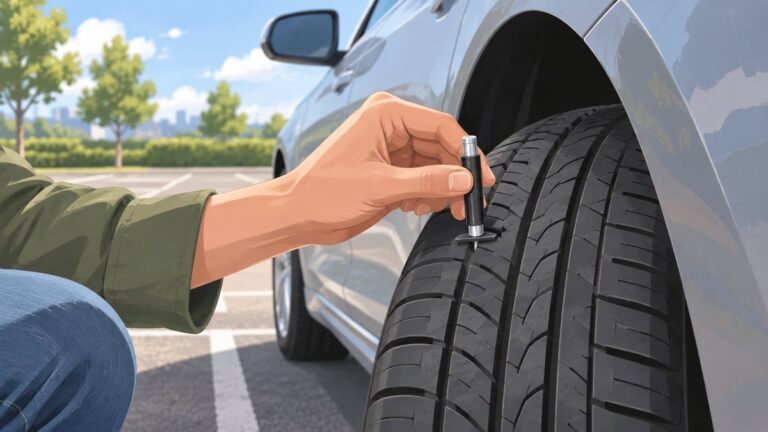
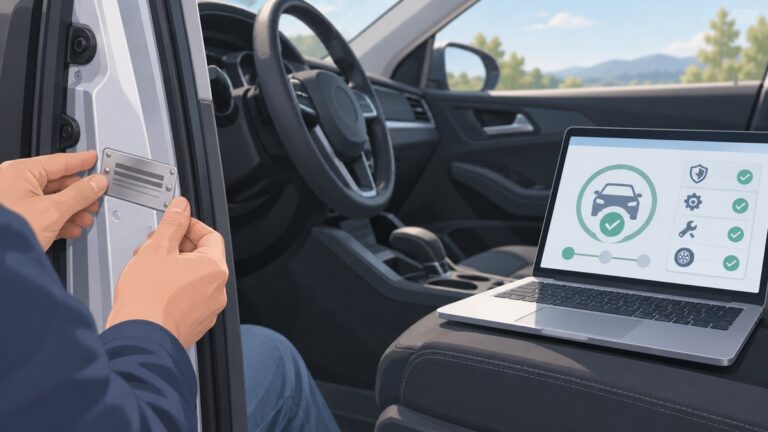
- Check the glass type when you can—and do not assume a breaker is universal. Look for the small marking in the lower corner of the window. It may identify the glass as TEMPERED or LAMINATED. The markings and window locations vary by vehicle. Your owner’s manual or model-specific information may provide additional confirmation.
- Exit through the first usable opening. Once a window or door is open, leave quickly. Take children out first when you can maintain control of them. Do not stop to retrieve phones, bags, or other belongings.
- Move away from the vehicle and toward the surface. A sinking or shifting car can trap, injure, or disorient you. Move away from it while accounting for current, darkness, debris, cold water, and the possibility that the vehicle may roll or move. Follow bubbles or rising air toward the surface if visibility is poor. Once you reach the surface, swim toward shore, a boat, a person, or another safe point.
- If the car is upside down, orient yourself by touch. Release your belt, find the nearest usable opening, and determine which way is up. In dark or turbulent water, bubbles can indicate the direction of the surface. Do not depend on seeing the exit or the vehicle’s interior layout.
- Do not make “wait until it fills” your plan. As water enters, pressure inside and outside can eventually equalize, potentially making a door easier to open. But reaching that point requires occupants to remain underwater, hold their breath, and perform a difficult escape. It is a last-resort situation, not the recommended method. Escape at the earliest workable opportunity.
- Call 911 after you are out. In a submersion emergency, escaping takes priority over making the call. Once you are safely outside, call 911 if possible, report the vehicle’s location, describe the water and current conditions, and identify anyone still inside. Help other occupants only if you can do so without putting yourself back in danger.
What if the window is laminated?
A glass breaker is not guaranteed to work on every vehicle. In AAA testing reported in the research behind this guide, four of six consumer escape tools broke tempered glass, while none broke through laminated glass. Spring-loaded tools performed better than hammer-style tools in the tested conditions; swinging a hammer-style tool is especially difficult underwater.
Do these 3 things before closing this tab:
1Clear out junk files and repair common Windows errors2Fix the driver behind crashes, sound loss and screen glitches3Repair Windows errors before they cause bigger problems#1 Best Overall

- 2-in-1 emergency-escape tool provides a window hammer and seat-belt cutter; 2-pack
- Tungsten double-head hammer: 1800HV hardness, 3 times stronger than common carbon steel – for instant car-door window breakage
- Sharp blade for easily cutting through a seat belt; bright-orange plastic handle provides a secure grip
- Designed to help escape from a sinking, over-turned, crashed, or burning car
- Protective bracket included for safe storage; store in center console or driver-side door pocket
Vehicle glass also varies by model and window position. AAA reported that about one-third of 2018 vehicle models had at least one laminated side window. That figure is model-year-specific and should not be treated as a current percentage for every vehicle, but it illustrates why checking your own car matters. A breaker that works on one side window may fail on another.
If every accessible window appears laminated or cannot be opened, move toward the vehicle’s remaining air pocket and reassess. As the front of many vehicles sinks first, the air pocket may be toward the rear, although vehicle orientation can vary. A door might become easier to open only after pressure has substantially equalized. This is a last-resort scenario: stay oriented, conserve your breath, locate an exit by touch, and leave as soon as a workable opening becomes available.
Children and child seats
Children should always remain properly restrained during ordinary travel. During a submersion emergency, release the child from the restraint once an adult can control the sequence, bring the child close, and pass or guide the child through the opening before adults when feasible.
Do not leave a child in a car seat because the seat may float. Floating does not solve the immediate danger of remaining inside a sinking vehicle, and the seat may be attached to the vehicle or become difficult to control in moving water. The escape objective is to get the child out of the vehicle and keep the child close to an adult.
What’s actually slowing this PC down?
Pick the symptom - the matching free tool is one click away.
Rank #2
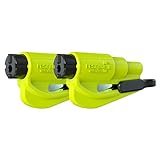
- The original 2-in-1 lifesaving compact car safety tool: this emergency keychain hammer provides peace of mind in case of car entrapment. Can be used in various situations: rollover, electrical system failure, car fire, floods, sinking car accident.
- Jammed seatbelt cutter: the razor-sharp, stainless-steel blade allows to cut a jammed seat belt in no time. Slice the seat belt diagonally for a quick and clean cut. Can be used multiple times.
- Tempered glass window breaker: the solid, heavy-duty, stainless-steel spike easily breaks tempered glass car side windows. Hit preferably one of the corners of the window. Spring-loaded mechanism and resets after each use. Reusable multiple times.
- Made in USA. We pride ourselves in offering efficient and reliable, made in the US, safety tools for the last 20 years.
- Trusted by first responders, Law Enforcement and EMTs and carried by more than 15 million motorists worldwide. The resqme seat belt cutter and window breaker saves a life on average every 15 days. Tested and certified by TUV, a German certification.
Prepare before an emergency
- Identify your escape windows. Check the markings on each side window and learn which are tempered or laminated. Do not assume that all side windows use the same glass.
- Keep the tool within reach. Store a car escape tool with a seat-belt cutter and window breaker where the driver and passengers can reach it while belted in—such as a secure console or door-pocket location designed for that tool. Never place it only in the trunk.
- Choose based on function, not decoration. Look for an accessible seat-belt cutter and a spring-loaded breaker, then verify what kind of glass the tool is intended to handle. No consumer tool should be treated as a guarantee against laminated glass.
- Have a no-tool plan. Know which windows open electrically, which doors might be reachable, and where the nearest exit is for each seating position. If you regularly carry children or passengers with limited mobility, discuss their roles before an emergency.
- Tell regular passengers the sequence. A short briefing can prevent hesitation: “Belts off, window or door, children out, then everyone out.”
- Consider professional training. A certified vehicle-submersion or water-rescue course may help you practice orientation and escape decisions under controlled supervision. Training is optional preparation, never a reason to delay immediate escape.
Floodwater: avoid the emergency if you can
If the vehicle is approaching floodwater rather than already submerged, prevention is the safest escape strategy: turn around and avoid driving into it. Do not drive around barricades or assume that shallow-looking water is safe. Fast-moving water can move a vehicle, hide a washed-out road, and leave you without a practical escape route.
Common myths that can cost time
“Take off your seat belt before the car hits the water.”
False. Keep your belt fastened during normal driving. It protects you in the crash that may precede the submersion. Release it after the vehicle enters the water and you are ready to escape.
Recommended Free Tools
Rank #3

- The original 2-in-1 lifesaving compact emergency car safety tool: this emergency keychain hammer provides peace of mind to yourself and your family on the road in case of car entrapment. Can be used in various situations such as rollover, electrical system failure, car fire, floods, sinking car accident.
- Jammed seatbelt cutter: the razor-sharp, stainless-steel blade allows to cut a jammed seat belt in no time. Slice the seat belt diagonally for a quick and clean cut. Can be used multiple times.
- Tempered glass window breaker: the solid, heavy-duty, stainless-steel spike easily breaks tempered glass car side windows. Hit preferably one of the corners of the window for better result. The resqme is equipped with a spring-loaded mechanism and resets after each use. The resqme is reusable multiple times.
- Made in USA. We pride ourselves in offering efficient and reliable, made in the US, safety tools for the last 20 years.
- Trusted by first responders, Law Enforcement and EMTs and carried by more than 8 million motorists worldwide. The resqme seat belt cutter and window breaker saves a life on average every 15 days. Tested and certified by TUV, a German certification
“The door will always open underwater.”
False. Outside water pressure can hold the door shut while the cabin remains comparatively dry. Try it only if it opens easily; prioritize a side window.
“Any window punch breaks any window.”
False. Tempered and laminated glass behave differently. Laminated glass can crack and remain attached rather than producing an opening, and consumer-tool testing found no tested tool broke through laminated glass.
“A phone, headrest, or ordinary hammer is a reliable substitute.”
Do not rely on them. Improvised objects such as a phone or car-seat headrest were ineffective in testing cited by AAA-related reporting. Hammer-style breakers are also difficult to swing underwater. A dedicated tool within reach is a better preparation, but it still depends on the glass type.
“Wait until the car is completely full of water.”
Do not make this your plan. Waiting leaves you underwater and requires a precise, breath-holding escape. Leave during the initial floating or early-submersion phase whenever a usable opening is available.
PC Slower Than It Used to Be?
A free scan shows the junk files, broken settings and background clutter dragging Windows down - then fixes them in one click.Free scan · Windows 10 & 11Outdated Drivers Are Slowing You Down
One free scan finds every outdated or missing driver and matches the right update for your exact hardware.Free scan · exact hardware matchRank #4
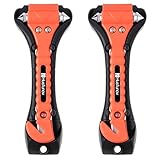
- Life-saving 2-in-1 tool:This Car Safety Hammer is a must-have for every car! It combines a window glass hammer breaker and a seat belt cutter, providing you with essential tools for emergency escape situations.Designed to break car windows in case of emergencies, our Car Safety Hammer has a sharp hammerhead that can easily shatter the glass. The built-in seat belt cutter blade ensures quick and safe seat belt release.
- Premium Material:High-grade carbon steel double-headed makes the hammer extremely sturdy, easy to break windows and save lives. The Razor-sharp blade mounted in a safe curved hook is made of high quality steel that can cut the seat belt quite easily.
- Well Designed:The bright color makes it easy to find in the dark or in a state of panic. It combines a protective bracket for safe storage. Anti-slip handle and light weight make it easy to control.
- Applicable Scenarios:Car accidents and emergencies,Be prepared for unforeseen situations on the road. Our Car Safety Hammer helps you escape from a vehicle quickly and safely in case of accidents or emergencies.In the unfortunate event of a car sinking in water, our Car Safety Hammer allows you to break the windows and swim to safety.
- Suitable for people:Whether you are a new driver or an experienced one, it is crucial to have a Car Safety Hammer within reach to ensure your own safety and the safety of others on the road.Protect your loved ones by equipping your family vehicles with this Emergency Escape Tool. Provide them with peace of mind and a reliable means of escape during emergencies.
Important limitations
No single sequence works perfectly in every crash. A vehicle may be inverted, badly damaged, full of debris, drifting in current, or sinking in darkness. Water temperature and depth can rapidly reduce your strength and breath-holding ability. Electrical windows may stop working, restraints may be damaged, and passengers may be injured or unable to follow instructions.
Use the earliest safe opening, avoid wasting time on a jammed door, keep children close, and move away from the vehicle after exiting. Never practice by intentionally submerging a car without professional supervision and a controlled training environment.
Frequently Asked Questions
Should I open the window before the car hits the water?
No. Keep your seat belt fastened and drive defensively. If the vehicle enters the water, open a side window immediately while the electrical system still works. If the vehicle is merely approaching floodwater, turn around and avoid it.
Which window should I break in a sinking car?
Target an accessible side window identified as tempered glass. Avoid the windshield, which is generally laminated and designed to stay intact. Check the small glass marking in the corner of the window when possible.
Best Value

- 🚔ESSENTIAL SAFETY TOOL - One end is a stainless steel seat belt cutter for cutting seatbelt, and the other end is the car window breaker tool with two hardened sharp and heavy carbon steel points, which allows you to leave the vehicle quickly in an emergency.Glass breaker and seatbelt cutter
- 🚔HIGH PERFORMANCE & DURABLE - The double-headed hammer is made of high-grade carbon steel and engineering plastics which make this car hammer very sharp and easy to break out the window for life-saving. The razor-sharp stainless steel seatbelt cutter makes cut the seatbelt in the shortest time,even underwater
- 🚔ERGONOMIC DESIGN - The anti-skid handle is long enough is approximately 5.9 inches, making it easy to control. It's compact and portable which allows it to be placed anywhere you can get in the car. The bright red for high visibility, you can find without any difficulty.
- 🚔2-PACK SAFETY HAMMERS - 2-Pack safety hammers that can be placed in different parts of your car, ready to be picked up by drivers and passengers in case of an emergency, which Increasing driving safety and can also be given to your family and friends as a surprising gift.Car window breaker tool for tesla.
- 🚔DEDICATED CUSTOMER SERVICE - We offer 90-day returns and free lifetime customer service. If you have any questions, please feel free to contact us, we will try our best to provide you with 100% satisfactory service.
What if my car has laminated side windows?
Try the electric window first and leave through any usable opening. A consumer glass breaker may crack but not open laminated glass. If no window works, move toward the remaining air pocket and reassess exits; this is a last-resort situation, not a reason to wait routinely.
Should a child stay in a floating car seat?
No. Children should be restrained during normal travel, but during a submersion emergency the priority is to release them, keep them close to an adult, and get them out of the vehicle before adults when feasible.
The Bottom Line
Remember: seat belts off, side window open, children out, everyone out, move away from the vehicle, then call 911. The best chance of escape is usually before the vehicle is fully submerged. Prepare by learning your window types and keeping a compatible escape tool within reach—but never assume a tool can break laminated glass.
Quick Recap
Product prices and availability are accurate as of the date/time indicated and are subject to change. Any price and availability information displayed on Amazon at the time of purchase will apply.