The safest way to drive through a flooded road in India is not to enter it. Floodwater can hide a sudden drop, a washed-out roadbed or a missing bridge approach, while moving water can carry a vehicle away. No car, SUV, motorcycle or driving technique can turn an unknown flooded route into a reliably safe crossing.
If you are approaching floodwater, stop before the inundated section, follow current local warnings and use an open alternative. If water is already rising around your vehicle, getting people out and reaching higher, safe ground takes priority over saving the car.
As an Amazon Associate I earn from qualifying purchases.
The rule that overrides every other driving tip
Do not drive into a flooded area. This is the consistent advice from the Maharashtra State Disaster Management Authority (SDMA), Delhi Fire Service, Assam State Disaster Management Authority (ASDMA) and the District Administration of Gondia.
Recommended Free Tools
A calm-looking surface is not evidence that a road is intact. Water can conceal a sharp edge at the pavement, a collapsed shoulder, an open drain or a section of road washed away altogether. Current can also be deceptive: water that appears shallow from the driver’s seat may be strong enough to move a vehicle.
#1 Best Overall

- 2-in-1 emergency-escape tool provides a window hammer and seat-belt cutter; 2-pack
- Tungsten double-head hammer: 1800HV hardness, 3 times stronger than common carbon steel – for instant car-door window breakage
- Sharp blade for easily cutting through a seat belt; bright-orange plastic handle provides a secure grip
- Designed to help escape from a sinking, over-turned, crashed, or burning car
- Protective bracket included for safe storage; store in center console or driver-side door pocket
Do not treat a larger vehicle, four-wheel drive, higher ground clearance or another driver’s successful crossing as proof that your route is safe. The Indian government guidance cited here does not establish vehicle-specific wading limits, and it does not approve crossing below a particular depth.
Before choosing a route
Check current local information
Flood conditions change street by street. Before setting out, check the latest instructions from the relevant district administration, state disaster-management authority, police, fire service and other official local channels. Look specifically for road closures, bridge restrictions, diversions and warnings for low-lying areas.
Use an open, marked alternative rather than relying on a map that has not been updated for current flooding. A route that was passable earlier in the day may be closed after an intense shower, a release from an upstream reservoir or a rise in a local drain or river.
What’s actually slowing this PC down?
Pick the symptom - the matching free tool is one click away.
Plan to turn around early
Leave enough space to stop before the water. If you can safely reverse or turn around on dry, stable ground, do that before reaching the flooded section. Do not continue simply because the destination is close or because other traffic is waiting behind you.
Rank #2
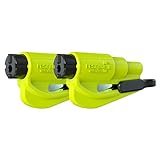
- The original 2-in-1 lifesaving compact car safety tool: this emergency keychain hammer provides peace of mind in case of car entrapment. Can be used in various situations: rollover, electrical system failure, car fire, floods, sinking car accident.
- Jammed seatbelt cutter: the razor-sharp, stainless-steel blade allows to cut a jammed seat belt in no time. Slice the seat belt diagonally for a quick and clean cut. Can be used multiple times.
- Tempered glass window breaker: the solid, heavy-duty, stainless-steel spike easily breaks tempered glass car side windows. Hit preferably one of the corners of the window. Spring-loaded mechanism and resets after each use. Reusable multiple times.
- Made in USA. We pride ourselves in offering efficient and reliable, made in the US, safety tools for the last 20 years.
- Trusted by first responders, Law Enforcement and EMTs and carried by more than 15 million motorists worldwide. The resqme seat belt cutter and window breaker saves a life on average every 15 days. Tested and certified by TUV, a German certification.
Never go around a closure
Do not drive around a barricade, cone line or other road barrier. ASDMA warns that a road or bridge beyond the barrier may have washed out. A bypass around a barrier can put the vehicle onto an uninspected shoulder, a broken bridge approach or deeper current.
Why floodwater is dangerous even when it looks shallow
| Hazard | What the driver cannot reliably see from the cab | Why it changes the decision |
|---|---|---|
| Hidden depth or abrupt drop-off | The water may cover a drain, eroded edge or sudden break in the road. | You cannot judge a safe line from the surface appearance. |
| Washed-out roadbed | Delhi Fire Service warns that the roadbed may have been washed away beneath the water. | The vehicle can fall or become immobilised even without strong current. |
| Moving water | Depth and speed are difficult to estimate from inside a vehicle. | Maharashtra SDMA warns that only half a metre of floodwater can carry a car away. This is an official safety warning, not proof that shallower water is safe. |
| Vehicle shutdown | Water can disable electrical systems and stop the engine. | A stalled vehicle can leave occupants trapped while the water level continues to rise. |
Delhi Fire Service’s flood guidance, last updated 17 August 2026, states: “Donot attempt to drive over a flooded road.The depth of water is not always obvious.” The wording reflects the key problem: a driver cannot turn an uncertain depth and an uncertain road surface into a dependable calculation while moving.
What to do when you reach a flooded stretch
- Stop before the water. Keep the vehicle on firm, unflooded ground if possible. Avoid stopping where a current could push the car sideways or where the road edge is already eroded.
- Look for official direction. Follow a signed diversion or instructions from authorised personnel. Do not create your own route through a closed section.
- Turn away while the vehicle is still in a safe position. Reverse or turn around only where the surface is known to be stable and the manoeuvre can be completed without entering deeper water.
- Do not enter to test the depth. A person walking ahead, a stick, a tyre track or a vehicle in front cannot confirm that the road underneath remains intact.
- Do not follow another vehicle into the water. Its clearance, weight, tyres, route and timing may differ, and its apparent success does not reveal what is under the surface.
- Wait for verified reopening information. If no safe alternative is available, delay the journey in a secure place rather than treating the flood as a temporary obstacle to cross.
How to interpret the half-tyre-height warning
The National Institute of Disaster Management (NIDM) says: “While driving, exit the roads if flood water is above half tyre height.” This is a trigger to leave the flooded road and reverse or change route when that is possible. It is not a specification saying that water below half the tyre is safe to enter.
Use the instruction this way:
- If you are still on dry ground, do not enter just because the water appears below half the tyre.
- If you are already on a flooded section and the water is above half the tyre, treat the situation as an immediate leave-the-road problem, not as a challenge to complete the crossing.
- If turning back would take you into deeper or faster water, choose the safest available direction and follow official emergency instructions rather than making a sudden manoeuvre.
The reviewed Indian guidance does not provide a universal depth limit for all roads or a tested wading depth for particular makes and models. Water depth, current, road construction, vehicle loading and changing ground conditions make a single number unsuitable as a permission to proceed.
Rank #3

- Vehicle Window Breaker: This smosun 2-in-1 safehammer glass breaker has a built-in high-pressure spring and a sturdy tungsten steel blade with a hardness of 55. Along with a 20KGF impact force can break the solid window glass in an instant. Note: Metal Tip Stays Inside The Tool - Only Springs Out When Breaking Glass.
- Seat Belt Cutter: The seat belt cutter features a built-in stainless steel cutter with a U-shaped hidden knife edge design, ensuring safety and preventing hand injuries. Simply align the U-shaped mouth of the cutter with the seat belt, push it forward swiftly, and get out of the vehicle easily and quickly.
- Upgraded anti-slip: smosun safety hammer comes with 8 ergonomically designed anti-slip devices made of silicone, which can upgrade your window breaker to an anti-slip handle, making it more comfortable to hold and easy to use. It is an essential safety tool for car emergencies.
- Fashionable & Portable: This escape tool is only 3.6 inches, lightweight, and powerful. It is easy to carry and can be hung on your keychain or on your vehicle's center console using Velcro tape. You can buy two, one in the front row and one in the rear row.
- Widely Used: This glass breaker is suitable for rescue, disaster response, escape, lifesaving, and any unexpected situations. Important Note: Only the tempered glass of the side windows of the car can be broken, and the laminated glass such as the front and rear windshield sunroofs cannot be broken. It's absolutely worth it.
If water starts rising around a vehicle
When the vehicle is still moving
If you can stop and leave the flooded section before water surrounds the vehicle, do so. NIDM’s half-tyre-height instruction is a warning to exit the road, reverse or change route. Avoid treating acceleration, a low gear, engine revving or a bow wave as a general solution; those techniques cannot reveal a missing roadbed or stop moving water from shifting the vehicle.
When the engine stalls
NIDM warns that a stalled vehicle’s electrical systems may shut down. If the engine stops and does not restart, occupants may become trapped. Do not remain inside waiting for the car to recover if water is rising or the vehicle is being moved by current.
When water surrounds the car
Gondia district’s “Flood: General Precautions” guidance says to abandon the vehicle and reach a safe place. Maharashtra SDMA likewise advises moving to higher ground if that can be done safely. The car is replaceable; a rising current can remove the time needed to escape.
Quick wins for a faster PC:
Repair Windows errors before they cause bigger problemsFix Now →Scan for outdated or missing drivers - takes under a minuteDriver Scan →- Tell everyone to stay calm and prepare to leave together.
- Unfasten seat belts and identify the safest exit available.
- Move toward higher, stable ground only when that path is safer than remaining in the vehicle. Avoid entering visibly fast water or stepping onto an edge you cannot see.
- Once clear, follow local authority instructions and request emergency assistance if anyone is injured, trapped or missing.
Emergency escape from the cabin
NIDM’s guidance describes escape preparation for a vehicle that has stalled or is being inundated. It notes that some vehicles may allow a window or sunroof to be opened through a single-button control while electrical power remains available. It also suggests keeping a hammer near the driver’s seat or using the metal tongs of a headrest to break a window in an emergency.
Rank #4
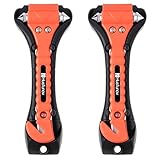
- Life-saving 2-in-1 tool:This Car Safety Hammer is a must-have for every car! It combines a window glass hammer breaker and a seat belt cutter, providing you with essential tools for emergency escape situations.Designed to break car windows in case of emergencies, our Car Safety Hammer has a sharp hammerhead that can easily shatter the glass. The built-in seat belt cutter blade ensures quick and safe seat belt release.
- Premium Material:High-grade carbon steel double-headed makes the hammer extremely sturdy, easy to break windows and save lives. The Razor-sharp blade mounted in a safe curved hook is made of high quality steel that can cut the seat belt quite easily.
- Well Designed:The bright color makes it easy to find in the dark or in a state of panic. It combines a protective bracket for safe storage. Anti-slip handle and light weight make it easy to control.
- Applicable Scenarios:Car accidents and emergencies,Be prepared for unforeseen situations on the road. Our Car Safety Hammer helps you escape from a vehicle quickly and safely in case of accidents or emergencies.In the unfortunate event of a car sinking in water, our Car Safety Hammer allows you to break the windows and swim to safety.
- Suitable for people:Whether you are a new driver or an experienced one, it is crucial to have a Car Safety Hammer within reach to ensure your own safety and the safety of others on the road.Protect your loved ones by equipping your family vehicles with this Emergency Escape Tool. Provide them with peace of mind and a reliable means of escape during emergencies.
These are preparedness options, not a reason to enter floodwater. Vehicle doors, windows, locks, airbags and headrests differ, so no single escape sequence works for every model. Read your owner’s manual in advance to understand how your vehicle’s windows and locks operate, and keep any escape tool accessible rather than stored in a boot that may become unreachable.
If a window can be opened safely, use it rather than waiting for the door. If it cannot, use an emergency window-breaking method only when necessary and move out promptly. Keep occupants together as far as conditions allow, and head for a visible, stable place above the water.
Scenario decisions at a glance
| Situation | Correct priority | What not to do |
|---|---|---|
| Flooded road ahead, vehicle still dry | Stop, obtain current official information and take an open alternative. | Do not enter to measure depth or follow another vehicle. |
| Barricade or closure ahead | Turn around only on safe ground and use the marked diversion. | Do not drive around the barrier. |
| Already on water, above half tyre height | Exit the road and reverse or change route if that can be done safely. | Do not interpret the threshold as a safe crossing depth. |
| Engine stalls and water is rising | Prepare to abandon the vehicle and reach safer, higher ground. | Do not keep trying to restart while occupants are becoming trapped. |
| Water surrounds the vehicle | Leave the car and get to a safe place, if the route out is safer than staying inside. | Do not remain in the vehicle to protect it. |
Common misconceptions about cars and floodwater
“My SUV has enough clearance.”
Clearance does not reveal the condition of the road beneath the water or protect against lateral current. The sources do not establish a safe flood depth for SUVs, four-wheel-drive vehicles, hatchbacks, sedans, motorcycles or any other vehicle category.
The Tool Desk
Outbyte PC Repair FREERepair Windows errors before they cause bigger problemsFix Now →Outbyte Driver Updater FREEFix the driver behind crashes, sound loss and screen glitchesFind Drivers →“Half a metre is the legal or safe limit.”
It is neither. Maharashtra SDMA uses half a metre as a warning that water can carry a car away. NIDM uses half-tyre height as a point at which a driver already on the road should exit. Neither statement authorises entering water below that measurement.
Best Value

- The original 2-in-1 lifesaving compact emergency car safety tool: this keychain hammer provides peace of mind on the road in case of car entrapment. Can be used in case of rollover, electrical system failure, car fire, floods, sinking car accident.
- Jammed seatbelt cutter: the razor-sharp, stainless-steel blade allows to cut a jammed seat belt in no time. Slice the seat belt diagonally for a quick and clean cut. Can be used multiple times.
- Tempered glass window breaker: the solid, heavy-duty, stainless-steel spike easily breaks tempered glass car side windows. Hit preferably one of the corners of the window. resqme is equipped with a spring-loaded mechanism. Resets after each use. Reusable
- Made in USA. We pride ourselves in offering efficient and reliable, made in the US, safety tools for the last 20 years.
- Trusted by first responders, Law Enforcement and EMTs and carried by more than 8 million motorists worldwide. The resqme seat belt cutter and window breaker saves a life on average every 15 days. Tested and certified by TUV, a German certification
“If the vehicle ahead made it, I can make it too.”
You cannot know whether the other vehicle crossed before the current increased, whether it used a different line or whether it suffered hidden damage. Its crossing supplies no safety guarantee for yours.
“Driving faster keeps water out.”
Speed cannot compensate for a washed-out surface or moving current. Avoidance is the safer response; the official material does not recommend acceleration as a way to neutralise those hazards.
Practical preparedness before monsoon travel
A small amount of preparation can improve your options if an unexpected closure develops:
- Keep your phone charged and carry a power bank so official alerts and emergency calls remain available.
- Know the local emergency numbers and the district or state channels that issue road-closure information.
- Keep an emergency window breaker and seat-belt cutter within reach of the driver. NIDM’s guidance refers to a hammer or the metal tongs of a headrest for breaking a window if occupants are trapped; an escape tool is supplementary preparedness, not flood-crossing equipment.
- Tell passengers before departure that a barricade or rising water means turning back, not negotiating a crossing.
- Allow extra time for a diversion so schedule pressure does not influence the decision to enter water.
What the official guidance establishes
| Issuing body | Relevant guidance | Date qualification |
|---|---|---|
| National Institute of Disaster Management | Exit the road if water is above half tyre height; a stalled vehicle’s electrical systems may shut down; prepare window escape options. | Publication year was not established in the accessible source. |
| Maharashtra State Disaster Management Authority | Do not drive through flooded areas; hidden abrupt drop-offs are possible; half a metre of water can carry a car; abandon a surrounded vehicle and move to higher ground if safe. | Page publication year was not stated. |
| District Administration, Gondia | Do not drive through floodwater; abandon a surrounded vehicle and reach safety. | Last updated 3 September 2026. |
| Delhi Fire Service | Do not drive over a flooded road; depth is not always obvious and the roadbed may have washed out. | Last updated 17 August 2026. |
| Assam State Disaster Management Authority | Do not drive through flooded areas or around road barriers; roads and bridges may have washed out. | Date was not stated in the accessible guidance. |
| Directorate of Civil Defence, Government of NCT of Delhi | Do not take a vehicle onto a flooded road without proper information about depth and current. | Date was not stated in the accessible guidance. |
The decision in one sentence
In India, a flooded road is a route to avoid, not a depth to calculate: check official local information, respect every barrier, turn back before entering, and if rising water surrounds the vehicle, leave it and reach safe higher ground when that can be done safely.
Quick Recap
Product prices and availability are accurate as of the date/time indicated and are subject to change. Any price and availability information displayed on Amazon at the time of purchase will apply.




