To determine what a Ford Super Duty needs, start with the truck’s 17-character VIN and separate three kinds of information: a repair record proves work was performed, a safety recall identifies a manufacturer remedy for a defined vehicle population, and a technical service bulletin (TSB) describes service information for a condition or repair. They answer different questions and carry different cost and safety implications.
Use the VIN to check current recall status, read the exact Ford or NHTSA communication, and then compare it with the repair order, mileage, diagnosis, parts and coverage. A TSB by itself does not prove an open recall, a safety defect, or a free repair.


As an Amazon Associate I earn from qualifying purchases.
What each record means
Confusing a paid repair with a recall or a TSB can lead to missed safety work, an unnecessary repair, or an unexpected bill. Classify the document before deciding what to do.
The Tool Desk
Outbyte Driver Updater FREEFix the driver behind crashes, sound loss and screen glitchesFind Drivers →Outbyte PC Repair FREERepair Windows errors before they cause bigger problemsFix Now →Repair record: evidence of work on one truck
A repair order, invoice or receipt documents work performed on a particular vehicle. The useful identifiers are the VIN, model year, Super Duty series, engine and configuration, mileage, date, symptom, diagnosis, labor, parts and payer. A dealer repair order may also show campaign numbers, technician findings and whether the customer, warranty or another program paid.
Ford warranty recordkeeping guidance recommends retaining the date, mileage, VIN and work performed, along with receipts. A personal maintenance log can organize oil changes and other owner-performed work, but it is not equivalent to a dealer repair order and does not establish that an official recall remedy was completed.
Safety recall: a defined safety action with a remedy
A recall is issued for a defined population when a manufacturer or the National Highway Traffic Safety Administration (NHTSA) identifies a safety-related defect or noncompliance. The remedy can involve repair, replacement, a refund or, rarely, repurchase. NHTSA states that recall repairs are free at the manufacturer’s dealership.
Recall status is vehicle-specific. A notice covering some F-250, F-350 or F-450 trucks in a model-year range does not automatically apply to every truck in that range. The VIN result determines whether the identified vehicle has an unrepaired recall, subject to the lookup’s limitations.
Technical service bulletin: service information, not automatically a free repair
A TSB, service bulletin or other manufacturer communication gives technicians information about a defined model-year, equipment or engine scope, a condition, diagnostic tests and a repair procedure. It may help explain a symptom even when no recall exists.
A TSB is not itself proof of an open safety recall, a defect investigation or a no-charge repair entitlement. Coverage must be checked separately against the truck’s warranty, an extended service contract, a customer-satisfaction program or another campaign. If the truck is out of coverage, the owner may have to pay even when the bulletin’s procedure exactly matches the symptom.
Why VIN-specific checking matters
Super Duty names span multiple engines, wheelbases, body configurations, model years and production changes. A bulletin or recall can apply to only one combination. Use the 17-character VIN, not just “2022 F-250 diesel,” when comparing records.
- Record the model year, F-250/F-350/F-450 series, cab and bed configuration, engine and current mileage.
- Copy the VIN from the dashboard or registration and check every character.
- Note when and where the truck was serviced, because a repair at a non-Ford facility may not appear in a manufacturer service history.
- Keep the original repair order and paid receipt; a credit-card statement alone normally does not show the diagnosis or parts used.
NHTSA’s recall tool is designed to identify unrepaired recalls. Its result is not a complete lifetime repair history. NHTSA cautions that results may omit recalls already repaired, newly announced recalls before all affected VINs are identified, recalls more than 15 years old except where a manufacturer offers additional coverage, and manufacturer customer-service or other non-safety campaigns. A “no unrepaired recalls” result therefore does not mean that every repair was completed or that no TSB applies.
Quick wins for a faster PC:
Clear out junk files and repair common Windows errorsFree Scan →Scan for outdated or missing drivers - takes under a minuteDriver Scan →Step-by-step: compare a Super Duty repair, recall and TSB
- Identify the exact truck. Write down the 17-character VIN, model year, series, engine, configuration and mileage. Photograph the VIN and odometer if you are documenting a dispute or reimbursement request.
- Check current safety recall status by VIN. Use NHTSA’s “Check for Recalls” vehicle lookup and Ford’s owner or support resources. Save or print the result with the date checked. If a recall is open, read the remedy and any driving or parking instruction in the current notice.
- Find manufacturer communications. NHTSA’s recall and investigation resources link to manufacturer communications. Search the truck and open the communication that matches its year, equipment and engine. Read the entire document, not only the title: scope, symptoms, diagnostic conditions, parts, labor operation, remedy status and coverage can all be different.
- Match the repair order to the communication. Compare the VIN and configuration, the customer’s symptom, diagnostic findings, parts, labor, date and mileage. A similar-sounding repair is not enough. The official remedy may require a different part, software level, inspection or torque procedure.
- Classify the payment. Mark the work as recall, factory warranty, another campaign, service-contract work or customer-paid. Do not infer free coverage from a TSB number. Ask the dealer to identify the coverage category in writing.
- Resolve an apparent conflict. If a paid repair appears to address an open recall, ask Ford or an authorized dealer whether the official campaign remedy is still required and whether reimbursement is available. Keep the original paid receipt, itemized invoice and proof of payment.
- Escalate unresolved safety questions. NHTSA advises contacting the manufacturer when questions remain about recall completion. A possible safety defect can be reported to NHTSA; complaints are evaluated with other data, and NHTSA says there is no fixed complaint count that automatically opens an investigation.
Comparison checklist for two records
Use the same fields for every recall, bulletin or repair record. This prevents a broad model-year description from being treated as proof that a particular truck qualifies.
| Field | What to compare | Why it matters |
|---|---|---|
| Applicability | VIN, model year, series, engine, configuration, production range and listed equipment | Determines whether the document covers this truck rather than a similar one. |
| Problem description | Safety risk in a recall; symptom and diagnostic condition in a TSB or repair | Separates a mandated safety remedy from guidance for a customer complaint. |
| Action and status | Remedy available or pending; repair open or completed; inspection, software or parts required | Shows what must happen next and whether prior work satisfies the official procedure. |
| Cost and coverage | Recall repair, warranty, campaign, service contract, customer-paid work or reimbursement rules | Prevents the assumption that every bulletin is free. |
| Evidence | Dated repair order, mileage, VIN, diagnosis, parts, labor and receipt | Supports a completion dispute, warranty claim or reimbursement request. |
| Timing and safety guidance | Notice date, current revision, appointment timing and any do-not-drive or parking instruction | Safety directions belong to the current notice; an example for another recall is not a general instruction. |
How to read a Ford or NHTSA communication
Start with the affected population
Look for the model years, VIN ranges, engine, body style, production dates and equipment named in the document. “Super Duty” is not a sufficient scope. If the communication lists a VIN range or a build condition, have the dealer confirm the VIN rather than relying on the model badge.
Separate the condition from the remedy
The condition explains what can fail and under what circumstances. The remedy explains what the dealer will inspect, replace, reprogram or otherwise do. A repair order that describes a symptom but lacks the specified remedy may not close a recall.
Check remedy availability and revision date
Some owner letters are issued before parts or software are ready. A dated notice can accurately say that the remedy was unavailable at that time while a later VIN lookup shows a different status. Always use the current VIN result and current communication for scheduling.
Recommended Free Tools
Look for coverage and reimbursement language
Read whether the work is free, warranty-limited, campaign-limited or subject to reimbursement conditions. If a notice allows reimbursement for an eligible prior repair, follow its documentation rules; do not assume every related invoice qualifies.
Rank #3

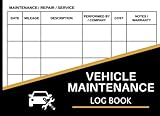
- 110 Sheets Log Book: This vehicle maintenance log book includes 110 record sheets to track repairs, services, fuel costs, and other vehicle-related expenses. It also comes with 36 convenient “Service Due” stickers to help remind you of upcoming maintenance schedules. Everything you need to keep your car records organized in one place.
- Detailed Information: Each page is carefully structured with dedicated sections for date, mileage, service description, parts replaced, vehicle information, cost, and additional notes. The clear and organized format allows you to maintain accurate records, monitor repair history, and better manage long-term vehicle performance and expenses.
- Enough Writing Space: The record sheets provide ample space for clear and thorough entries. Whether you’re documenting routine oil changes or major repairs, there’s plenty of room to write detailed information without feeling cramped.
- Easy to Use: The spiral binding allows the notebook to lay flat for comfortable writing, making entries quick and convenient. The included 36 “Service Due” stickers can be placed inside the book or on visible surfaces like your windshield or dashboard, helping you keep important maintenance reminders in sight.
- Proper Size: This compact logbook measures 5.5” x 7.1”, which fits easily in your glove compartment, center console, backpack, or desk drawer. Its portable size ensures you can access and update your vehicle records anytime, whether at home, in the garage, or at the service center.
Two recall examples that show why status differs
The following Ford notices illustrate different remedies and timing. They are historical examples, not current instructions for an arbitrary truck. Check the VIN and the current notice before driving or scheduling work.
Recall 24S78 / NHTSA 24V957: certain 2020–2022 diesel trucks
Ford’s January 2025 owner notification covered certain 2020–2022 Super Duty vehicles with 6.7L diesel engines. It described possible aged biodiesel deposits in high-pressure fuel-pump components, which could lead to pump failure and loss of motive power. The letter stated that software was not then available and that Ford would notify owners when the remedy became available.
This example demonstrates why an owner should not treat the notice date as the present status. A truck may have received a later remedy, remain open, or fall outside the affected VIN population. The current VIN lookup and dealer confirmation control.
Recall 25S20 / NHTSA 25V163: certain 2025 trucks
Ford’s April 2025 owner notification for certain 2025 Super Duty vehicles described a shifter mechanism that could detach and prevent engagement of Park. The notice said the dealer would replace the steering-column assembly at no charge. It also explained that a prior repair might still need the recall procedure to ensure the correct parts were used and described documentation for reimbursement of an eligible prior paid repair.
This example shows that a truck can have a related earlier repair and still require the official campaign procedure. Keep the invoice and ask Ford or the dealer to verify both the repair and reimbursement eligibility.
How to tell whether a recall repair was already done
Look for more than a closed status or a handwritten note. Strong evidence combines a campaign identifier with the VIN, date, mileage, remedy and parts.
- Dealer repair order: Prefer an itemized order showing the recall number, labor operation, parts and technician completion.
- Owner letter or campaign record: Use it to identify the recall, then verify completion with Ford or a dealer because an owner letter alone does not prove the work was performed.
- Independent-shop invoice: It can document work, but ask Ford whether the work satisfies the manufacturer’s official remedy and whether the VIN status was updated.
- Vehicle history report: Treat it as supplemental. It may omit repairs and does not replace the manufacturer’s VIN-specific campaign record.
- Owner maintenance log: Useful for dates, mileage and routine work, but not proof of campaign completion unless supported by the repair documentation.
If records conflict, provide Ford or the servicing dealer with the VIN, campaign number, invoice, date, mileage and proof of payment. Ask for a written explanation of whether the official remedy is complete, still required or eligible for reimbursement.
Outdated Drivers Are Slowing You Down
One free scan finds every outdated or missing driver and matches the right update for your exact hardware.Free scan · exact hardware matchWindows Errors? Fix Them Before They Spread
Repair common Windows errors and clear accumulated junk for a smoother, more stable PC - no reinstall needed.Free scan · no reinstallDoes a TSB mean Ford will fix the truck for free?
No. A TSB describes a service procedure or diagnostic condition; it does not create the same free-repair entitlement as a safety recall. Payment depends on the truck’s warranty, a separate service campaign, an extended contract or customer-pay status.
Before authorizing work, ask the service department to answer these questions on the estimate:
- Is this document a TSB, a recall, a warranty extension or another campaign?
- Does the VIN and configuration meet the document’s applicability requirements?
- What diagnostic result confirms that the bulletin applies?
- Which parts and labor are covered, and what remains customer-pay?
- Will diagnosis be charged if the condition is not confirmed?
Get the bulletin or campaign identifier and the coverage decision on the repair order. If the dealer declines coverage, a second Ford dealer can review the same VIN and evidence, but neither a bulletin title nor a matching symptom guarantees approval.
Independent reader supportYour contribution helps us test, update, and keep practical guides available for everyone.When a prior repair and a recall overlap
Overlap is common enough to require a deliberate comparison. A component may have been replaced before a recall was announced, or an earlier repair may have used a part that the later campaign replaces again.
Do these 3 things before closing this tab:
1Repair Windows errors before they cause bigger problems2Scan for outdated or missing drivers - takes under a minute3Clear out junk files and repair common Windows errorsAsk whether the prior part is an approved remedy
Provide the invoice and part number. The manufacturer or dealer can determine whether the earlier part and procedure meet the campaign requirement. Do not remove or discard replaced parts until the question is resolved if the notice or dealer asks to inspect them.
Best Value

- Made in USA - Proudly produced in Ohio by a Veteran-owned business
- This book will help you remember your last oil change /last service appointment. You can easily track all services, mileage and maintenance for multiple automobiles - great for business or personal use.
- The yearly expense summary is a very important part of this book. The yearly summary page is a perfect tool for your tax prep and your budget. After every month you should log your total business miles and personal miles in the “Annual Mileage Summary” page.
- This book comes in two convenient sizes, 8.5” x 11” - perfect to fit into any binder or clipboard that you may use for business and 5” x 7” which is the perfect size to fit into your glove compartment!
- Our unique cover is a semi-rigid transparent cover that leads to a sturdy book that resists stains and wrinkles. Reorder SKU: LOG-100-57CW-PP(Auto-Maintenance)
Ask about reimbursement separately
Reimbursement is a coverage question, not proof that the repair closed the recall. Follow the notice’s deadline and documentation requirements, if any. Keep the itemized receipt, proof of payment, VIN and evidence that the truck was within the affected population.
Do not assume a related repair makes driving safe
Only the current notice’s remedy and safety guidance answer whether the vehicle should be driven, parked outdoors or taken directly to a dealer. A similar repair on another truck is not a substitute for that instruction.
What a clean recall result does—and does not—tell you
A clean NHTSA result can mean that no unrepaired safety recall is currently shown for the VIN in that system. It does not establish that the truck has no TSBs, no customer-service campaigns, no warranty issues or no incomplete repairs. It can also omit a recall that was already repaired, a newly announced campaign whose VIN population is still being identified, or a recall outside the tool’s stated age and coverage limits.
NHTSA’s FAQ states: “Once a vehicle has been recalled, that recall never expires.” That statement concerns the recall itself; it does not mean that every online result displays every historical repair or that a dealer will perform unrelated bulletin work for free.
Why recall statistics need context
NHTSA reported 1,073 vehicle and equipment safety recalls in 2024 and more than 29.3 million vehicles recalled that year in an October 30, 2025 consumer alert. Those figures cover all vehicle and equipment categories in the United States, not Ford Super Duty trucks specifically. They explain why VIN checking is useful, but they are not a Super Duty recall rate and cannot predict an individual truck’s risk.
Keeping records that remain useful
Use one folder—paper or digital—for the VIN, registration, recall notices, TSBs, estimates, repair orders, receipts and correspondence. A maintenance log book can make routine entries easier to find. For each entry, record:
- date and odometer mileage;
- VIN and vehicle description;
- symptom or scheduled maintenance;
- diagnosis and test results;
- parts and fluids used;
- labor performed and repair facility;
- who paid and any warranty, campaign or reimbursement reference;
- next action, such as a pending part or follow-up inspection.
The log organizes owner-maintained notes; it does not replace an itemized repair order or prove that a recall remedy was completed.
A practical decision rule
| If you find… | Next action |
|---|---|
| Open safety recall for the VIN | Read the current remedy and safety instructions, then schedule the manufacturer’s authorized repair. Do not substitute a generic repair based only on a symptom. |
| TSB matching the symptom, no open recall | Have a qualified technician confirm the bulletin’s diagnostic condition and obtain a written coverage estimate before authorizing work. |
| Paid repair that appears related to a recall | Send the invoice and proof of payment to Ford or a dealer; ask whether the official remedy is still required and whether reimbursement applies. |
| Closed recall but no paperwork | Request completion details by VIN from Ford or the servicing dealer and retain the response with the vehicle records. |
| No recall result but an unresolved safety concern | Contact the manufacturer and report a potential safety defect to NHTSA; a clean lookup does not settle a safety question. |
Bottom line
Compare Ford Super Duty information in this order: VIN and configuration, current recall status, exact manufacturer communication, repair-order evidence, and coverage. A recall is a safety action with a manufacturer remedy; a TSB is technical guidance whose cost depends on coverage; and a repair record is proof of work on one vehicle. Keeping those categories separate is the most reliable way to determine what has been done, what remains open and who should pay.
Quick Recap
Product prices and availability are accurate as of the date/time indicated and are subject to change. Any price and availability information displayed on Amazon at the time of purchase will apply.




