There is no universal winner. An electric scooter is cheaper to run when its electricity cost, maintenance, insurance, depreciation and battery exposure together outweigh the petrol scooter’s fuel and ownership costs. Calculate both vehicles over the same distance, period, country, tax treatment and resale assumption. A useful first screen is energy cost per kilometre; a purchase-and-ownership calculation is what determines the real result.
For a quick energy comparison, divide distance by a petrol scooter’s km/l and multiply by your local price per litre. For an electric scooter, multiply kilometres by consumption in kWh per kilometre and then by the applicable electricity tariff. Keep home and public charging separate. Spain’s Ministry for the Ecological Transition, for example, listed indicative costs of €9.82 per 100 km for gasoline 95 E5, €3.29 for domestic electricity and €8.11 for rapid electricity on 23 September 2026. Those are Spain-wide reference figures based on average prices and conformity-certificate consumption under a common EU method, not a scooter-specific test: Spain’s ministry comparison.
As an Amazon Associate I earn from qualifying purchases.
What “running cost” should include
Running cost can mean only the energy needed to move the scooter, or it can mean the full cost of owning and operating it. State which definition you are using. A fuel-only answer is useful for a commute decision, but it can be misleading when one scooter costs substantially more to buy, insure or replace at the end of its life.
For a fair total-cost-of-ownership (TCO) comparison, include:
#1 Best Overall
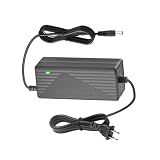
- 【Charger for 36V Battery】 Input: 100-240V 50/60Hz ; Output: 42V 2A .The Connector Size: 5.5 mm , 1-prong DC plug. Suitable for battery voltage of 36V and 1-prong.
- 【Universal Application】Compatible with JETSON GOTRAX GXL DLX V2, G2, G3, G4, Apex, Glider, XR Elite, XR Ultra,G MAX Ultra, Jeton Bolt Pro electrick, Hiboy S2 Pro, Rival 36V Lithium-ion Battery. The Charger is only suitable for 36V lithium battery, NOT for 29.4V /25.2V/ 24V batteries or lower.
- 【Charger Compatibility】go trax charger G2 G3 G4,GXL V2,Rival,XR Ultra/Elite,Apex, Glider,Bolt/Bolt Pro/Adventure/Metro/Journey/LX10/J5/J8,Jetson Eris Pro/Ora Pro/Racer/Rhythm charger
- 【Reliable with High quality】The oxygen-free copper cooling system makes it heat-conductive, fast in heat dissipation and long in service life. The socket head is made of pure copper and is plated with nickel to prevent oxidation, plugging and sparking, and high temperature resistance.
- 【Security Protection Mechanism 】 The electric charger is made of ABS fireproof material,built-in smart chip can give you full-side protection, Including Protection against Over-Heated/Over-Current/Over-Voltage/Short-Circuit.
- Purchase or finance cost, including on-road charges and taxes that differ by vehicle.
- Petrol or electricity for the same kilometres.
- Scheduled servicing, tyres, brakes, consumables, repairs and roadside assistance.
- Insurance, registration and recurring taxes.
- Home charging equipment, wiring or public-charging fees where applicable.
- Battery replacement or other battery-related costs for the electric scooter.
- Depreciation, or the expected resale value credited back at the end of the period.
This category structure is consistent with the Dutch government’s 28 May 2025 analysis of electric and fossil mopeds, which covers purchase price, energy or fuel, repair, depreciation and insurance (Dutch TCO report). NITI Aayog’s ownership-cost framework likewise includes capital and infrastructure cost, energy or fuel consumption and price, maintenance, annual distance, tax and anticipated battery replacements (NITI Aayog framework).
Collect comparable input data
Use the exact two scooter models and record the source and date for every number. Do not pair one model’s certified best-case range with another model’s observed real-world mileage.
| Input | Petrol scooter | Electric scooter | How to make it comparable |
|---|---|---|---|
| Purchase cost | On-road price, including taxes and registration | On-road price plus supplied or optional charger | Use the same region and payment basis; separate finance interest from the cash price. |
| Consumption | km per litre (km/l) | kWh per 100 km or kWh/km | Label each figure as certified, claimed or observed. |
| Energy price | Local petrol price per litre | Home tariff and each public-charging tariff | Use prices from the same date; include time-of-use rates and taxes where relevant. |
| Distance | Annual kilometres and ownership years | Use actual odometer-based distance if possible, including weekend and seasonal use. | |
| Maintenance | Service schedule, fluids, belt or drive parts, tyres and brakes | Service schedule, tyres, brakes, electronics and battery checks | Obtain model-specific schedules and local labour rates. |
| Battery exposure | Not applicable as traction battery | Warranty, usable capacity, replacement assumption and end-of-life value | Do not invent a replacement interval or price; model scenarios if the manufacturer does not publish them. |
| Resale | Expected value after the period | Expected value, accounting for battery age and warranty | Apply the same valuation date and method to both scooters. |
Calculate energy cost per kilometre
Petrol formula
Petrol cost = (distance in km ÷ fuel economy in km/l) × petrol price per litre
To express the result per kilometre, use:
Petrol cost per km = petrol price per litre ÷ km/l
For example, at a hypothetical local price of €1.80/l and measured economy of 45 km/l, the energy cost is €0.04/km. Replace both figures with your own current price and scooter result; the example is arithmetic, not a market estimate.
Electricity formula
If the scooter’s consumption is stated in kWh/100 km:
Electric cost per km = (kWh per 100 km ÷ 100) × tariff per kWh
What’s actually slowing this PC down?
Pick the symptom - the matching free tool is one click away.
For a trip or year:
Electric cost = distance in km × (kWh per 100 km ÷ 100) × tariff per kWh
Use the tariff that actually applies to the energy. A home tariff may include a fixed standing charge that would exist with or without the scooter; decide whether to allocate that fixed charge and apply the same rule consistently. Public charging may add session, parking or subscription fees.
Full-charge shortcut
When only battery capacity is available, the Bureau of Energy Efficiency describes this shortcut:
Cost of one full charge = usable battery capacity in kWh × tariff per kWh
Do these 3 things before closing this tab:
1Fix the driver behind crashes, sound loss and screen glitches2Repair Windows errors before they cause bigger problems3Scan for outdated or missing drivers - takes under a minuteSee the BEE charging guidance at BEE’s EV information page. Capacity multiplied by the tariff does not automatically include electricity lost between the wall socket and the battery. If you have a wall-meter or charger efficiency figure, add that loss; otherwise disclose that the shortcut is optimistic. “Usable” capacity is preferable to a gross laboratory capacity when the manufacturer supplies both.
Separate home, workplace and public charging
Record the share of kilometres charged at each location. The BEE notes that EVs may charge at home or at public stations and that electricity tariffs vary by Indian state (BEE EV information). The same principle applies elsewhere: a scooter charged almost entirely at home can have a very different energy cost from one relying on rapid public charging.
| Charging case | Cost to use | Questions to record |
|---|---|---|
| Home | Residential tariff, plus any incremental installation cost | What is the marginal kWh price, and does a time-of-use period apply? |
| Workplace or shared facility | Free, subsidised or metered rate | Is access guaranteed for the whole ownership period? |
| Public standard charging | Per-kWh, per-minute, session or subscription pricing | Are parking and idle fees charged after charging finishes? |
| Public rapid charging | Often a higher tariff than home charging | How often will the scooter actually need it? |
Spain’s 23 September 2026 figures illustrate the spread: €3.29/100 km for domestic electricity versus €8.11/100 km for rapid electricity, compared with €9.82/100 km for gasoline 95 E5. The ministry says those estimates use average market prices and vehicle consumption from certificates of conformity under a common EU methodology; they are not a measured comparison of particular scooters. Treat them as a location-specific reference, not as your quotation.
What the published India example does—and does not—prove
The Government of India’s India EV Digest (March 2025) compares a Honda Activa 6G with an Ather 450X. The petrol scooter is listed as 109.51 cc with stated mileage of 50 km/l; the electric scooter is listed with a 3.7 kWh battery and stated energy consumption of 4 kWh/100 km. In the chart’s 12 km/day row, the stated costs are ₹6.66/km for petrol and ₹6.50/km for the EV, with EV TCO below the petrol example at that usage level (Press Information Bureau, India EV Digest, March 2025).
That result is a model- and assumption-specific crossover, not a 12-km universal rule. It depends on the two named scooters, the prices, incentives, financing, tariffs, maintenance assumptions, distance pattern and resale treatment used in that analysis. Changing any of those inputs can move or remove the crossover.
Rank #2

- Output: 42V 2A, Input: AC 100V - 240V, 8ft extra long enough power cord
- Compatibility: Fits for GOTRAX GXL V2, G4, G3, G2, XR Elite, XR Ultra, Apex, Glider, fit for GOTRAX 36V Lithium-ion Battery
- NOTE: Not for 3-Prong Connector, Not for 29.4V , 25.2V , 24V version
- Security & Protection: The Replacement GOTRAX Scooter charger has undergone strict quality control procedures and is equipped with various safety protections to provide over-voltage, over-load, over-current, short circuit protection
- 30 days refund, 12-months worry free warranty. If you have any quality problems, please contact us
Build a total-cost model step by step
- Choose the comparison period. Three, five or eight years can produce different results because depreciation and battery risk are time-sensitive. Use the period you realistically expect to keep the scooter.
- Set annual distance. Convert your commute, errands and leisure riding into kilometres per year. Keep the same distance for both vehicles; do not give one model a shorter route.
- Enter local prices. Use a dated petrol price, each electricity tariff, taxes and any public-charging fees. Note the country, state or municipality.
- Normalize consumption. Convert kWh/100 km to kWh/km by dividing by 100. Convert any fuel figure to litres per kilometre by taking its reciprocal.
- Calculate annual energy. Multiply each normalized consumption figure by annual kilometres and the relevant unit price. If charging is mixed, calculate home and public kilometres separately and add them.
- Add scheduled and unscheduled costs. Use manufacturer service intervals, local labour rates, tyres, brakes, fluids, belts and likely repairs. For an electric scooter, include electronics and battery diagnostics when the schedule specifies them.
- Add fixed ownership costs. Include insurance, registration, road tax and finance interest under the same treatment for both scooters.
- Model infrastructure and battery risk. Add a charger, wiring or meter upgrade only if it is required for your use. For the battery, show a base case with no replacement and a scenario with a replacement cost and year supplied by the manufacturer or a documented quote.
- Subtract resale value. Estimate each scooter’s value at the end of the period using the same source date and valuation method. A battery still under warranty may affect the electric scooter’s resale differently from an out-of-warranty pack.
- Divide and inspect. Divide total cost by total kilometres for cost per kilometre, but also retain total cash cost and annual cash flow. A low per-kilometre figure does not remove a large upfront payment.
The calculation can be represented as:
Total TCO = purchase or finance cost + energy/fuel + servicing and repairs + insurance/tax + charging infrastructure + battery replacement − resale value
Worked comparison template
Fill this table with your two models rather than copying figures from an unrelated market. “Not stated” is preferable to an invented value.
| Line item | Petrol scooter | Electric scooter |
|---|---|---|
| On-road purchase price | Enter local quote | Enter local quote, charger included or extra |
| Consumption basis | __ km/l; certified, claimed or observed | __ kWh/100 km; certified, claimed or observed |
| Energy price | __ per litre on __ date | Home __ per kWh; public __ per kWh |
| Annual distance | __ km | |
| Annual energy cost | annual km ÷ km/l × price/l |
annual km × kWh/100 km ÷ 100 × tariff |
| Annual service and repairs | Model-specific estimate | Model-specific estimate |
| Insurance and tax | Local quote | Local quote |
| Charging infrastructure | Usually not applicable | Required cost, if any |
| Battery replacement | Not applicable as traction battery | Documented price and assumed year, or “not stated” |
| Resale value at end date | Estimate using chosen method | Estimate using chosen method and battery status |
| Total TCO | Sum less resale | Sum less resale |
| TCO per kilometre | Total TCO ÷ total km | Total TCO ÷ total km |
Maintenance: why electric can be simpler, but not maintenance-free
Electric drivetrains generally have fewer moving parts than combustion drivetrains. Australia’s Department of Climate Change, Energy, the Environment and Water identifies reduced maintenance as a general EV benefit and still lists tyres and brakes as consumables (Australian government EV facts). That broad statement does not establish a percentage saving or dollar amount for scooters, and car figures on the page should not be transferred to two-wheelers.
A petrol scooter may require engine oil and filter changes, spark-plug work, air-filter service, belt or clutch inspection and fuel-system repairs, depending on its design. An electric scooter avoids engine oil and combustion components but still needs tyres, brake components, suspension, bearings, lights, controls, software or electronic diagnosis and eventual battery attention. Use each manufacturer’s schedule and your local workshop rates rather than applying a generic “EV maintenance is X percent cheaper” claim.
Battery replacement and charging-equipment risk
Battery replacement can materially alter lifetime cost. NITI Aayog’s framework explicitly models anticipated replacements, but no universal replacement interval or current replacement price is established here. Do not assume that a battery will last exactly a certain number of years, nor that a replacement will cost a fixed percentage of the scooter.
Create at least two transparent scenarios:
- Base case: no traction-battery replacement during your ownership period, with the manufacturer’s warranty and capacity terms recorded.
- Replacement case: add a documented pack price, labour and disposal cost in the year you assume replacement occurs.
- High-cost case: use a higher verified quote or an earlier replacement year if your usage, climate or warranty exclusions make that plausible.
For charging hardware, buy or budget only equipment specified for the scooter’s voltage, connector, current and manufacturer requirements. A replacement electric scooter charger is not universally compatible; matching the connector alone is insufficient. The BEE describes home charging as an official use case, but compatibility must be checked against the exact model documentation.
Run sensitivity scenarios instead of one fragile answer
Prices and usage change. Present a low, central and high case for the variables that can move the result most:
PC Slower Than It Used to Be?
A free scan shows the junk files, broken settings and background clutter dragging Windows down - then fixes them in one click.Free scan · Windows 10 & 11Crashes, No Sound, or Screen Glitches?
Random freezes, missing sound and display glitches usually trace back to one bad driver. Find and replace yours safely.Free scan · under a minute| Variable | Low-cost case | Central case | High-cost case |
|---|---|---|---|
| Petrol | Lower dated local price | Current typical local price | Higher observed or stress-test price |
| Electricity | Mostly home charging at the marginal tariff | Your expected home/public mix | Frequent rapid public charging and fees |
| Distance | Low annual kilometres | Expected annual kilometres | High-mileage use |
| Battery | No replacement during ownership | Documented warranty or quote assumption | Earlier or higher verified replacement cost |
| Resale | Stronger resale outcome | Best evidence available today | Lower resale, especially with an out-of-warranty battery |
Low daily travel often leaves the fixed purchase-price difference dominant because there are fewer kilometres over which to recover it. High mileage gives energy and maintenance differences more influence. These are arithmetic consequences of your inputs, not a universal break-even threshold.
Common comparison errors and how to correct them
Using a national average as your personal tariff
Correct it by entering your electricity bill’s marginal rate, public-charging price and petrol price for the same date and location. A national or ministry figure is a reference, not a quote.
Mixing test standards
A certified consumption result, a manufacturer claim and a rider’s observed result are different evidence types. Label them and, where possible, use the same test basis for both scooters. Apply a conservative real-world adjustment only when you can justify it; do not quietly adjust one vehicle but not the other.
Ignoring charging losses
Battery capacity multiplied by tariff estimates stored energy, not always electricity drawn from the wall. Add measured charger losses or disclose that the shortcut excludes them.
The Tool Desk
Outbyte Driver Updater FREEScan for outdated or missing drivers - takes under a minuteDriver Scan →Outbyte PC Repair FREEClear out junk files and repair common Windows errorsFree Scan →Comparing only fuel or electricity
Include purchase price, servicing, insurance, taxes, infrastructure, battery exposure and resale. A cheaper kilometre can be outweighed by a higher upfront price over a short ownership period.
Assuming a battery replacement date
Use the manufacturer’s warranty and a documented replacement quote. If neither is available, show “not stated” and a sensitivity range rather than inventing a lifespan.
Transferring car statistics to scooters
BEE’s cited example of ₹86.95/litre petrol and ₹4.5/kWh Delhi home charging is dated 8 February 2021 and concerns a Tata car; it is a historical illustration, not a current scooter comparison (BEE historical example). Likewise, percentages or dollar savings stated for cars do not establish scooter savings.
Using the India crossover as a rule
The ₹6.66/km petrol and ₹6.50/km EV values at 12 km/day belong to the named Activa 6G/Ather 450X analysis. Different prices, incentives, tariffs, distances or models produce a different answer.
Quick wins for a faster PC:
Scan for outdated or missing drivers - takes under a minuteDriver Scan →Repair Windows errors before they cause bigger problemsFix Now →Fix the driver behind crashes, sound loss and screen glitchesFind Drivers →How to turn the result into a purchase decision
- Choose the electric scooter confidently when your charging access is reliable, your electricity mix is inexpensive, the model’s warranty and service support are acceptable, and the TCO remains lower in both central and high-cost scenarios.
- Choose the petrol scooter when you lack dependable charging, use long routes that make public rapid charging frequent, or the electric scooter’s upfront and battery-risk costs remain higher at your expected mileage.
- Keep both options open when the result changes with one uncertain input. Get a written battery quote, insurance quote and service schedule before treating a small calculated advantage as decisive.
Report three outputs separately: energy cost per kilometre, total ownership cost over the chosen period and total cash paid before resale. That separation shows whether the advantage comes from cheap energy, lower maintenance, a lower purchase price or an optimistic resale assumption.
Quick Recap
Product prices and availability are accurate as of the date/time indicated and are subject to change. Any price and availability information displayed on Amazon at the time of purchase will apply.




