The fair answer is not found by comparing sticker prices or monthly payments. Compare the two specific vehicles at the same ownership horizon using written out-the-door prices, the total cost of financing, and expected insurance, fuel, registration, maintenance, repairs and resale. A new Hyundai can cost more at purchase but may reduce early maintenance and warranty risk; a used car can cost less up front but require an inspection-based repair budget and may have less warranty remaining.
Because the Hyundai model, used vehicle, location, mileage, loan terms and ownership period are unspecified, there is no universal break-even price. Build the comparison with actual buyer’s orders, lender quotes, insurance quotes and an independent inspection report. The process below gives you a defensible answer for your budget rather than a generic new-versus-used rule.
As an Amazon Associate I earn from qualifying purchases.
Define what “the same budget” means
Choose the budget definition before looking at cars. For a cash purchase, it is the maximum amount you can pay after taxes and registration without using money reserved for emergencies. For a financed purchase, it is the total amount you can repay over the chosen term, including interest, rather than a monthly-payment ceiling alone. Include the same down payment, trade-in value, loan term and ownership period in both scenarios. If the new Hyundai and the used car require different down payments or rates, record those differences instead of hiding them in the monthly payment.
Set one ownership horizon and one annual mileage assumption. Five years and 12,000 miles per year might be appropriate for one household, while three years and 20,000 miles could fit another; those figures are examples, not a universal standard. Use the mileage you genuinely expect because fuel, maintenance intervals, warranty mileage limits and resale value all depend on it.
#1 Best Overall

- Bright Colors and Text: Bright yellow background and large black text can clearly attract people's attention and avoid unnecessary things.
- High Quality Materials: Made of top-quality strong magnet, which has more durable and sturdy. High quality reflective materials provide maximum visibility between day and night.
- Reduce Pressure: Once other drivers realize you are learning to drive they will give you space and respect, reducing the likelihood of an accident.
- Removable and Reusable: Compared to student driver bumper sticker,is easily removed to other vehicles without fading for a long time.
- Note: The magnetic new driver can strongly stick to the rear of the car made of metal. Not aluminum or other plastics.
Build a comparison worksheet
| Item | New Hyundai | Used vehicle |
|---|---|---|
| Exact year, trim, drivetrain and VIN | Record from the window sticker or buyer’s order | Record from the listing, title and VIN |
| Purchase location | City and state where the transaction occurs | City and state where the transaction occurs |
| Ownership period and annual miles | Use one assumption | Use the identical assumption |
| Cash price before taxes and fees | Written quote | Written quote |
| Taxes, registration and mandatory fees | Written buyer’s order | Written buyer’s order |
| Down payment and trade-in | Same assumptions unless documented otherwise | Same assumptions unless documented otherwise |
| APR, term and payment schedule | Lender quote | Lender quote |
| Insurance, fuel and maintenance | Vehicle-specific estimates | Vehicle-specific estimates |
| Inspection findings and repair allowance | Pre-delivery condition and warranty exclusions | Independent written inspection |
| Expected resale value | Comparable local listings or valuation evidence | Comparable local listings or valuation evidence |
Compare written out-the-door prices first
Ask each seller for a written out-the-door (OTD) quote. It should show the negotiated vehicle price, destination or delivery charges when applicable, documentation and other dealer fees, sales or use tax, registration, title charges, and every installed add-on. A used-car quote should identify the exact vehicle and disclose whether a warranty, certification fee or service contract is included. Do not treat a quote as comparable if one vehicle includes dealer accessories or protection products that the other does not.
Taxes and registration depend on your state, county, city, residency and transaction structure. A vehicle bought in another state can still create tax and title obligations where you register it. Keep those local amounts in the OTD figure rather than comparing advertised prices from different jurisdictions. If a seller will not provide an itemized quote, mark the price as uncertain and do not use it as the basis for a final decision.
Separate optional products
Request a second version of each quote with optional service contracts, paint or upholstery treatments, security products and other add-ons removed. You can then decide deliberately whether any product is worth buying. An add-on financed into the loan also accrues interest, so its cost is not limited to the line-item price.
Compare financing by total repayment, not payment size
The Federal Trade Commission’s financing guidance says the total financing cost depends on the negotiated price, annual percentage rate (APR) and loan term. Longer terms can reduce the required monthly payment while increasing the total amount repaid. Obtain a written quote for each vehicle showing the down payment, APR, number of payments, payment amount and total repayment.
| Financing field | Why it matters |
|---|---|
| Amount financed | Shows how much of the OTD price remains after the down payment and trade-in credit. |
| APR | Determines the interest rate applied to the financed balance; compare offers on the same date. |
| Loan term | Controls both payment size and how long the balance remains outstanding. |
| Number and size of payments | Reveals the scheduled cash commitment and allows the total to be checked. |
| Total amount repaid | Combines principal and finance charges; use this figure for the budget comparison. |
| Prepayment rules and fees | Confirm whether paying early changes interest or triggers a fee under the contract and state law. |
Use the same term when you are testing which vehicle is cheaper, then run a second scenario using the term you would actually accept. A low payment created by stretching the used car or Hyundai loan to a longer term is not a savings. Get an outside preapproval when possible, then compare it with the dealer’s offer using the same amount financed and term.
Add the costs that arrive after purchase
Purchase price is only one part of ownership cost. For the same horizon and mileage, estimate each of these separately:
Rank #2

- SPECIAL DESIGN: JUSTTOP's new driver car sign is crafted with black and red lettering that perfectly combined with a yellow background color, and uses all space to make the font bigger, easy to see.
- REFLECTIVE MAGNET: Reflective for added in low light or night time driving conditions. The flashing color of the new driver magnet attracts people's attention easily provides safety to new drivers.
- WEATHERPROOF: Being made of high-quality waterproof and heat-resistant material, strong magnetic strength, the magnet stickers will perfectly withstand any weather conditions of each season.
- STRESS REDUCTION: There comes with 3 pack new driver magnet, perfect for each side and the rear. These magnets hint other motorists to stay away from you, thereby saving tailgating and bothersome honking. You will have a better situation to focus on learning how to drive, without having to risk irritating other drivers.
- EASY TO CLEAN & REUSABLE AND REMOVEABLE: Just clean the back of magnet and the vehicle with a damp wash cloth, then allow both to dry before use. The magnetic sign can be removed and reattached anytime. You can easily transfer it to another car when it is needed. (Note: Magnetic car decals are only suitable for vehicle surfaces containing magnetic metal.)
- Insurance: Ask your insurer for a quote using the exact VIN or, for a vehicle not yet selected, the precise year, trim and safety equipment. A new vehicle’s replacement value, a used vehicle’s repairability and your deductible can produce very different premiums.
- Fuel or charging: Use the fuel economy or energy consumption of the exact powertrain, your annual miles and a realistic local fuel or electricity price. Keep the assumptions identical in both scenarios.
- Registration and recurring taxes: Include initial title and registration in OTD costs, then add recurring renewal charges that apply during your ownership period.
- Scheduled maintenance: List the services due at the mileage you expect to drive. Use the manufacturer’s schedule and local shop quotes rather than a generic per-mile allowance.
- Repairs and wear items: Tires, brakes, batteries, belts, fluids and unexpected repairs should be budgeted according to the vehicle’s condition, age, mileage and inspection results.
- Resale: If you plan to sell within the horizon, use local evidence for the exact model, trim, mileage and condition. A generic depreciation percentage is not a substitute for comparable vehicles in your market.
Use a conservative repair allowance for the used car only after an independent inspection identifies likely work. For the new Hyundai, include items the warranty does not cover, such as normal wear, damage, misuse and maintenance outside any complimentary program.
The Tool Desk
Outbyte Driver Updater FREEFix the driver behind crashes, sound loss and screen glitchesFind Drivers →Outbyte PC Repair FREERepair Windows errors before they cause bigger problemsFix Now →Investigate the used vehicle’s actual condition
Age and odometer reading are screening tools, not a condition report. A carefully maintained older car can be a better purchase than a neglected low-mileage example, while a high-mileage vehicle with complete records may be less risky than one with an unknown history.
Collect documents before negotiating
- Ask for the title status, seller’s maintenance records, recent invoices and the vehicle identification number.
- Run a vehicle-history report to look for reported collisions, title brands, ownership changes, service entries and mileage inconsistencies. The report covers only information reported to its data sources.
- Check open safety recalls using the manufacturer’s VIN tools or the National Highway Traffic Safety Administration’s current recall information. Confirm that completed recall work is documented.
- Read the FTC Buyers Guide displayed on a dealer’s used car. It states whether the dealer is offering the car as-is or with a warranty and identifies warranty terms that should appear in the contract.
Pay for an independent inspection
Arrange an inspection with a mechanic who does not work for the seller. The inspection should be performed before you finalize the purchase and should produce a written report listing safety defects, diagnostic findings, deferred maintenance, estimated repair costs and items that need monitoring. A history report cannot reveal every mechanical problem.
The FTC’s Buying a Used Car From a Dealer guidance puts the point plainly: "That’s why it’s always a good idea to pay for an independent mechanic to conduct a mechanical inspection of a used car." The FTC recommends this even when a dealer says the vehicle is certified or backed by a warranty.
Turn the report into a price adjustment
Separate urgent safety repairs, repairs likely during your ownership period and cosmetic preferences. Get written estimates for the first two categories. Subtract agreed repairs the seller will complete, add the remaining near-term cost to the used car’s effective purchase price, and then compare that adjusted figure with the new Hyundai’s OTD price. Do not subtract a repair merely because the seller promises to fix it; verify the work and retain the invoice.
Understand which Hyundai warranty applies
Hyundai’s US warranty overview lists a 5-year/60,000-mile New Vehicle Limited Warranty and a 10-year/100,000-mile Powertrain Limited Warranty for the original owner. Subsequent owners receive powertrain coverage under the 5-year/60,000-mile New Vehicle Limited Warranty, subject to the written terms. That means you should not assign a used Hyundai the original purchaser’s full 10-year/100,000-mile powertrain term without checking the VIN, original in-service date, transfer rules, exclusions and maintenance requirements.
Rank #3
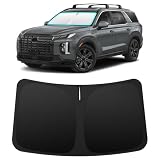
- [Custom Fit for Hyundai Palisade] Designed specifically for 2020 2021 2022 2023 2024 2025 2026 Hyundai Palisade, our windshield sun shade offers a 100% perfect fit for your vehicle’s front window.
- [Sun & Heat Damage Protection] Blocks harsh sunlight and heat to prevent cracking, fading, and warping of your dashboard, steering wheel, and seats — keeping your interior looking like new.
- [Premium Reflective Material] Constructed from upgraded 240T reflective polyester with UV-resistant coating that effectively blocks sunlight and up to 99% of harmful UV rays for superior heat insulation.
- [Dual-Layer Cooling Performance] The reflective outer layer and insulating inner layer work together to help lower interior temperature and reduce air conditioning load on hot days.
- [Quick Installation & Easy Storage] Simply unfold for instant use and fold back within seconds. Comes with a compact storage pouch for convenient organization when not in use.
| Situation | Coverage information to verify |
|---|---|
| New Hyundai | Remaining time and mileage on the 5-year/60,000-mile New Vehicle Limited Warranty, plus eligibility for the original-owner 10-year/100,000-mile Powertrain Limited Warranty. |
| Privately sold or ordinary used Hyundai | Whether the buyer is a subsequent owner, the original in-service date, mileage, transferability and any exclusions; the full original-owner powertrain term should not be assumed. |
| Hyundai Certified Used Vehicle | Remaining comprehensive coverage and the CPO powertrain warranty, deductible, in-service date and dealer-specific limitations. |
Warranty coverage is valuable only for failures within its written scope. It does not eliminate fuel, scheduled maintenance, tires, brakes, collision damage or every diagnostic and repair expense. Read the contract for the exact vehicle instead of relying on a sales summary.
What Hyundai CPO status adds
Hyundai’s Certified Used Vehicles program describes vehicles no more than six model years old and under 80,000 miles. Hyundai lists a 173-point inspection, a complimentary CARFAX report, remaining comprehensive coverage and a CPO powertrain warranty with a $50 deductible per repair visit. Coverage clocks start at the vehicle’s original in-service date, and the program page directs buyers to dealer terms and limitations.
CPO status is a useful input, not a substitute for your own inspection. Confirm which inspection items passed, obtain the report, identify the exact warranty expiration date and ask the dealer to explain the deductible and exclusions in writing. A CPO car near the age or mileage limit may have much less coverage remaining than a newer CPO example.
Account for complimentary maintenance correctly
Hyundai’s published complimentary-maintenance information applies to eligible new model-year 2020–2025 vehicles for up to three years or 36,000 miles, whichever comes first. The 2025 terms describe four basic services. Hyundai excludes used and CPO vehicles and limits the benefit to listed maintenance and eligible owners. Treat it as a reduction in qualifying scheduled-service costs, not as free repairs or unlimited maintenance. A newer model year may have different terms, so verify eligibility and the transaction-specific conditions before assigning a value.
Calculate an ownership-cost comparison
Use one line for every cost and show the arithmetic so another person can audit it. A practical formula is:
Total ownership cost = OTD price + finance charges + insurance + fuel or energy + registration renewals + scheduled maintenance + repairs and wear items − sale or trade-in proceeds.
Rank #4
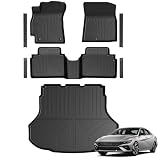
- Custom Fitment: Designed with 3D laser scanning for 2021 2022 2023 2024 2025 2026 Hyundai Elantra gasoline. Not fit hybrid models. Includes 1st & 2nd row floor mats, trunk mat and 4pcs door sill guards — 40% more components than standard sets
- Extra Protection: Unique door sill guards for Hyundai Elantra provide an added layer of protection, shielding paint from scratches, shoe scuffs, and pet claws. Built to handle everyday family use and keep your vehicle looking new
- Non-Slip Defense: Raised edges and textured surfaces help trap dirt, spills, and debris while reducing slippage. Custom-fit clips keep the floor mats firmly in place, ensuring stable protection even during active family trips
- All-weather TPE Material: 100% odorless, BPA Free and providing complete safety for your family while minimizing environmental impact. These flexible car mats full set feature water-resistant performance backed by marine-grade durability that withstands heavy daily use
- Quick Installation & Cleaning: Scan the QR code in the installation instructions for video guide. While getting dirty, just rinse with water hose in seconds and air dry - no chemical cleaners required
For a cash purchase, finance charges are zero, but do not treat the cash price as the only cost. For a financed purchase, use the lender’s total amount repaid and subtract the down payment only once; avoid adding both the full payment stream and the full OTD price.
Recommended Free Tools
| Worksheet line | New Hyundai entry | Used-car entry |
|---|---|---|
| OTD price | Itemized buyer’s order | Itemized buyer’s order plus agreed inspection-related work |
| Total finance charge | Lender contract or quote | Lender contract or quote |
| Insurance over the horizon | Annual quote multiplied by the selected period, adjusted for known changes | Annual quote multiplied by the selected period, adjusted for known changes |
| Fuel or energy | Annual miles, exact efficiency and local price | Annual miles, exact efficiency and local price |
| Maintenance | Manufacturer schedule minus qualifying complimentary services | Manufacturer schedule for the vehicle’s current mileage and condition |
| Repairs and wear | Non-warranty items and a realistic reserve | Inspection estimates, deferred work and a realistic reserve |
| Registration renewals | Local recurring charges during the horizon | Local recurring charges during the horizon |
| Expected sale or trade value | Comparable local evidence | Comparable local evidence |
| Net cost | Add costs and subtract proceeds | Add costs and subtract proceeds |
Run at least three scenarios: the likely case, a higher-repair case for the used vehicle and a higher-insurance or fuel-price case if those inputs are uncertain. Keep the same assumptions wherever the vehicles are not materially different. The result is a range, not a promise, because future repair bills, insurance rates and resale prices are uncertain.
Independent reader supportYour contribution helps us test, update, and keep practical guides available for everyone.Choose based on the risk you are willing to carry
A new Hyundai is more defensible when
- The written OTD gap is small after taxes and fees, and the new-car financing offer does not erase the difference through a higher APR or longer term.
- You need predictable condition, want the maximum remaining factory coverage and expect to keep the vehicle through several years of ownership.
- The model and transaction qualify for complimentary maintenance, and the listed services materially reduce your early scheduled-service budget.
- The used candidate has incomplete records, a large inspection estimate, an unfavorable title history or insurance costs that narrow its apparent savings.
A used car is more defensible when
- The inspected vehicle has a materially lower adjusted OTD cost, complete maintenance records and no unresolved safety or title concerns.
- You can fund identified near-term repairs without sacrificing an emergency reserve and the warranty remaining is clear enough for your ownership horizon.
- Insurance, fuel, registration and financing quotes preserve a meaningful advantage after all costs are included.
- You can accept more variability in condition and resale value in exchange for lower depreciation exposure or a higher trim for the same cash outlay.
These are decision conditions, not guarantees. A used car with a low price but a large repair reserve can cost more than the new Hyundai, while a new car with expensive insurance or an unfavorable loan can lose its apparent advantage.
Common comparison mistakes and fixes
Comparing monthly payments
Problem: A longer loan makes either vehicle look affordable while increasing total interest and the time you may owe more than the car is worth. Fix: Compare APR, term, number of payments and total amount repaid from written loan offers.
Using advertised price instead of OTD price
Problem: Taxes, registration, dealer fees and accessories appear after the headline price. Fix: Require itemized buyer’s orders for both vehicles in the same jurisdiction.
Quick wins for a faster PC:
Fix the driver behind crashes, sound loss and screen glitchesFind Drivers →Clear out junk files and repair common Windows errorsFree Scan →Scan for outdated or missing drivers - takes under a minuteDriver Scan →Treating a history report as an inspection
Problem: Unreported damage and mechanical wear may not appear in the report. Fix: Pay for an independent written inspection and obtain repair estimates before committing.
Best Value

- Bright Colors and Text:Bright yellow background and large black text can clearly attract people's attention and avoid unnecessary things.
- High Quality Materials:Made of top-quality strong magnet, which has more durable and sturdy. High quality reflective materials provide maximum visibility between day and night.
- Reduce Pressure:Once other drivers realize you are learning to drive they will give you space and respect, reducing the likelihood of an accident.
- Removable and Reusable:Compared to student driver bumper sticker,is easily removed to other vehicles without fading for a long time.
- Note:The magnetic student driver can strongly stick to the rear of the car made of metal. Not aluminum or other plastics.
Assuming all Hyundai warranty miles transfer
Problem: The original-owner powertrain term is different from subsequent-owner coverage. Fix: Verify the VIN, in-service date, owner status and written exclusions with Hyundai or an authorized dealer.
Overvaluing CPO branding
Problem: CPO eligibility and a 173-point inspection do not reveal how much warranty time remains or whether every future repair is covered. Fix: Read the CPO contract, confirm the deductible and still commission an independent inspection.
Ignoring mileage mismatch
Problem: Applying the same annual mileage to both cars without checking service intervals can understate used-car maintenance or overstate a new-car benefit. Fix: Map your expected odometer reading to each vehicle’s actual maintenance schedule.
Free tools Windows power users keep installed
One-click scans. No signup required.
Assuming an online buying channel proves availability
Problem: Hyundai’s January 2025 Amazon Cars FAQ describes checkout and says a new vehicle is automatically covered by the Hyundai New Vehicle Warranty and complimentary-maintenance plan, subject to conditions, but it does not establish current inventory or model eligibility. Fix: Verify the live listing, model-year eligibility, final OTD quote and applicable warranty terms before using an online purchase path in your comparison.
A practical seven-step workflow
- Write the assumptions: state, ownership period, annual miles, cash or finance, down payment, trade-in and acceptable loan term.
- Select exact candidates: record the Hyundai trim and VIN or stock number, and the used vehicle’s VIN, mileage, title status and seller.
- Get itemized OTD quotes: remove optional add-ons from the first comparison and preserve the written documents.
- Get financing offers: collect APR, term, payment count, payment amount and total repayment for each vehicle using matching assumptions.
- Price ownership: obtain insurance quotes, estimate fuel and registration, and map scheduled maintenance over the same miles.
- Validate the used car: review the history report, recalls, Buyers Guide and service records, then obtain an independent written inspection and estimates.
- Apply warranty and resale facts: verify the Hyundai’s exact coverage, value any qualifying maintenance benefit, estimate likely sale proceeds and compare the resulting net-cost ranges.
Keep every quote and report with the worksheet. If one seller refuses an inspection, will not disclose fees or cannot document warranty terms, record that uncertainty as a cost and risk rather than assuming the most favorable outcome.
What your final decision should say
State the winner in terms of your assumptions: for example, “The used vehicle costs less over five years if the inspection estimate stays below the stated reserve and the quoted insurance rate holds,” or “The new Hyundai costs more at purchase but is the lower-risk choice because its verified warranty and qualifying maintenance benefit outweigh the used car’s repair exposure.” If changing the ownership period, mileage, loan term or repair estimate changes the winner, show that sensitivity instead of presenting a false universal answer.
Quick Recap
Product prices and availability are accurate as of the date/time indicated and are subject to change. Any price and availability information displayed on Amazon at the time of purchase will apply.
Do these 3 things before closing this tab:
1Fix the driver behind crashes, sound loss and screen glitches2Clear out junk files and repair common Windows errors3Scan for outdated or missing drivers - takes under a minute



