The right streetfighter for city riding is the motorcycle you can control confidently at walking pace, place both feet (or one solid foot) when stopping, operate smoothly in traffic, and support locally. Start with rider fit and low-speed behavior, then compare ready-to-ride mass, power delivery, electronics, comfort, and ownership costs. Engine size and aggressive styling should come later.
Streetfighter and naked motorcycles often use upright handlebars while retaining high-performance engines and sport-focused chassis. A city-friendly choice therefore depends on the rider, route, model year, trim, and market—not on the name “streetfighter” or a low seat number alone.
As an Amazon Associate I earn from qualifying purchases.
What a streetfighter motorcycle is—and why city use changes the choice
“Streetfighter” usually describes a naked motorcycle with exposed bodywork, an upright-looking cockpit, and performance hardware derived from a sport bike. The riding position may be less folded than a fully faired machine, but the underlying engine, gearing, brakes, suspension, and throttle response can still be aggressive. For example, Ducati identifies its 2025 Streetfighter V2 as a naked motorcycle with an 890 cc engine producing 120 hp. That specification describes capability, not ease in stop-and-go traffic.
Recommended Free Tools
Urban riding repeatedly tests skills and ergonomics that a horsepower comparison misses:
#1 Best Overall

- 2 Visors Included: Clear + Smoked and 1 Neck Scarf for Winter Use
- Streamlined Aerodynamic Design Reduces Wind Noise and Drag
- Advanced and Lightweight Durable ABS Shell
- Quick Release Clasp and Strap and Removable Inner Lining Pads
- Meets or Exceeds FMVSS-218 and DOT Safety Standards
- Balancing a heavy motorcycle while feet are moving between the ground, pegs, and controls.
- Modulating clutch and throttle through crawling traffic and tight turns.
- Managing heat, wind exposure, suspension movement, and wrist or hip angles over a complete route.
- Stopping, starting, parking, and maneuvering on uneven surfaces.
- Living with servicing, insurance, fuel, parts, and dealer access.
Manufacturers publish specifications for particular years and markets. Those figures are useful for narrowing a shortlist, but they do not independently establish comfort, heat performance, reliability, turning circle, clutch effort, real-world fuel economy, or the skill required to ride a model safely in town.
Begin with your rider and route profile
Describe the actual trips
Write down the proportion of your riding that is dense stop-and-go traffic, flowing urban roads, ring roads, short errands, commuting with luggage, or carrying a passenger. Count hills, rough pavement, narrow parking spaces, and the longest uninterrupted stretch. A motorcycle that feels manageable on an open road can be tiring when every block requires a clutch slip and a foot-down stop.
Set a control requirement before a performance target
Decide what “confident” means for you: both feet comfortably touching, one foot planted with the motorcycle upright, or the ability to catch the bike while standing on a cambered street. Include your boots and normal riding clothing when assessing reach. Your proportions, inseam, arm length, strength, and experience affect the result more than the nominal seat height.
Outdated Drivers Are Slowing You Down
One free scan finds every outdated or missing driver and matches the right update for your exact hardware.Free scan · exact hardware matchPC Slower Than It Used to Be?
A free scan shows the junk files, broken settings and background clutter dragging Windows down - then fixes them in one click.Free scan · Windows 10 & 11Separate learning needs from long-term needs
A newer rider may value predictable throttle response, selectable power modes, a light steering feel, and strong low-speed balance. An experienced rider may prioritize suspension adjustability, braking feel, or highway performance. Neither profile automatically points to a particular engine size. The correct answer is the motorcycle that leaves enough control margin for the least forgiving part of your route.
Check physical fit in person
Use the complete motorcycle, not a seat-height chart alone
Published seat heights in the examples below span 31.1 to 32.9 inches, yet seat shape and width can change how easily you reach the ground. Suspension sag lowers the motorcycle under your weight; a wide front of the seat can force your legs outward; bars and footpegs alter leverage; and the bike’s balance determines how heavy it feels once it starts leaning. Sit on the exact year and trim you would buy, with a similar level of fuel and your riding boots.
Run a stationary control check
- Ask the seller to keep the motorcycle upright and let you assume your normal riding position.
- Turn the bars from lock to lock. Confirm that your wrists stay neutral and that the controls do not pull your arms or contact your knees.
- Reach the clutch and front-brake levers with one or two fingers without shifting your palm or stretching.
- Move each foot from the ground to its peg repeatedly. Check that you can find the rear brake and shifter without looking.
- With the engine off, push the motorcycle a short distance and apply the front brake. Notice steering effort and whether the mass feels top-heavy.
- Practice a controlled stop and restart in a safe, supervised area before making a purchase decision.
Evaluate walking-pace balance
At walking pace, look for a smooth clutch take-up, predictable throttle, manageable steering effort, and a neutral-feeling chassis. Tight turns and U-turns expose balance and lock limitations that a straight-line test cannot. A lower seat does not compensate for a motorcycle that feels unstable when leaned slightly or difficult to arrest once it begins to tip.
Rank #2

- 【DOT Certified & High-Impact Protection】 This full face motorcycle helmet meets or exceeds DOT FMVSS-218 standards, ensuring professional-grade safety. Built with a rugged ABS shell and energy-absorbing EPS, these motorcycle helmets dot approved provide ultimate defense for street bikes, cruisers, and sport bikes
- 【Optimized Airflow for All-Weather Riding】 Experience superior ventilation with 4 strategically placed air intakes and exhaust vents. This full face helmet design minimizes wind resistance and fogging, keeping you cool during summer rides and providing a reliable full face helmet adult option for rainy or cold weather
- 【Quick-Release Dual Visor System】 Adapt to any light condition with ease. Our full face helmet motorcycle features a tool-free quick-release system. Each order includes a pre-installed tinted shield plus a bonus clear visor, making these full face motorcycle helmets for men and women versatile for both bright days and night riding
- 【Washable Lining & Comfort Fit】 Maintain freshness on every journey with our fully removable and machine-washable interior. The moisture-wicking sponge padding makes these motorcycle helmets for adults incredibly comfortable for long-distance trips, ensuring a snug fit for these full face motorcycle helmets dot certified
- 【Complete Bundle & Perfect Sizing】 We include a premium carrying bag for easy storage and scratch protection. Whether you are searching for motorcycle helmets for women or men, TRIANGLE offers 4 sizes (S-XL) to ensure a secure fit. Please measure your head circumference to find the perfect full face motorcycle helmet for women or men
Compare published specifications without creating false precision
The table is a shortlist tool, not a ranking. The manufacturers use different weight conventions, and equipment can vary by market. Verify the specification printed for the motorcycle available in your location.
| Motorcycle and specification | Published figures useful for a shortlist | How to interpret it for city riding |
|---|---|---|
| Ducati Streetfighter V2, U.S. 2025 model year | 890 cc; 120 hp; 32.9-inch seat; high and wide handlebar; six-axis IMU with cornering ABS, traction control, wheelie control, and quick shifter | High output and advanced electronics provide capability but do not prove easy commuting. Ducati describes the ergonomics as intended to reduce wrist load; that is a design intent, not an independent comfort result. Equipment and specifications may vary by market. |
| Kawasaki Z650 ABS, U.S. 2025 model year | 31.1-inch seat; 381.5 lb estimated dry weight; ABS; three-mode traction control | The seat figure may suit a shorter inseam, but dry weight excludes operating materials and cannot be compared directly with a curb-weight figure. |
| Kawasaki Z900 ABS, U.S. 2026 model year | 31.9-inch seat; 469.7 lb curb weight for the 50-state version; ABS; traction control; power modes; IMU-enhanced chassis awareness | Kawasaki’s curb figure includes operating materials and a near-full tank. It is not an apples-to-apples comparison with the Z650’s estimated dry weight. |
| Yamaha MT-09, U.S. 2025 model year | 32.5-inch seat; 4.6 inches of rear-suspension travel; dual front discs with ABS | The cited specification does not provide enough comparable information to rank this motorcycle against the others for commuting. Assess its actual fit, response, and equipment in person. |
Weight: use one convention at a time
Ready-to-ride or curb weight is the useful number for parking, pushing, and recovering a motorcycle in traffic. Dry weight generally excludes fuel and some operating fluids. Kawasaki labels the Z650 figure “estimated dry weight,” while the Z900 figure is “curb weight.” Because the definitions differ, subtracting 381.5 lb from 469.7 lb would imply a precision the specifications do not support. If a manufacturer publishes only dry weight, ask for a wet or curb figure for a meaningful comparison.
Seat height: a starting point, not a verdict
The Z650’s 31.1-inch published seat is the lowest of these examples; the Z900 is 31.9 inches; the MT-09 is 32.5 inches; and the Streetfighter V2 is 32.9 inches. Those values are tied to the stated model years and markets. Seat width, suspension sag, rider proportions, and center-of-mass feel can make a taller, narrower seat easier for one rider than a lower, wider one.
Judge power delivery rather than peak output
Look for controllability in the first part of the throttle
City riding rewards a predictable response when the throttle is opened a few degrees, a clutch that engages progressively, and gearing that does not force constant slipping. Ask for a supervised ride that includes a walking-pace turn, a stop on an incline, and a smooth restart. The specification sheet cannot reveal whether the particular motorcycle’s response suits your hand and experience.
Use selectable modes as a control tool
Power modes can soften response for congested streets and restore a sharper setting on open roads. Confirm which modes are fitted to the exact trim and how they alter throttle behavior. The 2026 U.S. Z900 page lists power modes, while Ducati lists several electronic controls for the 2025 Streetfighter V2. Treat those features as options to configure, not substitutes for smooth technique.
What’s actually slowing this PC down?
Pick the symptom - the matching free tool is one click away.
Do not equate displacement with friendliness
An 890 cc, 120-hp motorcycle can be perfectly controllable for a skilled rider and unnecessarily demanding for another. Conversely, a smaller engine can still feel abrupt, tall, or difficult to balance. Compare the usable response at low speed, not just cubic centimeters or the peak horsepower number.
Rank #3
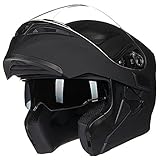
- High Resistance ABS Shell With Micrometrically Adjustable Strap
- Meets or Exceeds FMVSS-218 and DOT Safety Standards
- Helmet Liner / Cheek Pads are Lightweight, Soft and Easily Removable and Washable
- Sleek and Lightweight Design Reduces Wind Noise
- Modular Flip-Up Function Anti-Scratch, Anti-Fog and Wide View Clear Visor
Compare braking, ABS, and electronic aids
Confirm the equipment on the motorcycle in front of you
ABS is listed for the cited Kawasaki Z650, Kawasaki Z900, and Yamaha MT-09 examples. Ducati describes cornering ABS on the Streetfighter V2, along with traction control, wheelie control, and a six-axis inertial measurement unit. “ABS” alone does not tell you whether the system has cornering functionality, multiple intervention levels, or the same hardware across markets and trims. Read the local specification and owner’s manual before relying on a feature.
Understand what aids can and cannot do
ABS can help prevent wheel lock during braking, while traction control can manage some rear-wheel slip. They cannot correct excessive speed, poor sight lines, an unsuitable following distance, or a rider who is unfamiliar with the motorcycle. Test the controls in a safe environment and leave factory settings unchanged until you understand the consequences of adjustments.
Assess comfort and chassis behavior on your route
Handlebar, seat, and peg relationship
An upright handlebar may reduce the forward reach compared with a fully faired sport motorcycle, but the exact bar width, sweep, seat contour, and peg position determine your posture. Check whether your wrists are loaded, whether your knees are sharply bent, and whether you can turn your head for traffic checks without strain. Ducati states that the Streetfighter V2 ergonomics are intended to reduce wrist load; regard that as the manufacturer’s design objective rather than a measured comfort claim.
Quick wins for a faster PC:
Clear out junk files and repair common Windows errorsFree Scan →Scan for outdated or missing drivers - takes under a minuteDriver Scan →Repair Windows errors before they cause bigger problemsFix Now →Suspension and rough pavement
Ride the roads you actually use, including patched asphalt, speed humps, drainage covers, and broken edges. The Yamaha MT-09 specification lists 4.6 inches of rear-suspension travel, but travel length alone does not predict the ride: spring rate, damping, preload, tire pressure, and setup matter. Ask whether preload or damping can be adjusted for your weight, luggage, or passenger.
Heat, wind, and route length
Naked bodywork leaves more of the rider exposed to airflow and does not provide the fairing protection of a sport-tourer. Engine heat in slow traffic, wind on faster roads, and the amount of time spent seated are personal-use questions that the cited specifications do not answer. On a test ride, include the longest low-speed section you can safely reproduce and note discomfort before it becomes fatigue.
Passengers and luggage
If you carry a passenger or a work bag, inspect the passenger seat, grab points, payload rating, and available luggage mounts on the exact model. A motorcycle that fits solo may become cramped or top-heavy when loaded. Confirm the owner’s manual limits rather than estimating from appearance.
Rank #4

- Unmatched Protection & Durability:Built Tough for Extreme Adventures, Our Helmet Exceeds Expectations by Meeting FMVSS-218 and DOT Safety Standards. Its Robust Construction Safeguards Ensuring Ultimate Security as You Conquer the Toughest Terrains
- Convenient Flip-Flop Mechanism: Easy Switching Between Full-Coverage Helmet and Open Mode, This Modular Motorcycle Helmet Is Perfect for City Riding and Long-Distance Touring
- Stay Cool and Comfortable with Strategically Placed Vents That Ensure Maximum Airflow and Reduce Heat and Moisture Buildup During the Ride
- Comfortable Interior Lining: Enjoy the Cozy Plush Lining That Provides Long-Lasting Comfort Even on Long Rides
- The Modular Design Makes It Suitable for Snowmobiles, Dirt Bikes, Scooters, Bike Riding and More. With Its Innovative Features, It Is Sure to Be an Ideal Choice for Riders Looking for a Stylish, Comfortable and Safe Helmet!
Make ownership part of the selection
Dealer and service access
Identify an authorized service location that can perform scheduled maintenance for the exact model year. Ask for the service intervals, labor rates, parts lead times, diagnostic requirements, and warranty terms in your market. A motorcycle that is enjoyable but difficult to maintain locally can be a poor city commuter.
The Tool Desk
Outbyte PC Repair FREERepair Windows errors before they cause bigger problemsFix Now →Outbyte Driver Updater FREEFix the driver behind crashes, sound loss and screen glitchesFind Drivers →Budget the complete purchase
Obtain a written out-the-door price that separates the motorcycle, freight, setup, registration, taxes, accessories, and any recurring fees. Insurance premiums depend on rider, location, coverage, and the motorcycle’s classification; request quotes using the exact vehicle identification details. Also estimate fuel, tires, chain or belt service, brake consumables, parking, and protective equipment. Current prices and stock were not established for these examples, so do not infer a local price from a manufacturer specification page.
Check range and daily logistics
Ask the seller for the tank capacity and a realistic range estimate for your route, then leave a margin for detours and traffic. Verify whether the motorcycle fits your parking space, can be secured to an anchor, and has a practical way to carry a lock, rain layer, or laptop. These are ownership constraints rather than performance specifications.
Independent reader supportYour contribution helps us test, update, and keep practical guides available for everyone.A repeatable shortlist and test-ride process
- Define the route. Record traffic density, typical speeds, hills, pavement quality, passenger use, luggage, and the longest daily ride.
- Set fit boundaries. Decide your acceptable seat reach, maximum manageable mass, and the control position that keeps wrists, knees, and back neutral.
- Select two or three candidates. Use the same model year and market wherever possible, and record whether each weight is dry, curb, or wet.
- Verify equipment. Confirm ABS type, traction-control levels, power modes, quick-shifter fitment, suspension adjustability, and any trim-dependent options.
- Perform a static check. Sit in your gear, move the bars, operate every lever, push the motorcycle, and practice finding the pegs and rear brake.
- Ride at walking pace. Include a controlled U-turn, a stop and restart, a slight incline, and a parking maneuver under supervision.
- Ride the route conditions. Assess throttle smoothness, clutch effort, heat, wind, suspension response, braking confidence, and visibility at junctions.
- Repeat after a break. Fatigue can reveal pressure points and control difficulty that disappear during a short first ride.
- Price ownership. Get written service, insurance, registration, parts, and accessory estimates for the exact motorcycle.
- Recheck the documents. Match the vehicle identification number, model year, trim, weight convention, seat height, safety equipment, warranty, and local legal requirements before signing.
How the example motorcycles fit a city-shopping conversation
Ducati Streetfighter V2
The 2025 U.S. specification combines an 890 cc engine and 120 hp with a 32.9-inch seat, high and wide handlebar, and extensive electronic assistance. It belongs on a shortlist when the rider can manage its size and performance and values the stated sport-oriented hardware. The specification does not establish low-speed ease, traffic heat behavior, or commuter comfort, so a careful fit and route test is essential.
Kawasaki Z650 ABS
The 2025 U.S. ABS version publishes a 31.1-inch seat and a 381.5 lb estimated dry weight, plus ABS and three-mode traction control. Those figures may make it worth examining for a rider who prioritizes reach and a lighter listed mass. Because the weight is dry, compare its physical feel directly rather than treating the number as a precise advantage over curb-weight motorcycles.
Kawasaki Z900 ABS
The 2026 U.S. 50-state version lists a 31.9-inch seat and 469.7 lb curb weight, with ABS, traction control, power modes, and IMU-enhanced chassis awareness. The curb figure includes operating materials and a near-full tank. Its seat is not dramatically taller than the Z650’s on paper, but the additional ready-to-ride mass must be assessed while pushing, parking, and recovering the motorcycle.
Best Value
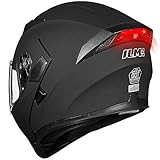
- High Resistance ABS Shell With Micrometrically Adjustable Strap
- Meets or Exceeds FMVSS-218 and DOT Safety Standards
- Helmet Liner / Cheek Pads are Lightweight, Soft and Easily Removable and Washable
- Sleek and Lightweight Design Reduces Wind Noise
- Modular Flip-Up Function Anti-Scratch, Anti-Fog and Wide View Clear Visor
Yamaha MT-09
The 2025 U.S. specification lists a 32.5-inch seat, 4.6 inches of rear-suspension travel, and dual front discs with ABS. Those details help establish fit and chassis questions to investigate, but the cited information is insufficient to rank the MT-09 against the other examples for urban use. Ride the exact motorcycle and verify the local trim’s equipment.
Safety and essential gear
Kawasaki’s 2025 Z900 safety guidance states: “Always wear a helmet, eye protection and proper apparel.” It also advises avoiding riding under the influence and following the owner’s manual maintenance schedule. Select a correctly fitting helmet that meets the certification requirements in your jurisdiction, plus clothing and footwear that protect you while allowing precise control. Check local licensing, insurance, lighting, noise, and equipment laws before riding; those rules vary by location.
Electronic aids do not replace training, judgment, or maintenance. Practice emergency braking and low-speed maneuvers in a legal, controlled area, keep tires and controls in good condition, and adjust your pace to visibility and traffic. If you are new to motorcycles, formal rider training can help you build the clutch, braking, and balance skills that no specification sheet measures.
A practical decision rule
Choose the candidate that passes every one of these tests: you can reach and operate the controls naturally; you can balance and turn it at walking pace; the power response is manageable in your most congested section; the braking and electronic equipment match your needs and local trim; the seating position remains tolerable for your full route; and service, insurance, and running costs fit your budget. If a motorcycle fails a core control or fit test, a lower seat, more power modes, or a larger specification sheet should not override that result.
Before purchase, write the exact model year, trim, market, weight convention, seat height, safety equipment, warranty, service location, and out-the-door cost on the same worksheet. Recheck every item against the dealer’s motorcycle and owner’s documentation. That process prevents a persuasive headline specification from becoming an impractical daily machine.
Quick Recap
Product prices and availability are accurate as of the date/time indicated and are subject to change. Any price and availability information displayed on Amazon at the time of purchase will apply.




