The Tool Desk
Outbyte PC Repair FREERepair Windows errors before they cause bigger problemsFix Now →Outbyte Driver Updater FREEScan for outdated or missing drivers - takes under a minuteDriver Scan →There is no single best tire for every car. Start with the size, load index, and speed rating approved for your vehicle; then choose a tire category for your climate and routes, and compare the tradeoffs that matter to you. This process helps you choose confidently without treating a brand name or one rating as a universal winner.
1. Start with your car’s approved tire specifications
Before comparing brands or prices, check the Tire and Loading Information label on the driver’s door area and your owner’s manual. They identify the original tire size and the vehicle maker’s recommended cold inflation pressure. NHTSA advises using the original tire size or another size recommended by the vehicle manufacturer. If you are unsure which alternatives are approved, ask a tire professional.
Also confirm the required load index and speed rating. The U.S. Tire Manufacturers Association (USTMA) recommends replacement tires with the vehicle- or tire-manufacturer-recommended size, load index, and speed rating; replacement tires should not be smaller or have less load-carrying capacity than originally specified. Treat fitment as a requirement, not a preference to trade away for a lower price.
Use the pressure on the vehicle placard or in the manual—not the maximum inflation pressure molded onto the tire sidewall. NHTSA recommends checking pressure at least monthly when tires are cold, meaning the car has been parked for at least three hours. A tire-pressure monitoring system (TPMS) warns of pressure loss but does not replace routine checks with a gauge. See NHTSA’s TireWise guidance and USTMA’s tire-care guidance.
#1 Best Overall

- Product Overview: The Fullway HP108 are 205/55R16 91V SL-Standard Load, 4 Ply Rated Performance Tires Manufactured For Passengers
- Driving Conditions: All Season Traction, UTQG 380AA
- Styling and Construction: Four Black Sidewall, Radial Construction, 16 Inch Tires
- Load Index and Speed Rating: Load Index 91 Supports up to 1356 lbs Per Tire and Speed Rating V Certified to 149 mph
- Additional Note: Tires Only - Rims/Wheels Not Included
2. Choose a tire category for your weather and driving
Think about the conditions you regularly encounter, not just the season printed on the calendar. Consider winter severity, highway and city driving, rough roads, off-road use, and whether you carry heavy loads or tow. NHTSA’s buyer guidance describes the main categories this way:
| Tire category | What it is intended for | What to consider |
|---|---|---|
| All-season | A variety of road conditions, with some mud and snow capability. | “All-season” does not mean equal performance in every winter condition. If snow and ice are routine, compare winter-capable options for the conditions you actually drive in. |
| Winter | More effective than all-season tires in deep snow. | Consider this category when winter conditions are a regular part of your driving; check that the tire is approved for your vehicle. |
| Summer | Warm-weather driving. | Not designed for operation below freezing or on snow and ice. |
| All-terrain | Primarily used on four-wheel-drive vehicles; a compromise between on-road and off-road capability. | Match the tire to how much off-road use you expect, while confirming fitment and the vehicle’s requirements. |
These are broad category descriptions, not a region-specific recommendation. Local climate, roads, and vehicle compatibility determine which category makes sense. NHTSA summarizes the categories in its Tire Buyers’ FAQ.
Rank #2
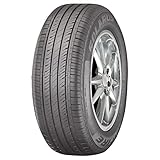
- 50,000 mile warranty
- All-Season Touring Tire
- Ideal for consumers looking for plenty of miles, good traction and fuel economy
- M+S Rated (mud and snow)
- Manufactured by Cooper Tire & Rubber Company
3. Compare the tradeoffs that affect your driving
Once you have narrowed the category and confirmed fitment, compare tires on the attributes that matter for your routes and priorities. Look for comparable evidence rather than assuming a higher price, familiar brand, or aggressive tread pattern guarantees a better match.
- Weather capability: Compare performance relevant to your climate, especially wet-road braking and winter capability if rain, snow, or ice is common where you drive.
- Load and speed requirements: Confirm each candidate meets the vehicle’s approved specifications before weighing other benefits.
- Tread life: Treat warranties and treadwear ratings as comparison information, not a promise of a particular mileage. Actual wear depends on driving, service, roads, and climate.
- Comfort and noise: If you spend long hours in the car or value a quiet ride, look for comparable information about ride comfort and road noise.
- Rolling resistance and fuel economy: Consider this if efficiency matters, but do not assume a published claim predicts the savings in your specific vehicle.
- Total installed cost: Compare the full price for the correct tires and installation, along with warranty terms. A low tire price alone does not show the overall cost.
No tire models were tested for this article, so it does not rank products or declare a winner. Compare independent tests when they cover the same sizes and conditions you care about; otherwise, treat claims from different sources cautiously.
Rank #3

- Patented tread pattern: Provides a comfortable and quiet ride
- Efficient fuel-saving tread compound: Offers grip in wet, dry, snow, and ice
- Specially formulated rubber compound and tread features: Low rolling resistance, for eco-friendly driving
- Optimized contact area with the road: Provides reliable tread life
4. Understand what UTQG ratings can—and cannot—tell you
Uniform Tire Quality Grading (UTQG) is a federal system for comparing covered passenger tires on treadwear, traction, and temperature. It can help you compare specific attributes, but it is not a comprehensive safety score or a guarantee of how a tire will perform in your driving.
| Rating | What it measures | Important limit |
|---|---|---|
| Treadwear | A comparative grade based on wear under controlled conditions. | It does not guarantee a particular service life or mileage. Driving habits, maintenance, road characteristics, and climate can change real-world wear. |
| Traction | Straight-line wet-pavement braking on specified surfaces; grades descend from AA to A, B, and C. | The test does not measure cornering traction. |
| Temperature | Resistance to heat under the grading system; grades descend from A to B and C. | It is one measured attribute, not an overall ranking of tire safety or suitability. |
NHTSA’s buyer FAQ explains the grades; its Consumer Guide to Uniform Tire Quality Grading, published in August 2016, details their limits. NHTSA notes that passenger tires must meet federal safety requirements in addition to their UTQG grades. Use the ratings as one input, alongside fitment and tire performance relevant to your conditions.
Rank #4

- Product Overview: The Fullway HP108 is a 215/55R17 98W XL-Extra Load, 4 Ply Rated High Performance Tire Manufactured For Passengers
- Driving Conditions: All Season Traction, UTQG 380AA
- Styling and Construction: One Black Sidewall, Radial Construction, 17 Inch Tire
- Load Index and Speed Rating: Load Index 98 Supports up to 1653 lbs Per Tire and Speed Rating W Certified to 168 mph
- Additional Note: Tire Only - Rim/Wheel Not Included
5. Check tire age, tread, and damage
When buying, inspect the tire’s DOT Tire Identification Number. Its final four digits indicate the manufacturing week and year. NHTSA advises checking this code and following the replacement timeframe recommended by the vehicle or tire manufacturer. Some manufacturers recommend replacement at six to ten years regardless of treadwear; that is manufacturer-specific guidance, not one universal age limit.
NHTSA says to replace tires at the 2/32-inch tread limit. Do not keep using a tire with damage such as cuts, cracks, or bulges, or irregular wear associated with underinflation or overloading. Noise, vibration, or a tire that will not maintain pressure are reasons to have it inspected by a professional. See NHTSA’s tire safety guidance.
What’s actually slowing this PC down?
Pick the symptom - the matching free tool is one click away.
Best Value
- Product Overview: The Fullway HP108 are 215/60R16 99V XL-Extra Load, 4 Ply Rated Performance Tires Manufactured For Passengers
- Driving Conditions: All Season Traction, UTQG 380AA
- Styling and Construction: Four Black Sidewall, Radial Construction, 16 Inch Tires
- Load Index and Speed Rating: Load Index 99 Supports up to 1709 lbs Per Tire and Speed Rating V Certified to 149 mph
- Additional Note: Tires Only - Rims/Wheels Not Included
6. Decide whether to replace one, two, or four tires
Replacing all four tires at once is USTMA’s recommendation for optimal performance. If replacing fewer than four is necessary, follow its guidance and consult a tire professional about vehicle-specific complications, including all-wheel-drive requirements.
- If replacing two: Match the vehicle-recommended size, load index, and speed rating, and install the newer pair on the rear axle.
- If replacing one is unavoidable: USTMA advises pairing the new tire with the tire that has the deepest remaining tread and installing both on the rear axle. It warns that replacing just one can negatively affect suspension, transmission, and tire wear.
Read USTMA’s replacement guidance and check your vehicle manual before deciding.
7. Plan for pressure checks and maintenance
Maintenance affects how long and how evenly tires wear. NHTSA and USTMA advise checking cold pressure monthly, inspecting tread and damage, and following the vehicle manual for rotation. If the manual recommends rotation but gives no interval, NHTSA says the typical interval is every 5,000 to 8,000 miles, or sooner if uneven wear appears. Some vehicles with staggered tire sizes cannot use the usual rotation pattern, so confirm the applicable instructions in the manual. Pulling to one side or uneven wear can indicate an alignment concern that a tire professional should assess.
NHTSA reports that properly inflated tires can extend average tire life by 4,700 miles, and that keeping tires properly inflated can save as much as 11 cents per gallon in fuel. Those are conditional figures from NHTSA’s TireWise page, not guarantees for an individual vehicle. Its page also reports 511 deaths in tire-related crashes in 2024, underscoring why pressure and condition checks belong in tire ownership, not just tire shopping. Details are available from NHTSA and USTMA.
Crashes, No Sound, or Screen Glitches?
Random freezes, missing sound and display glitches usually trace back to one bad driver. Find and replace yours safely.Free scan · under a minutePC Slower Than It Used to Be?
A free scan shows the junk files, broken settings and background clutter dragging Windows down - then fixes them in one click.Free scan · Windows 10 & 11Quick Recap
A practical buying sequence
- Describe your driving: Note your typical weather, routes, off-road use, load or towing needs, and comfort priorities.
- Confirm approved fitment: Get the size, load index, and speed rating from the door label or owner’s manual, or verify them with a tire professional.
- Choose a category: Narrow the options based on climate and how you use the car.
- Compare relevant evidence: Weigh wet and winter capability, tread life, comfort, noise, rolling resistance, warranty terms, and total installed cost.
- Check age and replacement needs: Inspect the date code and condition, then decide whether one, two, or four tires need replacement.
- Confirm installation details: Ask the installer to verify fitment and discuss balancing, pressure, TPMS, rotation, and any all-wheel-drive guidance for your vehicle.
Product prices and availability are accurate as of the date/time indicated and are subject to change. Any price and availability information displayed on Amazon at the time of purchase will apply.