Crashes, No Sound, or Screen Glitches?
Random freezes, missing sound and display glitches usually trace back to one bad driver. Find and replace yours safely.Free scan · under a minuteWindows Errors? Fix Them Before They Spread
Repair common Windows errors and clear accumulated junk for a smoother, more stable PC - no reinstall needed.Free scan · no reinstallChoose the body style that best handles your regular passengers, cargo, access needs, and parking—not the one with the broadest reputation. A sedan’s enclosed trunk, a hatchback’s large rear opening, and a small SUV’s seating height or available capability can each be useful, but the label alone does not establish how spacious, efficient, safe, or affordable a particular vehicle will be. Compare specific models and powertrains, then test the finalists with the people and items you actually carry.
Start with the jobs the vehicle must do
List the situations you face repeatedly: number of passengers, child-seat use, routine cargo, tight parking, ease of getting in and out, and any genuine ground-clearance or drivetrain needs. Separate must-haves from occasional conveniences. If two body styles can meet the must-haves, keep both on your shortlist until you compare specific vehicles.


As an Amazon Associate I earn from qualifying purchases.
- Start with a sedan if you want a conventional passenger-car layout and a separate enclosed trunk, and its passenger and cargo capacity is sufficient. Check the trunk opening against the largest items you regularly carry.
- Start with a hatchback if you often load bulky items and value a large liftgate and flexible cargo space. Confirm that the seats fold in a useful way and the roofline accommodates your cargo.
- Start with a small SUV if the seating position, entry and exit, cargo layout, or capability of the models you are considering suits your needs. Check the actual step-in height, visibility, dimensions, and fuel economy rather than assuming every SUV offers the same advantages.
There is no class-wide MPG, cargo-volume, or safety advantage established here for one of these body styles. The useful comparison is between exact models, model years, trims, and powertrains.
Free tools Windows power users keep installed
One-click scans. No signup required.
Compare cargo access, not just cargo volume
Published capacity is only part of the answer. A hatchback’s broad rear opening can make it easier to load awkward objects, while a sedan’s separate trunk keeps luggage enclosed. Small SUVs vary in opening shape, floor height, and usable layout, so the badge does not tell you whether your gear will fit.
#1 Best Overall
For each finalist, check the manufacturer’s seats-up and seats-folded cargo measurements, then inspect the opening width and height and the load-floor height. Bring a stroller, luggage, sports gear, or another representative item to a showroom or test drive and try loading it. If you carry tall objects, check whether the roofline or folded-seat shape limits usable height.
Check passenger fit and everyday access
Passenger-space figures do not capture every comfort or access issue. Sit in the front and rear seats, paying attention to rear headroom and legroom, door opening, and how easily passengers can get in and out. A higher seat may help one person enter or exit, but a taller step-in can be inconvenient for another; assess the specific vehicle and the people who will use it.
If you use child seats, bring the seats and check installation, front-seat clearance, and whether caregivers can buckle the child comfortably. If a mobility aid or other regular passenger equipment matters, test the full routine rather than relying on a general body-style description.
What’s actually slowing this PC down?
Pick the symptom - the matching free tool is one click away.
Compare fuel economy for the exact powertrain
Fuel economy depends on the vehicle and its powertrain, not simply whether it is called a sedan, hatchback, or SUV. Compare the EPA combined value for the exact model year, trim, engine, or electrified version you are considering. EPA identifies combined MPG as the most prominent quick-comparison value on its electric-vehicle label. Its Explore the Automotive Trends Data resource covers model years 1975–2025, according to the U.S. Environmental Protection Agency, accessed in 2026; that dataset’s coverage is not a promise about any individual vehicle.
Rank #3
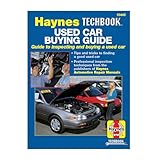
- Step-by-step procedures written from a complete teardown and rebuild, giving you the confidence to tackle repairs at any skill level.
- Over 700+ clear photos and diagrams that simplify complex systems, helping you complete jobs faster and with fewer mistakes.
- Comprehensive troubleshooting and fault-finding guides to quickly diagnose problems and reduce costly downtime.
For an electric vehicle, use the relevant label information rather than comparing a gasoline MPG figure with an electric vehicle’s energy rating as though they were the same measure. Consider the charging or fueling routine and costs that apply to your use, too.
Evaluate safety by model year and equipment
Search the Insurance Institute for Highway Safety (IIHS) ratings for the exact vehicle and model year. Review crashworthiness, headlights, and crash-prevention results, and confirm which body style and equipment the listing covers. IIHS describes its ratings as evaluating crashworthiness and crash avoidance or mitigation. Its award requirements change: for example, 2026 Top Safety Pick criteria specify crash-test and headlight performance plus acceptable or good front crash prevention results; Top Safety Pick+ adds stronger pedestrian and vehicle-to-vehicle prevention criteria. Check the current IIHS ratings rather than treating an award or rating from another year as current.
Do not treat “small SUV” as a safety rating. IIHS notes that vehicle size and weight affect forces occupants experience in a crash, and that in a collision between vehicles a heavier vehicle tends to push a lighter one backward. That relationship is not a blanket recommendation to choose a heavier vehicle: crash compatibility, crashworthiness, avoidance technology, vehicle mass, and the other road user all matter. Ratings may sometimes be shared between sedan and hatchback versions when structures and occupant restraints are comparable, but verify the listing for the actual body style and year.
Account for driving, parking, and ownership costs
Before settling on a style, compare the finalists’ exterior length and width, turning circle where available, and sight lines. Check whether each fits your garage, usual street-parking spaces, and the roads you drive. Test-drive finalists on familiar roads and try the parking situations you encounter regularly.
Compare total ownership costs rather than purchase price alone. Obtain insurance quotes for the specific vehicles and consider fuel or charging, maintenance, tires, financing, and any parking constraints. A small difference in sticker price may matter less than recurring costs or whether the vehicle works in your day-to-day spaces.
Quick Recap
Use a fit check before choosing
- Write down the non-negotiables. Record who rides in the vehicle, child-seat or mobility needs, routine cargo, parking limits, and any required clearance or capability.
- Shortlist specific vehicles. Include more than one body style if both could work; compare model year, trim, and powertrain rather than broad category labels.
- Test passenger and cargo fit. Bring the regular passengers, child seats, and representative gear. Check openings, load height, seat folding, and access in person.
- Verify the numbers and ratings. Compare EPA combined economy for the exact powertrain and current IIHS information for the exact year and body style.
- Test the ownership routine. Drive and park each finalist in conditions like yours, then compare purchase, insurance, energy, maintenance, tire, and financing costs.
Product prices and availability are accurate as of the date/time indicated and are subject to change. Any price and availability information displayed on Amazon at the time of purchase will apply.