The best luxury SUV is the one that meets your non-negotiable passenger and cargo needs, then wins on the style and ride qualities you value. There is no universal winner because seating layout, wheel size, suspension, and options can change the result within one model line. Rank style, usable space, and ride comfort; define minimum requirements; compare identical configurations; put your own passengers and luggage in the vehicle; and drive the exact trim over roads you know.
Use the process below to avoid choosing a beautiful SUV that is cramped, a spacious one that rides harshly, or a comfortable one whose options and seating arrangement do not fit your life.
| # | Preview | Product | Price | |
|---|---|---|---|---|
| 1 |
|
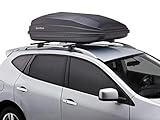
SportRack Vista XL Rear Opening Cargo Box,Black | $399.99 | Buy on Amazon |
| 2 |

|
Thule Pulse 2 L Roof Mounted Box, 16 Cubic Ft, Dual-Side Opening | $749.95 | Buy on Amazon |
| 3 |

|
Thule Force 3 XL US | $929.95 | Buy on Amazon |
As an Amazon Associate I earn from qualifying purchases.
What you are really choosing
“Luxury SUV” describes a broad category, not a single balance of qualities. A sleek two-row vehicle, a three-row family hauler, and a rear-seat-focused flagship can all carry a luxury badge while serving different purposes. The decision has three primary dimensions, plus configuration and value checks:
Quick wins for a faster PC:
Clear out junk files and repair common Windows errorsFree Scan →Fix the driver behind crashes, sound loss and screen glitchesFind Drivers →Repair Windows errors before they cause bigger problemsFix Now →| Dimension | What it includes | What can change the result |
|---|---|---|
| Style | Exterior shape and presence; cabin materials, colors, trim, controls, and seating design | Paint, wheels, upholstery, decorative trim, and model grade |
| Passenger space | Seat count, entry, posture, headroom, knee room, and access to each row | Two- versus three-row layout, second-row design, child seats, and seat travel |
| Cargo utility | Space available with the seats you normally keep occupied, loading opening, and flexibility | Sliding or folding seats, seatback angles, equipment, and roof-storage compatibility |
| Ride comfort | How the vehicle absorbs broken pavement, joints, highway undulations, and body movement | Suspension hardware, wheel and tire package, drive mode, load, and road surface |
| Configuration and value | What the vehicle you can actually buy includes and costs | Local-market equipment, packages, model year, and option pricing |
Manufacturers and reviewers use words such as “sporty,” “premium,” or “comfortable” as shorthand. Treat those words as prompts for inspection, not as measurements. Your own passengers and roads are the final test.
#1 Best Overall
- 18 cubic foot (510 L) internal cargo capacity
- Made from durable UV-resistant ABS material
- Rear opening for easy access away from traffic
- Tool-free mounting hardware for easy installation and removal
- Includes key and lock to secure contents in the box, and the box to your rack
Why a model name is not enough
Two vehicles with the same badge can differ substantially. A larger wheel may sharpen steering response while transmitting more impact. An optional air suspension may soften the ride, but only on the grade that includes it. A six-seat arrangement can provide easier access to the third row than a seven-seat bench while reducing total seating. Record the model year, trim, seating layout, suspension, wheel and tire size, and major packages for every candidate.
Set priorities before visiting a dealer
Start with a private ranking. Ask every regular driver or passenger to rank style, space, and ride comfort from first to third, then agree on minimum requirements. A statement such as “three adults must sit in the third row for a two-hour trip” is testable; “needs to be roomy” is not.
Define your actual occupants and trips
- List the adults, children, pets, and child seats that will normally travel together.
- Identify the row that will remain occupied on ordinary trips. This is the row that determines practical cargo space.
- Describe the longest routine journey, not just the occasional holiday. Note highway time, rough urban pavement, steep driveways, and parking constraints.
- List the objects that must fit: stroller, sports equipment, musical instruments, work cases, groceries, or mobility aids.
- Separate “must have” from “nice to have.” A panoramic roof or large wheel may be negotiable; safe access to the third row may not be.
Turn preferences into pass/fail rules
Write a short scorecard before you see a vehicle. Examples include:
What’s actually slowing this PC down?
Pick the symptom - the matching free tool is one click away.
- All regular adults can enter and sit in their assigned rows without twisting or rubbing knees against seatbacks.
- The normal passenger configuration leaves enough room for the weekly luggage load.
- The driver can maintain a comfortable posture while every passenger keeps the seat position they need.
- The exact vehicle has the suspension equipment required for the ride you want, not merely an available option on another grade.
- The exterior and interior combination still appeals to you after seeing it in natural light and sitting inside.
Eliminate a candidate that fails a genuine minimum. Do not let attractive styling persuade you to rationalize a problem you will experience every day.
Judge style as a personal, multi-part decision
Separate exterior presence from cabin appeal
Look at the vehicle from the angles you will see most: approaching it in a parking lot, loading the rear, and viewing it from the driver’s seat. Ask whether the proportions, lighting, grille, roofline, and wheels fit your taste. Then assess the cabin separately. Materials, color, seat shape, control layout, visibility, and perceived build quality can matter more after the novelty of the exterior fades.
Audi’s U.S. information for the 2027 SQ7 illustrates how style and utility are packaged together: the model offers wheel choices up to 23 inches, seat-comfort equipment, and six- or seven-seat configurations. Those are configuration facts, not proof that every buyer will prefer its appearance or ride. Lexus presents distinct grade treatments for the 2026 LX, including a rear-passenger-oriented four-seat Ultra Luxury grade. The useful lesson is to compare the exact grade and interior, not a generic photo of the model.
Inspect the exact color and trim
Dealer listings often show a different wheel, upholstery, or decorative trim than the vehicle you will buy. Sit in the actual combination whenever possible. Check whether glossy surfaces reflect sunlight into your eyes, whether the seat bolsters press your hips, and whether the controls remain legible at night. If the vehicle is ordered, request a build sheet that names the interior grade, seat configuration, wheels, tires, and suspension.
Recommended Free Tools
Translate marketing language into observations
| Label you may hear | Questions to ask yourself |
|---|---|
| Sporty | Do the seats hold you comfortably? Is steering effort pleasant? Does the suspension remain composed without sending sharp impacts into the cabin? |
| Elegant or traditional | Do the materials and controls feel special to you, and will the design still suit your taste after years of ownership? |
| Minimalist | Can you adjust climate, audio, and seat functions quickly without hunting through menus? |
| Premium | Are the touch points, switchgear, seat surfaces, and door closures convincing in the exact vehicle? |
Measure passenger space, not just seat count
Count usable seats
A published seat count says how many positions exist, not whether those positions work for your people. The 2027 Audi SQ7 can be configured for six or seven. The six-seat layout may make passage to the third row easier, while the seven-seat arrangement can provide a wider second-row bench. Sit in every row you expect to use and evaluate entry, foot placement, thigh support, headroom, knee clearance, shoulder room, and the ability to see out.
The 2026 Lexus LX includes a four-seat Ultra Luxury grade focused on rear-passenger space and experience. It demonstrates a deliberate trade: fewer occupants can receive more individual space and amenities. Conversely, a three-row SUV can carry more people on paper while making the third row suitable only for children or short journeys. Decide which outcome you need.
Use your own passengers and child seats
- Bring the adults who will regularly ride in the vehicle, or at least people with similar heights and body types.
- Install the child seats you actually use. Check the second-row seat travel, front-seat position, buckle access, and the path to the third row.
- Have each passenger enter independently. A seat that feels acceptable after climbing in may be impractical when access is repeated several times a day.
- Set the driver’s seat for the primary driver, then test the second row behind it. Repeat with the tallest regular passenger.
- Recline seatbacks to normal positions and check whether knees, feet, shoulders, and head remain supported for a long trip.
Examples that clarify the trade-offs
| Vehicle or grade | Seating or space fact | How to use the fact |
|---|---|---|
| Audi SQ7, 2027 U.S. information | Six- or seven-seat configurations | Compare aisle access and second-row width in the exact layout. |
| Lexus LX Ultra Luxury, 2026 | Four-seat grade | Consider it when rear-passenger experience outranks maximum capacity. |
| Audi Q7, 2026 U.S. overview | Up to seven seats; sport adaptive air suspension available in a package | Verify that both the seating arrangement and suspension package are present on the vehicle you are evaluating. |
| Lexus RX, 2026 | Five-seat layout | Appropriate when a third row is not a requirement; do not infer three-row capability. |
| Volvo XC90, current U.S. description | Six- or seven-seat versions | Check which second-row arrangement is fitted and whether it suits your access needs. |
Do not transfer a capacity figure from one model to another. The Volvo EX90, for example, is described as offering up to 67.6 cubic feet of cargo capacity; that figure belongs to the EX90 and should not be applied to the XC90.
Rank #2
- A simple, durable roof box built for commuting, day trips, and weekend escapes
- 450 litres of cargo space and a 75 kg load capacity for luggage, gear, skis and snowboards. Secure, tool-free system with a torque indicator that clicks when safely attached. Confirms closure for added peace of mind. Access your gear easily from either side of the vehicle
- Streamlined shape designed to suit a wide variety of modern vehicles
- Made from hardwearing ASA-ABS plastic that resists sun, scratches, and weather
- Full trunk access with minimal risk of contact with the cargo box, thanks to its forward position on the vehicle roof
Compare cargo the way you will use it
Start behind the occupied row
Maximum cargo volume with seats folded is useful for an occasional move but often irrelevant on a school run or workday. Measure or test the space behind the row that normally remains upright. Check the opening height and width, floor length, wheel-well intrusion, under-floor storage, seatback angle, and whether a powered tailgate can be stopped at your garage height.
An April 2026 Edmunds comparison republished by the Associated Press found that editors fitted as much luggage behind the Audi Q5’s rear seat as behind the BMW X3, even though the BMW appeared to lead on specification-sheet cargo numbers. The same comparison reported that the Q5’s rear seat offers more legroom, a reclining back, and the ability to slide to exchange passenger room for cargo room, while the X3’s back is fixed. This is a reminder that volume ratings and flexibility are different questions, and that a specific editorial comparison is not a universal laboratory result.
Bring representative loads
- Use the actual stroller, carry-on bags, grocery crates, sports bags, or work equipment.
- Place the load behind the normal passenger row first, then repeat with the seats folded if that is a realistic use.
- Check whether heavy items can be lifted over the bumper without awkward twisting.
- Look for tie-down points, a flat floor, and a cover that accommodates the objects you carry.
- Confirm that passengers can still recline or adjust their seats after the cargo is loaded.
Understand published figures and roof storage
Audi’s 2026 Q7 release lists up to 806 liters of trunk capacity with five seats in use. Audi says German orders begin in June 2026, with deliveries from September 2026; those dates are Germany-specific, so verify timing and equipment in your market. Lexus describes nearly 30 cubic feet behind the rear seats for the 2026 RX. Manufacturer figures may use different measurement conventions and seat positions, so do not rank them as if they were a standardized test.
Roof storage can solve an occasional bulky-load problem without forcing you into a larger SUV. Audi lists a roof box for the SQ7 with a stated 510-liter capacity and a carrier unit. Before buying any roof box, verify roof rails, mounting hardware, permitted roof and vehicle loads, hatch clearance, garage height, and compatibility with the exact year and trim. Added height can affect parking and handling, and a filled box changes the vehicle’s load.
Evaluate ride comfort by configuration and road
Identify the hardware first
Ride quality is not a permanent attribute of a model name. Record whether the vehicle has steel springs, adaptive dampers, air suspension, rear steering, a sport package, and which wheel-and-tire set is fitted. A large wheel usually leaves less tire sidewall to absorb sharp edges, although the total result depends on the suspension tune and tire construction.
Do these 3 things before closing this tab:
1Fix the driver behind crashes, sound loss and screen glitches2Repair Windows errors before they cause bigger problems3Scan for outdated or missing drivers - takes under a minuteThe Audi Q5-versus-BMW X3 comparison published in April 2026 describes the Q5 Prestige trim’s air suspension as the comfort-oriented route and says an X3 with the M Sport package can lose smoothness. That conclusion applies to those tested configurations; it does not establish that every air-suspended SUV rides better than every conventionally sprung one, or that every sport package is harsh.
Audi’s U.S. 2026 Q7 overview identifies sport adaptive air suspension as available in a package. Treat “available” as a prompt to confirm the build sheet. A vehicle without that package may feel materially different from the one described in a brochure or review.
Drive a representative route
- Begin on a smooth local road to establish steering, seat support, noise, and body control.
- Cross expansion joints, patched pavement, and speed humps at normal speeds. Listen for impacts and feel whether the body settles quickly.
- Use a highway section to assess vertical motion, wind noise, lane changes, and seat fatigue.
- Drive a rough road you know. Familiar surfaces make differences easier to identify than an unfamiliar dealership loop.
- Repeat the route in the exact trim and wheel setup you would purchase. If possible, add typical passengers or representative cargo.
Separate comfort from handling preference
A vehicle can feel controlled without feeling soft. Some drivers prefer firm body control and direct responses; others prioritize isolation from potholes and joints. Decide whether “comfortable” means low impact harshness, little float, low noise, supportive seats, or a combination. Write down observations immediately after each drive rather than relying on a general impression.
Public shopping discussions sometimes contrast magnetic-ride suspension in a Cadillac with air suspension in an Audi. That is one shopper’s way of framing the choice, not a broad consumer study or a substitute for driving both exact configurations. Suspension names alone cannot predict your result on your roads.
Use an apples-to-apples comparison sheet
Before comparing scores, make the vehicles comparable. Record the following for each candidate:
Rank #3
- Offers durability and maintains a sleek appearance, designed to handle daily use and the demands of active lifestyles
- A quick, secure, and intuitive mounting system that indicates when the cargo box is safely attached with a simple click
- Provides easy access to your cargo from both sides of the vehicle, enhancing convenience and efficiency
- Extensively tested for road safety and durability in the Thule Test Center, ensuring top-notch quality and reliability
- SlideLock system with separate locking and opening functions, automatically locks the lid in place and indicates when the box is closed securely
| Field | Entry to record | Why it matters |
|---|---|---|
| Model year and market | For example, 2026 U.S. or 2027 U.S. | Equipment, dimensions, and launch timing can differ by region and year. |
| Trim and packages | Exact grade plus suspension and technology packages | Options can change ride, controls, seating, and price. |
| Seating layout | Five, six, or seven seats; bench or individual second-row seats | Seat count and access are not interchangeable. |
| Wheels and tires | Diameter and tire specification shown on the vehicle | Sidewall and tuning influence impact absorption and noise. |
| Passenger test | Who sat where, with which child seats | Records usable comfort rather than brochure capacity. |
| Cargo test | What fit behind the occupied row | Captures daily utility instead of maximum folded-seat volume. |
| Ride route | Roads, speeds, passengers, and load | Makes your impressions repeatable and fair. |
| Price and availability | Local quote and delivery status | Prevents an attractive but unavailable configuration from winning on paper. |
Score each category only after a pass/fail check. A five-point style score should not compensate for a failed third-row requirement. If two vehicles meet all minimums, let your ranked preference decide: style first, space first, or ride first.
Common compromises and practical responses
“The attractive SUV is too small for our normal load”
Confirm the result with your usual passengers and luggage before rejecting it. If the shortfall is occasional bulky cargo, investigate a compatible roof box or a different seat configuration. If the load is weekly and the rear seats must remain upright, move to a vehicle that passes the behind-the-row test rather than relying on an accessory every day.
“The spacious SUV feels less comfortable than expected”
Check the exact wheels, tires, sport package, and suspension. Drive a comfort-oriented grade if one exists, then repeat the same route. Do not assume that changing drive mode will compensate for hardware you do not have.
The Tool Desk
Outbyte PC Repair FREEClear out junk files and repair common Windows errorsFree Scan →Outbyte Driver Updater FREEFix the driver behind crashes, sound loss and screen glitchesFind Drivers →“The third row exists but is difficult to use”
Test the entry path with the second row occupied and with child seats installed. A nominally larger cabin may be less practical if adults must climb, fold seats repeatedly, or accept poor posture. Consider a six-seat arrangement if its center passage solves the access problem and you do not need seven positions.
“Published cargo numbers disagree”
Check whether each number is measured with five seats, all rows, or seats folded, and whether the convention is liters or cubic feet. Use your physical load as the deciding evidence. The Q5/X3 comparison shows why a specification advantage may not translate into more luggage in practice.
“The dealer vehicle is not the one advertised”
Ask for the vehicle identification number or build sheet and verify model year, trim, seating, suspension, wheels, and packages. A review of a Prestige trim with air suspension cannot be applied to a base vehicle without that equipment.
How the documented examples fit different buyers
These examples illustrate decision patterns, not a ranking:
Free tools Windows power users keep installed
One-click scans. No signup required.
- Maximum seating flexibility: A six- or seven-seat SQ7, Q7, or XC90 deserves an in-person row-by-row test. Choose the arrangement that fits your regular passengers, not the larger number on the window sticker.
- Rear-passenger priority: The four-seat LX Ultra Luxury grade shows how a buyer can trade capacity for a more dedicated rear cabin.
- Two-row practicality: The five-seat RX suits a buyer who does not require a third row; its manufacturer-described nearly 30 cubic feet behind the rear seats should still be checked with your own equipment.
- Comfort-oriented setup: Compare the Q5 Prestige with air suspension and an X3 M Sport only as the specific configurations described by the April 2026 Edmunds/AP comparison. Drive both on your roads before generalizing.
- Occasional oversized cargo: The SQ7 roof-box example demonstrates an accessory path, subject to fitment and load-limit checks.
Volvo’s current U.S. description separates the XC90 from the EX90: the XC90 is described as a six- or seven-seater, while the EX90 is described as offering up to 67.6 cubic feet of cargo capacity. Keep those model names and figures separate when making a shortlist.
A final test-drive checklist
- Bring your driver, regular passengers, child seats, and representative cargo.
- Photograph or record the exact trim, seating layout, wheels, tires, and suspension equipment.
- Set the driver’s seat first, then test every passenger row in the positions people will actually use.
- Load the normal cargo behind the occupied row and confirm that the tailgate, cover, and seat adjustments still work.
- Drive smooth, broken, jointed, and highway roads at ordinary speeds.
- Write separate notes for appearance, materials, passenger comfort, cargo flexibility, noise, impact harshness, and body control.
- Apply your pass/fail rules before looking at the vehicle’s promotional language or a reviewer’s conclusion.
- Obtain a local written quote for that exact configuration and verify availability, delivery timing, and included equipment.
Make the decision without letting one dimension dominate
Choose the candidate that clears your hard requirements for people, luggage, and ride, then use style to break the tie if style is your highest-ranked preference. If ride comfort is first, prioritize the exact suspension and wheel setup and repeat the route with a realistic load. If space is first, judge the occupied-row cargo test and third-row access rather than maximum folded-seat figures. If style is first, confirm that the cabin and exterior combination you love also passes the practical tests.
Model-year and market differences matter. Audi’s stated Q7 rollout timing is for Germany, and manufacturer figures for cargo or electric range are not independent standardized tests. Lexus estimates 38 miles of all-electric range for the 2026 RX 450h+; that powertrain figure is relevant only if propulsion choice is part of your decision and should not be treated as an independently tested result. Verify the local vehicle’s equipment and specifications before signing.
Quick Recap
Product prices and availability are accurate as of the date/time indicated and are subject to change. Any price and availability information displayed on Amazon at the time of purchase will apply.




