The right electric port tractor is the one that completes your loaded and empty moves, fits your shift and queue pattern, and can recharge without exceeding the site’s electrical limits. Start with route and payload data, then select a battery and axle configuration; do not choose from a headline range number alone.
Port drayage can mean a few-mile terminal loop, repeated port-to-warehouse turns, or a longer intermodal leg. Those jobs have very different energy and charging requirements. The process below shows how to match a Class 8 electric tractor to the work your fleet actually performs.
As an Amazon Associate I earn from qualifying purchases.
1. Define the drayage duty cycle before looking at trucks
The U.S. Department of Energy (DOE) Alternative Fuels Data Center puts the decision in the correct order: assess the vehicle’s specific operating needs first, because those needs affect range. An average daily distance is not enough. A regular peak day, a winter shift, or a long terminal queue can determine whether a truck finishes its work.
Crashes, No Sound, or Screen Glitches?
Random freezes, missing sound and display glitches usually trace back to one bad driver. Find and replace yours safely.Free scan · under a minuteWindows Errors? Fix Them Before They Spread
Repair common Windows errors and clear accumulated junk for a smoother, more stable PC - no reinstall needed.Free scan · no reinstallBuild a representative and worst-case route record
Use dispatch records, electronic logging data, or telematics for at least several weeks. Separate the following for each tractor and route:
#1 Best Overall

- EV Charging Message: The 8 x 12 inch single-sided sign displays “Electric Vehicle Charging Station” with a charging icon; designed with high-contrast white graphics
- Reflective for Low-Light Visibility: The reflective surface returns light from headlights, flashlights, or nearby fixtures; the sign does not glow in the dark or produce light on its own
- Aluminum Construction: Made from aluminum with UV-protected printing for routine indoor or outdoor placement at homes, garages, parking areas, and businesses
- Mounting on Multiple Surfaces: Four pre-drilled corner holes support installation on doors, walls, fences, gates, or poles using fasteners selected for the mounting surface
- What’s Included: The package contains one electric vehicle charging parking sign; mounting hardware and a stake are not included
- Daily and peak miles, with loaded and empty legs shown separately.
- Container and trailer combinations, payload, and gross combination weight (GCW).
- Terminal queue, gate, loading, and waiting time, including any idling.
- Road speed, stop-and-go operation, grades, and highway mileage.
- Number of stops, backing events, and route deviations.
- Weather, temperature, wind, and seasonal heating or air-conditioning demand.
- Shift start and finish times, handoffs, break periods, and whether a second shift uses the same tractor.
- Cab HVAC use and auxiliary equipment loads.
- Where the truck can dwell long enough to charge.
Record the most demanding recurring day, not an exceptional one-off. If a peak route regularly exceeds the battery’s usable energy or leaves no practical charging window, selecting a larger pack or changing the operation is safer than relying on a published maximum.
Use DOE examples as context, not design limits
A DOE request-for-information summary reported that stakeholders commonly described drayage applications as less than 400 miles and port operations near an on-site charging hub as below 100 miles. Those are historical responses, not engineering cutoffs for every port.
A separate 2021 DOE presentation illustrated a route with an initial 150–200-mile segment, a 45-minute opportunity charge described as adding up to 60 miles, another 60–100 miles, and a return to the depot. It is a teaching example rather than a current fleet average or a guaranteed result. Your own route, payload, weather, charger power, and charging curve determine what is possible.
2. Turn route data into a range and reserve requirement
Plan for loaded energy use and a reserve
Ask each manufacturer for an energy and remaining-range estimate for the same representative and worst-case routes. Specify payload, trailer or container, temperature, grades, speed, HVAC use, queue time, and charging stops. Require the assumptions in writing.
Advertised range is configuration- and use-dependent. Freightliner states that eCascadia range varies with drive axle, battery, load, driver behavior, and environment. Volvo and Kenworth likewise present ranges for particular battery and tractor configurations. None of these figures is a controlled head-to-head test against the others.
Set an operating reserve that reflects your dispatch risk and access to charging. A route that technically ends with a few miles indicated may be unacceptable if a gate delay, detour, cold weather, or charger outage would strand the tractor. Have dispatch define the minimum state of charge required at depot return and at any opportunity-charging stop.
Check payload and GCW at the same time
A larger battery can increase range but also changes tractor weight, payload headroom, axle loading, and charging demand. Compare the actual tractor’s permitted GCW and axle layout with the heaviest container combinations you haul. Confirm legal weight limits for the route and terminal, not just the manufacturer’s maximum.
3. Design charging around the shift
Choose the charging pattern
Most fleets use one or a combination of these patterns:
Rank #2
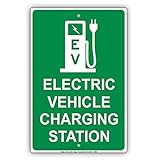
- Size detail: 8x12 inch, 20x30cm
- Super craftsmanship, attractive design and superior quality.
- Made from high-grade environmental and recycled material Aluminum Metal.
- It is suitable for many places, such as bar, cafe, dining room, billiard house, hotel, club wall decoration, creating contracted but fashionable atmosphere.
- Accessory structure: very light and thin, Pre-drilled holes are provided on the top and bottom, which can be easily installed in any position outside or inside.
- Depot charging: The truck returns nightly and charges during a long dwell. This is simplest when the route fits one shift and the site has sufficient electrical capacity.
- Opportunity charging: The truck charges during a terminal, warehouse, or intermodal dwell. It can support more miles without a larger battery, but only if the dwell is predictable and the charger is available.
- Two-shift or mid-day fast charging: A shared tractor receives a planned high-power charge between shifts. The schedule must include connector access, queueing, and the time needed for the charger to taper power near a high state of charge.
- Public heavy-duty charging: A route depends on an external site. Verify location, vehicle access, payment, uptime, cable reach, and whether the charger is designed for Class 8 tractors before counting it as dependable capacity.
Charging to a stated percentage is not a complete route plan. Charging time must fit the actual break or dwell, account for simultaneous trucks, and respect the site’s power limit. DOE guidance notes that DC fast charging can add substantial driving range in a short period, but charger design must match the specific medium- and heavy-duty application.
Audit the depot before ordering trucks
Have an electrical engineer and utility representative assess:
- Existing service capacity and transformer headroom.
- Required service or transformer upgrades and their lead time.
- Charger output, connector compatibility, and the vehicle’s allowable input.
- How many trucks charge at once and whether managed charging can stagger loads.
- Parking layout, turning paths, bollards, cable reach, and weather protection.
- Charger uptime, maintenance response, communications, and payment or authorization systems.
- Energy tariffs, demand charges, and any time-of-use rates.
Do not assume that a nominally available 250 or 350 kW charger can deliver that power to every truck simultaneously. The site’s service, switchgear, charger configuration, and other electrical loads may impose a lower practical limit.
Do these 3 things before closing this tab:
1Repair Windows errors before they cause bigger problems2Scan for outdated or missing drivers - takes under a minute3Clear out junk files and repair common Windows errors4. Compare the current Class 8 candidates by configuration
The following figures are each manufacturer’s published specifications available in 2026. They are starting points for a route-specific quote, not guarantees of loaded performance.
| Candidate | Published configuration and range | Published charging detail | Questions to resolve |
|---|---|---|---|
| Freightliner eCascadia | Single-drive standard range: 155 miles; single-drive long range: 230 miles; tandem-drive typical range: 220 miles. Maximum GCW listed as 65,000 lb for single drive and 82,000 lb for tandem drive. | About 90 minutes to 80%; up to 180 kW through a single port or 270 kW through dual ports. The stated range is based on more than one million miles in the manufacturer’s Innovation and Customer Experience fleets and typical target-application load profiles using regenerative braking. | Which axle and battery combination meets your payload and route? What range and state-of-charge reserve will the dealer guarantee for your duty cycle? |
| Volvo VNR Electric | Six-battery 6×2 and 6×4 tractors rated up to 275 miles. Volvo lists up to 82,000 lb GCW for the 6×2 tractor. The family also includes shorter-range configurations, including a 4×2 tractor described for local and regional delivery up to 175 miles. | CCS1 charging; up to 80% in 90 minutes with six batteries on a 250 kW charger. The up-to-275-mile specification lists 565 kWh gross and 452 kWh usable energy. | Is the required axle and battery configuration available for your operation? Does the loaded route still meet the reserve requirement? |
| Kenworth T680E | The April 2026 brochure lists 250 kWh / 100 miles, 375 kWh / 150 miles, and 500 kWh / 200 miles. Class 8 configuration is listed up to 82,000 lb GCW and is designed for short, regional haul and drayage. | A 350 kW DC fast charger is listed as standard; a 19 kW AC charger is optional. | Which pack is available with the desired tractor configuration? Confirm current production timing, service coverage, and the charging behavior at your site’s actual power. |
The ranges above use different test methods, configurations, and wording. Ask all three manufacturers for a common data sheet covering your route, payload, climate, reserve, and charging schedule. Also confirm usable energy, not only gross battery capacity, and obtain a written configuration and service quote.
5. Verify operational fit beyond range
Axles, weight, and maneuvering
Single-drive, tandem-drive, 4×2, 6×2, and 6×4 layouts affect traction, weight, tire wear, turning behavior, and legal loading. A terminal loop may favor maneuverability and lower mass, while a heavy intermodal leg may require a different axle arrangement. Have the dealer map the actual container chassis, fifth-wheel position, kingpin load, and axle weights for your heaviest moves.
Driver workflow and terminal procedures
Train drivers on regenerative braking, state-of-charge planning, charger connection, and what to do when a charger is occupied or unavailable. Make sure the cab, mirrors, fifth wheel, and trailer systems fit existing yard procedures. A truck that meets the route on paper can still underperform if drivers cannot connect reliably during a short dwell or if queueing forces repeated repositioning.
The Tool Desk
Outbyte PC Repair FREERepair Windows errors before they cause bigger problemsFix Now →Outbyte Driver Updater FREEScan for outdated or missing drivers - takes under a minuteDriver Scan →Service and recovery
Ask where high-voltage repairs, towing, software support, and roadside recovery will occur. Confirm dealer coverage along every regular route, parts availability, maintenance intervals, battery and electric-drive warranties, and the procedure for a disabled truck at a terminal. Obtain realistic lead times for both the tractor and replacement charging equipment.
Rank #3

- 3M AUTHORIZED. Official 3M reflective films and inks on durable, rustproof aluminum ensure that our signs meet all DOT requirements for outdoor parking and traffic signs.
- REFLECTIVE. Signs have Engineer Grade reflectivity that makes sure they can be spotted at night.
- DURABLE & LAMINATED. Heavy-duty rustproof aluminum has a 10-year outdoor durability rating backed by a 3M warranty. Graphics are protected from weather and abuse and graffiti can be cleaned off. Laminated signs outlast competitive unlaminated or overcoated signs.
- INSTALLATION. All signs come with rounded, burr-free corners and pre-punched/pre-cleared holes. Signs mount to U-channel posts, square or round galvanized posts, wooden posts and chain link fences.
- MADE IN USA. We have been making signs for over 100 years in the US. We know which signs work and which signs are durable outside.
6. Build a local total-cost model
There is no aligned public price, maintenance record, energy tariff, downtime history, or residual-value dataset for the three trucks above. That means a defensible comparison must use your fleet’s quotations and operating records rather than a generic payback claim.
Include every capital and operating input
- Truck purchase or lease payment, financing rate, and delivery costs.
- Charger hardware, civil work, switchgear, transformer, engineering, permits, and commissioning.
- Utility service upgrades, demand charges, energy rates, and charging-management software.
- Diesel and electricity consumption using the same route, payload, and season assumptions.
- Scheduled maintenance, tires, high-voltage inspections, and unscheduled repairs.
- Downtime, substitute-truck rental, missed appointments, and lost dispatch capacity.
- Insurance, registration, taxes, training, and facility labor.
- Battery warranty terms, end-of-term condition, residual value, and disposal or second-life assumptions.
- Any incentive, grant, voucher, tax treatment, or utility contribution that your specific entity can actually claim.
Run the model over a stated ownership or lease period and test low, expected, and high utilization. Keep diesel and electric cases consistent: the same miles, payload, shifts, driver labor, and service expectations. Present a payback or savings figure only when every input is documented and local.
7. Check port rules and incentives in the correct jurisdiction
Port access is not universal
Registration, clean-truck, appointment, and access rules differ by port and can change independently of vehicle specifications. The reviewed DOE incentive material notes a clean-truck rule in the New York and New Jersey port complex, but that does not establish a requirement at other ports. Before ordering, confirm current rules with the destination port, including vehicle eligibility, model-year requirements, registration, and any zero-emission access program.
New York and New Jersey program announcement
On September 3, 2026, CALSTART and the Port Authority of New York and New Jersey announced programs totaling $45 million. The announcement describes up to $39 million in point-of-sale vouchers for zero-emission drayage trucks, yard tractors, and supporting charging infrastructure, plus a $5 million Green Drayage Accelerator intended to award up to five charging hubs within 10 miles of port facilities. The programs were expected to commence in fall 2026.
The announcement does not establish that applications are open now or that every fleet qualifies. Confirm eligibility, deadlines, eligible configurations, voucher timing, ownership requirements, and charging-hub terms with the program administrator before including any amount in your purchase model. CALSTART Executive Vice President of California and Regional Market Acceleration Alycia Gilde summarized the implementation issue this way: “Deploying zero-emission trucks at scale requires pairing accessible vehicle incentives with reliable, high-capacity charging.”
Use federal and state directories carefully
The DOE Alternative Fuels Data Center lists programs that may support medium- and heavy-duty zero-emission vehicles and charging, but its summaries can be outdated or under review. Treat the directory as a place to find administrators, then verify current terms with the agency, port, utility, or grant office. Do not count a prospective incentive until the applicant, truck, charger, location, and deadline are confirmed.
8. A practical procurement sequence
- Define the routes: Export representative and worst-case days from dispatch or telematics, including payload, queue time, weather, grades, and shift structure.
- Set the operating envelope: Specify required miles, reserve state of charge, GCW, axle loads, charging dwell, and acceptable downtime.
- Survey the site: Obtain utility capacity, tariff, service-upgrade, parking, and charger-layout information.
- Request comparable bids: Give every manufacturer the same route and payload file and require configuration, usable energy, estimated consumption, reserve, charging time, warranty, and delivery assumptions in writing.
- Validate with a pilot: If possible, run the selected configuration on representative loaded routes and record energy use, queue effects, charger uptime, and remaining state of charge.
- Model the economics: Use local truck quotations, infrastructure bids, electricity rates, maintenance assumptions, downtime, financing, incentives, and residual values.
- Confirm compliance: Check port access, registration, grant eligibility, utility agreements, and safety procedures before signing.
- Plan deployment: Train drivers and technicians, commission chargers, establish a recovery process, and phase deliveries so charging capacity is available when each tractor arrives.
9. Common selection mistakes and their fixes
Buying from the largest advertised range
Why it fails: The number may apply to a light or specific axle and battery configuration under favorable conditions.
Quick wins for a faster PC:
Repair Windows errors before they cause bigger problemsFix Now →Fix the driver behind crashes, sound loss and screen glitchesFind Drivers →Fix: Obtain a route-specific estimate with loaded weight, climate, HVAC, speed, and reserve stated.
Rank #4

- Premium Aluminum Quality – Crafted from high-grade, rust-free aluminum to deliver a strong, professional-looking sign that resists wear, maintains its shape, and provides long-lasting performance you can rely on.
- Designed for Indoor & Outdoor Display – Engineered to perform in any environment, this sign holds up against sun, rain, wind, and daily exposure, making it ideal for homes, businesses, and outdoor spaces.
- Vibrant, Fade-Resistant Printing – Printed using UV-resistant inks that help preserve bold colors and sharp text, ensuring your message stays clear, readable, and visually appealing year after year.
- Quick & Easy Mounting – Comes ready to install with pre-drilled holes for fast, secure mounting on walls, fences, posts, doors, or other surfaces without the need for special tools or adhesives.
- Made in the USA with Care – Proudly manufactured in the USA using premium materials and attention to detail, delivering dependable quality, professional craftsmanship, and a product you can trust.
Ignoring simultaneous charging
Why it fails: A site may have enough energy for one truck but not for the planned number at shift change.
Fix: Model the worst charging queue, power sharing, demand charges, and a backup plan for an unavailable charger.
Counting dwell as charging time without measuring it
Why it fails: Gate delays, repositioning, and a full charger can consume the entire window.
Fix: Use observed dwell distributions and count only reliable plug-in time.
Comparing gross battery capacity with usable energy
Why it fails: Gross kWh does not equal the energy available for driving.
Fix: Request usable energy, charging curve, thermal limits, and expected state of charge at route milestones.
Assuming incentives are guaranteed
Why it fails: Programs have geography, applicant, vehicle, timing, and funding limits.
Recommended Free Tools
Fix: Obtain written eligibility confirmation and model the purchase without the incentive until the award is secure.
Best Value

- Always be Charging Humor Electric Car Truck Vehicle Charging Stations
- Perfect gift for Birthdays, Christmas, Thanksgiving, Anniversary or Halloween.
- Lightweight, Classic fit, Double-needle sleeve and bottom hem
10. Match the truck to the operating pattern
Short terminal loop with nightly return
A lower-range configuration may be adequate when daily miles are consistently low, payload is known, and depot charging is available for the full dwell. The priority is dependable charging capacity and maneuverability rather than paying for unused battery mass.
Repeated port-to-warehouse turns
Compare the energy consumed per loaded turn, queue duration, and number of turns per shift. Opportunity charging can work if dwell is predictable; otherwise, specify enough usable energy for the peak day and a defined reserve.
Long intermodal leg or two shifts
These operations require the closest scrutiny of battery size, axle and GCW limits, charger power, and shift handoff. A mid-shift charge may support utilization, but only when the charger, connector, and site power are dependable at the exact handoff time.
What’s actually slowing this PC down?
Pick the symptom - the matching free tool is one click away.
Decision checklist
- Have we measured peak as well as average miles?
- Are loaded and empty legs, payload, GCW, grades, weather, HVAC, and queue time documented?
- Is the quoted range tied to the exact battery, axle, and tractor configuration?
- Do we know usable energy and the expected state of charge at each route milestone?
- Can the depot charge the planned number of trucks within the available dwell?
- Are utility upgrades, tariffs, demand charges, and charger uptime included?
- Do dealer service and recovery coverage reach every regular route?
- Are port rules and incentives verified for the actual jurisdiction and applicant?
- Does the total-cost model use local prices and clearly labeled assumptions?
Choose the configuration that passes every route, charging, weight, service, and financial check—not the one with the biggest badge or range number. A written, route-specific vehicle and infrastructure plan is the evidence that an electric tractor will work in your port operation.
Frequently Asked Questions
Should a port fleet buy the longest-range electric tractor available?
No. Select the smallest configuration that completes the measured peak duty cycle with an agreed reserve and a dependable charging plan. A larger battery can add cost and weight without improving a short, predictable route.
How much range does a 45-minute opportunity charge add?
A 2021 DOE illustrative drayage presentation described a 45-minute opportunity charge as adding up to 60 miles. That is an example, not a guaranteed result; actual added miles depend on charger power, battery state, temperature, vehicle limits, and dwell quality.
Are the published ranges of the three Class 8 trucks directly comparable?
No. Freightliner, Volvo, and Kenworth publish figures for different configurations and test conditions. Request common route, payload, climate, reserve, and charging assumptions before comparing bids.
Free tools Windows power users keep installed
One-click scans. No signup required.
Can a fleet include an announced incentive in its payback calculation?
Only after the responsible program confirms that the fleet, vehicle, site, and application meet current requirements. Announcements describe potential funding, not a guaranteed award.
Quick Recap
Product prices and availability are accurate as of the date/time indicated and are subject to change. Any price and availability information displayed on Amazon at the time of purchase will apply.




