The right electric dirt bike is the one whose power, size, controls, battery and legal status fit the way you actually ride—not the one with the biggest horsepower number. Start by identifying your trails and expected ride length, then screen bikes for manageable weight, seat height, adjustable power, suspension, charging time, service support and local access rules.
The specifications below come primarily from manufacturer product pages and distributor documentation. They are useful for narrowing a shortlist, but they are not a substitute for sitting on the exact bike or for an independent comparison on your terrain. Trim, model year and regional version can change the numbers.
As an Amazon Associate I earn from qualifying purchases.
Start with the trails, not the horsepower
Electric dirt bikes that look similar on a specification sheet can feel completely different on the trail. A compact, light machine may be easier to turn around a tree or pick up after a fall, while a motocross-focused bike may deliver far more performance than a new trail rider can use. Decide where and how long you ride before comparing models.
Tight technical single-track
Technical single-track has low-speed turns, roots, rocks, ledges and frequent stops. Control at walking pace, predictable throttle response and low mass matter more than maximum output. A bike with selectable power modes lets you begin with a softer setting and add response as your technique improves. A lower seat and a weight you can support when stopped also reduce fatigue and make dabbing a foot less intimidating.
#1 Best Overall

- 【DOT Certified & High-Impact Protection】 This full face motorcycle helmet meets or exceeds DOT FMVSS-218 standards, ensuring professional-grade safety. Built with a rugged ABS shell and energy-absorbing EPS, these motorcycle helmets dot approved provide ultimate defense for street bikes, cruisers, and sport bikes
- 【Optimized Airflow for All-Weather Riding】 Experience superior ventilation with 4 strategically placed air intakes and exhaust vents. This full face helmet design minimizes wind resistance and fogging, keeping you cool during summer rides and providing a reliable full face helmet adult option for rainy or cold weather
- 【Quick-Release Dual Visor System】 Adapt to any light condition with ease. Our full face helmet motorcycle features a tool-free quick-release system. Each order includes a pre-installed tinted shield plus a bonus clear visor, making these full face motorcycle helmets for men and women versatile for both bright days and night riding
- 【Washable Lining & Comfort Fit】 Maintain freshness on every journey with our fully removable and machine-washable interior. The moisture-wicking sponge padding makes these motorcycle helmets for adults incredibly comfortable for long-distance trips, ensuring a snug fit for these full face motorcycle helmets dot certified
- 【Complete Bundle & Perfect Sizing】 We include a premium carrying bag for easy storage and scratch protection. Whether you are searching for motorcycle helmets for women or men, TRIANGLE offers 4 sizes (S-XL) to ensure a secure fit. Please measure your head circumference to find the perfect full face motorcycle helmet for women or men
Open trail and mixed terrain
Open trails and fire roads reward stability, useful mid-range acceleration and enough battery for the distance between charging opportunities. You still need manageable handling, but a slightly larger chassis, stronger brakes and more suspension travel can be worthwhile if the route includes faster sections, whoops or repeated square-edge hits.
Motocross tracks
Motocross places high demands on suspension, chassis strength, braking and repeated acceleration. A motocross-oriented bike can be an excellent track tool, yet unnecessarily demanding for a beginner riding wooded trails. Track riding also consumes energy quickly, and a claimed trail duration should not be treated as a prediction for a full day of racing.
Long trail outings
For all-day routes, battery capacity, realistic charging opportunities and rider fatigue become central. A bike that is enjoyable for a 60-minute loop may be a poor choice if you regularly ride several hours from a vehicle. Ask whether you can carry a charger, reach an outlet, or swap or recharge the battery according to the exact model’s design and instructions.
Recommended Free Tools
Match power delivery to your experience
Peak power is only one part of the riding experience. Electric motors deliver torque immediately, so an aggressive throttle map can be difficult to manage even when the bike’s peak figure looks modest. Look for controllable response, selectable modes and adjustable engine braking where available.
New riders
Choose a setting that allows smooth starts and predictable low-speed control. Practice throttle, brake and body-position drills in a legal, open area before entering technical terrain. A lower-power mode is useful only if the bike remains easy to balance and the controls are intuitive; it cannot compensate for an excessive seat height or a chassis you cannot recover when it leans.
Developing trail riders
Intermediate riders can benefit from a bike with several maps or a broad adjustment range. Begin with a conservative map, then increase response one step at a time while watching traction, arm fatigue and braking control. More output is valuable when it solves a real problem—such as climbing a loose hill or clearing an obstacle—not when it merely increases wheelspin.
Experienced riders and racers
Experienced riders may want high output, strong cooling and suspension settings that tolerate repeated hard hits. Confirm that the bike’s chassis, brakes, tires and battery management are designed for that use. A race-capable motor does not automatically make a bike suitable for long-distance trail riding.
Rank #2

- 2 Visors Included: Clear + Smoked and 1 Neck Scarf for Winter Use
- Streamlined Aerodynamic Design Reduces Wind Noise and Drag
- Advanced and Lightweight Durable ABS Shell
- Quick Release Clasp and Strap and Removable Inner Lining Pads
- Meets or Exceeds FMVSS-218 and DOT Safety Standards
What adjustable power means in practice
Stark Future says the VARG MX 1.2 power can be customized from 10 to 80 hp. That is a manufacturer capability claim, not an independent assessment of how each setting feels. A wide range can serve multiple riders, but you still need to test throttle response, map changes and braking behavior on the exact bike.
Check physical fit and low-speed handling
Fit determines whether you can control the motorcycle when stopped, turning, climbing or recovering from a tip-over. Treat the following specifications as screening inputs, then sit on the exact model with riding boots and, if possible, make a supervised test ride.
Seat height and reach
Seat height is not the same as the distance to the ground once suspension sags under your weight. Check whether you can place one foot securely, move the bike backward and reach the controls without stretching. A tall seat may be manageable for an experienced rider who rarely stops, but it is a major confidence issue on technical trails.
Weight and recovery
Compare ready-to-ride mass where the manufacturer provides it, and ask how the battery is included in the stated figure. The ability to lift the bike from a trail-side fall, pivot it in a tight turn and load it into your transport matters as much as acceleration. Do not assume that a lighter electric bike has weaker components, or that a heavier one is automatically more stable; the frame, battery placement and suspension setup change the feel.
Free tools Windows power users keep installed
One-click scans. No signup required.
Load limit
Include the rider, clothing, backpack, tools and any accessories when checking the recommended load. Exceeding the limit can alter suspension behavior, braking distance and component durability. Surron Canada’s current Light Bee X listing gives a 100 kg maximum recommended load.
Suspension adjustment and travel
Adjustable preload, compression and rebound allow a technician or knowledgeable owner to match the bike to rider mass and terrain. More travel helps absorb larger impacts, but it can also raise the seat and alter handling. Verify the adjustment range and the maintenance procedure in the owner’s manual rather than relying on a marketing label.
Wheels and tires
Wheel diameter changes rollover ability, steering response and tire availability. Stark Future lists the VARG EX with a 21-inch front and 18-inch rear setup. That traditional full-size arrangement can suit faster, rougher terrain, while smaller wheels may feel more approachable to shorter riders. Tire casing, pressure and tread often have as much effect on traction as wheel size.
Rank #3
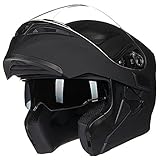
- High Resistance ABS Shell With Micrometrically Adjustable Strap
- Meets or Exceeds FMVSS-218 and DOT Safety Standards
- Helmet Liner / Cheek Pads are Lightweight, Soft and Easily Removable and Washable
- Sleek and Lightweight Design Reduces Wind Noise
- Modular Flip-Up Function Anti-Scratch, Anti-Fog and Wide View Clear Visor
Use the specifications as a shortlist, not a verdict
| Bike and source | Published figures | What those figures can and cannot tell you |
|---|---|---|
| Stark Future VARG MX 1.2 (2026 product page) | 118 kg; 7.2 kWh battery; customizable 10–80 hp; up to six hours of trail riding; one to two hours for a full recharge, depending on charger and outlet | The six-hour statement depends on rider ability and track conditions. It is not directly comparable with a distance claim from another bike, and the recharge time depends on charging equipment and electrical supply. |
| Surron Canada Light Bee X (current listing accessed in 2026) | 6 kW; 75 km at 40 km/h, depending on terrain; 56 kg net weight; 100 kg maximum recommended load; 830 mm seat height | The 75 km figure is a manufacturer claim at a stated speed and terrain-dependent condition. Surron Canada warns that displayed specifications may not represent every regional import. |
| Stark Future VARG EX (current product page) | 264 lb; 21-inch front and 18-inch rear tires; KYB suspension | These details indicate a full-size chassis and named suspension supplier, but they do not establish ride comfort, range or suitability for a particular rider. |
Do not combine a battery figure from one trim with the weight, controller or range claim from another. Confirm whether a listing describes a complete motorcycle, a battery-only mass, a net or curb weight, and which model year and market it covers.
The Tool Desk
Outbyte Driver Updater FREEScan for outdated or missing drivers - takes under a minuteDriver Scan →Outbyte PC Repair FREERepair Windows errors before they cause bigger problemsFix Now →Plan range conservatively
Electric dirt-bike range changes with speed, elevation, temperature, surface, tire pressure, rider weight, stop-and-go technical riding and throttle use. A slow, flowing trail can consume less energy than repeated climbs and deep sand, while high-speed track sessions can drain a battery rapidly.
How to interpret published claims
Surron Canada lists the Light Bee X at 75 km at 40 km/h, depending on terrain. That is a distance claim under a stated speed and a terrain qualification; it is not a guaranteed distance for every rider. Stark Future describes up to six hours of VARG MX trail riding, dependent on rider ability and track conditions. Hours and kilometres measure different conditions and should not be ranked against each other.
Build a usable reserve
Plan to finish with energy for an unexpected detour, a cold-weather reduction or a slow technical section. Before committing to a remote loop, ride a shorter route and record the starting charge, distance, terrain and remaining battery. Use the result as a personal baseline for that bike and season, not as a universal test.
Charging time and logistics
The VARG MX 1.2 product page states one to two hours for a full recharge, depending on the charger and outlet. Confirm the required electrical circuit, connector, charging location and whether charging is permitted at your riding site. A quick recharge is useful only if the necessary power is available when you need it.
What’s actually slowing this PC down?
Pick the symptom - the matching free tool is one click away.
Compare suspension, brakes and controls for the terrain
Battery and motor numbers do not describe how a bike stops or survives repeated impacts. For each candidate, check fork and shock adjustability, travel, wheel sizes, tire availability, brake rotor dimensions, lever reach and the ease of changing power or engine-braking settings while wearing gloves.
Engine braking and throttle behavior
Stark Future describes the VARG EX with “Fully Customizable Power and engine braking.” Treat that as a manufacturer feature description. Adjustable engine braking can help a rider control descents or reduce brake use, but the preferred setting depends on terrain, traction and technique. Make changes in a safe area and confirm how the bike behaves when the battery is nearly depleted.
Rank #4

- Advanced Safety Design: Combines a lightweight ABS outer shell.
- DOT Approved, Clear Vision: Meets DOT standards, with a scratch-resistant, anti-fog lens for optimal visibility.
- Easy Quick Release: Convenient quick-release chin strap with adjustable features for effortless and speedy helmet adjustments and removal.
- Comfort System: Designed for superior comfort, the helmet’s interior features a moisture-wicking lining that ensures a cool and dry experience during your ride.
- Sun Visor for Added Protection: Built-in pull-down sun visor system provides effective sun protection, ensuring a comfortable and shaded ride.
Brakes and downhill control
Hydraulic brakes, pad compound and rotor size should be considered together with rider mass and terrain steepness. A powerful brake can still feel poor if the lever is too far away or the pads are contaminated. Ask the dealer about pad and rotor availability and follow the maintenance intervals in the manual.
Suspension setup
Factory settings are a starting point. Correct sag, rebound and compression can make a larger difference than a headline travel number. Have the suspension set for your dressed riding weight, then make one change at a time and record the result.
Check service, parts and model-year documentation
Electric propulsion reduces some engine maintenance, but it does not eliminate inspections. Bearings, chain or belt components, brake fluid, pads, tires, spokes, suspension seals, fasteners and battery connections still require attention. High-voltage components should be serviced only as the manufacturer permits.
Find the exact owner’s manual
Surron New Zealand’s manual index lists Light Bee and Ultra Bee variants and shows model-year or version dates. Use that type of model-specific documentation to verify torque values, inspection intervals, charging instructions, warnings and approved parts. A manual for a similar-looking year or regional version may not be sufficient.
Confirm local support before paying
- Ask who performs warranty and high-voltage work in your area.
- Check availability and typical lead times for brake parts, tires, plastics, controls and battery-related components.
- Confirm software, diagnostics or pairing requirements if the bike uses an application or electronic controller.
- Get warranty exclusions and battery coverage in writing.
- Verify that the dealer can supply the exact trim and model year advertised.
Parts support is especially important for a bike used far from home. A lower purchase price can become expensive if routine wear parts must be imported or the motorcycle sits unused while waiting for service.
Independent reader supportYour contribution helps us test, update, and keep practical guides available for everyone.Verify safety equipment and legal access
Helmet and protective equipment
The commercial buyer guide cited for this topic recommends a motorcycle helmet meeting DOT FMVSS 218 and beginner rider training. Verify the current certification marking, correct size and secure fit; certification and fit matter more than a particular brand. Add eye protection, gloves, boots that cover the ankle, abrasion-resistant clothing, knee protection and body armor appropriate to your speed and terrain.
Training
Instruction is worthwhile even for riders who already know how to bicycle or drive a car. A qualified off-road course can teach throttle control, braking on loose surfaces, body position, hill starts and recovery techniques before you attempt difficult trails.
Best Value
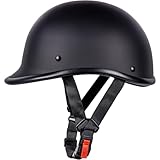
- DOT Approved Motorcycle Helmet:Built with rugged ABS shell and impact-absorbing EPS liner for solid on-road protection. Ready for daily cruising, city commuting, and weekend runs.
- Low Profile Beanie Helmet Design:Sits close without the mushroom look. Gives a clean, compact skull cap silhouette that cruiser and bobber riders want — covers critical areas without adding bulk.
- Vintage-Style Look:With classic biker lines and a fresh finish that feels bold, not dated. Pairs with old-school choppers, café racers, and modern cruisers for a half helmet with real character.
- Quick-Release Buckle: Let you gear up and go instantly. Just click in and ride. A simple convenience that saves time on daily commutes and quick trips around town.
- Lightweight with Removable Inner Padding: Cuts neck fatigue on long rides. The washable, breathable liner keeps things fresh through hot summer days, all-day comfort lasts.
Registration and road use
Trail legality, registration, insurance, noise rules and equipment requirements vary by jurisdiction and by vehicle classification. Stark Future’s VARG EX page presents regional road-homologation information and says registration procedures are jurisdiction-specific. Do not apply that claim to another model, country or state. Contact the relevant transport authority, land manager and insurer before riding on public roads or managed trails.
Access permission
A bike can be mechanically suitable yet prohibited on a particular trail because of land rules, vehicle class, seasonal closures or battery-fire restrictions. Carry proof of permission where required and check current closures rather than relying on an old forum post.
A practical buying process
- Describe your normal ride. Write down the trail type, typical loop length, elevation, surface, speed and whether you ride alone.
- Set a skill-based power target. Prioritize a manageable map and predictable response. Treat maximum horsepower as a reserve, not as the buying objective.
- Screen physical dimensions. Compare seat height, weight, load rating, wheel sizes and suspension range against your dressed riding weight and ability to recover the bike.
- Audit energy needs. Compare battery capacity and the conditions behind each range or duration claim. Identify where and how you will recharge.
- Inspect the hardware. Check brakes, tires, suspension, controls, charging connector and protection for the battery and motor.
- Verify documents and support. Download the exact manual, confirm the model year and region, and identify a parts and service source.
- Confirm legality and insurance. Check registration, trail access, safety equipment and coverage before delivery.
- Arrange a fit check or test ride. Test starts, slow turns, standing posture, brake reach, map selection and lifting or pushing the bike. If a seller cannot provide the exact specification or a safe evaluation, treat that as a reason to pause.
Common buying mistakes and how to avoid them
Choosing by peak power alone
A large number can conceal difficult throttle response, excess weight or suspension that is poorly matched to your pace. Compare controllability and fit first.
Outdated Drivers Are Slowing You Down
One free scan finds every outdated or missing driver and matches the right update for your exact hardware.Free scan · exact hardware matchWindows Errors? Fix Them Before They Spread
Repair common Windows errors and clear accumulated junk for a smoother, more stable PC - no reinstall needed.Free scan · no reinstallTreating a range claim as a guarantee
Published range and duration are condition-dependent. Keep a reserve and establish your own baseline on representative terrain.
Ignoring the loaded weight
Net or dry figures may exclude equipment or use a different battery configuration. Ask for the ready-to-ride specification and include your gear when checking the load limit.
Assuming every regional version is identical
Import specifications, road equipment, software, battery configuration and certification can differ. Surron Canada explicitly warns that its displayed Light Bee X specifications may not represent every regional import.
Buying before checking parts
Confirm routine wear-part availability and the location of authorized service. This is essential if your riding area is remote or your season is short.
Quick wins for a faster PC:
Repair Windows errors before they cause bigger problemsFix Now →Fix the driver behind crashes, sound loss and screen glitchesFind Drivers →Skipping legal research
Do not infer road legality from a product photograph or from another country’s listing. Verify the rules that apply to your address and the land where you intend to ride.
How to make the final choice
After the checks above, choose the bike that leaves you with the most control and practical margin. A lighter, lower-output model may be the better tool for tight trails and a new rider, while a full-size, adjustable machine may make sense for an experienced rider who alternates between fast open terrain and track use. The decisive evidence is a correct fit, a power setting you can manage, a battery plan that covers your real loop, documented support and permission to ride where you intend.
Because the available figures are manufacturer specifications and claims rather than a controlled comparison across riders and terrain, no single model can be named the universal winner. Use the numbers to create a shortlist, then validate the exact regional trim through its manual, dealer and a safe fit check.
Quick Recap
Product prices and availability are accurate as of the date/time indicated and are subject to change. Any price and availability information displayed on Amazon at the time of purchase will apply.
Do these 3 things before closing this tab:
1Scan for outdated or missing drivers - takes under a minute2Clear out junk files and repair common Windows errors3Fix the driver behind crashes, sound loss and screen glitches



