Free tools Windows power users keep installed
One-click scans. No signup required.
Choose a motorcycle helmet by fit first, not by the size printed on the box. Measure your head, use the exact model’s size chart, identify whether your head is round oval, intermediate oval or long oval, and then try that helmet on for at least 30 to 45 minutes. A properly fitted helmet feels evenly snug, stays aligned when you move your head and remains secure when the chin strap is fastened. Only after a helmet passes those checks should you compare legal certifications, independent ratings, price and features.
No size label can predict an individual fit. The same circumference can fit differently in different brands and models, so the final decision requires a physical try-on and retention check.
As an Amazon Associate I earn from qualifying purchases.
Why motorcycle helmet fit matters more than the size label
A helmet protects as intended only when it remains positioned on your head during a crash. Circumference is useful for narrowing your choices, but it does not describe the three-dimensional shape of your head or how the liner and cheek pads contact you. The National Highway Traffic Safety Administration (NHTSA) says to compare your measurement with the chart for the specific helmet model, treating that chart as a starting point because sizing varies by brand and model. NHTSA’s helmet guidance
The Tool Desk
Outbyte PC Repair FREEClear out junk files and repair common Windows errorsFree Scan →Outbyte Driver Updater FREEFix the driver behind crashes, sound loss and screen glitchesFind Drivers →Fit also affects whether you will wear the helmet correctly on every ride. A painful pressure point, a loose liner or a helmet that shifts can become a reason to leave the strap loose or skip the helmet. The practical goal is even, firm contact without pain, independent movement or a roll-off risk.
#1 Best Overall

- 2 Visors Included: Clear + Smoked and 1 Neck Scarf for Winter Use
- Streamlined Aerodynamic Design Reduces Wind Noise and Drag
- Advanced and Lightweight Durable ABS Shell
- Quick Release Clasp and Strap and Removable Inner Lining Pads
- Meets or Exceeds FMVSS-218 and DOT Safety Standards
What a correctly fitting helmet should feel like
Even, firm pressure
The interior should feel snug around the head rather than resting loosely on it. You should feel consistent contact, but not sharp or painful pressure. For a full-face helmet, the cheek pads should remain comfortably in contact with your cheeks and move with your face when you move the helmet. SHARP’s fit guide
No painful hot spots
A new helmet can feel tight because the padding is fresh, but a localized hot spot is different from general snugness. Persistent pain at one area usually indicates that the interior shape does not match your head. Wear the helmet long enough to expose pressure that is not obvious during a quick shop fitting.
A stable position
With the chin strap secured, the shell should move with your head rather than sliding over it. It should not rotate independently when you turn, tilt or shake your head gently. Stability is a fit requirement, not an optional comfort preference.
Step 1: Measure your head circumference correctly
- Use a flexible cloth measuring tape. A rigid tape or a loose string measurement can produce an unreliable result.
- Place the tape just above your eyebrows at the front of your head.
- Circle the thickest part at the rear of your head, keeping the tape level rather than angled upward or downward.
- Record the circumference and repeat the measurement to check that the result is consistent.
- Use that number with the size chart for the exact helmet model you intend to try.
This process follows NHTSA’s instructions. The number narrows the size choice; it does not establish that the helmet fits. Two helmets carrying the same nominal size can use different internal shapes or padding dimensions, so do not substitute one model’s chart for another’s. NHTSA’s measurement guidance
How to use a borderline measurement
If your measurement falls between chart entries, do not assume that simply choosing the larger shell will solve the problem. Try the sizes the manufacturer lists for your measurement and evaluate the actual contact pattern. The correct choice is the one that is evenly snug and stable without painful pressure, not automatically the larger or smaller number.
Step 2: Match the helmet’s internal shape to your head
NHTSA identifies three broad head shapes: round oval, intermediate oval and long oval. View your head from above when assessing its outline; face shape is not a reliable substitute for head shape. A circumference that matches the chart can still leave pressure points if the helmet’s interior contour is wrong. NHTSA’s head-shape guidance
Round oval
A round-oval head is comparatively similar in front-to-back and side-to-side dimensions. A helmet designed with a more elongated interior may leave excessive side pressure or feel unstable even when its circumference is correct.
Recommended Free Tools
Rank #2

- 【DOT Certified & High-Impact Protection】 This full face motorcycle helmet meets or exceeds DOT FMVSS-218 standards, ensuring professional-grade safety. Built with a rugged ABS shell and energy-absorbing EPS, these motorcycle helmets dot approved provide ultimate defense for street bikes, cruisers, and sport bikes
- 【Optimized Airflow for All-Weather Riding】 Experience superior ventilation with 4 strategically placed air intakes and exhaust vents. This full face helmet design minimizes wind resistance and fogging, keeping you cool during summer rides and providing a reliable full face helmet adult option for rainy or cold weather
- 【Quick-Release Dual Visor System】 Adapt to any light condition with ease. Our full face helmet motorcycle features a tool-free quick-release system. Each order includes a pre-installed tinted shield plus a bonus clear visor, making these full face motorcycle helmets for men and women versatile for both bright days and night riding
- 【Washable Lining & Comfort Fit】 Maintain freshness on every journey with our fully removable and machine-washable interior. The moisture-wicking sponge padding makes these motorcycle helmets for adults incredibly comfortable for long-distance trips, ensuring a snug fit for these full face motorcycle helmets dot certified
- 【Complete Bundle & Perfect Sizing】 We include a premium carrying bag for easy storage and scratch protection. Whether you are searching for motorcycle helmets for women or men, TRIANGLE offers 4 sizes (S-XL) to ensure a secure fit. Please measure your head circumference to find the perfect full face motorcycle helmet for women or men
Intermediate oval
Intermediate oval is a middle profile. Many riders fall near this category, but the label is only a starting description; the pressure pattern during a sustained try-on is the more useful evidence for your individual fit.
Long oval
A long-oval head is longer front to back and narrower side to side. A rounder interior can create forehead pressure or side discomfort. NHTSA notes that pressure at the forehead can indicate a helmet that is too round for your head, while pressure at the sides can indicate that it is too oval. NHTSA’s pressure-point guidance
Use pressure location as a diagnostic
- Forehead pressure: may indicate that the helmet is too round for your head.
- Side pressure: may indicate that the helmet is too oval for your head.
- One sharp, persistent spot: suggests a localized mismatch rather than a generally snug fit.
- Uniform contact without pain: is the pattern you want to confirm during the longer try-on.
Step 3: Try on the exact helmet, not just a similar one
SHARP recommends trying multiple helmets. Put on the exact model, shell size and interior configuration you would buy, because a different model or replaceable liner can change the fit. Ask a salesperson to observe the fit, but make your own assessment of comfort and movement. SHARP’s fit guide
Putting it on without misreading tightness
- Open the strap fully and hold the helmet by the chin straps.
- Spread the opening gently as you lower it over your head; do not force it down at an angle.
- Fasten the strap according to the manufacturer’s instructions before judging stability.
- Check that the helmet sits level and that your vision is unobstructed in the normal riding position.
Fresh cheek pads can feel firm. That alone does not prove the helmet is too small. Pain, numbness, a concentrated hot spot or an inability to keep the helmet level are stronger reasons to reject the fit.
Crashes, No Sound, or Screen Glitches?
Random freezes, missing sound and display glitches usually trace back to one bad driver. Find and replace yours safely.Free scan · under a minuteWindows Errors? Fix Them Before They Spread
Repair common Windows errors and clear accumulated junk for a smoother, more stable PC - no reinstall needed.Free scan · no reinstallFull-face cheek-pad contact
In a full-face helmet, your cheeks should stay in comfortable contact with the cheek pads. When you move the shell gently, your cheeks should follow its movement rather than the helmet sliding over your face. Excess space at the cheeks can accompany a helmet that shifts, while painful compression means the pad shape or helmet shape is unsuitable. SHARP’s full-face fit guidance
Step 4: Wear it for 30 to 45 minutes
NHTSA recommends wearing a newly purchased helmet for 30 to 45 minutes to reveal pressure points that may not appear during a brief fitting. Use a clean, safe fitting area and keep the helmet on long enough to notice developing pain, numbness or a pressure headache. NHTSA’s 30-to-45-minute recommendation
What to record during the extended try-on
- Where pressure begins and whether it intensifies.
- Whether discomfort is broad and mild or concentrated and painful.
- Whether the helmet stays level as you talk, look around and tilt your head.
- Whether cheek contact remains comfortable rather than becoming crushing.
- Whether you can tolerate the fit without loosening or unfastening the strap.
Do not buy a helmet hoping a painful hot spot will disappear with use. Padding may settle, but a fundamental shape mismatch can remain. If discomfort develops during the extended fitting, try a different internal shape or model instead.
Rank #3
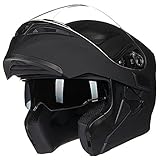
- High Resistance ABS Shell With Micrometrically Adjustable Strap
- Meets or Exceeds FMVSS-218 and DOT Safety Standards
- Helmet Liner / Cheek Pads are Lightweight, Soft and Easily Removable and Washable
- Sleek and Lightweight Design Reduces Wind Noise
- Modular Flip-Up Function Anti-Scratch, Anti-Fog and Wide View Clear Visor
Step 5: Check movement and retention with the strap secured
Perform movement tests only after fastening the chin strap correctly. A helmet that feels acceptable while unfastened can fail once you test how it behaves during head movement.
What’s actually slowing this PC down?
Pick the symptom - the matching free tool is one click away.
Side-to-side and fore-and-aft movement
- Fasten and adjust the strap so it is secure under your chin according to the manufacturer’s instructions.
- Rotate the helmet gently from side to side.
- Tilt your head forward and backward.
- Observe whether the shell moves with your head or slips and rotates independently.
The helmet should not shift independently or slide out of position. Movement that is obvious during these checks is evidence of an inadequate fit, even if the circumference is correct.
Roll-off check with another person
SHARP describes a careful roll-off check. Tilt your head forward and ask another person to push upward at the rear base of the helmet. If the helmet can be rolled off, it is not secure. SHARP’s retention check
Have the helper apply controlled pressure rather than yanking the helmet. Stop if the test causes pain. A helmet that fails this check should not be “fixed” by leaving the strap looser or relying on an aftermarket part.
How tight should a motorcycle helmet feel?
It should feel evenly snug, with firm contact around the head and comfortable cheek contact where applicable. It should not cause sharp pain, numbness or a persistent headache. You should not be able to rotate the shell independently of your head or roll it off with the strap fastened.
Do these 3 things before closing this tab:
1Scan for outdated or missing drivers - takes under a minute2Clear out junk files and repair common Windows errors3Fix the driver behind crashes, sound loss and screen glitchesA loose helmet is not made safer by adding a random liner or by tightening the strap excessively. A helmet that is painfully tight is not made correct by assuming all padding will compress. Use the extended try-on and movement checks to distinguish normal new-padding firmness from a shape or size problem.
What to do about pressure points
Forehead pressure
Forehead pressure can indicate that the helmet is too round for your head, according to NHTSA. Try a model with an internal contour better suited to your front-to-back profile rather than simply increasing the size. NHTSA’s pressure-point guidance
Rank #4

- Unmatched Protection & Durability:Built Tough for Extreme Adventures, Our Helmet Exceeds Expectations by Meeting FMVSS-218 and DOT Safety Standards. Its Robust Construction Safeguards Ensuring Ultimate Security as You Conquer the Toughest Terrains
- Convenient Flip-Flop Mechanism: Easy Switching Between Full-Coverage Helmet and Open Mode, This Modular Motorcycle Helmet Is Perfect for City Riding and Long-Distance Touring
- Stay Cool and Comfortable with Strategically Placed Vents That Ensure Maximum Airflow and Reduce Heat and Moisture Buildup During the Ride
- Comfortable Interior Lining: Enjoy the Cozy Plush Lining That Provides Long-Lasting Comfort Even on Long Rides
- The Modular Design Makes It Suitable for Snowmobiles, Dirt Bikes, Scooters, Bike Riding and More. With Its Innovative Features, It Is Sure to Be an Ideal Choice for Riders Looking for a Stylish, Comfortable and Safe Helmet!
Side pressure
Pressure at the sides can indicate that a helmet is too oval for your head. A different shape may relieve the hot spot while preserving the snug contact needed for stability. Do not accept side pain merely because the circumference number matches.
Cheek pressure
Cheek pads should contact the cheeks in a full-face helmet, but contact should remain comfortable. If the pressure is painful or makes it difficult to keep the helmet on for 30 to 45 minutes, test another model or an approved pad configuration for that exact helmet.
Can you adjust the interior?
Some manufacturers offer replaceable cheek pads and liners. Use only parts approved for the exact helmet model and configuration. NHTSA cautions that other interior changes can affect the warranty and compromise helmet integrity. Do not cut, remove, compress or replace impact-protection components with generic parts. NHTSA’s interior-adjustment guidance
When a manufacturer-approved pad change makes sense
- The shell and basic head shape already fit securely.
- The manufacturer lists the replacement pad or liner for your exact model.
- The revised configuration still passes the movement and roll-off checks.
- The change does not involve modifying the shell or protective liner yourself.
If the helmet remains painful or unstable after an approved adjustment, return to the model-selection stage instead of attempting further modifications.
Independent reader supportYour contribution helps us test, update, and keep practical guides available for everyone.Compare safety information only after fit and comfort
Once several helmets fit securely and remain comfortable during the extended try-on, compare their safety information. SHARP advises choosing among helmets that fit and are comfortable, then selecting the highest SHARP rating within your budget. SHARP is a UK consumer-information scheme, so riders elsewhere must also check the requirements and independent test information that apply in their own jurisdiction. SHARP’s choosing-a-helmet FAQ
United States: DOT and FMVSS No. 218 information
In the United States, NHTSA says to look for the DOT symbol and FMVSS No. 218 certification-label information. NHTSA does not pre-approve helmets; it relies on manufacturer self-certification and tests some helmets for compliance. The agency states: “NHTSA does not approve helmets, or any other motor vehicle equipment, instead relying on a self-certification process.” This statement applies to the US regulatory system. NHTSA’s certification explanation
United Kingdom: SHARP ratings
SHARP ratings provide comparative consumer information for helmets sold in the UK. Use the rating after confirming that the helmet fits you; a high comparative rating cannot compensate for a helmet that moves, causes pain or fails the retention check. SHARP’s FAQ on choosing a new helmet
Best Value
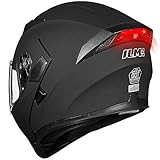
- High Resistance ABS Shell With Micrometrically Adjustable Strap
- Meets or Exceeds FMVSS-218 and DOT Safety Standards
- Helmet Liner / Cheek Pads are Lightweight, Soft and Easily Removable and Washable
- Sleek and Lightweight Design Reduces Wind Noise
- Modular Flip-Up Function Anti-Scratch, Anti-Fog and Wide View Clear Visor
A published impact-loss statistic
SHARP’s fit page attributes a statistic from the COST 327 Final Report stating that 12% of helmets were lost during impact. The figure should be understood as SHARP’s attribution to that report, not as an independently verified result here. It underscores why retention and strap checks belong in the fitting process. SHARP’s fit page
A practical comparison framework for helmets that fit
When two or more candidates pass the physical fitting checks, compare them in this order:
| Criterion | What to verify | Why it matters |
|---|---|---|
| Measured fit | The model’s chart includes your circumference and the shell feels evenly snug. | Circumference narrows the choice but does not prove fit. |
| Head shape | The interior matches your round-oval, intermediate-oval or long-oval profile without persistent hot spots. | Shape mismatch can create forehead or side pressure. |
| Extended comfort | No painful pressure develops during a 30-to-45-minute try-on. | Short fittings can miss pressure that appears over time. |
| Stability and retention | The secured helmet follows head movement and cannot be rolled off in the careful check. | A helmet that shifts or rolls off is not secure. |
| Legal certification | The marking and certification information required where you ride, such as DOT and FMVSS No. 218 information in the US. | Legal requirements differ by jurisdiction. |
| Independent comparison | A rating such as SHARP where available and relevant to your market. | Comparative testing can separate helmets after fit is established. |
| Price and availability | The purchase price, return or exchange conditions and access to model-specific replacement parts. | A correctly fitting, legally usable helmet must also be obtainable and maintainable. |
Do not reverse this order by choosing a rating or price first and trying to make the helmet fit afterward. No exact model can be recommended from the title alone because the rider’s measurements, head shape and try-on response are unknown.
Quick wins for a faster PC:
Scan for outdated or missing drivers - takes under a minuteDriver Scan →Clear out junk files and repair common Windows errorsFree Scan →Fix the driver behind crashes, sound loss and screen glitchesFind Drivers →Buying in a store or online
In-person purchase
- Bring your measured circumference and ask to try multiple models.
- Request the exact shell size and liner configuration you would receive.
- Keep the helmet on for the full 30-to-45-minute assessment if the retailer permits it.
- Complete the strap, movement and roll-off checks before paying.
- Ask whether replacement cheek pads or liners are available for that precise model.
Online purchase
- Measure your head with a cloth tape and save the number.
- Read the manufacturer’s chart for the exact model, not a general brand chart.
- Confirm the return or exchange policy before ordering; do not alter the helmet while you are deciding whether it fits.
- When it arrives, inspect it and perform the full fitting sequence indoors: strap, movement, cheek contact and extended wear.
- Return it if it develops painful pressure, shifts independently or fails the retention check.
A flexible cloth tape is a useful sizing aid, but it cannot guarantee fit. The physical try-on remains decisive.
Common fitting mistakes and their fixes
Choosing by circumference alone
Symptom: The chart says the size is correct, but you have a forehead or side hot spot. Fix: Reassess head shape and try a different model contour.
Accepting a loose helmet because it feels comfortable
Symptom: The helmet rotates or slides when you move your head. Fix: Try the smaller chart-listed size or another model, then repeat the secured movement and roll-off checks.
Rejecting a helmet solely because new pads feel firm
Symptom: General snugness without a sharp hot spot. Fix: Complete the 30-to-45-minute try-on and evaluate whether pressure remains comfortable and even.
Leaving the strap loose
Symptom: The helmet feels acceptable until movement is tested, or it can be pushed upward at the rear. Fix: Fasten and adjust the strap correctly; if the helmet still shifts or rolls off, choose another fit.
Modifying the liner yourself
Symptom: A rider cuts, removes or substitutes interior material to relieve pressure. Fix: Stop and consult the manufacturer for model-compatible replacement pads or liners. Unapproved changes can affect warranty and helmet integrity.
Final pre-purchase checklist
- My circumference was measured with a cloth tape just above the eyebrows and around the thickest rear point.
- I used the chart for this exact helmet model.
- I considered head shape from above, not face shape.
- The helmet feels evenly snug without a painful hot spot.
- Full-face cheek pads maintain comfortable contact with my cheeks, if applicable.
- I wore it for 30 to 45 minutes and checked for developing pressure.
- With the strap secured, it follows my head instead of rotating independently.
- The careful rear-base push test cannot roll it off.
- Any interior replacement part is approved for this exact model.
- The helmet carries the certification information required where I ride.
- Only after these checks did I compare independent ratings, price and availability.
Bottom line
Measure first, but buy only after the specific helmet proves its fit. The right helmet is evenly snug, matches your head shape, remains comfortable for at least 30 to 45 minutes and stays secure under movement and retention checks. After that fit-and-comfort hurdle, use the certification and independent-rating information for your riding jurisdiction to choose among the helmets that genuinely fit.
Quick Recap
Product prices and availability are accurate as of the date/time indicated and are subject to change. Any price and availability information displayed on Amazon at the time of purchase will apply.




