Do these 3 things before closing this tab:
1Repair Windows errors before they cause bigger problems2Fix the driver behind crashes, sound loss and screen glitches3Clear out junk files and repair common Windows errorsTo find out whether a repair is covered, use the warranty booklet for your exact vehicle and market, verify the original in-service date and mileage, then compare the written diagnosis and cause of failure with the relevant coverage and exclusions. A luxury badge does not create a special warranty. Coverage is controlled by the vehicle’s model year, VIN status, warranty type, time-and-mileage limits, and the contract’s definitions.
What a luxury SUV warranty actually covers
A factory warranty generally promises to repair defects in materials or workmanship during a stated period. It does not promise to pay for every repair that occurs while the warranty is active. The same component can receive different treatment depending on whether it failed because of a manufacturing defect, ordinary wear, poor maintenance, an accident, an unauthorized modification, or another excluded cause.



As an Amazon Associate I earn from qualifying purchases.
Separate sections may apply to the same SUV: a basic limited warranty, powertrain coverage, emissions coverage, corrosion protection, restraint-system coverage, roadside assistance, and special warranties for particular components. A tire, battery, multimedia unit, air-conditioning part, or high-voltage component may have its own term or a separate manufacturer warranty.
Free tools Windows power users keep installed
One-click scans. No signup required.
For a used SUV, your purchase date is usually not the date the factory warranty began. The relevant starting point is normally the original in-service date recorded for that VIN, although the contract for a particular vehicle may define the start differently. Confirm it rather than relying on a seller’s statement.
1. Find the documents that control the claim
Get the exact warranty booklet
Use the warranty booklet issued for the SUV’s model year and sales market. A manufacturer’s document library can help locate it; for example, Mercedes-Benz USA organizes owner service and warranty manuals by model year and vehicle. The booklet is more authoritative than a generic web summary, a sales listing, or a verbal promise.
For a used vehicle, ask the seller for the warranty paperwork and give the manufacturer or an authorized dealer the vehicle identification number (VIN). The VIN lets them check the original delivery or in-service record, open campaigns, and the coverage status stored in the manufacturer’s system.
Collect the contract for any optional coverage
If the SUV has an “extended warranty,” identify whether it is a manufacturer-backed warranty or a separately purchased service contract. A service contract is a different agreement with its own administrator, covered-part list, exclusions, deductible, authorization rules, and term. Keep the complete contract, not just a brochure or finance-office summary.
Quick wins for a faster PC:
Scan for outdated or missing drivers - takes under a minuteDriver Scan →Clear out junk files and repair common Windows errorsFree Scan →Fix the driver behind crashes, sound loss and screen glitchesFind Drivers →Record the market and ownership details
- Country and, where relevant, state or province where the SUV was sold and is being repaired.
- Model year, trim, engine or battery configuration, and VIN.
- Original in-service date and current odometer reading.
- Current owner, whether the vehicle is certified pre-owned, and any transfer restrictions.
- Whether the repair is being requested under factory coverage, a certified-pre-owned limited warranty, or a service contract.
2. Check whether the coverage is still active
Compare both time and mileage
Write down the applicable coverage period and mileage limit, then compare both with today’s date and odometer reading. “Whichever comes first” means reaching either limit can end that coverage. Do not use the basic warranty’s limit for a component with a separate term.
As a concrete U.S. example, BMW of North America’s 2026 new-vehicle limited warranty covers defects in materials or workmanship for 48 months or 50,000 miles, whichever occurs first. That is a BMW model-year term, not an industry standard or a promise for another make, model year, or country.
Check each system separately
| Coverage to check | Why it matters | What to record |
|---|---|---|
| Basic limited warranty | Often addresses defects in vehicle materials or workmanship. | Start date, end date, mileage limit, deductible, and authorized repair network. |
| Powertrain warranty | May cover only specified engine, transmission, drive-axle, or related parts. | Exact components listed and any separate exclusions. |
| Component-specific warranty | Battery, emissions, restraints, corrosion, tires, or electronics may have distinct terms. | Component definition, duration, mileage, and claim administrator. |
| Certified-pre-owned coverage | Applies only if the SUV qualified under the program and may begin after or overlap factory coverage. | Certification date, transfer rules, deductible, and exclusions. |
| Service contract | Optional protection is governed by its own contract rather than the factory booklet. | Covered parts, exclusions, term, deductible, authorization, and administrator. |
Ask for a VIN-based confirmation
Call the manufacturer’s customer-care line or an authorized dealer and ask for the remaining coverage by VIN. Request the answer in writing or ask the representative to identify the applicable contract section in an email or repair order. A database result is useful, but the written warranty language remains the controlling authority if records conflict.
3. Match the diagnosed repair to the warranty language
Get a precise diagnosis before asking for coverage
Ask the repair facility to state:
- The failed component and its part number, if known.
- The observed symptom and test result.
- The identified failure mode.
- The likely root cause, including any outside event or related part.
- Whether the proposed work is replacement, adjustment, software programming, maintenance, or consequential damage repair.
“The SUV needs a suspension repair” is too vague for a coverage decision. “Right-front adaptive damper leaking internally; no collision damage observed” gives the administrator something that can be compared with the contract.
Separate defects from maintenance and wear
| Repair description | Questions to ask | Coverage issue |
|---|---|---|
| Part failed during normal use | Does the booklet list the part and define a defect as covered? | Potentially covered if the cause fits the defect language and no exclusion applies. |
| Routine service | Is this an oil change, inspection, fluid, filter, belt, brake pad, or tire service? | Usually maintenance rather than a warranty defect; verify the booklet. |
| Normal wear | Is the item designed to wear as mileage accumulates? | Often excluded unless a separate defect caused premature failure. |
| Accident or environmental damage | Is there collision, flooding, vandalism, corrosion from outside conditions, or road impact? | Commonly excluded from factory defect coverage and handled through another policy. |
| Modification or misuse | Was the vehicle altered, overloaded, raced, incorrectly fueled, or operated contrary to instructions? | Coverage may be denied for the affected damage if the exclusion applies. |
| Related or consequential damage | Did an excluded part fail first and damage a covered part? | The cause chain matters; the administrator may require proof before covering anything. |
Check exclusions and special component rules
Read the exclusions immediately after the coverage promise. A covered component can still be excluded when the failure was caused by an accident, improper maintenance, contamination, unauthorized alteration, or another listed event. Also check whether a component is assigned to another warranty. BMW, for example, states that tires are not covered by its new-vehicle limited warranty and directs owners to the tire manufacturer’s coverage.
Mercedes-Benz USA’s extended-warranty information illustrates why the agreement itself controls: it lists exclusions and conditions that can change the result for a particular repair. Treat such examples as contract-specific, not as a universal luxury-SUV rule.
4. Use maintenance records to establish causation
Build a dated file
Keep invoices, repair orders, inspection sheets, parts receipts, diagnostic printouts, and photographs. Include the date, mileage, vehicle identification, work performed, fluids or parts used, and the shop’s name. The Federal Trade Commission’s consumer guidance, dated April 2, 2024, says: “Keep records of repairs and maintenance like oil changes, tire rotations, belt replacement, new brake pads, and inspections.”
Organize the file chronologically and mark the first date the symptom appeared. A clear timeline helps distinguish a sudden defect from a missed service interval or damage that occurred later.
The Tool Desk
Outbyte PC Repair FREEClear out junk files and repair common Windows errorsFree Scan →Outbyte Driver Updater FREEFix the driver behind crashes, sound loss and screen glitchesFind Drivers →Know what an outside repair means
In the United States, a dealer generally cannot deny warranty coverage solely because routine maintenance or a repair was performed at an independent shop. If the manufacturer or dealer claims an aftermarket or recycled part caused the damage, it must be able to establish that connection before denying coverage for the damaged component. Keep the independent shop’s part numbers and specifications so the causation question can be answered with evidence rather than assumption.
Check maintenance requirements without overstating them
Read the schedule for the vehicle and market. A missed required service can matter if the administrator can connect it to the failure, but the existence of a late oil change does not automatically prove that every unrelated repair is excluded. Ask the dealer to identify the specific causal link and contract provision.
5. Follow the claim procedure exactly
- Stop driving if continued operation could increase damage. Follow the owner’s manual and roadside instructions. Document warning messages and the circumstances in which they appeared.
- Use the required repair channel. The booklet may require an authorized dealer, prior authorization, or a particular claims administrator. For BMW’s example warranty, service must be sought through an authorized BMW center in the United States or Puerto Rico; another make or market may use different rules.
- Provide the VIN and documents. Give the repair order, maintenance history, mileage, and any service-contract number before authorizing chargeable work.
- Request a written diagnosis and estimate. The document should separate covered-part work from customer-pay items and identify diagnostic, labor, parts, towing, rental, taxes, and any deductible.
- Ask for authorization before disassembly or replacement. Some contracts require the administrator to approve diagnosis or teardown. Failure to obtain authorization can create a payment dispute even when the part appears covered.
- Obtain the decision in writing. If denied, ask for the exact exclusion, the factual cause relied on, and the appeal or second-opinion process.
- Keep every communication. Save emails, case numbers, names, dates, photographs, and revised estimates until the claim and any reimbursement are complete.
Confirm what the warranty pays
Coverage for a component does not automatically answer whether the plan pays diagnosis, programming, fluids, shop supplies, towing, rental transportation, or consequential damage. Ask the administrator to itemize those decisions before work begins. A deductible or customer contribution may apply under a service contract or certified-pre-owned plan even when the factory warranty has no deductible.
6. Handle a denial or partial approval
Ask for the contract-based reason
Request three things: the failed part identified by the technician, the cause the administrator accepted, and the precise paragraph used to deny or limit payment. Compare that paragraph with the diagnosis and exclusions in your booklet or service contract. A statement such as “wear and tear” is not enough to resolve a dispute when the technician documented a sudden defect; ask what evidence supports the classification.
Recommended Free Tools
Rank #4

- Made in USA - Proudly produced in Ohio by a Veteran-owned business
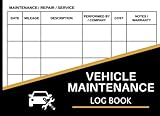
- This book will help you remember your last oil change /last service appointment. You can easily track all services, mileage and maintenance for multiple automobiles - great for business or personal use.
- The yearly expense summary is a very important part of this book. The yearly summary page is a perfect tool for your tax prep and your budget. After every month you should log your total business miles and personal miles in the “Annual Mileage Summary” page.
- This book comes in two convenient sizes, 8.5” x 11” - perfect to fit into any binder or clipboard that you may use for business and 5” x 7” which is the perfect size to fit into your glove compartment!
- Our unique cover is a semi-rigid transparent cover that leads to a sturdy book that resists stains and wrinkles. Reorder SKU: LOG-100-57CW-PP(Auto-Maintenance)
Escalate methodically
- Ask the service manager to review the diagnosis and submit photographs, test results, and maintenance records.
- Open a case with the manufacturer’s customer-care department and provide the dealer’s written decision.
- Obtain an independent written inspection if the dispute turns on the cause of failure.
- Use the contract’s arbitration, mediation, or complaint procedure if applicable.
- Check the consumer-protection rules that apply in your jurisdiction; U.S. warranty law and remedies can vary by state and by contract.
Do not authorize unrelated customer-pay work merely to obtain a warranty repair. Ask the facility to separate safety-critical work, covered work, and optional recommendations on the estimate.
Independent reader supportYour contribution helps us test, update, and keep practical guides available for everyone.7. Evaluate an extended warranty or service contract separately
Read the covered-parts list
The Federal Trade Commission distinguishes a manufacturer’s included warranty from an optional service contract, which is sometimes marketed as an “extended warranty.” Service contracts vary widely and often exclude normal wear and tear. Check whether the contract is exclusionary (everything covered except listed exclusions) or named-component (only listed parts covered), because that structure changes how you read it.
Compare the terms that affect a real repair
| Contract feature | Questions to answer before purchase or a claim |
|---|---|
| Start and end | Does the term begin on the sale date, the original in-service date, or after factory coverage ends? What mileage ends it? |
| Covered repairs | Are the failed part, seals, gaskets, software, programming, and related damage included? |
| Exclusions | Are wear items, maintenance, pre-existing conditions, modifications, commercial use, or environmental damage excluded? |
| Deductible | Is it charged per visit, per repair, or per component? |
| Authorization | Must the administrator approve diagnosis, teardown, or parts before work begins? |
| Repair locations | Can you use any licensed shop, a brand dealer only, or a network facility? |
| Payment | Does the administrator pay the shop directly, reimburse you, or impose labor-rate and parts limits? |
| Administration | Who is financially responsible, and how do you contact that administrator if the selling dealer closes? |
| Transfer and cancellation | Can the contract transfer to a buyer or be canceled, and what refund formula applies? |
Look for overlap with the factory warranty
Compare the service contract’s start date with the factory warranty’s end date. Paying for overlapping protection may provide little additional value, while a contract that begins only after a waiting period may not cover a symptom already present. Disclose existing warning lights and diagnosed problems; pre-existing-condition exclusions can be decisive.
How to compare multiple coverage options
When an SUV has basic, powertrain, component-specific, certified-pre-owned, and optional service-contract protection, compare them on the same checklist rather than by brand reputation.
What’s actually slowing this PC down?
Pick the symptom - the matching free tool is one click away.
| Comparison point | Why it changes the outcome |
|---|---|
| Covered part and failure cause | A named component may be covered only when the contract recognizes the documented cause. |
| Exclusions and maintenance rules | Wear, accidents, misuse, modifications, and missed service can remove protection. |
| Remaining time and mileage | Coverage ends at the first applicable limit unless the contract says otherwise. |
| Administrator and repair network | The entity that authorizes payment and the shops you may use can differ by plan. |
| Diagnostic and labor treatment | A covered part may still leave diagnostic charges, programming, fluids, or a deductible to you. |
| Transferability | Restrictions can affect a used buyer’s ability to rely on the plan. |
| Overlap | Two plans may cover the same component, but one may pay only after the other or exclude already-covered repairs. |
There is no universal “best” warranty for every luxury SUV. The useful comparison is the written protection remaining on the specific VIN and the repair risks you can document.
Best Value
Quick worksheet: “Does my SUV warranty cover this repair?”
- Write the VIN, model year, market, current mileage, and original in-service date.
- Name the coverage being claimed: factory basic, powertrain, component, certified pre-owned, or service contract.
- Copy the exact failed part and failure cause from the diagnostic report.
- Locate the coverage paragraph and every related exclusion in the controlling document.
- Check whether another warranty, such as tire or emissions coverage, governs the component.
- Assemble maintenance and prior-repair records that address causation.
- Ask the required repair facility or administrator for pre-authorization.
- Get the approval, partial approval, or denial in writing before authorizing non-emergency work.
Common questions
Is my factory warranty still active if I bought the SUV used?
Possibly. The relevant clock usually began with the original in-service date, not your purchase date. Confirm the VIN, date, mileage, transfer rules, and any separate component terms with the manufacturer or authorized dealer.
Does an extended warranty cover normal wear and tear?
Often it does not. A service contract’s own exclusions control, and many exclude normal wear, maintenance, and pre-existing conditions. Read the covered-parts and exclusions sections together.
Can a dealer deny coverage because I used an independent shop?
In the United States, not solely for that reason. The Federal Trade Commission says a manufacturer or dealer must establish that an aftermarket or recycled part caused the damage before denying coverage for the damaged part. Keep detailed invoices and part information.
Are tires covered by a luxury SUV’s factory warranty?
Not necessarily. BMW’s U.S. new-vehicle limited warranty, for example, excludes tires and directs owners to the tire manufacturer. Check your own booklet and tire warranty.
What should I do if the dealer only gives a verbal denial?
Ask for the diagnosis, the contract paragraph, the exclusion relied on, and the appeal procedure in writing. Then compare that explanation with your records and, if needed, request a manufacturer case review or independent inspection.
Can I rely on a generic online warranty summary?
No. Summaries can omit model-year, market, component, and exclusion details. Use the exact booklet and service contract for your VIN, then obtain written confirmation from the responsible administrator.
Quick Recap
Product prices and availability are accurate as of the date/time indicated and are subject to change. Any price and availability information displayed on Amazon at the time of purchase will apply.




