The Tool Desk
Outbyte PC Repair FREERepair Windows errors before they cause bigger problemsFix Now →Outbyte Driver Updater FREEFix the driver behind crashes, sound loss and screen glitchesFind Drivers →Before buying a used car, check its VIN-based title and brand history through an NMVTIS consumer report, compare every mileage record you can obtain, look for physical signs of damage, and have an independent mechanic inspect it. Treat these as separate checks: no single report or visual clue can prove a car was never damaged or that its odometer is accurate.
Start with the VIN, not the seller’s description
Ask the seller for the vehicle identification number (VIN) before paying for any reports. Confirm that the VIN in the report matches the VIN on the vehicle and the title and sale paperwork. Otherwise, you may be researching a different vehicle from the one being offered.
As an Amazon Associate I earn from qualifying purchases.
If the seller will not provide the VIN or will not let you verify it against the paperwork and vehicle, pause the purchase. A report is only useful when it belongs to the specific car you are considering.
What’s actually slowing this PC down?
Pick the symptom - the matching free tool is one click away.
Use the same VIN for each lookup and report so that you can compare like with like. Keep copies or notes of the results, along with the dates and mileage readings on documents you review. That makes it easier to spot a discrepancy instead of relying on memory while you talk with the seller. If records appear to refer to different vehicles or show conflicting identifying information, resolve that before weighing the car’s condition or negotiating a purchase.
#1 Best Overall
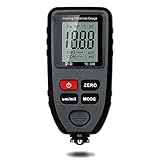
- Auto-Detection for Steel and Aluminum Coatings:This Coating Thickness Gauge utilizes advanced dual technology to automatically recognize ferrous and non-ferrous substrates, making it easy to measure coating thickness on both steel and aluminum without any guesswork
- Ideal for automotive paint inspection, powder coating checks, and metal surface finishing. Commonly used on used cars, anodized aluminum, bathroom fittings, bike frames, stadium seats, lockers, appliances, and more. (Note: Designed for metallic surfaces only.)
- A Must-Have for Used Car Buyers:Don't let hidden repairs catch you off guard. This tool lets you check the paint thickness on each car panel, helping you spot any previous accidents or repairs before buying a used vehicle
- Save Money on Used Car Purchases:When buying used cars, this paint thickness gauge helps you identify potential issues by ensuring the paint thickness is consistent across all panels. Great for detecting accident repairs and verifying if the car has been in a heavy crash
- Important Note: Please note that this gauge is specifically designed to measure coating thickness on metal substrates. It cannot be used on non-metallic materials such as plastic, fiberglass, or wood.
Check title and brand history through NMVTIS
The National Motor Vehicle Title Information System (NMVTIS) is a sensible first stop for title and brand information. Use the U.S. Department of Justice’s NMVTIS consumer page to choose a listed consumer report provider. Review the title history, any reported brands, the latest reported odometer reading, and any theft information shown. NMVTIS information comes from state titling agencies, recyclers, junk and salvage yards, and insurance carriers.
A vehicle brand is a state label describing a condition or status. Examples include junk, salvage, and flood. A brand is a reason to investigate the car and its paperwork; it is not, by itself, a complete account of the vehicle’s condition. State terminology and records can differ, so read the actual entry and follow up on anything you do not understand.
Some NMVTIS consumer reports link to the current state’s full title record. If yours does, open that record and compare it with the title the seller presents. The DOJ’s “Research Vehicle History” page identifies approved consumer report providers, while its “Used Car Buying Tips” page also recommends using NMVTIS when researching a used vehicle.
Quick wins for a faster PC:
Fix the driver behind crashes, sound loss and screen glitchesFind Drivers →Repair Windows errors before they cause bigger problemsFix Now →Scan for outdated or missing drivers - takes under a minuteDriver Scan →Read the report as a record of information that has been reported, not as a guarantee that every past event will appear. Pay attention to the actual title and brand entries and to the latest odometer reading. If the report shows a brand you did not expect, ask what the brand means in the relevant state and request records that explain the vehicle’s status. Do not assume a seller’s description, such as “clean title,” answers every question about prior damage or mileage.
What each kind of evidence can tell you
| Evidence | What it can help establish | What it cannot establish by itself |
|---|---|---|
| NMVTIS consumer report | Title and brand history, the latest reported odometer reading, and sometimes theft information. | A complete accident or repair history. |
| Supplemental vehicle-history report | May add accident or repair events not shown in the NMVTIS report. | That no unreported damage occurred. Coverage varies by provider and report. |
| Title and odometer disclosure | The paperwork and mileage statement presented for the sale. | That the statement is consistent with every other record or necessarily complete. |
| NICB VIN lookup | Certain records involving flood damage, unrecovered theft, or salvage. | A definitive clean bill of health. The FTC says the vehicle must have been insured when damaged for the relevant damage to appear in the lookup. |
| Physical and mechanic inspection | Present condition, wear, and physical clues that may merit further investigation. | A complete reconstruction of the vehicle’s past. |
The sources complement one another rather than competing to deliver one final answer. NMVTIS is useful for title and brand history; a supplemental report may add accident or repair entries; paperwork and dated service records help test the mileage story; and an inspection assesses the car as it exists now. A consistent set of records is reassuring, but it still cannot prove that no unreported event occurred.
Look beyond NMVTIS for accident and repair records
Do not assume that an NMVTIS report is a complete accident log. The Federal Trade Commission says reports from some other providers may include accident and repair history beyond NMVTIS. Its used-car guidance names AutoCheck, CARFAX, and VinAudit as examples; the FTC does not endorse a specific provider.
Before paying for a supplemental report, check what that particular report says it includes. An accident entry can give you a lead to investigate, but an empty accident section is not proof that the car was never in a collision. Events may be absent from a report, and different reports can contain different records.
Use any reported event to ask the seller for documentation and to direct the mechanic’s attention to the relevant area. If the seller’s account conflicts with a report, ask for an explanation and records rather than deciding that either source automatically settles the issue.
Rank #2

- HIGH ACCURACY COATING THICKNESS MEASUREMENT – Digital paint thickness gauge for metal surfaces with 0.1 μm (0.01 mils) resolution and ±(3%+2 μm) accuracy, helping detect repainting, repairs, and uneven coating thickness during used car inspection, detailing work, and professional quality control. Suitable for checking doors, hood, roof, fenders, and other painted metal panels where accurate coating evaluation is required.
- EASY & FAST OPERATION — FACTORY CALIBRATED – Factory calibrated and ready to use right after installing batteries. Large backlit LCD with clear readings and simple buttons make this coating thickness meter easy for professionals and first-time users. Ideal for pre-purchase vehicle checks, car dealership inspections, trade-in evaluation, and mobile appraisers who need quick and convenient measurements without complicated setup.
- AUTOMATIC Fe / NFe SUBSTRATE DETECTION – Automatically detects Fe (steel/iron) and NFe (aluminum/copper) and selects the correct measuring method. Ideal for modern vehicles with mixed body materials and accurate results without manual switching. This helps users inspect steel doors, aluminum hoods, and other metal body parts with the correct measurement principle applied automatically.
- WIDE MEASURING RANGE FOR AUTOMOTIVE & INDUSTRIAL USE – Measuring range 0–1500 μm (0–59.1 mils) covers factory paint, repainting layers, and thicker coatings. Suitable for car body panels and industrial coated metal parts. Whether checking original automotive paint thickness or verifying thicker coating applications on metal components, the gauge provides a practical working range for many inspection scenarios.
- DUAL TECHNOLOGY: MAGNETIC INDUCTION + EDDY CURRENT – Uses magnetic induction for ferrous metals and eddy current technology for non-ferrous metals, providing stable, repeatable measurements across steel, iron, aluminum, and copper substrates. This dual-technology design allows one device to cover common automotive body metals without requiring separate meters or manual probe replacement.
Think of an accident entry as a prompt for follow-up, not a complete repair assessment. The entry may alert you to an event, but the report alone cannot establish the quality of repairs or the car’s current condition. Ask the seller whether there are invoices or other records for the work and share what you find with the mechanic. If you obtain more than one report, compare the entries and coverage rather than assuming that one provider’s empty section disproves an event listed elsewhere.
Reconcile the odometer against records
Compare the number displayed on the odometer with the title and signed mileage disclosure, the latest reading in the NMVTIS report, and dated service or inspection records. Look for a consistent sequence of readings over time. A reading that goes backward, a large unexplained gap, or paperwork that does not match the displayed mileage needs an explanation before you buy.
- Read the odometer in the car and record the number you see.
- Compare that number with the title and the seller’s mileage disclosure.
- Compare both with the latest reported reading and dated maintenance or inspection documents.
- Check any available oil-change stickers and service records for readings that do not fit the sequence.
- Ask the seller to explain every discrepancy and provide supporting records before proceeding.
NHTSA’s “Odometer Fraud” guidance recommends looking for inconsistencies in maintenance or inspection records and oil-change stickers. It also suggests considering whether the vehicle’s wear, especially on the pedals, seems consistent with the displayed mileage. Wear is a clue to investigate, not a measurement of the car’s actual mileage. A visual check cannot settle the question, and digital odometer tampering can be difficult to detect.
Windows Errors? Fix Them Before They Spread
Repair common Windows errors and clear accumulated junk for a smoother, more stable PC - no reinstall needed.Free scan · no reinstallCrashes, No Sound, or Screen Glitches?
Random freezes, missing sound and display glitches usually trace back to one bad driver. Find and replace yours safely.Free scan · under a minuteWhen reviewing records, put readings in date order and ask whether the sequence makes sense. A single older reading is not enough to establish the car’s current mileage, and a mismatch is not automatically proof of fraud; it is a question that needs an explanation and supporting documentation. If the seller cannot explain a material inconsistency, do not treat the current display as verified just because it looks plausible or a report contains no other warning.
Understand which federal disclosure period applies
NHTSA’s December 22, 2020 consumer alert describes a change effective January 1, 2021. Under the rule summarized in that alert, model year 2011 and newer vehicles require odometer disclosure during their first 20 years. Model year 2010 and older vehicles remain under the prior 10-year disclosure period.
Use the vehicle’s model year—not just the date it was built or first sold—to understand the rule described by NHTSA. Check the actual title paperwork and the applicable state process. A disclosure requirement makes the paperwork important to review; it does not mean that a report or signed form independently verifies the odometer’s accuracy.
The model-year distinction matters when interpreting why a disclosure may or may not appear in a transfer record. For a model year 2011 or newer vehicle, the federal period described by NHTSA extends through its first 20 years; for model year 2010 and older, the prior 10-year period remains. Do not infer a car’s actual mileage solely from whether a form is present. Review the documents that apply to the transaction and compare their statements with the car and its other records.
Do these 3 things before closing this tab:
1Repair Windows errors before they cause bigger problems2Scan for outdated or missing drivers - takes under a minute3Clear out junk files and repair common Windows errorsCheck for flood damage and signs of prior repair
A flood-damaged car may develop electrical problems, rust, or corrosion after the sale. The FTC’s December 2021 guidance, “Avoid a flood-damaged used car,” recommends looking for clues in the cabin and trunk, including:
Rank #3
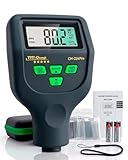
- AUTOMOTIVE PAINT THICKNESS GAUGE – CM-224PRO Designed for measuring coating thickness across vehicle panels during structured professional evaluation. Compare readings on doors, hood, roof and body panels to assess coating consistency and identify thickness variations that may indicate refinishing or prior repair. Suitable for dealerships and inspection professionals.
- 0–59.1 MILS RANGE WITH 0.01 MILS (0.1 µM) RESOLUTION – PROFESSIONAL CONSISTENCY Measures coatings from 0–59.1 mils (0–1500 µm) with stable resolution of 0.01 mils (0.1 µm), supporting consistent and repeatable comparison between factory coating and refinished surfaces during professional inspections.
- FE NFE AND ZINC AUTO DETECTION – AUTOMATIC SUBSTRATE RECOGNITION Automatically identifies steel (Fe), aluminum (NFe) and galvanized surfaces (Zn), supporting inspection of modern vehicles built with mixed body materials without manual switching or mode selection.
- PROFESSIONAL PROBE DESIGN – STABLE AND REPEATABLE CONTACT Engineered probe construction supports consistent surface engagement and repeatable readings during multi-point inspection routines in professional workshop environments.
- FAST PANEL-TO-PANEL MEASUREMENT FLOW – EFFICIENT FULL VEHICLE SCANNING Optimized for efficient professional workflow: place the probe vertically, read the value and continue across panels during dealership and workshop-based inspections.
- Mud or sand beneath seats or the dashboard.
- Rust around doors.
- Carpet that is loose, stained, or mismatched.
- Mold or decay smells, or unusually strong cleaning-product odors.
These clues do not prove flood damage, and their absence does not prove the car stayed dry. A strong cleaning smell or new-looking carpet is a reason to look more closely, not a verdict. Ask an independent mechanic to assess signs that could point to water intrusion and related corrosion or electrical trouble.
The FTC also points buyers to the National Insurance Crime Bureau’s flood, salvage, and theft lookup. Its coverage has an important limit: according to the FTC, the vehicle must have been insured when it was damaged for the relevant damage to be reflected. Use the lookup as one cross-check, not as a substitute for examining the car.
Pay particular attention to whether several clues appear together. For example, odors, disturbed or mismatched carpet, and mud beneath the dashboard each call for closer examination; they should lead to questions and a mechanic’s assessment rather than an immediate conclusion. Likewise, a lookup with no result cannot rule out damage because of the insurance limitation described by the FTC. The goal is to combine records with a physical assessment, not to let one negative lookup outweigh signs on the vehicle.
Recommended Free Tools
Arrange an independent pre-purchase inspection
Have a mechanic who is independent of the seller inspect the vehicle before you commit to buying it. A report can show recorded events; an inspection can assess the car’s present condition and identify problems that were never recorded or reported. The FTC puts the distinction plainly: “A vehicle history report is not a substitute for an independent vehicle inspection.”
Give the mechanic the records you have gathered and point out inconsistencies or reported events you want checked. Ask for the findings in writing so you can make a decision based on the condition observed, not only on a seller’s assurance or a clean-looking report.
Plan the inspection as a separate step, rather than using a report as a reason to skip it. Tell the mechanic about any title brand, mileage gap, accident or repair entry, flood clue, or mismatch you noticed. That context can help focus the review on concerns raised by the evidence. The mechanic evaluates current condition; the records help describe reported history. Neither one replaces the other.
A paint thickness gauge is an optional tool for a buyer who wants to look for signs of prior bodywork, but it cannot verify accident history and is not a substitute for a mechanic. If you use one, treat what it indicates as a clue for further assessment rather than a final answer about how or when damage occurred.
Make the purchase decision from the combined evidence
These checks answer different questions. A title record can expose a title brand; a mileage comparison can reveal inconsistent readings; a physical inspection can identify present-day clues; and a mechanic can assess condition. None reconstructs every event in the car’s history. Consider the following before paying:
Rank #4

- 【Auto-ID Dual Tech & Material Note】This paint depth gauge automatically identifies Fe/NFe substrates without manual switching. The device is specifically designed for metal substrates and is not suitable for plastic, carbon fiber, or wood. It is ideal for detecting heavy paint on car bodies, boat hulls, and industrial steel structures to ensure accurate readings.
- 【High Precision & Wide Range】Equipped with a wear-resistant probe, this coating thickness gauge delivers lab-grade stability across a 0-78.7 mils (0-2000μm) range. It features high resolution of 0.004 mil / 0.1μm for 0-3.9 mils (0-99.9μm) and 0.04 mil / 1μm for 3.9-78.7 mils (100-2000μm), accurately detecting minute changes in powder coatings or anodized layers. With a measurement accuracy of ≤ ±(3% H+ 2μm / 0.079mil), it ensures reliable results for professional tasks, from measuring paint on curved bumpers (min radius 5mm/197mils) to verifying films on machinery.
- 【Single/Continuous Scan Mode】This paint meter offers more than just single scans by displaying real-time statistics (Avg, Max, Min) of the last 10 measurements in continuous scanning mode. Users can quickly identify uneven spraying on hoods or thickness variations in industrial furniture powder coatings through statistical data. This method reflects overall process quality better than single-point measurements.
- 【Data Storage & USB Output】This digital thickness gauge features a "Data Hold" function to lock readings after measuring in deep engine bays or narrow gaps. It is equipped with a Type-C interface that supports exporting 30 sets of stored data to a PC for generating professional inspection reports. This capability is perfect for creating check reports for used car sales or quality control logs.
- 【Smart Calibration & Ergonomics】This mil thickness gauge comes with Fe/NFe calibration foils and substrates for zero-point and thickness calibration before work. Operators must ensure no dust, wrinkles, or irregularities exist between the thickness standard sheet and the substrate during use. Pressing the OK key allows users to clear historical calibration records easily.
- Identity: The VIN in the reports matches the vehicle and its paperwork.
- Title: You understand the current title information and any brand history, and have checked a linked state title record when available.
- Accidents and repairs: You have considered a supplemental report where useful and have not treated a blank accident section as proof of no damage.
- Mileage: The odometer, disclosure, and dated records form a plausible sequence, or any discrepancy has been resolved with documentation.
- Condition: Flood or repair clues have been assessed, and an independent mechanic has inspected the car.
If a key mismatch remains unexplained, do not treat a clean result elsewhere as a resolution. Delay the purchase until the question is answered or walk away. The records and inspection complement one another; they do not cancel out a material warning from another source.
In practice, a concerning record should lead to a specific next step: verify the title entry, request supporting paperwork, ask about a mileage discrepancy, or have the mechanic examine a suspected area. If that follow-up does not resolve the concern, you have learned something important even if no single source can prove exactly what happened. Do not let pressure to buy turn an unexplained mismatch into an assumption that everything is fine.
Independent reader supportYour contribution helps us test, update, and keep practical guides available for everyone.Frequently asked questions
How can I learn a vehicle’s history?
Start with the VIN and an NMVTIS consumer report to review title and brand history, the latest reported odometer reading, and any available theft information. Consider a supplemental report for accident or repair events, compare mileage with paperwork and service records, check for physical clues, and arrange an independent inspection. Each source has limits, so use them together.
Does a clean vehicle-history report mean the car has never been in an accident?
No. Accident and repair coverage varies, and an event may not appear in a report. The FTC says some providers may include information beyond NMVTIS, but an empty accident section does not prove there was no damage. Ask about records and have an independent mechanic inspect the vehicle.
What should I do if the mileage in the records does not match?
Compare dated title disclosures, service or inspection records, oil-change stickers, the latest reported reading, and the odometer display. Ask the seller for an explanation and supporting documents. NHTSA notes that wear, including pedal wear, may be a clue, but a visual check cannot establish the actual mileage and digital tampering can be difficult to detect.
What odometer disclosure period applies to the car?
NHTSA’s December 22, 2020 alert says the change effective January 1, 2021 covers model year 2011 and newer vehicles during their first 20 years. Model year 2010 and older vehicles remain subject to the prior 10-year period described in the alert. Check the actual paperwork and applicable state process.
Can the NICB lookup rule out flood damage?
No. The FTC says the vehicle must have been insured when damaged for the relevant damage to appear in the NICB lookup. Check the car for physical clues and ask an independent mechanic to assess suspected water damage, corrosion, or electrical problems.
Do I still need an inspection if the report looks good?
Yes. The FTC says a vehicle-history report is not a substitute for an independent vehicle inspection. A report reflects recorded events; a mechanic can assess current condition and look for problems that may never have been reported.
Best Value

- (*^_^*) [Record Various Data] It can record the average value, maximum value, minimum value, dif at the same time, and supports up to 50 data for statistics, making the numerical data you measure more accurate and convenient. If the auto power off function is on and there is no for 3 minutes, the instrument will automatically shut down to save battery power.
- (*^_^*) [Multifunctional] Thickness gauges are used to measure the thickness of metal coatings and other coatings such as paint/enamel/chrome on steel, paint and anodized coatings on aluminum/copper. Automatic detection of substrate properties. It has small size and high precision battery level indicator. It also has automatic shutdown function, used for FE/NFE.
- (*^_^*) [Precision Integrated Probe] It is important to check the car paint to make sure the paint thickness is about the same on each panel and to determine if the car is in good condition with a car paint inspection thickness gauge when you buy the car. The instrument adopts the principles of electromagnetic induction (F probe) and eddy current effect (N probe) to automatically detect the properties of the substrate.
- (*^_^*) [What Can Be Read and Detect Paint Depth] The large LCD display of the paint depth gauge shows the metal type, operating mode, quantity, battery status and the reading in µm, mm or mils. The thickness gauge has a measurement range of 0-2000um, an accuracy of ±(3%+1um), and a resolution of 0um-999um (1um).
- (*^_^*) [Widely Uses] It is used to non-destructively measure the thickness of coatings and paints. It is an essential equipment for material surface treatment, widely used in manufacturing, metal processing industry, chemical industry, commodity inspection and other fields, and can also work stably in laboratories, workshops and outdoors. Suitable for automotive paints, powder coatings, anodized aluminum, bathroom accessories, bicycle frames, stadium seating, outdoor sheds, furniture, swings, c
Frequently Asked Questions
How can I learn a vehicle’s history?
Start with the VIN and an NMVTIS consumer report to review title and brand history, the latest reported odometer reading, and any available theft information. Consider a supplemental report for accident or repair events, compare mileage with paperwork and service records, check for physical clues, and arrange an independent inspection. Each source has limits, so use them together.
Does a clean vehicle-history report mean the car has never been in an accident?
No. Accident and repair coverage varies, and an event may not appear in a report. The FTC says some providers may include information beyond NMVTIS, but an empty accident section does not prove there was no damage. Ask about records and have an independent mechanic inspect the vehicle.
What should I do if the mileage in the records does not match?
Compare dated title disclosures, service or inspection records, oil-change stickers, the latest reported reading, and the odometer display. Ask the seller for an explanation and supporting documents. NHTSA notes that wear, including pedal wear, may be a clue, but a visual check cannot establish the actual mileage and digital tampering can be difficult to detect.
Free tools Windows power users keep installed
One-click scans. No signup required.
What odometer disclosure period applies to the car?
NHTSA’s December 22, 2020 alert says the change effective January 1, 2021 covers model year 2011 and newer vehicles during their first 20 years. Model year 2010 and older vehicles remain subject to the prior 10-year period described in the alert. Check the actual paperwork and applicable state process.
Can the NICB lookup rule out flood damage?
No. The FTC says the vehicle must have been insured when damaged for the relevant damage to appear in the NICB lookup. Check the car for physical clues and ask an independent mechanic to assess suspected water damage, corrosion, or electrical problems.
Do I still need an inspection if the report looks good?
Yes. The FTC says a vehicle-history report is not a substitute for an independent vehicle inspection. A report reflects recorded events; a mechanic can assess current condition and look for problems that may never have been reported.
The Bottom Line
Use the VIN to check NMVTIS title and brand history, compare the odometer with disclosures and dated records, consider a supplemental accident-history report, and inspect the car for damage clues. Then have an independent mechanic evaluate its present condition. A clean report or lookup is not proof of a clean past, and unresolved title or mileage discrepancies are reasons to pause before buying.
Quick Recap
Product prices and availability are accurate as of the date/time indicated and are subject to change. Any price and availability information displayed on Amazon at the time of purchase will apply.




