Charge an electric scooter only with the charger supplied for that exact scooter, while you are awake and at home. Keep the scooter on a hard, stable surface away from exits and anything combustible, do not cover the charger or battery, and unplug it as soon as the manual says the charging cycle is complete. Stop immediately if the battery becomes extremely hot, swells, leaks, smells unusual, or makes hissing or cracking sounds.
Exact charge time, temperature limits, storage percentage, recharge interval and replacement-charger specification vary by make and model. Your scooter’s current manual and manufacturer are the authority for those details.
As an Amazon Associate I earn from qualifying purchases.
Why the exact charger and scooter manual matter
An electric scooter battery and its charger are a matched system. A plug that fits does not prove that the charger has the correct voltage, current, charging profile or safety approval for your battery. The U.S. Consumer Product Safety Commission (CPSC) warns that chargers marketed as “universal” can physically fit while remaining incompatible, creating a fire hazard. Its September 5, 2024 release says: “Chargers marketed as ‘universal’ or suitable for general categories of micromobility devices may fit into your device but still be incompatible with it.”
What’s actually slowing this PC down?
Pick the symptom - the matching free tool is one click away.
Between January 1, 2023 and May 16, 2024, the CPSC received 156 reports of fire and thermal incidents involving “universal” micromobility chargers. This is a count of reports received by the agency, not a statement that every incident was independently confirmed or that it represents every incident. Read the full warning at CPSC’s September 5, 2024 release.
#1 Best Overall

- 24V 2A SLA Battery Charger with 3-Pin XLR Connector – 24 Volt 2 Amp (2000mA) Automatic Battery Charger Designed for Compatible Mobility Scooters and Power Chairs Using 24V Sealed Lead Acid (SLA/AGM) Battery Systems.
- Compatible with Popular Mobility Scooters & Power Chairs – Compatible Replacement Charger for Select Pride Mobility, GoGo Elite Traveller, Jazzy Power Chair, Drive Medical, and ShopRider Models Using a Standard 3-Pin XLR Charging Port. Also Compatible with Many 24V Electric Scooters and Select Electric Bicycles Including Currie, Schwinn, GT, eZip, and IZIP Models.
- Fully Automatic Charging Operation – Smart Charging System Automatically Transitions from Active Charging to Maintenance Mode During Operation. Red Indicator Light Shows Charging in Progress and Green Indicator Light Indicates Batteries Are Fully Charged or Charger Is in Standby Mode.
- Designed for 24V Sealed Lead Acid Battery Systems Only – Compatible ONLY with 24V SLA/AGM Battery Systems Using a Standard 3-Pin XLR Charging Port. NOT Compatible with Other Battery Types.
- Electrical Specifications & Charging Features – Input: AC 100-120V 50/60Hz, Output: 24V 2A (2000mA), Connector Type: 3-Pin XLR Male, Cord Length: Approximately 8.9 Feet. Designed for Compatible 24V SLA/AGM Battery Systems. Built-In Short Circuit, Reverse Polarity, and Over-Current Protection Features.
Use the charging instructions supplied with your scooter. If the original charger is missing or damaged, ask the manufacturer for a replacement tested and approved for your exact model. Do not choose by connector shape, a generic “e-scooter” description or the lowest price.
The CPSC micromobility safety guidance and the UK Department for Transport’s battery-safety guidance both emphasize supervised charging and using the correct equipment.
Prepare a safe charging place
Set up the scooter before connecting power. The charging location should let you leave quickly if something goes wrong and should not allow a fire to block your normal exit.
- Keep escape routes clear. Do not charge in a hallway, beside a door, on a stair landing or anywhere that could trap people leaving the home.
- Separate the scooter from combustibles. Keep it away from curtains, bedding, paper, cardboard, fuels, solvents and other flammable materials. A firm, level, non-combustible surface is preferable.
- Leave the battery and charger uncovered. Do not place clothing, bags or blankets over either item. Covering can retain heat.
- Avoid unsuitable environments. Do not charge in very hot, very cold or damp conditions, in direct sunlight, or where water can reach the charger or battery. Use the temperature limits in your manual when they are specified.
- Use appropriate alarms. UK government guidance advises suitable fire detection when a scooter is charged or stored indoors. UK fire services commonly recommend heat alarms in garages or kitchens and working smoke alarms in other rooms; apply the advice of your local fire service to your home’s layout.
The UK Department for Transport advice cited here applies to England, Scotland and Wales. It is not a universal statement of fire-code or emergency requirements in every country.
Step-by-step: charging at home
- Confirm the equipment. Check that the charger is the one supplied with the scooter or a replacement the manufacturer has approved for that exact model. Inspect the casing, cable, plug and connector for cuts, crushed sections, exposed conductors, scorching, bent contacts or looseness. Do not use damaged equipment.
- Check the scooter and battery area. Look for swelling, deformation, leaks, unusual residue or a strong smell. If any of these are present, do not connect the charger. Follow the warning-sign procedure below instead.
- Move the scooter to the prepared location. Keep it out of exits and away from combustible materials. Make sure the battery and charger are dry and not unusually hot or cold.
- Follow the manual’s connection sequence. Manuals can specify which end to connect first, whether the scooter should be switched off, and which indicator should illuminate. Use that exact sequence rather than relying on a generic video or another model’s instructions.
- Remain awake and present. Start charging only when you can monitor it. Do not charge while sleeping, away from home or when nobody can respond to a problem.
- Monitor for abnormal changes. Stop the charge if the battery becomes extremely hot, starts swelling, leaks, gives off an unusual strong smell, or makes hissing or cracking sounds. A charger that becomes hotter than the manual allows, smokes or shows damage also requires immediate disconnection if it is safe to do so.
- End the cycle as directed. Use the manual’s indicator or charging-time instruction. Once the cycle is complete, unplug the charger; do not leave it connected for long periods. Follow the manual if it gives a specific shutdown or cool-down sequence.
- Store the charger safely. After charging, let equipment cool as directed, keep the cable from being pinched, and store it dry. Do not wrap a hot charger tightly or leave it where moisture can enter.
Indicator colors, charge duration and “full” behavior are model-specific. If an indicator does not match the manual, do not guess that charging is safe; disconnect when safe and contact the manufacturer.
What to do when the scooter will not be used
There is no single storage percentage, recharge interval or maintenance schedule that applies to every scooter. Battery chemistry, pack design and the manufacturer’s controls differ. The CPSC and UK Department for Transport both direct owners to the manufacturer’s storage instructions rather than prescribing one universal number.
Rank #2

- 【Charger Specifications】:Input: 100-240V 50/60Hz ; Output: 54.6V 1.5A. PLEASE NOTE: 1.Only for the Device that has a 48V 13S Li-ion battery pack.(NOT for 24V 25V 29.4V 36V 42V or other !) 2.Don’t use it for Lead Acid battery pack!
- 【Universal 5 Plugs Charger】:This battary charger comes with 5 types of plugs for true versatility: 5.5x2.5/2.1mm +4 converters(1-prong DC, 0.47in Standard 3-Prong Connector, 18mm RCA and 3-Pin Male XLR Connector, Universal IEC plug) Suitable for most 48V 13S Lithium Battery Devicet.
- 【Safe and Reliable】:UL Certified, The universal power adapter has been tested and confirmed provide overvoltage protection, overcurrent protection, short circuit protection, temperature protection to ensure safe and available.
- 【Indicator Light】:Red light when charging, green light when fully charged. Fast charge with high current. Just plug in and it will maintain the battery automatically.
- 【Great Service】The battery charger is made with high quality materials and sold under strict quality control. Please rest assured to purchase. if you have any qustions about our charger, we will provide you refund or other satisfactory solution!
Before a long period of non-use, find the storage section of the current manual and record its requirements for:
Do these 3 things before closing this tab:
1Repair Windows errors before they cause bigger problems2Scan for outdated or missing drivers - takes under a minute3Clear out junk files and repair common Windows errors- the charge level or percentage at which the scooter should be stored;
- the interval, if any, for checking or recharging the battery;
- permitted storage temperature and humidity;
- whether the battery should remain installed or be removed by an authorized procedure;
- any preparation, inspection or shutdown steps.
Store the scooter in the manufacturer’s permitted environment, protected from dampness and extreme temperatures, with the battery and charger uncovered. Do not create your own schedule from advice for a different model. If the manual is unavailable, request the current version from the manufacturer before choosing a storage percentage or recharge routine.
Warning signs that mean stop
Some battery problems become more dangerous when charging continues. The UK Department for Transport identifies the following signs as reasons to stop and seek instructions:
| Sign | Immediate response |
|---|---|
| Extreme heat | Stop charging immediately. Do not resume until the manufacturer or local fire service has provided safe guidance. |
| Swelling, deformation or new lumps | Stop using and charging the scooter. Do not press, puncture, disassemble or try to flatten the pack. |
| Leakage or unusual residue | Stop using and charging. Avoid contact and follow manufacturer or local fire-service instructions for isolation. |
| Hissing or cracking sounds | Stop charging and move away. Treat worsening noise as an urgent hazard. |
| Unusual strong smell | Stop charging and using the scooter. Keep people away and obtain professional instructions. |
| Worsening charging performance | Examples include failure to reach a full charge or charge times becoming longer. Stop using the battery and ask the manufacturer or a qualified service provider for an assessment. |
Do not open a battery pack or attempt a cell-level repair at home. A pack that looks slightly different from when it was new can still contain a serious internal fault.
If the battery smokes or catches fire
Smoke, flames or rapidly worsening heat is an active fire, not a troubleshooting problem.
Recommended Free Tools
- Leave immediately. Get everyone out of the home or building.
- Stay out. Do not return for the scooter, charger, pets or possessions, and do not handle a burning battery.
- Raise the alarm and call emergency services. Use your local emergency number. The UK guidance cited here specifies 999; other countries use different numbers.
- Tell responders what is burning. Say that a rechargeable lithium battery or electric scooter is involved, if you know that is the case.
For a suspect battery that is not smoking or burning, do not improvise a move or place it in water. Follow the scooter manufacturer’s instructions and your local fire service’s advice for safe isolation and assessment.
Rank #3

- 48V Ebike Charger with 54.6V 2A output, specially designed for 13S 48V lithium battery packs
- Fast charging technology delivers high efficiency and greatly reduces waiting time for electric bike charging
- Equipped with 5 interchangeable plugs to fit most common electric bike connector types
- Wide compatibility with electric bicycles, ebikes, one wheel, scooters, and Rad Power Bike models
- Built-in multiple smart safety protections against over-voltage, over-current, short circuit and overheating
Replacing a missing or damaged charger
A replacement is appropriate only when the original is unavailable or unsafe, and it must be identified for the exact scooter model. Contact the scooter manufacturer or an authorized service channel with the model designation, serial information and battery details requested by the manual.
When evaluating a replacement, verify all three points:
- Exact-model compatibility: the manufacturer identifies it for your scooter and battery, not merely for a broad class of devices.
- Testing and approval: the replacement has been tested and approved for that device, as the CPSC recommends.
- Complete instructions: the supplied documentation states connection, indicator, charging and storage procedures for your model.
Do not rank chargers by connector fit, wattage printed in an online listing or price alone. If a seller cannot establish model-specific compatibility and approval, do not connect the charger. The CPSC’s consumer battery information is available at cpsc.gov’s Batteries topic.
Cleaning and routine checks
Battery care is mainly preventive. Before each charging session, make the same short inspection part of your routine:
- Check the battery housing, charging port, cable and plug for damage or contamination.
- Confirm that the scooter and charger are dry before connection.
- Look for swelling, distortion, leaks, scorching or an unusual smell.
- Keep ventilation openings and the charger surface free of objects; never cover them.
- Use only the cleaning method specified by the manual. Do not spray liquid into a charging port or battery enclosure.
- Record unusual changes, such as a charge that no longer completes or takes substantially longer, and report them to the manufacturer.
Do not set a maintenance interval by copying another scooter’s schedule. If your manual specifies inspections, firmware-related battery procedures or service intervals, follow those instructions; otherwise ask the manufacturer what service is authorized.
Independent reader supportYour contribution helps us test, update, and keep practical guides available for everyone.Common situations and the safe response
The connector fits, but the charger is from another scooter
Do not use it. Physical fit is not proof of electrical or safety compatibility. Obtain a model-approved replacement.
Rank #4
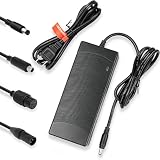
- Plug-and-play design, easy to operate, ideal as a direct replacement charger for original scooter battery chargers.
- 42V 2A fast charger specially designed for 36V 10S lithium-ion batteries, providing stable and efficient charging performance for electric scooters.
- Equipped with 3 different interchangeable connectors to fit multiple charging ports and maximize compatibility with various electric ride-ons.
- Wide compatibility with Pocket Mod, Sports Mod, electric scooters, e-bikes, hoverboards and most 36V lithium battery powered devices.
- Built-in intelligent safety protection system including over-voltage, over-current, short circuit, overheating and reverse polarity protection.
The scooter is cold, hot or damp after storage
Do not charge it immediately. Move it only if doing so is safe, allow the equipment to reach the environmental conditions permitted by the manual, and make sure it is dry. If you cannot find the permitted range, ask the manufacturer rather than guessing.
The Tool Desk
Outbyte Driver Updater FREEFix the driver behind crashes, sound loss and screen glitchesFind Drivers →Outbyte PC Repair FREEClear out junk files and repair common Windows errorsFree Scan →The charger or battery gets unusually hot
Stop charging if the battery is extremely hot. If the equipment is smoking, burning or rapidly worsening, evacuate and call emergency services. If it is hot but not burning, keep clear and contact the manufacturer or local fire service for isolation instructions.
The battery no longer reaches full charge
Do not extend the charging time or substitute a stronger charger. Failure to fully charge and increasingly long charge times are warning signs identified by UK guidance. Stop using the battery and arrange a manufacturer or qualified-service assessment.
The manual gives a different instruction from general advice
Use the exact model manual for model-specific details such as charge duration, indicator meanings, temperature limits, storage level and recharge frequency. General safety principles still apply: use approved equipment, supervise charging, keep exits clear, avoid combustibles and stop when warning signs appear.
Recycling a worn-out battery
Never place a lithium battery or a scooter containing one in household trash or general recycling. A damaged or discarded battery can be crushed, shorted or ignited in collection and processing equipment. The CPSC advises taking lithium batteries to a local battery recycler or hazardous-waste collection center.
Free tools Windows power users keep installed
One-click scans. No signup required.
Collection rules vary by location. Ask your municipal waste authority, a local hazardous-waste program or the scooter manufacturer where complete scooters and damaged battery packs are accepted. Tell the facility if the battery is swollen, leaking or otherwise damaged, and follow its packaging and transport instructions. Do not dismantle the pack to make disposal easier.
A practical home-charging checklist
- Is this the supplied charger or a manufacturer-approved replacement for the exact model?
- Is the scooter dry, undamaged and free of swelling, leaks, scorching, strange smells or unusual sounds?
- Is the charging spot away from exits, combustibles, direct sun, dampness and temperature extremes?
- Are the battery and charger uncovered?
- Are you awake, at home and able to monitor the entire charge?
- Do you know what the manual says about the indicator and charge completion?
- Will you unplug when the cycle is complete?
- Do you know the manufacturer’s storage instructions for the next period of non-use?
- Do you know how your local authority handles lithium-battery recycling?
If any answer is no, pause charging and obtain the missing model-specific information before proceeding. Safe charging is less about finding a universal setting than consistently following the instructions for the particular scooter and removing it from service when its battery shows signs of failure.
Quick Recap
Product prices and availability are accurate as of the date/time indicated and are subject to change. Any price and availability information displayed on Amazon at the time of purchase will apply.




