Recommended Free Tools
To calculate how much luggage your car can carry with four passengers, read the Tire and Loading Information label on the driver’s door, subtract the actual weights of the driver and three passengers from the label’s combined occupants-and-cargo limit, then verify the loaded vehicle against its GVWR and front and rear GAWRs.
Use this formula: maximum luggage and cargo = placard combined limit − (driver + passenger 1 + passenger 2 + passenger 3). The result is a trip-specific allowance, not a universal number for a vehicle model. Accessories and trailer tongue weight also use that capacity, and a load can satisfy the total limit while still overloading one axle.
As an Amazon Associate I earn from qualifying purchases.
The calculation in one line
Let C be the maximum combined weight of occupants and cargo printed on your vehicle’s Tire and Loading Information label. Let P be the actual combined weight of the four people in the car, and L be luggage and other cargo. The trip is within the placard limit when:
P + L ≤ C
Rearranging the equation gives the amount available for luggage and other cargo:
#1 Best Overall

- 𝟭𝟬𝟬% 𝗪𝗮𝘁𝗲𝗿𝗽𝗿𝗼𝗼𝗳 & 𝗧𝗲𝗮𝗿𝗽𝗿𝗼𝗼𝗳 𝗠𝗮𝘁𝗲𝗿𝗶𝗮𝗹 - Crafted from 100% waterproof 900D PVC tarpaulin and every part of seams are reinforced with high-frequency welding technology, this Asinking rooftop cargo bag is triply long-lasting and heavy-duty for any harsh elements.
- 𝗘𝗮𝘀𝘆 𝘁𝗼 𝗨𝘀𝗲 - Our Asinking car roof bag includes 1 non-slip rubber mat, 1 luggage lock, 6 security hooks, and 1 storage bag for the rooftop carrier. This bag can be easily and quickly installed on the roof, making you ready to go in no time. It is also foldable for convenient storage when not in use.
- 𝗨𝗡𝗜𝗩𝗘𝗥𝗦𝗔𝗟 𝗙𝗜𝗧 - This Asinking car roof bag is designed to fit any size car or SUV and is compatible with vehicles with or without roof racks or cross bars.
- 𝗘𝗫𝗧𝗥𝗔 𝗦𝗘𝗖𝗨𝗥𝗜𝗧𝗬 - We've added an additional combination lock to each Asinking roof bag to prevent the zipper from sliding and to provide added security for your luggage when parked overnight. The rubber mat also helps protect your car roof's finish.
- 𝗟𝗮𝗿𝗴𝗲 𝗖𝗮𝗽𝗮𝗰𝗶𝘁𝘆 - Measuring 52” (L) x 40” (W) x 18” (H), our Asinking 21 cubic feet roof cargo bag can accommodate luggage for 4-6 people, including tents, sleeping bags, suitcases, golf bags, or foldable chairs. The soft shell construction offers flexibility to fit various sized items.
Lmaximum = C − P
This is the number to calculate before packing. If the four occupants weigh 620 pounds and the placard limit is 1,400 pounds, the arithmetic allowance is 780 pounds. That 780 pounds is not automatically a safe loading plan, however; you must still check the vehicle’s Gross Vehicle Weight Rating (GVWR), each axle’s Gross Axle Weight Rating (GAWR), and the manufacturer’s loading instructions.
Where to find the number you need
Read the Tire and Loading Information label
Open the driver’s door and look for the Tire and Loading Information label, sometimes called the vehicle-loading placard. Find the statement that says the combined weight of occupants and cargo should never exceed a specified number of pounds and kilograms. Record that value as C.
Use the number for the exact vehicle in front of you. Trim level, seating configuration and installed equipment can change a vehicle’s rated capacity, so do not substitute a figure from a similar car, an internet listing or a different model year.
Do not substitute the seating convention
Federal vehicle-capacity definitions use 150 pounds (68 kilograms) per designated seating position. That is a regulatory convention used to establish ratings; it is not a replacement for the actual weights of your occupants. For a four-person trip, use the real or reasonably estimated weight of the driver and each passenger.
Step-by-step: calculate luggage capacity for four people
- Locate the placard. With the driver’s door open, record the combined occupants-and-cargo limit in pounds, kilograms or both.
- Weigh or estimate each occupant. Include the driver and all three passengers. Use current, trip-specific weights rather than automatically entering 150 pounds for everyone.
- Add the four weights. This total is
P, the occupant portion of the load. - Subtract occupants from the placard limit. Calculate
C − P. The result is the maximum total for luggage, cargo, accessories and any trailer tongue load that must be counted against the vehicle’s capacity. - Make a complete cargo list. Include suitcases, coolers, tools, sports equipment, pet carriers, roof-carrier contents and removable accessories that will travel with the car. If you are towing, include the trailer’s tongue load.
- Weigh or estimate the cargo total. Keep
Lat or below the calculated allowance. A luggage scale can help, but estimates should be conservative when the margin is small. - Check the certification label and owner’s manual. Confirm that the fully loaded vehicle remains below GVWR and that neither the front nor rear axle exceeds its GAWR.
- Position the load as directed. Follow the owner’s manual for cargo placement. Do not concentrate heavy items at one end of the vehicle when doing so could overload an axle.
Worked examples
Example 1: the NHTSA seating illustration
National Highway Traffic Safety Administration loading guidance illustrates a 1,400-pound combined occupants-and-cargo limit with five occupants at the 150-pound regulatory convention:
Rank #2

- 【100% Waterproof & Heavy-Duty Material】 Made with upgraded durable 840D PVC material and high-frequency welded seams, features a double-layered waterproof cover, this rooftop cargo carrier keeps your luggage dry even in heavy rain, snow, or long-distance travel. Built for road trips, camping, and family vacations.
- 【21 Cubic Feet Extra Storage Space】 Expand your vehicle’s storage instantly. The large 21 cubic feet roof top cargo bag (52 x 40 x 18 inches) easily fits 4–6 suitcases, tents, sleeping bags, and travel gear, free up inside vehicle space for more comfortable on the way.
- 【More Secure with 10 Reinforced Straps & 6 Door Hooks】 Upgraded safety system includes 10 reinforced straps, 6 door hooks and anti-slip mat for stronger stability at highway speeds and prevent scratch from your car simultaneously. Keeps the roof bag firmly in place even on long drives or windy conditions.
- 【Fits All Vehicles With or Without Roof Rack】 Designed to work with cars, SUVs, vans, and trucks — no matter if you have side rails, crossbars, or no rack at all. Quick installation in minutes.
- 【Complete Travel Kit Included】 Comes with anti-slip mat, luggage lock, reinforced straps, door hooks and storage bag for easy setup, safe travel, and compact storage when not in use.
1,400 − (5 × 150) = 650 pounds
The illustration leaves 650 pounds for cargo. It demonstrates the subtraction method; it is not the payload rating of a particular car and does not describe a four-passenger trip.
Example 2: four occupants with actual weights
Suppose a placard states a 1,400-pound combined limit and the four occupants weigh 170, 160, 150 and 140 pounds:
What’s actually slowing this PC down?
Pick the symptom - the matching free tool is one click away.
| Item | Weight |
|---|---|
| Driver | 170 lb |
| Passenger 1 | 160 lb |
| Passenger 2 | 150 lb |
| Passenger 3 | 140 lb |
| Occupant total (P) | 620 lb |
| Placard combined limit (C) | 1,400 lb |
| Maximum luggage and other cargo (C − P) | 780 lb |
If the trip’s luggage and other counted cargo total 780 pounds or less, the arithmetic satisfies the placard limit. You still have to perform the GVWR and axle checks below; the calculation does not waive those limits.
Example 3: why actual passengers change the answer
Using the same 1,400-pound placard, four occupants who total 800 pounds leave 600 pounds for luggage and other cargo:
1,400 − 800 = 600 pounds
Replacing the actual occupants with four 150-pound entries would produce a different result and could overstate the available luggage capacity. The number on the label is fixed for that vehicle, but the passenger subtraction changes from trip to trip.
Rank #3
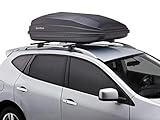
- 18 cubic foot (510 L) internal cargo capacity
- Made from durable UV-resistant ABS material
- Rear opening for easy access away from traffic
- Tool-free mounting hardware for easy installation and removal
- Includes key and lock to secure contents in the box, and the box to your rack
What counts against the allowance
Passengers
The driver counts exactly like every other occupant. Every person riding in the vehicle is part of the combined occupants-and-cargo total, including a passenger who is only present for part of the journey when you are calculating the vehicle’s loaded condition for that trip.
Quick wins for a faster PC:
Fix the driver behind crashes, sound loss and screen glitchesFind Drivers →Repair Windows errors before they cause bigger problemsFix Now →Luggage and loose cargo
Count every item carried inside the vehicle or in a cargo area: bags, boxes, food, equipment, tools and supplies. Add the contents of a roof box or other carrier rather than treating the carrier as weightless.
Accessories
Accessories that remain on the vehicle during the trip use payload capacity. This includes installed or removable equipment when it contributes to the vehicle’s loaded weight. The relevant question is the weight actually carried by the vehicle, not whether an item was supplied with the car or attached after purchase.
Trailer tongue load
If a trailer is attached, its tongue load bears on the tow vehicle and must be included in the vehicle’s total weight. It therefore reduces the capacity left for passengers and luggage. A trailer’s overall weight is a separate towing consideration, but the tongue load still belongs in this payload calculation.
Three limits must all pass
Do not stop after comparing luggage with the placard number. A properly loaded vehicle must satisfy three related checks.
Rank #4

- 【840D CHAMPION QUALITY MATERIAL】 Made with heavy-duty 840D abrasion-resistant PVC fabric, this ultra-durable car roof cargo carrier stands up to any rough treatment or harsh weather. Better still, the triple-reinforced welded seams make it hard to tear or rip for years to come.
- 【MORE THAN WATERPROOF】 Featuring waterproof zipper wrapped with 6 inches widened velcro zipper flaps, our vehicle cargo carriers will exceed your expectations with the waterproof effet. The reinforced seams will make it possible "zero leakage" even in downpours.
- 【EASY INSTALLATION】 Our roof rack cargo carrier comes with an anti-slip mat and 8 thickened adjustable straps that will keep the cargo bag in place. The smooth zipper, adjustable straps, door hooks and robust buckles allows you to effortlessly secure it to any car.
- 【SECURE FIT & LARGE CAPACITY】 Our 21 cubic feet rooftop cargo bag is compatible with vehicles with our without roof rack, the large capacity can keep the shape nicely, even when holding many luggage cases, blanket, tents, sleeping bags and more.
- 【PACKAGE LIST】You will receive 1x roof top carrier bag, 1x storage bag, 1x anti-slip mat, 6x padded door hooks, 2x extra luggage straps, 1x luggage lock.
| Check | What to compare | Pass condition | What can go wrong |
|---|---|---|---|
| Combined occupants and cargo | Driver, passengers, luggage, accessories and applicable tongue load versus the Tire and Loading Information label | Total is no greater than the placard’s combined limit | Packing can exceed the trip-specific allowance even when the car feels normal to drive |
| Gross vehicle weight | Fully loaded vehicle weight versus GVWR on the certification label and in the owner’s manual | Loaded vehicle does not exceed GVWR | A vehicle can be within one calculation yet exceed its manufacturer-specified loaded weight |
| Axle loading | Actual front and rear axle loads versus their respective GAWRs | Neither axle exceeds its GAWR | Heavy cargo concentrated at the front or rear can overload one axle before total weight reaches the overall limit |
Understanding GVWR
GVWR is the manufacturer’s specified loaded weight of a single vehicle. It includes the vehicle, occupants, cargo, accessories and any applicable trailer tongue load. The fully loaded car must remain at or below this rating.
Understanding GAWR
GAWR is the maximum allowable load on a specified axle. Check the front and rear ratings separately. Passing the total-weight test does not prove that the front and rear loads are balanced within their individual ratings.
Why the checks are related but not interchangeable
NHTSA defines vehicle capacity weight as the rated cargo and luggage load plus 68 kilograms (150 pounds) times the designated seating capacity, and says vehicle capacity weight cannot exceed GVWR minus unloaded vehicle weight. Unloaded vehicle weight includes the vehicle’s necessary fluids but excludes occupants, cargo and ordinarily removed accessories. Gross vehicle weight is the vehicle’s curb weight plus passengers and cargo. These definitions explain why the door-placard calculation and the certification-label checks address the same loaded vehicle from different angles.
Independent reader supportYour contribution helps us test, update, and keep practical guides available for everyone.Distribute luggage so an axle is not overloaded
After calculating a legal total, place items according to the owner’s manual. Avoid putting the heaviest items at the extreme front or rear when the manual gives a different arrangement. Keep cargo secure so it cannot move and change the load distribution while driving.
When the available margin is small, verify the actual vehicle and axle weights rather than relying on estimates. A certified public truck scale or portable axle scale can provide separate readings for the loaded vehicle and its axles. Compare those readings with GVWR and the front and rear GAWRs shown on the vehicle documentation.
Best Value

- 【100% Waterproof & Heavy-Duty Material】 Made with upgraded durable 840D PVC material and high-frequency welded seams, features a double-layered waterproof cover, this rooftop cargo carrier keeps your luggage dry even in heavy rain, snow, or long-distance travel. Built for road trips, camping, and family vacations.
- 【30 Cubic Feet Extra Storage Space】 Expand your vehicle’s storage instantly. The large 30 cubic feet roof top cargo bag (60 x 43 x 20 inches) easily fits 7-9 suitcases, tents, sleeping bags, and travel gear, free up inside vehicle space for more comfortable on the way.
- 【More Secure with 10 Reinforced Straps & 6 Door Hooks】 Upgraded safety system includes 10 reinforced straps, 6 door hooks and anti-slip mat for stronger stability at highway speeds and prevent scratch from your car simultaneously. Keeps the roof bag firmly in place even on long drives or windy conditions.
- 【Fits All Vehicles With or Without Roof Rack】 Designed to work with cars, SUVs, vans, and trucks — no matter if you have side rails, crossbars, or no rack at all. Quick installation in minutes.
- 【Complete Travel Kit Included】 Comes with anti-slip mat, luggage lock, reinforced straps, door hooks and storage bag for easy setup, safe travel, and compact storage when not in use.
A scale check is especially useful when several factors combine: four heavy adults, dense equipment, a roof carrier, a large number of bags or a trailer tongue load. The scale does not change the ratings; it tells you whether the planned loading arrangement stays within them.
How to handle uncertain weights
When occupant weights are estimates
Use a reasonable current estimate for each person and leave a safety margin instead of treating an uncertain estimate as an exact value. The closer the trip comes to the placard limit, the more valuable an actual measurement becomes.
When luggage weight is unknown
Weigh individual bags or weigh the packed group. Include items added after the initial packing check. A late-added cooler, tool case or equipment bag can consume the remaining allowance even if the original luggage list passed.
Free tools Windows power users keep installed
One-click scans. No signup required.
When the label is unreadable
Do not infer the combined limit from the vehicle’s appearance, engine size or a similar car. Use the certification label and owner’s manual to identify the manufacturer’s ratings, and obtain the correct vehicle-specific placard information before relying on a payload calculation.
When the result is close to a limit
Reduce the load, move heavy items only as the owner’s manual permits, or verify the loaded vehicle and axles at a scale. A small arithmetic margin can disappear through underestimated passenger, accessory or tongue weight.
Common calculation mistakes
- Forgetting the driver: the driver is one of the four occupants and must be included in
P. - Using 150 pounds for everyone: 150 pounds (68 kilograms) is a regulatory seating convention, not a substitute for actual passenger weights.
- Subtracting only the suitcases: accessories and, when towing, trailer tongue load also occupy the vehicle’s capacity.
- Using curb or unloaded weight as payload: the trip calculation starts with the placard’s combined occupants-and-cargo limit; unloaded vehicle weight is a separate defined value.
- Checking only total weight: front and rear GAWRs must be checked independently.
- Assuming a model-wide payload figure: use the label on the specific vehicle, because the rating belongs to that vehicle’s configuration.
- Ignoring placement: a legal total can still be poorly distributed, creating an axle-loading problem.
A printable four-passenger loading checklist
- Read and record the combined occupants-and-cargo limit on the driver-door placard.
- Record the actual weight of the driver and each of the three passengers.
- Add the four occupant weights.
- Subtract that total from the placard limit.
- List and weigh all luggage, cargo and accessories.
- Add trailer tongue load if a trailer is attached.
- Confirm that occupants plus all counted cargo do not exceed the placard limit.
- Confirm that the fully loaded vehicle does not exceed GVWR.
- Confirm that front and rear axle loads do not exceed their respective GAWRs.
- Distribute and secure the cargo according to the owner’s manual.
- Use a certified public truck scale or portable axle scale when the margin is small or the load is difficult to estimate.
Why payload can change between trips
The vehicle’s placard limit does not change during an ordinary trip, but the amount left for luggage does. Four lighter occupants leave more capacity for cargo than four heavier occupants. Adding a roof carrier, equipment, accessories or a trailer tongue load reduces the remaining allowance again. That is why payload should be calculated for the actual people and equipment traveling, rather than copied from a generic vehicle specification.
The same calculation also explains why a car that handled one family’s vacation luggage may not have the same luggage capacity on another trip. The relevant starting point is always the specific vehicle’s placard, followed by the occupants and cargo actually loaded.
The Tool Desk
Outbyte Driver Updater FREEFix the driver behind crashes, sound loss and screen glitchesFind Drivers →Outbyte PC Repair FREERepair Windows errors before they cause bigger problemsFix Now →Bottom line
Read the driver-door placard, subtract the actual combined weight of four occupants, and keep luggage, accessories and any trailer tongue load within the amount left. Then verify GVWR and both axle ratings, because all three checks must pass. If the margin is narrow, weigh the loaded vehicle and axles instead of relying on a rough estimate.
Quick Recap
Product prices and availability are accurate as of the date/time indicated and are subject to change. Any price and availability information displayed on Amazon at the time of purchase will apply.




