Recommended Free Tools
Buy a completed RWB Porsche as two vehicles at once: the original Porsche and the later wide-body custom build. The safest purchase is one with a verifiable VIN and factory specification, documented conversion work, a complete maintenance and repair file, and an independent inspection by a Porsche specialist who can evaluate both the mechanical car and the modifications.
RWB UK confirms that already-built cars can be bought, but cautions that provenance and the condition of the starting car vary. Appearance, a badge, or a seller’s description cannot establish who performed the conversion or whether the underlying Porsche is sound.
As an Amazon Associate I earn from qualifying purchases.
Can you buy an RWB Porsche that is already built?
Yes. RWB UK’s frequently asked questions explicitly address buying a completed car. That answer comes with an important qualification: not every car associated with RWB was formed by Nakai-San, and some projects may have started with a poor-condition base car. Treat the RWB name as a reason to investigate more carefully, not as a substitute for inspecting the vehicle.
Ask the seller for the original conversion paperwork, dated build or progress photographs, the identity of the builder or RWB partner involved, and a written list of every change made after the conversion. Separate RWB-supplied or partner-installed work from work performed by later owners. Public guidance does not establish a universal certificate or central database that independently authenticates every completed car, so a sticker, plaque, social-media post, or verbal claim is not sufficient on its own.
#1 Best Overall
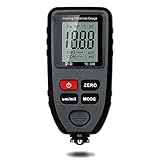
- Auto-Detection for Steel and Aluminum Coatings:This Coating Thickness Gauge utilizes advanced dual technology to automatically recognize ferrous and non-ferrous substrates, making it easy to measure coating thickness on both steel and aluminum without any guesswork
- Ideal for automotive paint inspection, powder coating checks, and metal surface finishing. Commonly used on used cars, anodized aluminum, bathroom fittings, bike frames, stadium seats, lockers, appliances, and more. (Note: Designed for metallic surfaces only.)
- A Must-Have for Used Car Buyers:Don't let hidden repairs catch you off guard. This tool lets you check the paint thickness on each car panel, helping you spot any previous accidents or repairs before buying a used vehicle
- Save Money on Used Car Purchases:When buying used cars, this paint thickness gauge helps you identify potential issues by ensuring the paint thickness is consistent across all panels. Great for detecting accident repairs and verifying if the car has been in a heavy crash
- Important Note: Please note that this gauge is specifically designed to measure coating thickness on metal substrates. It cannot be used on non-metallic materials such as plastic, fiberglass, or wood.
The purchase standard
- The 17-character VIN agrees with the title, registration and vehicle markings.
- The base Porsche’s model, year, engine and transmission can be reconciled with its original records.
- The conversion has identifiable parts, a known installer where possible, and supporting invoices or photographs.
- An independent Porsche specialist has inspected the car and road-tested it with the seller’s permission.
- Local registration, emissions, roadworthiness and insurance requirements have been confirmed for this exact configuration.
Start with the base Porsche, not the body kit
An RWB conversion changes the visual identity and often the wheel, tire, suspension and bodywork specification, but it does not erase the history of the Porsche underneath. Establish the car’s identity and original condition before judging the quality of the customization.
Verify identity and original specification
- Record the VIN from the car and compare it with the title or registration, import documents where relevant, and the manufacturer markings.
- Ask Porsche for the available original production information. A Production Specification (PPS) records production-card details such as optional equipment, original colors, engine and transmission types, completion date and, when available, the original MSRP.
- Compare the PPS with the present car and note every difference. A mismatch is not automatically a defect—customization is the point of an RWB—but unexplained differences need documentation.
- Request maintenance invoices, inspection reports, engine or transmission rebuild records, collision and repair records, import paperwork, and records of later modifications.
Porsche’s US Vehicle Documentation information says the PPS is available for all model years and can be produced for a Porsche built for another country. The US FAQ lists a $150 price, updated February 20, 2026. Confirm the current ordering process and price directly with Porsche before relying on it. A PPS describes how the car left production; it does not establish present technical condition, prior owners or warranty history.
Ask who actually built the conversion
Request names, dates, invoices and photographs rather than accepting a generic statement that the car is an RWB. The file should identify the bodywork installer, wheel and suspension supplier, paint shop, and any shop that performed structural or mechanical repairs. Have the seller identify non-RWB components separately, including later replacement panels, aftermarket suspension, exhaust work, engine changes and interior alterations.
The Tool Desk
Outbyte Driver Updater FREEScan for outdated or missing drivers - takes under a minuteDriver Scan →Outbyte PC Repair FREEClear out junk files and repair common Windows errorsFree Scan →An RWB partner familiar with the specific car may be able to explain its history and condition. That conversation is useful evidence, but it should complement—not replace—a neutral inspection.
Rank #2

- HIGH ACCURACY COATING THICKNESS MEASUREMENT – Digital paint thickness gauge for metal surfaces with 0.1 μm (0.01 mils) resolution and ±(3%+2 μm) accuracy, helping detect repainting, repairs, and uneven coating thickness during used car inspection, detailing work, and professional quality control. Suitable for checking doors, hood, roof, fenders, and other painted metal panels where accurate coating evaluation is required.
- EASY & FAST OPERATION — FACTORY CALIBRATED – Factory calibrated and ready to use right after installing batteries. Large backlit LCD with clear readings and simple buttons make this coating thickness meter easy for professionals and first-time users. Ideal for pre-purchase vehicle checks, car dealership inspections, trade-in evaluation, and mobile appraisers who need quick and convenient measurements without complicated setup.
- AUTOMATIC Fe / NFe SUBSTRATE DETECTION – Automatically detects Fe (steel/iron) and NFe (aluminum/copper) and selects the correct measuring method. Ideal for modern vehicles with mixed body materials and accurate results without manual switching. This helps users inspect steel doors, aluminum hoods, and other metal body parts with the correct measurement principle applied automatically.
- WIDE MEASURING RANGE FOR AUTOMOTIVE & INDUSTRIAL USE – Measuring range 0–1500 μm (0–59.1 mils) covers factory paint, repainting layers, and thicker coatings. Suitable for car body panels and industrial coated metal parts. Whether checking original automotive paint thickness or verifying thicker coating applications on metal components, the gauge provides a practical working range for many inspection scenarios.
- DUAL TECHNOLOGY: MAGNETIC INDUCTION + EDDY CURRENT – Uses magnetic induction for ferrous metals and eddy current technology for non-ferrous metals, providing stable, repeatable measurements across steel, iron, aluminum, and copper substrates. This dual-technology design allows one device to cover common automotive body metals without requiring separate meters or manual probe replacement.
Know what configuration you are buying
RWB UK lists G-Body, 930, 964, 993, 996 and 997 models as cars it says can be modified. The kits are model-specific; parts are not interchangeable simply because two cars look similar. RWB Japan’s published 930, 964 and 993 offerings describe wide fenders, bumpers, side rockers and wings, with wheels and suspension packages or options shown on those model pages.
| Area to verify | What to record on the candidate car | Why it matters |
|---|---|---|
| Base chassis | Exact generation, model, year, VIN and original engine/transmission types | Determines which body and mechanical parts should fit and what Porsche records should show |
| Body conversion | Fenders, bumpers, side rockers, wing, lamps, trim and attachment method | Reveals whether the installed parts match the claimed configuration and whether repairs were made later |
| Wheels and tires | Brand, diameter, width, offsets, tire sizes, age and remaining tread | Wide fitments can create steering, suspension and body-clearance problems if setup is wrong |
| Suspension | Make and model, spring or damper settings if known, ride height and alignment records | Ride height and adjustment affect handling, underbody clearance and tire contact |
| Subsequent work | Every non-RWB modification, replacement and repair with invoices | Later work may explain differences from the original build and may affect legality or insurance |
Measure or document ride height, steering clearance, wheel-arch clearance, underbody clearance and any evidence of rubbing. Look inside the wheel wells and under the car for marked liners, worn tire shoulders, scraped fasteners, cracked fiberglass, bent brackets or fresh repairs. These checks apply the published body, wheel and suspension configuration to a used-car inspection; they are not a universal factory RWB inspection standard.
Prepare the inspection before making an offer
Make the appointment conditional on an independent Porsche specialist being allowed to inspect and road-test the car. A seller’s demonstration drive cannot reveal everything, and a shop that performed the conversion may have a conflict of interest.
Free tools Windows power users keep installed
One-click scans. No signup required.
- Obtain the VIN, title or registration copy, import documents where applicable, service invoices and conversion records before the appointment.
- Ask for a genuinely cold start. Do not let the seller warm the engine before you arrive.
- Arrange a Porsche specialist, Porsche Classic Partner, qualified dealer or experienced independent shop that is willing to inspect custom bodywork as well as the mechanical systems.
- Authorize a diagnostic scan, fault-memory report and any available overspeed or event information appropriate to the car’s generation.
- Tell the inspector to include a road test, underbody examination and wheel-clearance check, not just an engine scan.
- Confirm the shop will provide photographs, measured findings and repair estimates rather than a simple pass or fail.
Body, paint and conversion inspection
Panel and paint quality
Walk around the car in daylight and inspect every transition between original Porsche panels and the wide-body work. Check panel alignment, consistent gaps, paint color and texture, overspray, sanding marks, cracking, bubbling and corrosion. Look for evidence of impact repair behind the fenders, at bumper mounts, around the rockers and near the wing supports. Porsche’s multipoint inspection guidance specifically includes body, paint and possible accident damage.
Rank #3
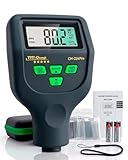
- AUTOMOTIVE PAINT THICKNESS GAUGE – CM-224PRO Designed for measuring coating thickness across vehicle panels during structured professional evaluation. Compare readings on doors, hood, roof and body panels to assess coating consistency and identify thickness variations that may indicate refinishing or prior repair. Suitable for dealerships and inspection professionals.
- 0–59.1 MILS RANGE WITH 0.01 MILS (0.1 µM) RESOLUTION – PROFESSIONAL CONSISTENCY Measures coatings from 0–59.1 mils (0–1500 µm) with stable resolution of 0.01 mils (0.1 µm), supporting consistent and repeatable comparison between factory coating and refinished surfaces during professional inspections.
- FE NFE AND ZINC AUTO DETECTION – AUTOMATIC SUBSTRATE RECOGNITION Automatically identifies steel (Fe), aluminum (NFe) and galvanized surfaces (Zn), supporting inspection of modern vehicles built with mixed body materials without manual switching or mode selection.
- PROFESSIONAL PROBE DESIGN – STABLE AND REPEATABLE CONTACT Engineered probe construction supports consistent surface engagement and repeatable readings during multi-point inspection routines in professional workshop environments.
- FAST PANEL-TO-PANEL MEASUREMENT FLOW – EFFICIENT FULL VEHICLE SCANNING Optimized for efficient professional workflow: place the probe vertically, read the value and continue across panels during dealership and workshop-based inspections.
A paint-thickness gauge can be a useful screening aid when readings differ sharply between panels. It cannot prove structural condition, reveal every repair or identify who performed the work. Use unusual readings as a reason for a body specialist to investigate, not as a stand-alone diagnosis.
Attachment and hidden areas
- Check that fenders, bumpers, rockers and the wing are securely attached with no cracked material, pulled fasteners or movement when gently tested.
- Inspect wheel-arch edges, inner liners and covered factory seams for corrosion, trapped moisture and hurried cutting or patching.
- Look underneath for bent brackets, unsupported panels, exposed wiring, damaged jacking points and evidence that the car has scraped.
- Verify that lamps, indicators, mirrors, locks and trim operate correctly after the body conversion.
- Inspect the trunk, engine bay and cabin for water leaks, unfinished edges or removed sound insulation.
Wheel and tire clearance
With the car on the ground, turn the steering from lock to lock and examine the gap between tires, liners, fenders, suspension arms and brake components. The inspector should repeat the check through suspension movement if the shop has the equipment to do so. Look for rubbing marks on tires and liners, uneven tire wear, damaged wheel lips and mismatched tires. Record the wheel and tire sizes and offsets; do not assume that a visually flush stance is mechanically safe.
Mechanical inspection and road test
Porsche’s used-car inspection categories cover records, diagnostics and mileage plausibility, a test drive, drivetrain and underbody, and the engine. The detailed tests must be matched to the particular generation and engine, but the following checklist gives the specialist a clear scope.
Engine and cooling
- Observe the cold start, idle quality, exhaust smoke, warning lights and oil-pressure or temperature behavior.
- Inspect for oil, coolant, fuel and hydraulic leaks around the engine, hoses, lines, seals and heat exchangers.
- Check belts, battery, cooling fans, wiring, intake and exhaust modifications, and signs of overheating or poor repairs.
- Compare the engine number and type with the available Porsche records and invoices. An engine replacement is not necessarily disqualifying, but it must be documented.
Transmission, clutch and drivetrain
- Check clutch engagement, pedal feel, gear selection, synchronizer behavior, differential noise and driveshaft or axle vibration as applicable.
- Look for fluid leaks, damaged mounts, improvised brackets and evidence of previous transmission or differential work.
- Verify that the transmission number and type are consistent with the vehicle’s records or clearly documented as a later change.
Brakes, steering and suspension
- Inspect pad and disc condition, brake lines, calipers, parking brake operation and signs of overheating.
- Check dampers, springs, bushings, ball joints, steering components, wheel bearings and alignment.
- Document ride height and any uneven stance. A very low setup may create underbody damage or make ordinary ramps and roads impractical.
Test-drive observations
From cold, assess starting, warm running, temperature stability, warning lights, clutch and shift operation, braking effectiveness, steering response, vibration, noise and handling. Porsche’s multipoint inspection includes a road test for performance, braking and handling. The specialist should note when a symptom appears and whether it changes with speed, engine load, steering angle or road surface.
Rank #4

- 【Auto-ID Dual Tech & Material Note】This paint depth gauge automatically identifies Fe/NFe substrates without manual switching. The device is specifically designed for metal substrates and is not suitable for plastic, carbon fiber, or wood. It is ideal for detecting heavy paint on car bodies, boat hulls, and industrial steel structures to ensure accurate readings.
- 【High Precision & Wide Range】Equipped with a wear-resistant probe, this coating thickness gauge delivers lab-grade stability across a 0-78.7 mils (0-2000μm) range. It features high resolution of 0.004 mil / 0.1μm for 0-3.9 mils (0-99.9μm) and 0.04 mil / 1μm for 3.9-78.7 mils (100-2000μm), accurately detecting minute changes in powder coatings or anodized layers. With a measurement accuracy of ≤ ±(3% H+ 2μm / 0.079mil), it ensures reliable results for professional tasks, from measuring paint on curved bumpers (min radius 5mm/197mils) to verifying films on machinery.
- 【Single/Continuous Scan Mode】This paint meter offers more than just single scans by displaying real-time statistics (Avg, Max, Min) of the last 10 measurements in continuous scanning mode. Users can quickly identify uneven spraying on hoods or thickness variations in industrial furniture powder coatings through statistical data. This method reflects overall process quality better than single-point measurements.
- 【Data Storage & USB Output】This digital thickness gauge features a "Data Hold" function to lock readings after measuring in deep engine bays or narrow gaps. It is equipped with a Type-C interface that supports exporting 30 sets of stored data to a PC for generating professional inspection reports. This capability is perfect for creating check reports for used car sales or quality control logs.
- 【Smart Calibration & Ergonomics】This mil thickness gauge comes with Fe/NFe calibration foils and substrates for zero-point and thickness calibration before work. Operators must ensure no dust, wrinkles, or irregularities exist between the thickness standard sheet and the substrate during use. Pressing the OK key allows users to clear historical calibration records easily.
Use Porsche documentation for the right purpose
| Document | What it establishes | What it does not establish | Published US information |
|---|---|---|---|
| Production Specification (PPS) | Original production-card specifications, including options, colors, engine and transmission types, completion date and MSRP when available | Current condition, current serial numbers, prior owners, warranty history or quality of the RWB conversion | Available for all model years; $150 listed in the US FAQ updated February 20, 2026 |
| Classic Technical Certificate (CTC) | Original production information plus current engine and transmission numbers and types, with verification against original records; a technical inspection | Authenticity of the RWB conversion, future condition, or a substitute for inspecting later modifications | For eligible classic vehicles; includes a 63-point inspection. US starting price listed as $500 plus local sales tax, with the exact amount set by the eligible provider |
| Recall lookup | Applicable recall information when the 17-character VIN is entered | General condition, accident history, RWB provenance or completion of unrelated repairs | Porsche’s US recall page covers calendar year 1999 onward |
The CTC inspection is performed by a Certified Porsche Classic Partner or eligible authorized dealer. It is valuable evidence for an eligible classic Porsche, but it is not an RWB build certificate and cannot replace a current inspection of custom bodywork, wheels, suspension or post-certificate repairs.
Independent reader supportYour contribution helps us test, update, and keep practical guides available for everyone.Check recalls, registration and insurance separately
Recall status
Use Porsche’s US recall page with the 17-character VIN to check applicable recalls from calendar year 1999 onward. Ask for proof that open campaigns were completed where records are available. A recall result says nothing about the quality or history of the RWB conversion.
Road legality
Registration, emissions, lighting, ride-height, noise and roadworthiness rules depend on the jurisdiction and the exact configuration. Confirm requirements with the relevant local authority before purchase, especially for an imported car or one with altered bodywork, suspension, exhaust or lighting. No single legality answer applies to every RWB Porsche.
What’s actually slowing this PC down?
Pick the symptom - the matching free tool is one click away.
Insurance
Tell the insurer exactly what the car is: the base Porsche, the RWB conversion, wheel and suspension changes, engine or transmission alterations, and the agreed value or market-value basis being requested. Obtain written confirmation that the modifications are covered before funds change hands. An insurer may require photographs, appraisals, invoices or an inspection.
Best Value

- (*^_^*) [Record Various Data] It can record the average value, maximum value, minimum value, dif at the same time, and supports up to 50 data for statistics, making the numerical data you measure more accurate and convenient. If the auto power off function is on and there is no for 3 minutes, the instrument will automatically shut down to save battery power.
- (*^_^*) [Multifunctional] Thickness gauges are used to measure the thickness of metal coatings and other coatings such as paint/enamel/chrome on steel, paint and anodized coatings on aluminum/copper. Automatic detection of substrate properties. It has small size and high precision battery level indicator. It also has automatic shutdown function, used for FE/NFE.
- (*^_^*) [Precision Integrated Probe] It is important to check the car paint to make sure the paint thickness is about the same on each panel and to determine if the car is in good condition with a car paint inspection thickness gauge when you buy the car. The instrument adopts the principles of electromagnetic induction (F probe) and eddy current effect (N probe) to automatically detect the properties of the substrate.
- (*^_^*) [What Can Be Read and Detect Paint Depth] The large LCD display of the paint depth gauge shows the metal type, operating mode, quantity, battery status and the reading in µm, mm or mils. The thickness gauge has a measurement range of 0-2000um, an accuracy of ±(3%+1um), and a resolution of 0um-999um (1um).
- (*^_^*) [Widely Uses] It is used to non-destructively measure the thickness of coatings and paints. It is an essential equipment for material surface treatment, widely used in manufacturing, metal processing industry, chemical industry, commodity inspection and other fields, and can also work stably in laboratories, workshops and outdoors. Suitable for automotive paints, powder coatings, anodized aluminum, bathroom accessories, bicycle frames, stadium seating, outdoor sheds, furniture, swings, c
How to compare two completed RWB cars
Compare candidates by evidence and condition rather than by stance, color or social-media visibility.
| Comparison axis | Questions to answer | Evidence to prefer |
|---|---|---|
| Base car | What generation and model is it? Does the VIN match? What was original? | PPS, title, registration, service records and matching markings |
| Conversion provenance | Who installed the kit, when, and what changed afterward? | Invoices, dated photographs, builder or partner confirmation and a parts list |
| Mechanical condition | Are engine, transmission, brakes, suspension, underbody and diagnostics satisfactory? | Independent written inspection, scan report, road-test notes and repair estimates |
| Configuration | Which body parts, wheels, tires and suspension are installed? Is clearance safe? | Measured clearances, alignment data, tire condition and documented component details |
| Ownership feasibility | Can it be registered, inspected and insured where you live? | Written confirmation from local authorities and the insurer |
| Price support | What have similar cars actually sold for, and what work is due? | Comparable completed transactions and itemized repair estimates |
Price the car without confusing build cost with value
There is no dependable transaction-price dataset or universal valuation formula established for used RWB Porsches. A seller’s asking price, claimed build cost or rarity statement is not proof of fair value. Compare completed sales of genuinely similar cars, considering the base generation and model, originality and history, documented builder, conversion specification, mechanical and body condition, location and registration status.
Before negotiating, create a written schedule of defects and overdue service. Obtain estimates for material findings, including body repairs, tire or wheel replacement, suspension work, leaks, brake work and undocumented engine or transmission issues. Use those documented costs in the decision. A beautifully finished car with weak records may deserve more investigation than a less dramatic car with transparent history and a clean inspection.
Quick wins for a faster PC:
Clear out junk files and repair common Windows errorsFree Scan →Fix the driver behind crashes, sound loss and screen glitchesFind Drivers →Red flags that should pause the purchase
- The seller will not provide the VIN, cold-start access, records or permission for an independent inspection.
- The car is described as an RWB but no builder, partner, invoices or photographs can be identified.
- Engine or transmission numbers differ from the records without a clear replacement history.
- Fresh paint, silicone, underseal or trim appears to conceal corrosion, impact damage or unfinished bodywork.
- Tires show rubbing, cords, severe shoulder wear or unexplained mismatches.
- Warning lights, fault codes, overheating, fluid leaks, vibration or poor shifting appear during the inspection.
- The proposed purchase depends on registration or insurance approval that has not been confirmed in writing.
- The seller relies on asking prices or build cost instead of comparable completed sales and condition evidence.
Ownership checklist after purchase
Keep the car’s identity and modification history together in one file. Store the title, PPS or CTC, inspection report, diagnostic scans, invoices, alignment settings, wheel and tire data, photographs and insurance correspondence. Give the next specialist the complete file; custom cars are easier to maintain when a technician can see what was changed and why.
Quick Recap
- Record the exact wheel, tire and suspension specification and recheck clearance whenever a component or ride height changes.
- Inspect tires, liners, fenders and underbody after driving on unfamiliar roads or after any contact.
- Use a Porsche-experienced shop for servicing and ask it to document leaks, warning lights, alignment and brake condition.
- Keep original parts if they are included with the sale and label them with the date and reason for removal.
- Update the insurer and registration authority when material modifications are added.
- Recheck recall status and service documentation when the car changes ownership or moves across borders.
A practical decision sequence
- Verify the VIN, title and original Porsche specification.
- Obtain the conversion file and identify every later modification.
- Confirm that local authorities and the insurer will accept the exact configuration.
- Commission an independent Porsche inspection with diagnostics, underbody examination and road test.
- Separate safety or reliability repairs from cosmetic preferences and price them.
- Compare the candidate with completed-sale evidence for similar cars, not with build cost alone.
- Proceed only when the records, condition, ownership requirements and total budget all make sense.
Product prices and availability are accurate as of the date/time indicated and are subject to change. Any price and availability information displayed on Amazon at the time of purchase will apply.




