What’s actually slowing this PC down?
Pick the symptom - the matching free tool is one click away.
A freight train is the middle leg of a coordinated intermodal chain, not a standalone delivery service. A container is unloaded from a ship, transferred to rail either inside the marine terminal or after a short drayage move, carried inland, and then collected by a truck for delivery to a warehouse or other receiver. The box can remain sealed while the mode changes; the handoffs, available equipment, road access, and receiving capacity determine whether the movement is smooth.
The concrete infrastructure figures in this explainer are U.S.-specific. Individual ports, terminals, railroads, and shippers use different layouts and service arrangements, so the exact route varies.
As an Amazon Associate I earn from qualifying purchases.
What “intermodal” means in a port-to-warehouse move
Intermodal freight uses at least two transportation modes for one shipment. In the container chain, a ship carries the box across water, a railcar carries it for the longer inland segment, and a truck handles local or final delivery. The cargo normally stays in the same container while the vehicle or conveyance changes. That reduces repeated loading of individual goods, but it makes every transfer point important.
The rail segment is not necessarily connected directly to every marine terminal. A port can contain several terminals with different cranes, gates, tracks, and operating rules. One terminal may load a container onto a train within the marine-terminal boundary, while another may require a truck to carry the box to a nearby rail facility.
#1 Best Overall

- Complete Ready To Run Electric Train Set: This 130-piece freight train set includes everything needed to start your model railroad journey right out of the box
- Powered Diesel Locomotive: Features an EMD GP40 Diesel Locomotive equipped with an operating headlight for realistic train operations
- Comprehensive Rolling Stock and Accessories: Includes Open Quad Hopper Car, Gondola Car, Steel Reefer Car, Off-Set Cupola Caboose, Signal Bridge, Miniature Figures, Railroad Signs, Street Signs, and Telephone Poles
- Easy Setup Track System: Features a 47 inch by 38 inch oval of Snap-Fit E-Z Track with included Power Pack and Speed Controller for convenient operation
- Authentic HO Scale Model: Built to 1:87 scale ratio, providing detailed and proportionate model railroad experience
At the destination, “last mile” usually means drayage: a short-haul truck movement between an inland rail terminal and a warehouse, distribution center, transload site, or other receiver. The final truck leg can be operationally decisive even when the train itself runs on schedule.
How a container gets from a ship to a warehouse by train
1. Unloading at the marine terminal
When the ship arrives, cranes remove containers and place them in a terminal stack or staging area. The terminal records the box, checks its release status, and plans the next movement. A port is not one uniform transfer point. The specific marine terminal determines whether railcars can be reached directly, which train service is available, and how the container enters the gate or rail queue.
2. Moving the box to rail
There are two common arrangements:
| Arrangement | What happens | Operational effect |
|---|---|---|
| On-dock rail | Terminal workers place the container on a railcar inside the marine-terminal boundary. | Eliminates the separate drayage trip between the marine terminal and an inland container transfer facility (ICTF), reducing one road movement and its associated gate and congestion exposure. |
| Off-dock rail | A drayage truck takes the container from the marine terminal to a nearby ICTF or rail terminal, where it is loaded to a train. | Adds a short truck leg, a driver, a chassis, a road route, and another appointment or gate process before the long rail movement. |
On-dock does not mean truck-free. Trucks still deliver import boxes from inland terminals to receivers, bring export boxes to marine terminals, and perform other local moves. Conversely, a port without on-dock tracks can still connect effectively to rail when a nearby facility and public-road link provide adequate capacity.
3. The inland rail journey
After loading, the train carries containers or truck trailers over the railroad network to an inland terminal or another network location. The route, interchange points, departure frequency, and terminal used depend on the railroad, the shipper or beneficial cargo owner, and the service purchased. Rail is generally used for the longer inland portion, while trucks cover the shorter terminal-to-terminal and terminal-to-receiver moves.
Rank #2

- Authentic Locomotive Design: Step back in time with this meticulously crafted Western freight train, featuring historically accurate details, authentic cargo cars, a luxurious private carriage, and captivating lighting effects that bring the Wild West to life.
- Playful Carriage and Track: This set features flexible expandability, allowing you to rearrange cars and extend your train, features universal track gauge that lets it smoothly navigate curves, unleashing your creativity.
- Immersive Atmosphere: Complete set features authentic coal and log cars, a passenger car, and a detailed water tower that can be displayed with the train or as a standalone piece. Discover hidden easter eggs and bring the Old West to life!
- Iconic Western Characters: Features six diverse minifigures with a dynamic of conflict, along with detailed accessories like a coal shovel and remote-controlled dynamite. It's a must-have for Western film buffs looking to recreate their favorite scenes.
- Family Fun Time: This cute train kit is a great way to spend quality time with family and friends during birthdays and holidays. Detailed instructions and numbered brick bags make building together a fun and rewarding experience for all ages.
The federal Bureau of Transportation Statistics (BTS) defines rail intermodal traffic as containers and truck trailers carried on railcars. That definition includes both maritime containers and domestic trailers; a rail intermodal unit is not limited to cargo that began on a ship.
4. Arrival at the inland terminal
At the destination terminal, the container is removed from the railcar and placed in a stack or pickup area. Release instructions, customs or other holds, terminal operating hours, and the availability of a suitable chassis affect when a truck can collect it. The train’s arrival time is therefore only one milestone; the box still needs to be physically accessible and legally released.
5. Drayage to the warehouse or receiver
A drayage carrier dispatches a driver and truck, secures a chassis, checks the terminal’s pickup requirements, and brings the container to the receiving facility. The warehouse unloads the goods, returns the empty container or equipment according to the carrier’s instructions, and makes the equipment available for another move. If the receiver is not ready, the container may remain at the rail terminal and continue occupying space.
Quick wins for a faster PC:
Scan for outdated or missing drivers - takes under a minuteDriver Scan →Repair Windows errors before they cause bigger problemsFix Now →Fix the driver behind crashes, sound loss and screen glitchesFind Drivers →Why the handoffs matter more than a train timetable
Each transfer depends on the next participant. A working chain requires a ship and marine terminal, a rail-loading plan, a train path and inland terminal, a truck and driver, a chassis, and a receiver with labor, dock space, and an appointment window when one is required.
Rank #3

- Complete Ready To Run Freight Train Set
- Powered by a F7 Diesel Locomotive with Operating Headlight
- Includes; Open Quad Hopper Car, Gondola Car, and Wide-Vision Caboose
- 47" x 38" Oval of Snap-Fit E-Z Track, Power Pack and Speed Controller
- HO Scale 1:87
- Marine-terminal constraint: A box may wait in the stack if its rail booking, documentation, or train slot is not ready.
- Off-dock road constraint: A short trip to an ICTF still consumes truck capacity, gate time, and road space.
- Rail-terminal constraint: Limited tracks, cranes, stack space, or pickup hours can slow the transfer from train to truck.
- Drayage constraint: Without a driver, tractor, or chassis, an available container cannot leave the terminal.
- Warehouse constraint: A receiver may lack dock workers, floor space, or an open appointment. The truck can be turned away even when the box and chassis are ready.
A 2021 U.S. House hearing record describes this destination-side mechanism in detail: pickup required a driver, drayage truck, and chassis, as well as a receiver with workers and space. If an appointment was missed, arranging another could take days, extending “container dwell,” the time the box remained at the terminal. That testimony documents the mechanism during the supply-chain disruption of that period; it should not be read as a claim that every terminal faces the same severity today.
How on-dock and off-dock rail change the route
The choice is geographical and operational rather than a universal ranking. On-dock rail removes one transfer, but it requires tracks, loading equipment, and a terminal layout that can support them. Off-dock rail can give a port access to a shared or nearby facility when installing tracks at each marine terminal is impractical.
| Question | On-dock rail | Off-dock rail |
|---|---|---|
| Where is the rail loading? | Within the marine-terminal boundary. | At a nearby ICTF or rail terminal. |
| Is a port-to-rail truck move required? | Not for the container’s transfer to that train. | Yes, a drayage move connects the marine terminal and rail facility. |
| Main advantage | Fewer road miles and fewer handoff opportunities between ship and train. | Can serve terminals that lack their own on-dock tracks. |
| Main exposure | Dependence on the terminal’s rail tracks, cranes, and train schedule. | Dependence on truck, driver, chassis, gate, and public-road capacity for the extra leg. |
BTS’s 2026 Port Performance Freight Statistics annual report counted 16 of the top 25 U.S. container ports with on-dock rail. The report’s terminal table describes conditions as of October 2025 and uses its own active-marine-terminal and rail-access definitions. The count is therefore a snapshot, not a claim that every terminal in those ports has identical access.
The road links that make rail usable
Rail terminals need reliable highway connections for both the first and last truck moves. The same BTS report identified 319 National Highway System connectors serving ports. It describes these connectors as roads providing the “last-mile connection between major rail, port, airport, and intermodal freight facilities on the National Highway System.”
Rank #4

- 【Segment Design Motorized Cargo Train】This 36.6 inch length train building set consists of 1 rechargeable motorized head and 2 cargo carriages used for deliver passengers, cargo and coal. Each carriage can be easily connected or separated, and move by powered locomotive as real city trains, with its powerful and rechargeable engine. (Switch control, NO remote control, )
- 【Eye-catching Size and Realistic Design 】The assembled train is 36.6*2.36*4.02 inch (L*W*H), with 16 curved tracks and 16 straight tracks to consist a 42*44 inch rectangle train tracks. The doors and carriage cover can be opened. Exquisite stickers bring this freight train to life.
- 【High Compatibility】This train set is compatible with mainstream brand trains and tracks, which makes train lovers, railway enthusiasts and transport building fans to combine this train into their own miniature rail network. Ideal for recreating railyard operations or building expansive train layouts.
- 【Great Gift for Fans of Train Toys】This train set is packed in elaborate box. It makes a great gift for model train lovers, railway enthusiasts and transport building fans to create your very own miniature rail network.
- 【Engaging Building Project】With 1078 pieces and an detailed instruction, it offers a building challenge for boys and girls who want to create their own locomotive train. Teens will enjoy hours of build-and-play, which will improve hands-on ability , promote engineering skills and spark imagination
A connector may be only a short segment, but its condition, intersection design, clearance, congestion, and access restrictions can affect the entire chain. An efficient train cannot compensate for a bridge restriction that blocks the chassis required to retrieve a container, or for a queue that causes a truck to miss a warehouse appointment.
What happens when a warehouse is not ready
Receiving capacity is part of transportation capacity. A warehouse may have a container assigned to it but lack an open dock, unloading crew, or storage space. When that happens, a drayage carrier may have to reschedule, hold the box at the rail terminal, or arrange another location subject to the shipper’s instructions.
The consequences spread beyond one shipment. A container occupying a terminal slot prevents that slot from being used for another arrival; a chassis tied up under the first box is unavailable for the next pickup; and a driver waiting or making an unsuccessful trip is not available elsewhere. This is why terminal dwell is influenced by warehouse labor and appointment performance as well as by rail operations.
Windows Errors? Fix Them Before They Spread
Repair common Windows errors and clear accumulated junk for a smoother, more stable PC - no reinstall needed.Free scan · no reinstallCrashes, No Sound, or Screen Glitches?
Random freezes, missing sound and display glitches usually trace back to one bad driver. Find and replace yours safely.Free scan · under a minuteHow to compare two ports or routes
There is no single best port-to-warehouse route. Compare the complete chain rather than rail distance alone.
Best Value
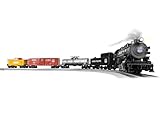
- UNION PACIFIC TRAIN SET – Complete O Gauge Train Set including a 0-8-0 steam locomotive, tender, Union Pacific boxcar, tank car, caboose, FasTrack sections, power supply, and LionChief remote.
- BLUETOOTH & APP CONTROL – Operate via LionChief Remote or Bluetooth using the Lionel CAB3 App with voice control for advanced smart device operation and enhanced functionality.
- DURABLE STEAM LOCOMOTIVE PERFORMANCE – Features a powerful maintenance-free motor, operating couplers, and directional control for long-lasting, dependable operation.
- REALISTIC SMOKE, LIGHTS & SOUNDS – RailSounds RC system delivers steam chuffing, whistle, bell, announcements, puffing smoke unit, and working headlight for immersive operation.
- O GAUGE FASTRACK SYSTEM – Snap-together FasTrack with O36 curves ensures quick setup, secure connections, and reliable performance for model train layouts.
- Map the physical handoffs. Identify the marine terminal, any ICTF, the inland rail terminal, and the receiving facility. Count every required truck move.
- Check rail access at the terminal level. A port-wide label can hide differences among its marine terminals; verify whether the specific terminal has on-dock tracks or uses an off-dock facility.
- Measure road exposure. Consider the distance and highway access between the marine terminal, ICTF, inland terminal, and receiver, including restrictions that affect chassis or heavy trucks.
- Confirm service and capacity. Ask about train frequency, terminal operating hours, pickup windows, chassis availability, and the process for holds or missed appointments.
- Validate receiver readiness. Align the train’s expected arrival with a warehouse appointment, labor plan, dock availability, and space for unloading.
- Compare data on the same basis. Match geography, measurement date, terminal definition, and indicator definition before treating one route as faster or more reliable.
What current freight indicators can—and cannot—tell you
BTS organizes freight indicators into port activity, freight movement, and transportation labor or capacity. Examples include rail train speed, terminal dwell, railcars online, highway truck speeds, and truck speeds near the Port of Los Angeles–Long Beach and the Port of New York–New Jersey.
These measures are useful signals, not a complete scorecard. BTS cautions that its selected indicators are provisional and have not been reviewed for representativeness or other aspects of statistical quality; some series are estimates or may be revised. A responsible comparison states the indicator’s geography, date, and definition and labels it an indicator rather than a definitive performance assessment.
BTS identifies the Association of American Railroads as a source for rail non-intermodal carloads and intermodal units, and the Surface Transportation Board as a source for railroad train speed and terminal dwell data. Its dataset catalog defines intermodal units as containers and truck trailers moved on railcars and notes weekly and monthly unit reporting by the Association of American Railroads. Those sources measure different parts of the chain, so a rail-speed number should not be presented as a warehouse delivery time.
Why the network needs redundancy
The U.S. National Freight Strategic Plan places emphasis on redundancy and rerouting on critical corridors, preparedness and recovery, interoperable freight data, and workforce capability. Applied to port intermodal movements, that means planning for alternate terminals, routes, drayage providers, chassis pools, and receiving schedules where feasible.
Redundancy does not guarantee a particular project outcome at an individual port or railroad. It is a planning principle: when one marine terminal, rail corridor, highway connector, or warehouse reaches a limit, another workable path can reduce the chance that the entire chain stops.
A practical way to trace one container
For a shipment-specific answer, follow the box in this order and record the responsible party at each stage:
- Ship name or voyage and the exact marine terminal where the container is discharged.
- Whether that terminal loads directly to an on-dock train or sends the box by drayage to an ICTF.
- Railroad service, origin terminal, destination terminal, and planned train departure.
- Release status, pickup window, chassis source, and the drayage carrier at destination.
- Warehouse appointment, receiving hours, unloading labor, and instructions for returning the empty equipment.
This sequence reveals where to investigate when tracking stops moving. A delay shown as “at terminal” may reflect a missing rail slot, a hold, unavailable equipment, a missed appointment, or a receiver that cannot accept the container—not necessarily a train that failed to run.
Free tools Windows power users keep installed
One-click scans. No signup required.
Quick Recap
Product prices and availability are accurate as of the date/time indicated and are subject to change. Any price and availability information displayed on Amazon at the time of purchase will apply.




