Free tools Windows power users keep installed
One-click scans. No signup required.
Electric trucks and automated trucks change different parts of freight risk. Electrification shifts how a vehicle stores, uses and replenishes energy; driving automation shifts who—or what—performs driving tasks, under which conditions, and how failures are managed. Neither technology is inherently safer or more dangerous based on the evidence available here. For fleet operators, the practical question is how each change affects crash prevention, operating readiness, maintenance, infrastructure and oversight.
Electric and autonomous trucks change different risk factors
An electric powertrain is not a driving-automation system, and an automated truck does not have to be electric. A truck can be electric and human-driven, automated and combustion-powered, or combine both technologies. The evidence discussed here addresses electrification and automation separately; it does not establish the overall risk of a combined electric-autonomous truck.
| Change | What changes | Risk questions for a freight operation |
|---|---|---|
| Electrification | Propulsion and the vehicle’s energy supply | Can the vehicle be charged where and when needed? What planning, inspections and response procedures does the fleet require? |
| Driving automation | Which driving tasks a system performs and the conditions in which it performs them | What can the system handle, how does it respond to a failure or a condition outside its design, and what does a driver or operator need to do? |
These are different risk categories, not competing answers to one safety question. Electrification makes energy supply and charging access operational concerns. Automation makes system capability, human oversight, maintenance and fallback behavior central concerns.
What automation may change about crash risk
Automated driving systems may help prevent crashes, but a potential safety benefit is not the same as proof that autonomous commercial trucks have lower crash rates. NHTSA describes the potential of automated systems to prevent crashes while also noting that highly automated driving remains a developing technology. The agency says questions including liability and insurance are still being addressed as the technology matures. See NHTSA’s overview of automated-vehicle safety.
#1 Best Overall
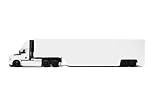
- AUTHENTIC DESIGN: Die-cast metal Freightliner eCascadia Semi-Truck & Container model featuring detailed exterior and opening container cargo doors
- PERFECT SCALE: Precision-crafted 1:62 scale, 13 inch replica with rubber tires and high-quality plastic components for enhanced realism
- INTERACTIVE PLAY: Fun pullback action mechanism allows the truck to drive forward when released
- DETAILED FEATURES: Functioning doors, authentic Freightliner branding, and realistic container trailer design make this an excellent display piece
It is important to distinguish driver-assistance features from higher levels of automation. A result for one assistance feature cannot establish the safety performance of a truck that performs more of the driving task.
What the lane-departure study does—and does not—show
A 2024 U.S. Department of Transportation summary reports that trucks equipped with lane-departure warning had a 21 percent lower crash rate than trucks without that technology in a study covering three years, 54,250 trucks, 117 fleets and 5.72 billion miles. That finding concerns lane-departure warning in the study’s fleet context; it is not a crash-rate estimate for autonomous trucks or proof that every safety system produces the same result. See the DOT ITS Deployment Evaluation summary.
For fleet decisions, the relevant distinction is whether evidence concerns the specific technology and operating context being considered. A truck’s ability to warn a driver or assist with a task is not equivalent to an automated driving system taking on that task.
Rank #2

- International lonestar, flatbed W/forklift pallets, 1: 43 Diecast New Ray toys #16643 White
Automation makes operating limits and fallback behavior essential
A safety assessment needs to ask more than whether an automated truck can avoid a collision in a particular scenario. It also needs to consider whether the system can sense its surroundings reliably, how it behaves in varied operating conditions, and what happens when sensing, actuation or control does not work as intended.
What’s actually slowing this PC down?
Pick the symptom - the matching free tool is one click away.
FMCSA’s automated-vehicle research identifies diverse test conditions, sensing performance, inspection and maintenance, and consistent responses to critical system failures as areas for assessment. In practical terms, a fleet needs to understand the system’s operating conditions and its response when a problem occurs, rather than assume that automation removes the need for a response plan. See FMCSA’s system-performance and risk-assessment work.
Human attention and transfer of control still matter
Automation can change a driver’s role without eliminating human-factor risk. Attention, secondary tasks, training and the transfer of control are all relevant when a person may need to respond to a system or resume a driving task. FMCSA’s privacy assessment, updated March 11, 2024, describes a planned simulator study involving 100 commercial drivers in simulated Level 2 advanced driver-assistance and Level 3 automated-driving conditions. It examines secondary tasks, control transfer and training; the document describes a study design, not published findings about driver outcomes. Read the U.S. DOT and FMCSA study description.
Rank #3
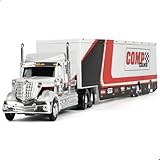
- International LoneStar Prototype – This 1:64 scale truck model is based on the legendary International LoneStar, produced by International Trucking Company. Known for its bold appearance and luxurious interior, the LoneStar is widely used in long-distance freight and heavy-duty transport. This semi-truck head model is a perfect collectible gift for truck enthusiasts, boys, men, and adult collectors.
- Durable Alloy & Realistic Details – Crafted with a die-cast alloy metal body and detailed with plastic and rubber parts, this semi-truck model combines durability with authenticity. The bottom details and rubber tires enhance the realistic feel while allowing the model to slide freely on smooth surfaces. Perfect for display, play, or as part of a classic truck model collection.
- Exquisite Color & Craftsmanship – The truck is finished in black and blue, a refined contrasting color scheme that elevates its collectible value. Printed coatings on multiple parts highlight the high degree of reproduction, making it stand out in any display. This semi-trailer truck model is an excellent gift choice for children, boys, men, and adults who love transport truck toys.
- Accurate Scale & Functional Design – Measuring 13.78 × 1.93 × 2.44 inches and weighing 0.53 lbs, this 1:64 scale alloy model is the ideal size for both collectors and young truck fans. The hood can be rotated 90° to open, adding more fun and authenticity to the display. An impressive semi-truck toy model for kids and adults to enjoy as part of their collection.
- Quality Assurance & Gift-Ready – Built under strict production standards to ensure premium quality, this International LoneStar truck model is delivered in sturdy protective packaging to guarantee safe shipping. We provide a one-year warranty and responsive customer support, so you can purchase with confidence. A worry-free choice for gifting, collecting, or display.
Separate evidence illustrates why overreliance is a concern but must be applied narrowly: in March 2026, the NTSB reported that automation overreliance contributed to two fatal Ford BlueCruise crashes involving passenger vehicles. Those investigations do not establish the crash risk of automated commercial trucks. They are relevant only as a reminder that partial automation and human use of it can create human-factors questions. See the NTSB’s BlueCruise findings.
Electric freight makes energy access part of operational readiness
For an electric freight vehicle, charging access is part of whether a route or depot plan is workable. A fleet must consider where suitable charging is available and how deployment aligns with its operations. The federal National Zero-Emission Freight Corridor Strategy was designed to guide deployment of charging and hydrogen-fueling infrastructure for medium- and heavy-duty vehicles from 2024 to 2040. It describes an infrastructure direction and planning horizon, not proof that a particular route or depot has adequate charging today. See the Department of Energy’s strategy announcement.
That distinction matters when translating national planning into fleet risk management. A strategy can help frame where infrastructure deployment is intended, but an operator still needs to verify that the facilities relevant to a particular vehicle and route are available and suitable. The source does not establish current coverage for any specific freight corridor.
Rank #4
- Efficient Heating: The built-in heating plate design provides fast and even heating with better circulation. The commercial electric food warmer is ideal for keeping stews, pasta, congee, soup, and more at the perfect temperature. Unlike regular heating tubes, the built-in design makes cleaning the compartment easier and extends the service life
- Commercial-Grade Large Capacity: Two full-size pans, Six 1/3-size pans, and two 6L pots, our steam table is designed for flexible replacement and customized layout to meet a variety of dining needs. Our standardized machine dimensions are compatible with all pans up to 5.9 inch in depth
- Smart Temperature Control: The control knob is easy to operate, with a temperature range of 86-190℉/30-85℃. Equipped with a high-precision temperature display, it clearly shows the internal temperature in real-time. The electric food warmer must be used with water. The built-in anti-dry burning protection device ensures secure use
- Premium Materials: The electric steam table is fully made of stainless steel, offering corrosion resistance, durability, and easy cleaning. High-quality, thick, anti-cut pans can be directly washed in water. The mobile wheels and convenient handle make it easy to move, while the bottom drain valve facilitates draining the remaining water from the machine
- Thoughtful Details: The removable sneeze guard allows customers to select food with security and reliability. The large undershelf is perfect for storing extra tableware and utensils. With a 1.8m power cord and main power switch design, it eliminates distance limitations to outlets. Widely used in cafeterias, hotels, fast food restaurants, supermarkets, and more
Inspection, maintenance and emergency planning need to match the technology
Automation depends on vehicle systems—including sensing equipment—remaining capable of their specified performance. FMCSA’s research treats inspection and maintenance planning as part of system-performance assessment, alongside failure response. That makes maintenance readiness a safety issue as well as an uptime issue: a system’s expected behavior depends on its condition and on the fleet’s procedures for identifying and addressing problems.
Electrification changes the vehicle’s energy and infrastructure context, but the sources available here do not quantify comparative electric-versus-diesel heavy-truck fire rates or establish a general fire-risk ranking. The NTSB’s page on a 2024 battery-electric Tesla Semi truck-tractor crash on Interstate 80 in California documents an individual investigation; one incident cannot establish a fleet-wide crash or fire rate. See the NTSB investigation page.
Accordingly, an operator should not infer a broad fire-rate conclusion from a single investigated event. Nor do the sources establish comparative repair costs for electric and diesel heavy trucks. Those figures should not be substituted with passenger-car data or vendor claims.
Outdated Drivers Are Slowing You Down
One free scan finds every outdated or missing driver and matches the right update for your exact hardware.Free scan · exact hardware matchPC Slower Than It Used to Be?
A free scan shows the junk files, broken settings and background clutter dragging Windows down - then fixes them in one click.Free scan · Windows 10 & 11Best Value

- [Vehicle Fitment]: Compatible with most Passenger Cars, Commercial Vehicles, Off-Road Vehicles, Gas Cars, Electric Cars, Motorcycles, Trucks
- [Specifications]: ①Color: Black; ②Material: Metal, ABS; ③Diameter: 80.00 mm; ④Voltage: 12 V; ⑤Current: ≤4.5 A/PC; ⑥Horn Volume: 110 dB; ⑦Frequency (High): 510 Hz
- [Direct Replacement]: The precise structural design of the product ensures a solid installation and prevents it from falling off during driving. Quick and easy installation, perfect match.
- [Advantages]: The shell of the electric snail horn is made of quality ABS material, which has the advantages of good waterproof performance, high temperature corrosion resistance, stability and not easy to deform. The product adopts copper plug, which enhances the conductivity and makes the sound louder and more powerful, and it can work normally no matter in any weather, extend a long lifepan.
- [Buy with Confidence]: A-Premium offers a one-year unlimited-mileage guarantee on our meticulously crafted horn. We offer a wide variety of automotive accessory categories, ensuring that you can hit the road with peace of mind.
Oversight, liability and insurance remain part of the automation picture
In the United States, NHTSA identifies FMCSA as the lead federal agency for commercial motor vehicle operational safety oversight, including areas such as driver qualifications, hours of service, hazardous materials and vehicle inspections. FMCSA has explained that existing commercial-vehicle rules can apply to many aspects of automated-driving-system-equipped commercial vehicles, while the federal motor vehicle and motor carrier rules described in its notice did not include ADS-specific technical performance standards for fully autonomous operation. See the agency’s notice on safe integration of ADS-equipped commercial vehicles and NHTSA’s automated-driving overview.
That description is a regulatory-context statement, not a guarantee that rules remain unchanged: requirements can evolve, so fleets should check current agency guidance before making compliance decisions. The available sources also do not establish commercial insurance prices or terms for autonomous trucks. NHTSA identifies liability and insurance as policy questions still being addressed, rather than offering a commercial-fleet premium comparison.
Quick Recap
What fleets can responsibly conclude
- Assess electric powertrains through energy planning and charging availability for the actual operation, not through assumptions about automation.
- Assess automated systems against their defined operating conditions, failure responses, inspection and maintenance needs, and the human tasks that remain.
- Keep evidence about driver-assistance features separate from evidence about higher-level automated driving.
- Do not infer fleet-wide fire rates, repair costs, insurance prices or autonomous-truck crash rates from an individual incident, passenger-car findings or a study of a different technology.
Product prices and availability are accurate as of the date/time indicated and are subject to change. Any price and availability information displayed on Amazon at the time of purchase will apply.




