Quick wins for a faster PC:
Clear out junk files and repair common Windows errorsFree Scan →Scan for outdated or missing drivers - takes under a minuteDriver Scan →Repair Windows errors before they cause bigger problemsFix Now →There is no universal diesel warm-up time. Follow the owner’s manual for your exact vehicle and engine: one cited Ford 6.7L procedure calls for about 15 seconds of idling and waiting for normal oil pressure, while a Cummins ISX12 motorhome guide says to drive once oil pressure is indicated, using light throttle and limited RPM until coolant reaches approximately 150°F. Those are application-specific instructions, not rules for every diesel.
What to do after starting a diesel engine
- Follow the starting procedure in your manual. Observe any wait-to-start or glow-plug indicator and other cold-start instructions.
- Wait for the specified oil-pressure indication. Do not raise engine speed before the manual’s stated cue. For the cited Ford 6.7L procedure, that means idling for about 15 seconds and waiting until the oil-pressure gauge indicates normal pressure. Ford owner manuals
- When the manual permits, drive gently while the engine warms. Use light throttle and avoid high engine speed or heavy load until the engine reaches the operating condition specified for your application.
- Use the manual’s cold-weather procedure when temperatures are severe. The required idle time, accelerator behavior, and use of a block heater can differ by vehicle.
These steps are a framework, not a substitute for the exact manual. Passenger cars, pickups, heavy trucks, motorhomes, generators, and off-road engines can have different controls and instructions.
How the cited manufacturer procedures differ
| Application | Warm-up instruction | Scope |
|---|---|---|
| Cummins ISX12 motorhome engine | Warm-up idling is unnecessary once oil pressure is indicated. Put the motorhome in motion with light throttle and limited RPM until coolant reaches approximately 150°F. | Cummins’ ISX12 RV quick reference, Bulletin 4971384, printed July 2012; the temperature is not a universal diesel target. Cummins RV resources |
| Ford 6.7L diesel | Idle for about 15 seconds after starting; do not increase engine speed until the oil-pressure gauge indicates normal pressure. | Model-specific Ford owner-manual guidance. Confirm the procedure for your model year and vehicle. Ford owner manuals |
| Ford 6.7L diesel in very cold weather | At approximately -26°C (-15°F), the cited manual recommends idling for several minutes before driving. | A severe-cold example for the covered Ford application, not a general threshold for all diesel engines. Ford owner manuals |
| Ram 2500/3500 | The 2023 manual says to keep engine speed under 1,000 RPM during no-load warm-up, especially in cold ambient conditions. | Instruction from the 2023 Ram 2500/3500 manual; check the manual for the vehicle’s model year. Ram owner manuals |
The differences are why a fixed recommendation such as “idle every diesel for five minutes” can be misleading. The oil-pressure cue, allowed warm-up method, cold-start strategy, and endpoint all depend on the engine and vehicle. The Cummins guide is an older quick reference that directs owners to the owner’s manual for complete information; use current engine-specific documentation for an actual vehicle.
What changes in extreme cold?
Cold weather can change both how long to idle and how to start. In the cited Ford 6.7L guidance, several minutes of idling are recommended before driving at approximately -26°C (-15°F). The same covered Ford application recommends an engine block heater at or below -23°C (-9°F). These figures belong to that manual, not to diesel vehicles generally.
What’s actually slowing this PC down?
Pick the symptom - the matching free tool is one click away.
#1 Best Overall
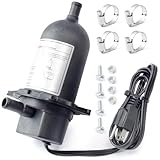
- Compatibility: Compatible with Diesel & Gas engines Generator Tractor Truck Bus Boat Marine etc. Please carefully compare every details of yours with the pictures before placing order
- Replace Part Number: TPS151GT10-000 Engine Heater replace TPS151GT8-000, TPS151GT12-000, TPS151GT10-005, 590-893, 52748, 24597503, KHTPS151GT10-005, KHTPS151GT10-000, for generac:84918G, 084918G (Please have in mind for generac it may have a 6' cord, this one has the standard 4' cord)
- Efficient Preheat: Provides 1500 watts of power output at 120 volts, which can quickly raise the coolant temperature in a short period of time, ensuring that the engine can be started smoothly even in cold weather and reducing wear and tear
- Temperature Control: It offers a temperature adjustment range of 100-120°F, allowing flexible adjustment of the preheating effect according to different environmental needs, reducing heat loss, and ensuring the equipment operates optimally at all times
- High Durability: Made of excellent materials, sturdy and shockproof, with excellent high temperature resistance. Sturdy shell and precision internal structure, making the heater more reliable, reducing maintenance and replacement costs
The 2023 Ram 2500/3500 manual also includes block-heater guidance for severe cold. Check your vehicle’s manual for the recommended temperature threshold, heater compatibility, and any installation requirements. Do not assume a heater or procedure specified for one model fits another.
Independent reader supportYour contribution helps us test, update, and keep practical guides available for everyone.How to find the right instructions for your engine
Use the owner’s manual for the vehicle’s exact model year and engine. For a Cummins engine, the manufacturer provides engine owner manuals and related technical resources through its serial-number-based lookup. Cummins Engine Manual Lookup and QuickServe
Rank #2

- Pre-Heat: Diesel and Gas engines, construction equipment, trucks, marine and industrial applications
- Heating Fluid: Engine Coolant, Water, other No pump needed (thermosiphon principle)
- Engine Displacement: 350 – 500 CID (5.7–8.2 L)
- Volts: 120v - kW: 1.5 - AMPS: 12.5 - 60Hz
- Temperature Range: ON: 100°F (38°C) – OFF 120°F (49°C)
In the manual, look for the starting, warm-up, cold-weather operation, and block-heater sections. Follow the dashboard or gauge cue it names, and check whether its directions change with ambient temperature or engine load.
Quick Recap
Best Value

- Compatibility: Replacement for Ford for F-250 for F-350 7.3L for Powerstroke Diesel 1995-2003. Replacement for Ford 7.3L Diesel engines in any vehicle, Pickup Trucks, Vans, Towtrucks all 1995-2003
- Replace Part Number: Replace F7TZ-6A051-AA. Please carefully check the model/part number/year to ensure it is suitable for your car
- Durability: Manufactured from quality materials under strict quality control to ensure longer service life. Able to withstand harsh environments and provide long-lasting and stable heating effect
- Efficient Heating: The heater can help preheat, effectively shorten the start-up time in cold weather, reduce equipment wear and tear, improve the starting efficiency and running performance
- Easy Installation: The replacement process is quick and easy, no need to modify the original system, direct replacement, saving time and installation costs
Rank #4

- Reference Part Number: Engine Block Heater 1153, 1155, 1155X with specifications of 120 Volts, 60 HZ, and 200 Watts for reliable engine heating performance
- Wide Range of Applications: Uses include cars, trucks, tractors, snow blowers, chainsaws, snowmobiles, and other equipment for heating engine block, oil pan, battery holder, intake manifold, small engine equipment, or hydraulic systems
- Engine Heating Function: This electric heater warms the engine of a vehicle to provide quicker starts and helps minimize wear on engine components during cold weather starts, promoting longevity
- Durable Construction: Built from high-quality materials, this heater is designed to withstand harsh weather conditions with robust construction that ensures reliable performance for cold weather engine protection
- Convenient Installation: Magnetic design allows for easy attachment to desired location without mechanical installation, simply plug in for instant heat transmission to help start your engine in freezing temperatures
Rank #3

- Uses include snow blowers, chainsaws, snowmobiles, or other small engines
- Applications can include oil pan, engine block, battery holder or intake manifold
- May also be used for warming hydraulic systems or thawing frozen gutters, livestock feeders, locks, and pipes
- Convenient, reliable with no mechanical installation
- Thermostatically controlled
Common warm-up mistakes to avoid
- Applying another engine’s instructions to yours: the examples above apply only to their named applications.
- Increasing RPM before the specified oil-pressure cue: follow the manual’s instruction on when engine speed may be raised.
- Using heavy throttle immediately after starting: when the manual permits driving, gentle throttle and limited RPM are the safer warm-up approach.
- Assuming more idling is always required: the Cummins ISX12 RV guide explicitly allows driving after oil pressure is indicated, while the cited Ford guidance calls for an initial idle and specifies longer idling in extreme cold.
- Choosing a block heater by temperature alone: verify the exact vehicle and engine fitment and follow the manual’s threshold and installation directions.
Product prices and availability are accurate as of the date/time indicated and are subject to change. Any price and availability information displayed on Amazon at the time of purchase will apply.




