What’s actually slowing this PC down?
Pick the symptom - the matching free tool is one click away.
A compact trailer can work for family camping in several ways: some low-profile teardrops add a bunk beside a fixed bed, while taller cabins offer standing room, tent-style trailers expand into a sleeping enclosure, and modular concepts use pop-up space. “Transforms” is not one standard mechanism, and these designs are not interchangeable. Compare the sleeping layout, usable interior space, enclosure, towing requirements and confirmed availability—not just the trailer’s advertised dry weight.
What “transforms” means in a family camper
In the examples here, extra family space comes from four distinct strategies: rearranging beds and bunks inside a low cabin, using a taller stand-in cabin, unfolding a tent-style enclosure, or expanding a modular prototype. The first three are different kinds of camping products; Honda’s Base Station is still a prototype, not a confirmed production camper.
| # | Preview | Product | Price | |
|---|---|---|---|---|
| 1 |
|
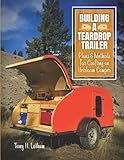
Building a Teardrop Trailer: Plans and Methods for Crafting an Heirloom Camper | $18.99 | Buy on Amazon |
| 2 |
|
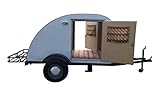
Teardrop Trailer Plans - Lightweight Camper for Motorcycle/Small Car Build | $20.95 | Buy on Amazon |
The specifications below come from manufacturers. They are not independent test results, and there is no standardized comparison across these models. Sleeping capacity alone also does not establish how comfortable a layout will be for a particular family; check the stated bed sizes and the configuration you would actually use.
Low-profile teardrops with family beds and bunks
Bend 5×10 Family: queen bed with an optional bunk
Bend Teardrop lists its 5×10 Family model with a queen mattress and an optional children’s bunk measuring 58.5 by 30 inches. The manufacturer lists the cabin at 58.5 inches wide, 96 inches long and 46 inches high. That low cabin is designed around sleeping rather than standing room.
Free tools Windows power users keep installed
One-click scans. No signup required.
Bend’s product page lists a dry weight of 1,200 pounds and a tongue weight of 100 pounds when equipped with the storage box and spare tire. Its listed exterior dimensions are 15 feet 5 inches long, 6 feet 10 inches wide wheel-to-wheel and 6 feet high. These are manufacturer-reported specifications; the page publication date is not stated. See the 5×10 Family Teardrop Camper for the maker’s current configuration and specifications.
Bend 6×12 Double Family: a sliding bunk in a larger cabin
The 6×12 Double Family has a California king bed and a full-size bunk that slides to open up the cabin. Bend says the 70.5-by-54-inch bunk can accommodate two to three children or one adult; that capacity is the manufacturer’s claim, not an independently verified occupancy rating. The listed cabin measures 70.5 inches wide by 108 inches long and 46 inches high.
Bend lists a dry weight of 1,750 pounds and a tongue weight of 125 pounds with the storage box and spare tire. Its listed exterior dimensions are 16 feet 5 inches long, 7 feet 10 inches wide wheel-to-wheel and 6 feet high. The product page does not state a publication date. Review the 6×12 Double Family Teardrop Camper for the manufacturer’s details.
Both Bend product pages list features including a pop-up outdoor kitchen, sink, 2-gallon water tank, storage, USB and 12V charging, screened windows, lighting and a powered roof vent. Confirm which items are included in the configuration and whether specifications have changed before ordering.
The Tool Desk
Outbyte Driver Updater FREEScan for outdated or missing drivers - takes under a minuteDriver Scan →Outbyte PC Repair FREERepair Windows errors before they cause bigger problemsFix Now →Other ways to add family space
Taller stand-in cabin: Bend Tallboy
The Bend Tallboy takes a different approach from the low 5×10 and 6×12: it is a stand-in cabin with configurable family bunks and beds. For a family comparing it with a low teardrop, standing room and interior arrangement may matter more than the compact profile. Check the manufacturer’s current page for its exact dimensions, storage and available layouts; the referenced Tallboy information does not establish specifications for a common comparison with the two Bend family models.
Tent-style expansion: SylvanSport GO
SylvanSport describes the GO as a trailer that converts into a pop-up tent and sleeps four. It is a tent-based alternative, not a hard-side teardrop cabin. That means the type of enclosure and expectations for setup and weather protection should be part of the comparison, alongside sleeping capacity. See SylvanSport GO pop-up camper for the maker’s description.
Rank #2
- Lightweight Design: Tailored for motorcycles and small cars, ensuring easy towing.
- Cozy Comfort: Compact yet spacious interior for a comfortable camping experience.
- DIY Adventure: Personalize your teardrop trailer with detailed, easy-to-follow plans.
- Aerodynamic Excellence: Enhances fuel efficiency and reduces wind resistance.
- Weekend Warrior: Ideal for camping enthusiasts looking for a unique, homemade camper.
Prototype modular expansion: Honda Base Station
Honda describes its Base Station concept as having pop-up standing and changing space, a queen sleeping area, and five standard window modules that can be swapped for options such as a kitchen, air conditioning or shower. Honda explicitly says, “The Honda Base Station is still a prototype.” Its eventual production form, availability and specifications are therefore not established. Details are on Honda’s Base Station page.
Hydraulic hard-side pop-up: Neo Camper USA ATLAS
Neo Camper USA describes the ATLAS as a hard-side camper that lowers for travel and expands hydraulically at camp. Its model page lists an occupancy of 3–4+ and a price of $57,800; price and availability can change, so verify them directly with the manufacturer. It is a more extensively equipped comparison than a typical compact teardrop, rather than a like-for-like small family trailer. See the ATLAS model page.
Compare the designs by the space your family needs
| Design | How it creates space | What to compare |
|---|---|---|
| Bend 5×10 Family | Queen bed plus optional children’s bunk in a low-profile cabin | Whether the optional bunk fits your children’s needs, cabin dimensions, listed dry weight and the specific equipped configuration |
| Bend 6×12 Double Family | Longer, wider cabin with a sliding bunk and California king bed | Bed and bunk arrangement, claimed bunk capacity, exterior dimensions and listed dry weight |
| Bend Tallboy | Stand-in cabin with configurable beds and bunks | Standing room, cabin arrangement, exterior height and storage; check current specifications with Bend |
| SylvanSport GO | Trailer converts into a pop-up tent | Tent enclosure, setup and weather expectations, and the manufacturer’s stated sleeping capacity |
| Honda Base Station | Prototype pop-up space with swappable modules | Prototype status, possible module choices and whether production availability is announced |
| Neo Camper USA ATLAS | Hydraulic hard-side pop-up expands at camp | Its larger equipment set, listed occupancy and current price and availability |
Choose first by the kind of space you need: extra sleeping surfaces, room to stand, an enclosed tent area or modular amenities. Then compare exterior dimensions, storage, setup and the actual configuration being offered. The listed products do not share an independent test or a standardized specification set, so avoid treating a single figure—especially sleeping capacity—as a complete measure of family usability.
Check tow fit using the loaded configuration
A dry weight is not the trailer’s loaded travel weight, and it cannot determine whether a specific vehicle can tow a particular build. Options, cargo and the vehicle’s own limits matter. Before purchase, verify the exact trailer configuration and loaded weight against authoritative documentation for both trailer and tow vehicle.
- Check the vehicle’s towing, payload and hitch ratings, along with any applicable braking requirements.
- Check the trailer documentation for its ratings and the weight of the configuration you plan to tow, including options and cargo.
- Confirm that the hitch and other equipment meet the requirements for that vehicle and trailer rather than relying on a generic accessory recommendation.
- Check applicable legal requirements for your location. The cited product pages do not establish whether any individual vehicle-and-trailer combination is suitable.
Confirm current configurations and buying terms
Bend’s buying page describes four base designs and a process of choosing a model, customizing it, placing a 50% upfront deposit, then paying the balance at pickup. Those terms can change; confirm the current process directly on Bend’s buying page. Product configurations, prices, stock and prototype status may also change, so treat manufacturer pages as the place to verify what is currently offered.
Quick Recap
Product prices and availability are accurate as of the date/time indicated and are subject to change. Any price and availability information displayed on Amazon at the time of purchase will apply.
Do these 3 things before closing this tab:
1Fix the driver behind crashes, sound loss and screen glitches2Clear out junk files and repair common Windows errors3Scan for outdated or missing drivers - takes under a minute



