Autonomous shuttles repeatedly sense their surroundings, use onboard software to plan a route through them, and convert that plan into steering, braking and movement. A human may also be part of the safety system—but whether that person is onboard, remotely advising, or absent from the vehicle depends on the service, its assessment status and the rules where it operates. “Autonomous” does not by itself mean a shuttle has no human support, or that someone is remotely driving it.
The operating loop: sense, plan, move and monitor
A shuttle’s self-driving operation is best understood as a cycle rather than a single decision. It gathers information about its location and surroundings, interprets that information, chooses a path and sends commands to the vehicle’s motion systems. The cycle then repeats continuously in real time. Singapore’s Land Transport Authority (LTA) describes this as a sense-plan-act process. The exact hardware and software vary by vehicle; the examples below are not a universal specification.
As an Amazon Associate I earn from qualifying purchases.
1. Sensors gather information
Different sensors provide different kinds of input. LTA lists cameras, LiDAR, radar, an inertial measurement unit (IMU) and a global navigation satellite system (GNSS) among the technologies an autonomous vehicle may use to understand its surroundings and location. A separate Singapore shuttle-trial release names radar, LiDAR, GPS, odometry and computer vision for the vehicles in that trial.
What’s actually slowing this PC down?
Pick the symptom - the matching free tool is one click away.
At a high level, cameras provide visual information, while LiDAR and radar are other ways of sensing objects and the environment. GNSS or GPS can contribute location information, and odometry can help track movement. An IMU measures motion-related information. These inputs can complement one another: the shuttle needs both a sense of where it is and information about what is around it. The cited sources identify example technologies, but do not give a complete sensor layout or explain how a particular vehicle combines or prioritises every input.
#1 Best Overall
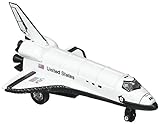
- Contents - One Diecast Pullback Space Shuttle
- Fun - Embark on interstellar adventures with a 5-inch diecast pullback space shuttle! Fuel your imagination as you launch into the cosmos, navigating the vast unknown. Pull back and release for thrilling missions, igniting curiosity and sparking astronomical joy in every cosmic journey.
- Occasions - Celebrate birthdays with a cosmic surprise, roll into space-themed playdates, or ignite curiosity during educational sessions. The 5-inch diecast pullback space shuttle adds interstellar flair to any occasion, fostering imagination and exploration in the realms of both fun and learning.
- Gift Ideas - Gift the universe of excitement with a 5-inch diecast pullback space shuttle. Perfect for aspiring astronauts or anyone with a passion for space exploration. This detailed toy combines playfulness and imagination, making it an ideal gift for birthdays, holidays, or any special occasion. Launch joyous adventures!
- Ages 3+ - This toy is reccomended for ages 3 and up.
2. Onboard software interprets and plans
Software uses the incoming sensor data to make decisions about a path toward the destination, obstacles and traffic rules. In practical terms, the vehicle must continually use what it senses to decide where it can move next. If the surroundings or its position change, the next planning cycle can account for that updated information.
This is a high-level description, not a disclosure of a shuttle’s full software design. The LTA overview explains the function of planning, but the available official descriptions do not establish the complete perception, prediction or planning architecture of a specific shuttle. It would therefore be misleading to claim that all services use the same algorithms, map format or decision rules.
3. Motion systems carry out the plan
Once software has planned a path, motion-control and actuation modules turn its commands into physical movement. That is the act portion of the cycle: the shuttle moves in response to the instructions, while new sensor information feeds the next round of decisions. LTA says the sense-plan-act process repeats continuously in real time; it is not a one-time route calculation followed blindly until the destination.
Recommended Free Tools
4. People and operating systems monitor the service
The vehicle’s onboard cycle is only one part of a passenger service. Operators also need procedures for monitoring, faults and incidents, and some deployments add a safety operator in the vehicle. In Singapore, LTA’s 2025 description of the planned Punggol rollout said safety operators would remain onboard during preparation, trial and commercial service. In a separate Singapore trial, an onboard safety driver was trained to take immediate control, and a vehicle fault system could alert that driver.
Rank #2
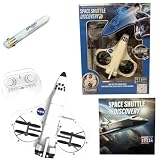
- 🚀 REAL FLYING SPACE SHUTTLE DRONE Experience the thrill of piloting your own Space Shuttle Discovery! This unique remote-controlled drone lets kids fly up, down, forward, backward, and hover—bringing space exploration to life.
- 🎮 EASY-TO-USE REMOTE CONTROL Designed for beginners and aspiring astronauts, the intuitive 2.4GHz controller provides smooth, responsive flight with multi-directional control and one-button takeoff/landing.
- 🌌 STEM LEARNING & SPACE EXPLORATION Encourages curiosity about space, science, and flight. Includes engaging educational elements to inspire imagination and hands-on STEM learning through play
- 💡 LED LIGHTS & DURABLE DESIGN Equipped with bright LED lights for exciting day or night flights. Lightweight yet durable construction ensures safe indoor and outdoor adventures.
- 🔋 RECHARGEABLE & READY FOR ADVENTURE Features a built-in rechargeable battery for repeated missions. Perfect gift for kids ages 10+ who love drones, aviation, and space-themed toys.
That human role is distinct from the vehicle’s software loop. A person may be there to intervene, follow an emergency procedure or help passengers, but the precise responsibilities depend on the service’s operating plan. “Self-driving” describes the vehicle’s driving capability; it does not, on its own, tell a passenger who is present or what authority a remote support team has.
Does an autonomous shuttle have a remote driver?
There is no universal yes-or-no answer. Remote assistance does not automatically mean remote driving. A remote team may provide advice or operational support without taking immediate control of steering, braking or acceleration. Conversely, some deployments rely on an onboard safety operator who is positioned to take control. The applicable arrangement depends on the vehicle’s assessment, service design and jurisdiction.
| Arrangement | What the sources establish | What not to assume |
|---|---|---|
| Onboard safety operator or driver | Singapore’s Punggol rollout description says safety operators would remain onboard through preparation, trial and commercial service. A separate Singapore trial trained an onboard safety driver for immediate control and included a fault alert to that driver. | Do not assume every shuttle service uses the same role, training, takeover trigger or service phase. |
| Remote operations or assistance with an onboard operator | LTA describes assessment of an operator’s remote-operations system and procedures. In the deployment-readiness assessment it describes, an operator remains onboard to intervene if needed. | The existence of remote operations does not establish that a remote person is driving the vehicle. |
| Remote assistance in a pilot without a safety driver | Great Britain’s Department for Transport applicant guidance, published 31 March 2026, describes a separate pilot scheme without a safety driver. It limits remote ADS assistance to advice and calls for response plans, communications-performance considerations, fallback protocols, system testing and functional safety assurance. | This is a framework for that Great Britain pilot scheme, not a global rule or proof that all remote support has the same limits. |
The distinction matters most when something goes wrong. “Remote support” can mean a person advising or coordinating a response; it does not necessarily mean that person can steer the shuttle at that moment. A deployment must define who acts, what triggers an intervention and what happens if the normal response is unavailable. Singapore’s Ministry of Transport says operators must document safety-operator roles, interaction protocols, conditions for manual takeover or emergency braking, and incident response. LTA and CETRAN jointly evaluate those plans before public-road deployment.
How shuttles are prepared and assessed before service
A route-based shuttle has to be prepared for its particular operating environment, not just switched on and sent out. LTA’s 2025 Punggol release described a preparation phase involving a closed-circuit test, detailed route mapping, sensor calibration, AI-model validation and safety-operator familiarisation with the route and local conditions. Those were planned stages in that release; they should not be read as confirmation that each stage has since been completed.
Rank #3

- Authentic NASA Licensed Model – Faithfully replicates the iconic Space Shuttle Discovery (OV-103), the most flown spacecraft in NASA history, with 39 missions and over 365 days in space.
- Inspiring and Educational Display Piece – Ideal for collectors and space enthusiasts, this model celebrates historic milestones such as the deployment of the Hubble Telescope and John Glenn’s return to space.
- Compact Display Dimensions – The 1:300 scale die-cast replica measures approximately 4 3/4 inches long with a 3 1/8 inch wingspan, perfect for desktops, shelves, or display cases.
- Premium Materials and Construction – Made of high-quality die-cast metal with a durable plastic base, featuring precision detailing and a sturdy stand for lasting presentation.
- Celebrate Space Exploration Legacy – Part of the Daron Postage Stamp Collection, this collectible model honors America’s pioneering spirit in spaceflight. Recommended for adult collectors and ages 14+.
In Singapore, LTA says autonomous vehicles must undergo safety assessments at CETRAN before deployment on its roads. LTA’s description of the deployable track identifies several components:
- A closed-circuit manoeuvre test.
- A demonstration for stakeholders and a review of documents.
- An assessment of the operator’s remote-operations system.
- A time-based, on-road, data-backed readiness assessment. In the readiness assessment described by LTA, an operator remains onboard to intervene if necessary.
These steps address different questions: whether the vehicle can perform manoeuvres, whether the operator has documented its systems, how remote operations work, and whether the service demonstrates readiness over time on the road. They are specific to Singapore’s described assessment framework. They should not be presented as a universal checklist used identically in every country.
What safety oversight covers beyond the vehicle
Safe operation is not only a matter of sensors and driving software. It also depends on people, maintenance, communication and procedures for responding to faults or passenger issues. The official frameworks cited here reflect that broader operational picture, while differing by jurisdiction.
Outdated Drivers Are Slowing You Down
One free scan finds every outdated or missing driver and matches the right update for your exact hardware.Free scan · exact hardware matchWindows Errors? Fix Them Before They Spread
Repair common Windows errors and clear accumulated junk for a smoother, more stable PC - no reinstall needed.Free scan · no reinstallSingapore: documented roles, response and trial insurance
In a written reply dated 12 February 2026, Singapore’s Ministry of Transport said operators must document safety-operator duties, interaction protocols, manual-takeover or emergency-brake conditions, and incident response. The plans are jointly evaluated by LTA and CETRAN before public-road deployment. The same reply says operators must provide third-party liability insurance for the duration of AV trials, covering third-party death, bodily injury and property damage. It also says the government was reviewing liability and insurance arrangements. These statements concern Singapore trials as of that reply; they are not a statement of insurance or liability requirements everywhere, or a complete account of arrangements for all commercial autonomous-vehicle operations.
Rank #4

- This Space Mission toy set includes a Boeing 747 and a space shuttle, offering authentic representations of iconic spacecraft from both past and present.
- Each toy is individually packaged, making it perfect for gifting or collecting.
- Designed to inspire imaginative play, allowing kids to recreate space missions and aircraft journeys.
- Ideal for children ages 3 and up, encouraging both learning and fun through hands-on play.
- Great for space and aviation enthusiasts, helping to foster an interest in science and exploration.
Great Britain: pilot applicant guidance
The Department for Transport’s 31 March 2026 guidance for applicants to Great Britain’s self-driving vehicle pilot scheme calls for a documented safety case and safety management system. It also addresses effective processes for detecting and responding to vehicle or passenger issues, incident management, suitable maintenance and software management, and appropriate insurance and cyber and data protections. These are requirements and considerations for applicants to that scheme, not a general international standard.
Research context and real limits
A Mineta Transportation Institute report hosted by the US Department of Transportation’s National Transportation Library discusses implementation issues such as signage, infrastructure, operator training, passenger and data safety, sensor placement and cybersecurity. Those subjects help explain why a shuttle service is more than its onboard sensors. The report should be treated as research context, not as proof that a particular shuttle has a specific safety record or that survey findings apply universally.
The available official descriptions support an explanation of the operating cycle and examples of oversight, but they do not establish a comparative safety rate for autonomous shuttles, a complete technical architecture for a named model, or measured Punggol travel-time results. A service’s real-world performance needs to be evaluated using evidence specific to that vehicle, route, operating conditions and period.
The Tool Desk
Outbyte PC Repair FREERepair Windows errors before they cause bigger problemsFix Now →Outbyte Driver Updater FREEFix the driver behind crashes, sound loss and screen glitchesFind Drivers →What the Punggol example does—and does not—show
LTA’s 2025 release described three scheduled, fixed-route autonomous shuttle services in Punggol, with four to seven stops on each route. It projected public-transport travel-time reductions of up to 15 minutes. More specifically, it estimated savings of up to 10 minutes on the first described route and up to 15 minutes on the second, compared with then-current public-transport options. These are route-specific LTA projections, not independently measured outcomes and not a general finding that autonomous shuttles save that much time.
Best Value
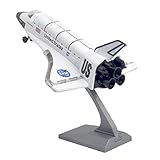
- ✈ Effect -- Music and light can attract children's attention, Slowly, children will spend less time playing the ipad, to better protect their eyes.
- ✈ Size: 8"(L) x 5.5"(W) x 3"(H) Durable Die-cast Metal Construction Space Shuttle made of zinc alloy, very strong, difficult to damage.
- ✈ Features -- Music, lights, alloy car models back to power functions.
- ✈ Design -- According to the prototype design of the space shuttle, Payload doors open to reveal satellite;It will stimulate children's curiosity about the wonders of the universe.
- ✈ Precautions -- Recommend for children who are at least 3 years old. Do not keep the small parts of the toy in mouth in case your child swallows it.
The example also illustrates why timing claims need their context. A projected saving for a planned service is not the same as an observed result after operation, and a result on one route would not automatically apply to another. Route, stops, schedule and the comparison journey all matter. The release’s travel-time estimates should therefore remain attached to the routes and comparison stated by LTA.
Loh Ngai Seng, Singapore’s Permanent Secretary for Transport and Chairman of the Committee on Autonomous Road Transport, described the trial’s purpose this way: “This trial will provide important insights into commuter experience and the interaction of AVs with other road users, as we seek to enhance urban mobility by deploying AV technology safely in our towns.” That statement sets out what the trial was intended to learn; it is not evidence that the trial achieved a measured safety outcome.
How to assess claims about a shuttle service
When evaluating a particular service, ask for details that match the operating conditions rather than relying on the word “autonomous.” Two services may use different equipment or have different human-support arrangements without either description alone proving which is safer or more capable. The available examples do not provide comparable technical and performance data for the named Punggol platforms, so they do not support ranking them.
- Sensor and location inputs: Which technologies are identified for the vehicle, and what does the operator say about their role?
- Approved route and conditions: Where and under what operating conditions is the service authorised to run?
- Human role: Is a safety operator onboard, and what are that person’s responsibilities and takeover triggers?
- Remote support: Is support advisory, or does the framework give a remote operator any driving authority? What is the fallback if communication or assistance is unavailable?
- Testing and monitoring: What assessments, ongoing monitoring and incident procedures apply?
- Passenger support and accessibility: What assistance is available to passengers during an ordinary journey or disruption?
- Performance claims: Is a travel-time or service figure projected or measured, and which route, dates and comparison does it describe?
The central practical point is that a shuttle is a coordinated system: sensors, onboard software, motion controls, operator procedures and, in some schemes, remote assistance. Its human-support arrangement cannot be inferred from the vehicle’s autonomy label. For a passenger, the most useful information is the service’s own explanation of who can help, how intervention works and what happens if the normal plan fails.
Quick Recap
Product prices and availability are accurate as of the date/time indicated and are subject to change. Any price and availability information displayed on Amazon at the time of purchase will apply.




