Crashes, No Sound, or Screen Glitches?
Random freezes, missing sound and display glitches usually trace back to one bad driver. Find and replace yours safely.Free scan · under a minutePC Slower Than It Used to Be?
A free scan shows the junk files, broken settings and background clutter dragging Windows down - then fixes them in one click.Free scan · Windows 10 & 11A hard speed-bump strike can damage more than the bumper. The most common problems affect the tire, wheel, alignment, steering, or suspension, but a tall or sharply shaped bump can also scrape the underbody, exhaust, splash shield, or other low-mounted parts. Some damage is hidden, so a car that looks fine may still have a slow tire leak, bent wheel, or altered alignment.
Check the vehicle before driving normally again. If you find a sidewall bulge, exposed cords, rapid air loss, a cracked wheel, severe vibration, loose steering, major pulling, a hanging component, or an active leak, stop driving and arrange roadside assistance or a professional inspection.
As an Amazon Associate I earn from qualifying purchases.
What determines how much damage a speed bump causes?
The impact is more severe when you cross the bump quickly, approach it at an angle, or have a heavily loaded vehicle. Other important factors include:
- Bump height and shape: A tall, sharp-edged bump creates a more abrupt suspension load than a broad, gradual hump.
- Vehicle ride height: Lowered cars, sports cars, and vehicles with long front overhangs are more likely to scrape.
- Tire and wheel setup: Low-profile tires and large wheels provide less sidewall cushioning and can be more vulnerable to wheel and tire damage.
- Tire pressure: An underinflated tire has less protection against the rim contacting the road or bump.
- Approach angle and steering: Hitting with one wheel first can load one corner and its steering and suspension components more heavily.
- Vehicle load: Passengers or cargo reduce available suspension travel and increase the chance of bottoming out.
A speed bump is not the same as a pothole: the wheel goes upward rather than dropping into a hole. But the sudden compression and rebound can still overload the tire, wheel, suspension, and underbody. Toyota owner-manual guidance advises crossing road bumps as slowly as possible to help avoid damage to the wheels and underside.
#1 Best Overall

- EASY SCRATCH and SWIRL REPAIR - If your car has light scratches, swirls, or other marks - you can easily fix that with our Scratch & Swirl Remover Kit! Using the included buffer pad, our specially formulated compound will allow you to easily remove and "erase" years of wear and tear from your vehicles paint and overall appearance!
- ULTIMATE PAINT REPAIR- Not only will this remove swirls and scratches, it will restore the gloss and shine of your paint and bring it back to its original brilliance! The special rubbing compound will remove water spots, oxidation and other contaminants from your paint!
- PREMIUM CHEMICALS - We formulate all our products to ensure they are the best! Professional grade, but easy enough for anyone to use! We use only the absolute best chemicals and ensure there are no unnecessary color dyes or scents!
- ADVANCED SOLUTION FOR ALL PAINT TYPES - Car paint scratch repair is safe to use on all paints and colors. You can safely use it on any clearcoat, single stage, or multi stage paint!
- REVOLUTIONARY PRODUCT - This scratch remover for vehicles provides an effortless and secure way to remove scratches.
Damage a hard speed-bump impact can cause
1. Tire damage
The tire may develop a puncture, cut, internal bruise, belt injury, tread separation, or sidewall bulge. It may also lose air immediately or develop a slow leak over the next several hours or days.
A bubble or bulge in the sidewall is an urgent replacement issue. It usually indicates damaged internal cords, and the tire should not be monitored casually or repaired with sealant. Do not continue normal driving if you see exposed cords, a cut reaching internal material, a rapidly falling pressure reading, a flat tire, or a damaged valve.
Inspect the inside and outside sidewalls, tread, shoulder, and the area where the tire meets the wheel. A tire can be structurally damaged without producing an obvious external mark. NHTSA recommends checking for cuts, cracks, bulges, and other abnormalities after an impact, and warns that a tire can lose pressure suddenly after striking a bump or curb.
2. Bent or cracked wheel
A hard hit can bend the wheel lip, crack an alloy wheel, damage the bead-sealing surface, or dislodge a wheel weight. Typical results include:
- A slow leak at the tire bead
- Steering-wheel vibration
- A vibration through the seat or body
- A wobble that becomes more noticeable as speed rises
- A wheel that appears visibly out of round
A cracked or visibly deformed wheel should be treated as unsafe until inspected. An external glance is not always enough; a shop may need to remove the wheel and dismount the tire to identify damage around the bead or the inside of the rim.
Rank #2

- Professional Paintless Dent Repair Kit: This car dent repair kit is made of high-grade alloy material. The dent puller uses strong adhesive hot melt glue to pull out dents, and the glue can be completely removed without damaging the car paint, ensuring 100% protection of the vehicle's finish. Whether you are a beginner or a professional, you can easily complete the repair
- Upgraded Control Handle Design: The Dent lifter features an ergonomically designed, comfortable handle for precise pressure control. The non-slip handle reduces hand fatigue and allows beginners to apply consistent pressure, thus increasing the success rate of repairs on panels of varying thicknesses
- Adjustable Mechanism: The bridge and dent lifter come with angle-adjustable and rotating design, so users can easily align tabs with the dent direction. It is especially effective for repairing stubborn small dents, making it suitable for DIY buyers
- 2-in-1 T-type Slide Hammer: The surface of the stainless steel 2-in-1 slide hammer is electroplated. There is a spring link between the pull head and the middle slide hammer, which can play a good buffering role. And it can be combined into 2 lengths and used with tabs and long pullers to repair various car dents
- High Viscosity Glue Sticks and Glue Gun: This paintless dent repair tool kit includes a professional hot glue gun and super sticky glue sticks. The glue gun heats up quickly within 3 to 5 minutes and releases glue without dripping. The high-viscosity glue sticks provide a strong and reliable bond to the car surface
3. Wheel alignment
The impact can change toe, camber, or another alignment angle. It can also bend a suspension or steering part, which means an alignment adjustment alone may not solve the problem.
Signs of altered alignment include:
- The car pulls left or right on a reasonably level road
- The steering wheel is no longer centered while driving straight
- Steering response feels different
- The vehicle wanders or feels less stable
- One tire begins wearing faster or unevenly
Proper alignment helps the vehicle track as intended and reduces unnecessary tire wear. If alignment readings cannot be brought within specification, the technician should look for a bent, loose, worn, or damaged component rather than simply installing new alignment settings.
What’s actually slowing this PC down?
Pick the symptom - the matching free tool is one click away.
4. Shocks, struts, springs, mounts, and bump stops
The sudden vertical load can stress the shock or strut, coil spring, upper mount, bushings, and bump stop. Possible symptoms include:
- A new clunk, bang, or knocking sound over bumps
- Repeated bouncing after the vehicle clears the bump
- A harsher or less controlled ride
- Fluid around a shock or strut
- Uneven ride height from one corner to another
- Excessive nose-diving under braking or instability in turns
One isolated noise does not prove that a strut has failed. A recurring noise, visible leak, broken spring, change in ride height, or new handling problem does warrant an inspection. A damaged mount or spring can create further tire wear and compromise control if ignored.
5. Steering and suspension links
A severe impact can affect tie rods, ball joints, control arms, sway-bar links or bushings, wheel bearings, and their mounting points. Watch for looseness, wandering, clunks while steering, vibration, unusual steering effort, or a steering wheel that no longer returns or centers normally.
Rank #3

- CLEAR COAT SAFE: Meguiar's Quik scratch remover for vehicles that is safe on all glossy paints and clear coats; this innovative car paint scratch repair kit works without damaging your paint, making it the ideal solution for DIY car care
- NEXT STEPS: Follow up with a wax like Meguiar’s Ultimate Quik Wax, car wax polish, or Meguiar’s Ultimate Liquid Wax for added protection, beauty and shine
- CAR SCRATCH ERASER FOR SCRATCHES & SCUFFS: Use your drill to quickly erase light scratches, scuffs, and paint transfer; using ScratchX’s micro-abrasive technology, this car paint repair set means anyone can quickly remove blemishes without hazing
- ALL-IN-ONE AUTO SCRATCH REMOVER FOR CARS: Meguiar's Scratch Eraser Kit includes all the car care products you need to remove fine scratches and blemishes, including a drill pad and one of our microfiber towels for cars to wipe it away
- MINIMAL EFFORT: Erase fine scratches and remove paint blemishes quickly and with minimal effort with Meguiar's scratch eraser kit ; this easy-to-use car detailer kit lets you restore your car's finish to like-new condition in no time
These are safety-critical parts. Do not crawl under an unsupported vehicle or try to diagnose play by aggressively rocking the wheel. If you suspect a loose or separated component, have the vehicle examined by a qualified technician.
6. Underbody, splash shield, exhaust, or bumper damage
A high or sharply profiled bump can strike the front air dam, bumper cover, splash shield, skid plate, exhaust, catalytic-converter heat shield, or other low-mounted component. Some electric vehicles also have battery enclosures positioned beneath the vehicle; a direct, severe strike deserves prompt professional attention.
Look for fresh scrape marks, hanging plastic, a new exhaust rattle, a crushed or displaced exhaust pipe, a fluid or fuel smell, fluid dripping, a changed exhaust note, or a warning light. A low car may have more significant underside damage than its exterior appearance suggests.
7. Brakes, sensors, and electronic systems
Speed-bump impacts are less likely to damage the brakes or electronics than the tires, wheels, alignment, and suspension. However, a sufficiently severe strike can affect a wheel-speed sensor, sensor wiring, brake shield, or mounting hardware.
Investigate any new ABS, traction-control, stability-control, tire-pressure, or other warning light. Do not simply clear the light and continue driving. Strong impacts can also misalign a driver-assistance sensor or its surrounding area on some vehicles, although that possibility depends on the vehicle and sensor location.
The Tool Desk
Outbyte Driver Updater FREEScan for outdated or missing drivers - takes under a minuteDriver Scan →Outbyte PC Repair FREEClear out junk files and repair common Windows errorsFree Scan →Rank #4
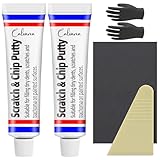
- Quick-Drying Formula: Our car paint scratch repair putty provides a rapid and effective solution for repairing dents and scratches. With its quick-dry feature, it ensures a flawless finish that stays intact. This auto body filler is easy to apply and sand, making repairs straightforward
- Versatile Scratch Repair: Specifically formulated to address gouges, pits, and damage on your vehicle. Utilizing this scratch putty allows you to effortlessly eliminate scratches while smoothing out any uneven surfaces.This compact automotive body filler is perfect for minor touch-up repairs
- Revitalize Car Paint: This car body scratch putty effectively tackles most dents and scratches on your vehicle, restoring its look to like-new condition. It's user-friendly and works well with various car paint colors and types
- Easy to Use: Enhance your car’s appearance with our automotive putty. Simply apply it to minor scratches and scuffs on the car's surface for a smooth, glossy finish with minimal effort
- Comprehensive Kit: This complete car rust repair kit features 2 tubes of 20g putties, 1 piece of sandpaper, 1 applicator, and 1 pair of gloves. One tube is designed to effectively fill over 10 damaged areas, depending on the size of the scratches
What to check immediately
- Move somewhere safe. If you are in traffic, travel only far enough to reach a safe location, and only if the vehicle remains controllable.
- Look for immediate danger. Stop driving and arrange help if the tire is flat, cut, or bulging; the wheel is cracked; steering feels loose; the car pulls sharply; vibration is severe; a part is hanging; or fluid is actively leaking.
- Inspect all four tires and wheels. Check both visible sidewalls, the tread, wheel lips, valve stems, and for fresh scrape marks. Look for bubbles, cuts, exposed cords, tread separation, a bent lip, or an apparently out-of-round wheel.
- Measure cold tire pressure. Use the pressure on the driver-door placard or in the owner’s manual, not the maximum pressure molded into the tire sidewall. An accurate digital tire pressure gauge is useful here. Record the readings and check again later if you suspect a slow leak.
- Do not rely only on TPMS. An unlit tire-pressure warning does not prove that the tire is undamaged. TPMS generally warns when pressure is significantly low; it may not identify a fresh cut, internal bruise, or pressure loss that has not yet reached the warning threshold.
- Inspect underneath safely. Look from the side without placing your body under an unsupported vehicle. Check for fresh scraping, hanging shields, crushed exhaust parts, leaks, and anything that has shifted.
- Take a cautious test drive only if everything looks normal. At low speed and away from traffic, check whether the steering wheel is centered, the car tracks straight, and there are any new vibrations, clunks, grinding, scraping, or repeated bouncing.
- Arrange an inspection if symptoms remain. Ask for a tire and wheel inspection, wheel-balance evaluation if there is vibration, alignment measurement if the steering is off-center or the vehicle pulls, and a steering and suspension inspection if there are noises, looseness, ride-height changes, or instability.
If pressure is low but the tire has no visible damage and is otherwise roadworthy, a portable tire inflator can restore pressure temporarily so you can reach a safe location or tire shop. It is not a repair: never inflate and continue using a tire with a bulge, major cut, exposed cords, suspected structural damage, or continuing pressure loss.
How urgent is the problem?
Stop driving and arrange towing or immediate professional help
- Sidewall bulge, exposed cords, major cut, rapid air loss, or a flat tire
- Cracked or visibly deformed wheel
- Severe steering-wheel shake, strong pulling, wandering, or loose steering
- A tire or wheel that visibly wobbles
- A broken, detached, or hanging suspension, exhaust, or underbody component
- Active fluid leakage or a burning smell
- A new warning light combined with abnormal handling, braking, or steering
Arrange an inspection soon
- New clunking, banging, grinding, or scraping
- An off-center steering wheel or a vehicle that pulls
- New vibration that changes with road speed
- Repeated bouncing, harshness, instability, or uneven ride height
- A visible shock or strut leak
- Uneven or rapidly developing tread wear
AAA and other automotive safety guidance recommend checking alignment when the vehicle pulls and having steering and suspension components inspected when unusual noises or vibrations follow a hard impact. An alignment or suspension check is especially appropriate when the symptoms do not disappear after the tires are checked.
Probably minor, but monitor it
The impact may have caused no meaningful damage if the vehicle tracks normally, steering feels unchanged, tire pressures remain stable, there are no new sounds or warning lights, and no visible tire, wheel, or underbody damage exists. Continue monitoring pressure and handling for the next several drives, particularly if the car has low-profile tires, large wheels, lowered suspension, or was heavily loaded.
What not to assume after a hard impact
- “There is no dent, so the car is fine.” Tire, wheel, alignment, and suspension damage can be hidden.
- “The TPMS light is off, so the tire is safe.” The system is not a complete structural-tire inspection.
- “An alignment will fix everything.” A bent tie rod, control arm, wheel, or other part must be found and repaired first.
- “I can keep driving if the tire holds air for a few minutes.” Internal impact damage may worsen without an immediate leak.
- “A tire inflator repairs the problem.” Inflation only addresses pressure; it does not repair a cut, bulge, bent wheel, or internal tire injury.
- “The noise is just plastic.” A new rattle may be a loose splash shield, but it could also be an exhaust or suspension component.
How to avoid repeating the damage
Slow down before the bump rather than braking sharply while the front wheels are on top of it. Keep the wheels as straight as practical, avoid accelerating over the bump, and take extra care when the vehicle is heavily loaded. Maintain the tire pressure specified by the vehicle manufacturer and pay particular attention to low-profile tires and lowered vehicles.
Do not deliberately straddle a bump unless the road design and vehicle allow it safely: moving across it at an angle can load one side of the suspension and may increase scraping or uneven impact. The safest approach is generally slow, controlled, and as square to the bump as traffic and road layout permit.
When a professional inspection is the right answer
The exact damage cannot be diagnosed from the impact description alone. Speed, bump geometry, vehicle model, tire and wheel specification, pressure, load, and symptoms all matter. A proper shop inspection may include checking the tire internally, measuring wheel runout, balancing the wheel, inspecting steering and suspension joints, checking ride height, and measuring alignment.
Best Value

- 【Paintless Dent Repair Kit】2 in 1 Slide Hammer T-Bar, Bridge Puller kit, Dent Lifter, 3pc Suction Cup(1black+2blue), Hot-Melt Glue Gun, Rubber Hammer, Tap Down Pen, 10pcs Glue Sticks, 100pcs Puller Tabs and so on. This 140pcs car dent puller kit makes it easy for anyone, even beginners, to fix You can fix dents effortlessly.(Please read the manual before use)
- 【Meet Various Types of Dents】Our Dent Puller Kit can meet all kinds of needs. T-Bar Puller fit for large dents. Bridge Puller is used to repair medium dents and Dent Lifter is suitable for small dents. Tabs of different sizes and shapes are great for repairing various dents. You can easily repair dents of various sizes. (Tip: This tool is not suitable for corners or creases)
- 【The Original Paint Is Not Damaged】It is paintless dent removal. The bottoms of the bridge dent puller and dent lifter are made of soft rubber, so they will not damage your car's original paint. Moreover, our glue is easy to clean, spray alcohol on the remaining glue after the dent is out, the glue residue can be completely removed without damaging your original paint.
- 【How to Use】1. Clean dent surface and apply hot glue to puller tab. 2. Put the puller tab on the dent and press for a few minutes. 3. Choose the appropriate repair tool based on the shape and size of the dent. Place the puller to pull up the dent. 4. After the dent is out, spray alcohol on the remaining glue on the car surface and use a rubber scraper to remove it.
- 【Widely Applicable Scenarios】Our dent repair kit for cars can efficiently works on various metal surfaces, like automobiles, refrigerators, motorcycles, and washing machine. You can fix those annoying dings and hail dents in just a few minutes, saving you both time and money on costly auto body repairs.
Seek a tire and suspension inspection when the car pulls, vibrates, develops a new noise, loses pressure, sits unevenly, scrapes, or shows any sign of a damaged wheel or tire. A visual check at home cannot rule out every internal tire, wheel, alignment, or suspension problem.
For broader tire maintenance—not as a test for hidden impact damage—a tire tread depth gauge can help identify wear that may need attention. It cannot determine whether the tire’s internal cords or belts were damaged by the speed bump.
Do these 3 things before closing this tab:
1Scan for outdated or missing drivers - takes under a minute2Clear out junk files and repair common Windows errors3Fix the driver behind crashes, sound loss and screen glitchesFrequently Asked Questions
Can hitting a speed bump damage alignment?
Yes. A hard impact can alter toe, camber, or another alignment relationship, or bend a steering or suspension component. Pulling, an off-center steering wheel, changed steering response, and uneven tire wear are reasons to have the vehicle inspected and its alignment measured.
How do I know if my tire was damaged by a speed bump?
Check for a sidewall bubble, cut, exposed cords, tread separation, fresh scraping, or pressure loss. A tire may also have hidden internal damage, so a new vibration, slow leak, or unusual handling should be checked by a tire professional even when the outside looks normal.
Is it safe to drive after hitting a speed bump hard?
Only drive cautiously to a safe location if the vehicle remains controllable and there is no visible tire or wheel damage, severe vibration, strong pulling, loose steering, active leak, hanging component, or warning light with abnormal behavior. Otherwise, stop and arrange assistance.
Can a speed bump damage a shock or strut?
It can overload a shock, strut, spring, mount, bushing, or bump stop. Repeated bouncing, a new clunk, fluid around the strut, uneven ride height, a harsher ride, or instability calls for a suspension inspection.
Free tools Windows power users keep installed
One-click scans. No signup required.
Should I get an alignment after every hard speed-bump hit?
Not necessarily. If the car tracks straight, the steering remains centered, pressures are stable, and there are no new symptoms, immediate alignment may not be necessary. If the car pulls, the wheel is off-center, vibration appears, or tire wear changes, have the wheel, suspension, and alignment checked rather than assuming an alignment alone is sufficient.
The Bottom Line
A hard speed-bump hit can damage the tire, wheel, alignment, suspension, steering, or underbody even without visible body damage. Check the tires and wheels, measure cold pressures, inspect underneath safely, and watch for pulling, vibration, new noises, leaks, or warning lights. Any bulge, exposed cord, cracked wheel, rapid pressure loss, severe handling change, or hanging part means stop driving and get professional help.
Quick Recap
Product prices and availability are accurate as of the date/time indicated and are subject to change. Any price and availability information displayed on Amazon at the time of purchase will apply.




