Quick wins for a faster PC:
Scan for outdated or missing drivers - takes under a minuteDriver Scan →Repair Windows errors before they cause bigger problemsFix Now →Fix the driver behind crashes, sound loss and screen glitchesFind Drivers →The air-cooled Porsche 911 endured because Porsche kept its defining layout—a rear-mounted flat-six, a distinctive silhouette and a usable 2+2 cabin—while repeatedly updating the engineering around it. From the original 911 to the 993, the final air-cooled generation, the car gained safety equipment, turbocharging, all-wheel drive and more sophisticated suspension without abandoning its basic identity. Its story is not that air cooling made it objectively better; it is that Porsche evolved a distinctive sports car until new emissions and engine requirements made a different cooling system necessary.
Where the 911 began
Porsche presented the 901 at the Frankfurt International Motor Show on 12 September 1963 as the successor to the 356. Before the car reached the market in 1964, the name changed to 911. Ferdinand Alexander Porsche was responsible for the design. The formula combined a rear-mounted, air-cooled six-cylinder boxer engine with a 2+2 cabin and luggage space, including two fold-down rear seats. Porsche’s account of the original car describes a 2.0-litre engine producing 130 PS and a top speed of 210 km/h. Porsche’s 60-year history of the 911 and its account of the idea behind the car trace that combination from the start.
The silhouette and rear-engine arrangement became the 911’s through-line, but the car was never simply frozen in its original form. Porsche’s own description of F. A. Porsche’s design aim captures the tension between continuity and change: “Optimising the function while uncompromisingly reducing the form to the essential. Transcending the familiar in order to keep finding the new, better solution.”
How the air-cooled 911 evolved
The generation dates below are approximate. Porsche sources use different production, model-year and generation boundaries, so overlapping dates do not mean that one calendar year maps neatly to a single generation.
The Tool Desk
Outbyte Driver Updater FREEFix the driver behind crashes, sound loss and screen glitchesFind Drivers →Outbyte PC Repair FREERepair Windows errors before they cause bigger problemsFix Now →#1 Best Overall

- High-Quality Materials:The Porsche 911 Turbo die-cast car is made of zinc alloy,plastic parts and rubber tires,making it safe for children to play with.It features detailed interior and exterior trim, and is very sturdy.
- Function:No batteries are required, but the vehicle has a powerful pull back feature. Simply pull it back, then release your hand, and the car will go for a long distance. The doors may be opened to view the whole inside of the vehicle. So appealing to children and collectors alike.
- Size:1/36 scale vehicle model with beautiful English packaging,ideal for toddlers to play with and carry. Car collectors will appreciate the perfect small size, which allows them to collect a complete set of cars without taking up too much space.
- Grow From Play:Help children learn more about car ,expand their knowledge ,increase the hand-eye coordination and the reaction speed of the children in the play.
- Ideal Christmas Festival Gift:All of TOKAXI die-cast model cars are attractively packaged in English, making them the perfect Christmas, Birthday, Children's Day, New Year gift for kids, party favors, home decorations, or travel toys for boys and girls.gifts for boys girls.
| Generation | Approximate period | What changed | What carried forward |
|---|---|---|---|
| Original 911 | 1963/64–1973 | Introduced the air-cooled flat-six and 2+2 layout; gained developments such as the Targa, improved brakes, fuel injection and safety features. | Rear-mounted engine, recognizable form and sports-car usability. |
| G-Series | 1973–1989 | Added safety and comfort equipment, improved corrosion protection and brought the turbocharged 911 to production. | Air-cooled flat-six and rear-engine concept. |
| 964 | 1989–1994 | Almost 85 percent newly developed, with a 3.6-litre engine, power steering, ABS and the option of all-wheel drive. | Rear-engine, air-cooled identity. |
| 993 | 1993/94–1998 | Introduced a multi-link rear axle and continued engine and body-style development; it was the final air-cooled generation. | The established 911 layout, refined with newer chassis and engine technology. |
Original 911: adding capability to the concept
The first generation grew beyond its initial specification. Porsche introduced the Targa in 1967, with a broad rollover bar, and added features including internally vented disc brakes, mechanical fuel injection, a safety steering system and rust protection. Porsche identifies the Carrera RS 2.7 as the first production passenger vehicle with a rear spoiler intended to reduce lift. In Porsche’s 2017 account, the 1972 Carrera RS 2.7 is listed at 210 hp and under 1,000 kg; those are the source’s figures and unit labels, distinct from the original 911’s 130 PS specification. Porsche’s 2017 history of seven 911 generations gives that RS specification.
G-Series: safety, comfort and turbocharging
The G-Series retained the air-cooled flat-six while making the car more accommodating and safer. Porsche records plastic bumpers, automatic seat belts and integral seats among the changes. From 1975, hot-dip galvanised sheet metal improved corrosion protection. The 911 Turbo, internally type 930, brought exhaust turbocharging into series production. Porsche reports that the initial 3.0-litre Turbo produced 260 PS, rising to 300 PS in 1977. In its 2024 account of the 911’s engineering history, Porsche describes the technology as developed through racing and made ready for series production in 1974; a controlled valve regulated boost pressure to help manage power delivery.
964: a major redesign beneath a familiar identity
Porsche says almost 85 percent of the 964 was newly developed. Its 3.6-litre flat-six produced 250 PS, and the generation added power steering, ABS, central locking, a more efficient heater and height-adjustable seats. The Carrera 4 brought all-wheel drive to the 911 line, using a system adapted from the 959. Other developments included an automatically retractable rear spoiler, dual ignition, knock control and Tiptronic availability. The rear-mounted, air-cooled engine remained at the center of the package.
Rank #2
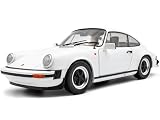
- SOLIDO BRAND QUALITY: Solido is known for producing high-quality diecast model cars with exceptional detail, durable construction, and accurate representations of real vehicles. Each model is crafted with precision and built to last.
- PORSCHE OFFICIALLY LICENSED MODEL: Officially licensed Solido replica of the 1974 Porsche 911 (930) 3.0 SC, finished in White and reproducing the iconic rear-engine German sports car.
- FEATURES & DETAILS: 1:18 scale diecast model featuring opening front doors, directional wheels, White finish and exterior styling faithfully based on the 1974 Porsche 911 (930) 3.0 SC.
- TOP QUALITY MATERIALS: Diecast metal body with molded plastic components, detailed interior, reproduced exterior trim, wheels, bodywork and White finish representing the 1974 Porsche 911 (930) 3.0 SC.
- COLLECTIBLE DISPLAY ITEM: Designed for collectors ages 14 and up. Intended for display by Porsche enthusiasts, classic sports car fans and diecast model collectors, making an excellent gift for any collection.
993: the final air-cooled generation
The 993 was the last 911 generation with an air-cooled engine, and Porsche reports that production ended in 1998. Its key chassis change was a redesigned multi-link rear axle, which Porsche says improved handling dynamics and comfort. The initial Carrera produced 272 PS; the initial 3.6-litre 993 Turbo used twin turbos and produced 408 PS, according to Porsche’s 2023 retrospective on the 993.
The range also showed how much the 911 concept could accommodate: Carrera 4, Cabriolet, Targa with an electrically retractable glass roof, Turbo, RS and GT2 versions. Porsche’s 2023 retrospective counts 68,881 examples produced through 1998. A separate Porsche account published in 2017 gives a different total, 67,535, so the production count depends on which official retrospective is used; the 2023 figure should not be treated as an uncontested total.
What made the air-cooled Porsche 911 so great?
“Great” is a judgment, not a measurable specification. The strongest case for the air-cooled 911 rests on the way several qualities reinforced one another over decades.
Rank #3

- REMOTE CONTROL PORSHCE 911 :1/24 scaled back on the real Porsche 911 GT3 RS,officially licensed by Porsche,the Porsche car has all the functions of a real car.For Porsche car fans, this is a realistic small scale replica of a Porsche model
- FULLY FUNCTIONAL PORSHCE RC CAR :The Porsche remote control car has functions such as forward, backward, left turn, right turn; and easy to control.The rc car simulates a very powerful engine just like a real Porsche. Let you experience the fun of remote control
- SAFE MATERIALS AND Scratch Resistance :Non-toxic ABS plastic and smooth exterior can withstand many bumps. The unique design of the wheels and the independent suspension system can reduce the friction between the tire and the floor and prolong the use time of the remote control car
- EXCELLENT PERFORMANCE :Operated by 2.4Ghz frequency, provides stability and a wider range of control for the race, provides up to 80 feet of range, lets you have fun at speeds up to 4 mph
- IDEAL REMOTE CONTROL PORSCHE CAR :The remote control porsche car works well on a smooth surface, suitable to play inside and outside. You not only play with it using the remote control but also place it as an exhibit on a display shelf. It is a good choice for you at various festivals
A distinctive, consistent mechanical identity
The rear-mounted flat-six gave the 911 a recognizable engineering character, and Porsche retained that basic arrangement through the air-cooled generations. The result was continuity that owners and observers could recognize even as individual generations changed substantially. Air cooling was part of that identity, but it is more accurate to see it as a defining feature of the original formula than proof of inherent superiority.
Sports-car character with everyday usefulness
The original 2+2 cabin, fold-down rear seats and luggage compartment made the 911 more than a narrowly focused two-seat coupe. Over time, the range of body styles and variants widened the ways a 911 could be used. That breadth helped the model preserve its sports-car purpose without limiting it to one kind of buyer or one kind of driving.
Continuous engineering rather than nostalgia
Porsche kept revising the car: brakes and fuel injection on early models; safety and corrosion improvements in the G-Series; turbocharging; electronic controls and all-wheel drive on the 964; and a new rear suspension on the 993. The formula endured not because Porsche refused to change it, but because the company changed components and capabilities while preserving the car’s recognizable center.
Rank #4
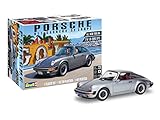
- Revell Plastic Model Car Kit #85-4521 is skill level 4 and contains 109 parts. Recommended for ages 12 and up.
- Assembled Dimensions: 7.00"x3.13"x2.19"
- 3.2-liter flat six engine. Positional front wheels & movable engine cover. Fuchs style wheels & optional front chin spoiler.
- Choice of left or right-hand drive version and either US or Euro spec front turn indicators and rear bumper guards.
- Molded in white and clear with soft black tires. Paint and glue not included.
When did Porsche stop making air-cooled 911s?
Porsche’s air-cooled 911 story ended with the 993, whose production concluded in 1998. The successor, the 996, marked the move to water cooling; Porsche sources place its appearance in 1997 or 1998 depending on whether they describe its introduction or the generation period. Those overlapping dates reflect different ways of defining a model’s launch and production era, not a contradiction about which generation ended the air-cooled line.
Why did Porsche switch the 911 to water cooling?
Porsche links the change to stricter emissions requirements and the adoption of four-valve cylinder heads, which needed better temperature regulation. The 996’s water-cooled engine also raised entry-level output to 300 PS, according to Porsche’s 60-year press-kit history. August Achleitner, Porsche 911 model-line leader from 2001 to 2018, explained the engineering logic: “The switch from air to water cooling was our ticket to the new technology.” He also said, “There was just no more potential for the air-cooled two-valve engine.” Both remarks appear in Porsche’s engineering history of the 911.
The change was therefore not simply a rejection of the past. Porsche had developed the air-cooled two-valve engine across generations, but the next stage of engine technology and emissions compliance called for a different system. The 996 altered a defining mechanical detail while continuing the broader 911 project: preserve the model’s identity by adapting its engineering to new requirements.
Do these 3 things before closing this tab:
1Scan for outdated or missing drivers - takes under a minute2Clear out junk files and repair common Windows errors3Fix the driver behind crashes, sound loss and screen glitchesQuick Recap
Product prices and availability are accurate as of the date/time indicated and are subject to change. Any price and availability information displayed on Amazon at the time of purchase will apply.




