Recommended Free Tools
The legendary 1965 Chevelle Z16 is not safely reduced to a single claim of being “the rarest.” Its conventional 201-car count, a disputed convertible, missing allocation records, and a documented engineering prototype make it both one of Chevrolet’s rarest Chevelles and one of its most difficult to define.
The 1965 Chevrolet Chevelle Malibu SS 396 with RPO Z16 is the best answer to the “rarest Chevelle” question only if the question is asked carefully. It is conventionally counted as 200 regular-production Kansas City coupes plus one Baltimore engineering prototype—201 cars in the usual telling. But its status is larger than its number: the Z16 was Chevrolet’s early, highly engineered blueprint for putting the new Mark IV 396 big-block into an intermediate.
There is also a complication. A reported Z16 convertible associated with Chevrolet general manager Semon “Bunkie” Knudsen appears in historical accounts, but its build status and fate are not resolved consistently. That is why “exactly 201 were ever built” is too certain, and why calling any one Chevelle objectively the rarest depends on the definition being used.
What the Z16 actually was
Z16 was a Chevrolet regular-production option code, not a later collector nickname. Chevrolet’s February 22, 1965 AMA specification sheet identifies the manufacturer as Chevrolet Motor Division, the car as Chevelle, the option as RPO Z16, the engine as an optional 396-cubic-inch V-8, and the body as a Malibu Super Sport two-door sport coupe.
Outdated Drivers Are Slowing You Down
One free scan finds every outdated or missing driver and matches the right update for your exact hardware.Free scan · exact hardware matchWindows Errors? Fix Them Before They Spread
Repair common Windows errors and clear accumulated junk for a smoother, more stable PC - no reinstall needed.Free scan · no reinstall#1 Best Overall
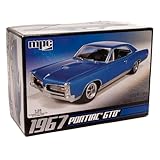
- V8 POWER: The model features a 400 cubic inch V8 engine, reflecting the muscle and power that defined the GTO's reputation.
- DETAILED SUSPENSION & EXHAUST: The kit incorporates separate rear suspension and exhaust detailing, adding to the realism of the model.
- BUCKET SEATS & CONSOLE: The model's interior features bucket seats and a floor shifter with a console, capturing the iconic look and feel of the GTO.
- OPTIONAL SUPERCHARGER: For those seeking more power, the kit offers an optional supercharger, allowing you to customize your model.
- CLEAR & COMPREHENSIVE INSTRUCTIONS: The included instructions are clear and user-friendly, making the kit accessible to modelers of different skill levels, from beginners to experienced hobbyists.
That formal identity matters. A Z16 was not simply any 1965 Chevelle with a 396 installed. Chevrolet used the Malibu SS sport coupe as the platform for a package designed around the new engine and the loads it would impose. In effect, it previewed the big-block Chevelle formula that would become one of the defining muscle-car combinations of the later 1960s.
Why Chevrolet built it
Chevrolet’s internal-program material, as reproduced in specialist reporting, places the Z16 paper trail from September 11, 1964 through March 23, 1965. The purpose was straightforward: give Chevrolet’s new Mark IV 396 a dramatic public home in the intermediate-sized Chevelle.
The choice was strategically important. A full-size Chevrolet could absorb a large-displacement V-8 without surprise; a Chevelle made the engine’s power more conspicuous. The Z16 therefore functioned as both a development exercise and a showroom statement. It showed that Chevrolet could package big-block performance in a midsize car while retaining the drivetrain, chassis, and braking equipment needed to make the combination credible.
The hardware that made a Z16 more than an engine swap
Period and specialist accounts describe the Z16 package with the following core equipment:
Rank #2

- A PERENNIAL CLASSIC FOR EXPERIENCED MODELERS: AMT’s 1/25 scale 1967 Shelby GT-350 is the perfect project for muscle car builders. Add it to your collection today!
- FEATURE PACKED: The 1967 Shelby GT-350 is a historical muscle car that stands alone! Fully paintable, it features authentically detailed water-slide decals. Build it up right with a Ford 289 V8 engine and all the Shelby touches—custom rear lower pan, chrome wheels, custom taillights and front grille, bucket seats, and more. Wrapped up nicely in retro-styled packaging!
- QUICK SPECS: 1/25 Scale, 123 Parts, 7 inches long once assembled. Parts molded in white, clear and transparent red, with black vinyl tires. Some parts are chrome plated. Plastic model kit paint and cement required (Testors or Tamiya brands recommended). Paint guide included in kit. Skill Level 2. For ages 10+
- THE PERFECT PRESENT: Don't know what to get dad for his birthday? Or maybe you have an avid hobbyist or collector in your life. This model kit makes an ideal gift for any occasion!
| Component | Z16 specification or reported feature | Why it mattered |
|---|---|---|
| Engine | 396-cu-in L37 V-8, rated at 375 hp | The new Mark IV big-block was the center of the program. |
| Transmission | Wide-ratio Muncie four-speed | It paired manual control with gearing intended for the engine’s broad torque. |
| Frame | Chevelle convertible-style boxed frame | Added structural support compared with an ordinary open-channel arrangement. |
| Suspension | Heavy-duty suspension package | Matched the chassis to the higher-performance mission. |
| Rear axle | 12-bolt rear axle | Provided a sturdier driveline foundation for big-block torque. |
| Brakes | 11-inch power drum brakes | Part of the package intended to manage the car’s performance. |
These details are the heart of the Z16 story. The car did not merely borrow a 396; it assembled a supporting package around it. That engineering coherence is why a genuine Z16 carries historical weight beyond that of a similarly powered, later-modified Chevelle.
The conventional count: 200 plus one
The widely repeated production figure is 201: 200 production coupes assembled at Kansas City and one Baltimore-built prototype. “Conventionally counted” is the right phrase because the historical record contains wrinkles that cannot responsibly be wished away.
Specialist reporting has described the Kansas City run as 200 cars, while other historical accounts differ over whether Baltimore produced one or two development cars. The best-documented Baltimore car is treated as the original Z16 prototype. It was an engineering-development vehicle converted to Z16 specification as the components were developed and was reportedly used at GM proving grounds before entering collector stewardship.
Then there is the reported Knudsen convertible. Some accounts call it a separate one-off and say it was destroyed; others leave its disposition unknown. The evidence reviewed here does not settle that disagreement. The sensible conclusion is that it sits outside the clean 200-production-coupes-plus-one-prototype total as an unresolved provenance story—not as a basis for casually changing the production count to 202.
Rank #3

- Revell Model Kit #14531, Skill Level 5, Contains 77-Parts, Recommended for ages 13 and up
- Detailed 440+6 V-8 engine, hood scoop that can be positioned open or closed
- Detailed interior with separate side panels and a front bench seat
- Molded in white and clear with chrome plated parts and black vinyl tires
- Illustrated assembly instructions. Requires paint and glue. (not included)
Why “the rarest Chevelle” is not a simple fact
Rarity has categories. A car can be rare as a regular-production option, as a particular body-and-engine combination, as a dealer conversion, as a prototype, or as a documented surviving example. The Z16 is exceptionally scarce in the first and fourth senses, especially when the Baltimore prototype is included in the discussion.
That does not make it safe to proclaim it the rarest Chevelle in every possible category. Chevrolet historical material, for example, describes 1970 SS Chevelles equipped with the 454 as that model year’s rarest Chevelle SS examples. A title that asks for the rarest Chevelle is therefore best answered with context: the Z16 is one of Chevrolet’s rarest and most consequential production-era Chevelles, while its documented prototype may be the most singular car in the Z16 story.
The prototype: where engineering history becomes collector history
The Baltimore-built prototype is important precisely because it is not just a low-production showroom car. Sports Car Market’s profile identifies it as the original Z16 prototype and describes it as an engineering-development car built up as Z16 components came online. Its reported GM proving-ground use links it to the moment Chevrolet was working out how to make the 396 Chevelle package real.
That distinction changes how the car should be understood. A production Z16 is scarce because of its tiny run. The prototype is scarce because it is a surviving development artifact: a vehicle connected to the hardware, testing, and decisions that preceded the Kansas City production run. Its historical value depends on the documentation and provenance supporting that narrative, not simply on the presence of unusual parts.
Free tools Windows power users keep installed
One-click scans. No signup required.
Rank #4

- 1:25 scale, skill level 2, paint & glue required
- 82 parts
- Molded in white, clear, transparent red, and some chrome-plated parts
- Black vinyl tires
- Metal axle
The paperwork mystery is part of the car’s value—and its risk
The Z16’s limited production does not mean every car is easy to document. Reproduced factory-memo reporting identifies allocations for the first 20 cars, but documentation for the remaining 180 shipments is described as lost or unknown. That gap is central to the model’s enduring mystery.
It should not be used to accuse every uncertain car of being fraudulent. Nor does it make a claim impossible to prove. It does mean a buyer, restorer, auction observer, or historian should apply a higher standard of corroboration than they might for a more thoroughly documented model.
What credible Z16 identification requires
- A provenance chain: ownership history, period paperwork, shipping or dealer material where available, and records that agree with one another.
- Vehicle-specific evidence: original or well-documented Z16-specific equipment and details evaluated in context.
- Independent expertise: review by a recognized Z16 registry or marque specialist, particularly when major value is at stake.
- Restoration disclosure: a car can be a meaningful restored Z16, but replacement parts, corrections, and deviations should be stated plainly.
What does not prove Z16 status by itself is a badge, a 396 engine, paint color, VIN alone, or one loose component. Those items can support a larger case; they cannot replace one. The incomplete allocation trail makes that discipline especially necessary.
Independent reader supportYour contribution helps us test, update, and keep practical guides available for everyone.Three labels collectors should keep separate
| Label | Meaning | What should support the claim |
|---|---|---|
| Original RPO Z16 | A factory-built Z16 with defensible identity. | Strong provenance plus corroborating vehicle-specific features and documentation. |
| Restored Z16 | A genuine Z16 that has been materially restored. | The same identity evidence, with an honest accounting of replacement and restoration work. |
| Tribute or clone | An enthusiast-built recreation of the Z16 look or specification. | Clear representation as a recreation; it is not a production Z16. |
There is nothing inherently wrong with a tribute build. The problem begins only when visual similarity or a desirable engine is offered as factory identity. On a car as rare and imperfectly documented as the Z16, precision in language is part of responsible ownership.
Best Value

- MODEL CAR BUILDING TOY – The LEGO Speed Champions Time Machine from Back to the Future (77256) building toy for kids 9 years old and up lets young builders create time travel adventures
- 2 MINIFIGURES – Kids can place the Doc Brown and Marty McFly minifigures inside the cockpit for creative storytelling and pretend play adventures
- BUILD 2 WAYS – Kids can construct the DeLorean from the first Back to the Future movie with lightning rod and California license plate, then rebuild it into the flying version with Mr. Fusion, orange license plate, and sideways wheels
- AUTHENTIC MOVIE DETAILS – Both versions of the iconic car include features straight from the films, like rear air vents, cockpit, the flux capacitor, and a time calculator GIFT FOR BOYS & GIRLS – This Back to the Future DeLorean is a fun build-and-play experience and makes a great birthday or any-time present for kids, movie fans and nostalgic adults
- ICONIC CARS FOR PLAY & DISPLAY – LEGO Speed Champions car building kits (sold separately) let kids and passionate car fans build detailed replica versions of some of the world’s most famous vehicles
A short timeline of the Z16 story
- September 1964: Internal-program documentation begins the recorded trail for Chevrolet’s 396 Chevelle effort.
- Engineering development: The Baltimore prototype is reportedly converted to Z16 configuration as the relevant hardware is developed and evaluated.
- February 22, 1965: Chevrolet issues the AMA specification sheet identifying the Chevelle RPO Z16 and its 396-cu-in V-8 option.
- 1965 production: Kansas City assembles the 200-coupe production run generally associated with the Z16.
- March 23, 1965: The reproduced internal-material timeline reaches its last cited date.
- Later collector era: The surviving cars become objects of careful registry work, restoration, and provenance research amid incomplete shipment records.
Why the Z16 still matters
The Z16’s importance is not merely that Chevrolet built very few. Its compact production story contains a full transition in American performance cars: a new big-block, an intermediate platform, structural and driveline upgrades, a limited public release, and a surviving prototype that preserves the engineering side of the experiment.
That is also why the mystery cannot be separated from the history. The missing allocation records, disputed convertible story, and difference between a production coupe and a development prototype prevent a simplistic “rarest ever” verdict. They make the Z16 more interesting. Rarity gives it mystique; provenance makes it historically legible.
Frequently Asked Questions
How many 1965 Chevelle Z16s were built?
The standard historical count is 201: 200 Kansas City production coupes and one Baltimore prototype. A reported Z16 convertible linked to Semon “Bunkie” Knudsen is an unresolved story, so it should not be used to state a settled 202-car total.
Is the Z16 definitively the rarest Chevelle?
It is among the rarest and most historically important production-era Chevelles, but “rarest” depends on the category. Other Chevelle variants can be rarer by model year, engine/body combination, prototype status, or documented-survivor count.
Do these 3 things before closing this tab:
1Scan for outdated or missing drivers - takes under a minute2Repair Windows errors before they cause bigger problems3Fix the driver behind crashes, sound loss and screen glitchesCan a VIN or badge authenticate a Z16?
No. A badge, 396 engine, color, VIN alone, or individual part cannot establish factory Z16 identity. A credible claim needs converging provenance, vehicle-specific evidence, documentation where available, and review by a recognized marque expert or Z16 registry.
Why is the Baltimore Z16 prototype so important?
The best-documented Baltimore car is described in specialist reporting as the original engineering-development prototype, converted to Z16 specification as components were developed and reportedly used at GM proving grounds. That makes it uniquely significant within Z16 history.
The Bottom Line
The 1965 Chevelle Malibu SS 396 RPO Z16 is best understood as one of Chevrolet’s rarest production-era Chevelles: conventionally 200 Kansas City production coupes plus one Baltimore prototype. Its real distinction is that it introduced a fully supported big-block Chevelle formula—and that its incomplete paper trail makes rigorous, car-by-car provenance indispensable.
Quick Recap
Product prices and availability are accurate as of the date/time indicated and are subject to change. Any price and availability information displayed on Amazon at the time of purchase will apply.
Quick wins for a faster PC:
Fix the driver behind crashes, sound loss and screen glitchesFind Drivers →Clear out junk files and repair common Windows errorsFree Scan →Scan for outdated or missing drivers - takes under a minuteDriver Scan →



