What’s actually slowing this PC down?
Pick the symptom - the matching free tool is one click away.
For most reliability-minded used buyers, the best broad range is the 2015–2024 Toyota 4Runner. This is the mature fifth-generation 4Runner, and a well-maintained, rust-free, VIN-cleared example is generally a safer bet than an older truck chosen only because of its reputation.
If you want the newest version of that generation, the 2024 4Runner is the clearest late-run pick. It retains Toyota’s established 4.0-liter V6, but final-year status does not make every 2024 perfect. Condition, maintenance history, corrosion, accident damage, and the individual VIN matter more than a supposed “magic” model year.


The best Toyota 4Runner years for reliability
| Model years | How to view them | Buying advice |
|---|---|---|
| 2015–2024 | Best broad used-buying range | Prioritize service history, frame condition, mileage, rust, and a clean inspection. |
| 2024 | Best late-run choice | A mature fifth-generation vehicle with the 4.0-liter V6; do not overpay simply because it is the final year. |
| 2025 and newer | Too new to crown for long-term reliability | Not necessarily unreliable, but it has less long-term ownership history and uses substantially new powertrain technology. |
| Before 2015 | Potentially worthwhile, but age and environment become more important | Buy the individual vehicle, not the badge. Inspect carefully for corrosion, leaks, neglected maintenance, and prior off-road damage. |
This is a defensible range rather than a precise ranking of every year. There is no single, comparable, exposure-adjusted failure-rate table covering every 4Runner year, trim, engine, mileage band, and climate. Claims that only a few specific years—such as 2017, 2019, or 2022—are reliable overstate what the available evidence can prove.
Why 2015–2024 is the safest general hunting ground
Autotrader’s used-buying guidance identifies the 2015–2024 4Runner range as the best general used choice. That recommendation reflects the maturity of the fifth generation, not a factory guarantee that every vehicle in the range is trouble-free.
#1 Best Overall

- Step-by-step procedures written from a complete teardown and rebuild, giving you the confidence to tackle repairs at any skill level.
- Over 700+ clear photos and diagrams that simplify complex systems, helping you complete jobs faster and with fewer mistakes.
- Comprehensive troubleshooting and fault-finding guides to quickly diagnose problems and reduce costly downtime.
The 2024 model year is especially straightforward from a powertrain-continuity perspective. Toyota’s 2024 materials list the familiar 4.0-liter V6. A buyer who wants the newest possible 4Runner with the longest-established version of that generation’s drivetrain can reasonably place a clean 2024 near the top of the shopping list.
That does not mean a 2024 automatically beats a neglected 2018, or that every 2015 is better than every 2014. A rust-free, properly serviced older vehicle can be a better purchase than a newer example that spent years in road salt, was modified for hard off-road use, or lacks maintenance records.
What “reliable” should mean when shopping used
For a used 4Runner, reliability is not only the absence of a dramatic engine failure. It also includes whether the vehicle:
- Has documented oil and fluid changes appropriate to its mileage and drivetrain;
- Has a solid frame and underbody without serious structural corrosion;
- Has avoided severe off-road impacts, water intrusion, or poorly executed modifications;
- Has no unresolved recall or service-campaign work;
- Does not show persistent leaks, warning lights, transmission problems, or suspension wear;
- Can be verified through an independent inspection rather than a seller’s verbal assurances.
Why the 2025 4Runner is not yet the long-term reliability pick
The 2025 4Runner should not be described as unreliable. It is simply too new to have accumulated the same long-term ownership record as the fifth-generation truck.
Toyota describes the 2025 4Runner as all-new. It introduced a turbocharged 2.4-liter engine and an available i-FORCE MAX hybrid powertrain, making it materially different from the 2024 V6 model. Those systems may ultimately prove dependable, but a new generation cannot have decades of real-world mileage data on the day it launches.
That distinction matters for a buyer whose priority is evidence-backed longevity. Choosing a 2025 or newer model may provide newer safety, technology, efficiency, and warranty coverage, but it is a different decision from choosing the most proven used 4Runner platform.
Practical rule: If you want the longest-established powertrain and the most mature ownership history, shop the 2015–2024 fifth generation. If you want the newest design and are comfortable accepting less long-term evidence, consider the 2025-plus generation without labeling it defective.
How strong is the 4Runner’s overall longevity record?
The 4Runner has a strong model-level reputation for lasting a long time. iSeeCars estimates that a 4Runner has a 48.5% chance of reaching at least 200,000 miles.
That statistic is useful background, but it cannot predict the future of a particular used 4Runner. It does not mean that 48.5% of vehicles in a dealership’s inventory will reach 200,000 miles, nor does it establish that one individual model year is superior to another. Maintenance, climate, mileage, ownership history, towing, modifications, and accidents all change the odds.
Use the longevity figure to explain why the model deserves consideration—not to skip the inspection.
What about older Toyota 4Runner years?
Older 4Runners can still be excellent purchases, especially when they have unusually good maintenance records and have lived in a dry climate. But as a vehicle ages, environmental exposure and deferred maintenance often matter more than the year printed on the registration.
2003–2007: inspect the documented leak area
A published bulletin record describes a possible small oil leak on some 2003–2007 4Runners equipped with the 1GR-FE engine. The leak can occur where the cylinder head, engine block, and timing-cover area meet.
This is an inspection item, not a statement that every vehicle in the range leaks. It is also not evidence that every affected vehicle has a major engine problem. Ask the seller whether the area has been inspected or repaired, then have an independent technician look for fresh oil, accumulated residue, and evidence of a previous repair.
2002–2006: frame corrosion deserves special attention
NHTSA reviewed a petition involving frame corrosion on 2002–2006 4Runners. That history supports a careful underbody and frame inspection, particularly for vehicles operated in states or regions that use road salt, but it does not prove that every 2002–2006 vehicle has dangerous corrosion.
Surface discoloration is not the same as structural rust. A qualified inspector should distinguish between superficial oxidation and corrosion that has weakened the frame, mounting points, suspension areas, or other structural components. Be cautious about vehicles with patched, poorly repaired, heavily scaled, or inaccessible frame sections.
2004 and 2005: do not rely on complaint counts alone
CarComplaints’ complaint aggregation flags the 2004 and 2005 4Runner under its own methodology. That can justify a closer review of maintenance records and condition, but complaint totals are not a representative failure rate. They can be affected by reporting behavior, vehicle age, mileage, and the types of owners who choose to submit complaints.
Quick wins for a faster PC:
Scan for outdated or missing drivers - takes under a minuteDriver Scan →Clear out junk files and repair common Windows errorsFree Scan →Similarly, Consumer Reports describes the 2000 4Runner as about average compared with other vehicles from the same model year in its subscriber survey. The lesson is simple: the 4Runner nameplate is not proof that every older example is a reliability champion.
The used 4Runner inspection checklist
Use this process before making an offer. It is more valuable than memorizing a list of supposedly perfect years.
1. Check the exact VIN for recalls and service campaigns
Run the vehicle’s exact VIN through Toyota’s recall and service-campaign lookup. Toyota’s tool covers vehicles sold or intended for sale in the United States, U.S. territories, and Mexico since 1999.
Do not assume that every vehicle of a given model year is automatically clear. Recall status is VIN-specific. Also remember that recall completion and mechanical reliability are separate questions:
Outdated Drivers Are Slowing You Down
One free scan finds every outdated or missing driver and matches the right update for your exact hardware.Free scan · exact hardware matchWindows Errors? Fix Them Before They Spread
Repair common Windows errors and clear accumulated junk for a smoother, more stable PC - no reinstall needed.Free scan · no reinstall- A completed recall does not automatically make a vehicle unreliable.
- No open recall does not certify the vehicle’s engine, transmission, frame, or maintenance condition.
Record which campaigns are open, which have been completed, and whether the seller can provide documentation.
2. Demand maintenance records
A clean title is useful, but it is not a maintenance history. Look for invoices, dealer records, inspection reports, and service entries that establish what was actually done and when.
Maintenance should match the exact year, mileage, drivetrain, and use. For example, Toyota’s 2024 maintenance guide includes front differential oil service for 4WD vehicles. A four-wheel-drive 4Runner that was used for towing, deep water crossings, dusty trails, or frequent short trips may need particularly careful record review.
Check for evidence of:
- Regular engine oil and filter changes;
- Transmission, transfer-case, and differential fluid service where applicable;
- Cooling-system maintenance;
- Brake, tire, and suspension work;
- Scheduled inspections and replacement items;
- Repairs after warning lights, overheating, leaks, or drivetrain symptoms.
Missing records do not prove neglect, but they should lower the price you are willing to pay and increase the importance of a professional inspection.
Free tools Windows power users keep installed
One-click scans. No signup required.
3. Inspect the frame and underbody
Put the vehicle on a lift and inspect the frame, crossmembers, suspension mounting points, brake and fuel lines, skid plates, and areas where mud or salt can collect. Pay particular attention to older vehicles and those from salt-belt or coastal environments.
Look for:
- Heavy scaling, perforation, or flaking metal;
- Fresh undercoating that may conceal corrosion;
- Welded or patched frame sections;
- Crushed or bent skid plates;
- Fluid leaks from the engine, transmission, transfer case, or differentials;
- Damage suggesting hard off-road impacts.
A seller’s statement that “all 4Runners have some rust” is not a substitute for measuring the seriousness of the corrosion.
4. Pay for an independent pre-purchase inspection
Use a shop that is independent of the seller and familiar with body-on-frame trucks or Toyota 4Runners. Ask the technician to document the condition rather than simply saying that the vehicle “looks good.”
The inspection should cover:
- Frame and underbody corrosion;
- Engine and drivetrain leaks;
- Transmission and four-wheel-drive operation;
- Suspension, steering, wheel bearings, and brakes;
- Cooling system and signs of overheating;
- Diagnostic trouble codes and readiness monitors;
- Evidence of accident repairs, flood exposure, or off-road damage;
- Uneven tire wear and alignment problems;
- Condition of belts, hoses, fluids, and battery;
- Operation of the vehicle’s electronic and safety systems.
If the seller refuses an independent inspection, treat that refusal as a meaningful risk signal and consider walking away.
The Tool Desk
Outbyte PC Repair FREERepair Windows errors before they cause bigger problemsFix Now →Outbyte Driver Updater FREEScan for outdated or missing drivers - takes under a minuteDriver Scan →5. Test-drive it cold and warm
Whenever possible, arrange to see the vehicle before it has been warmed up. A cold start can reveal noises, smoke, rough running, or delayed warning lights that may be less obvious after the engine reaches operating temperature.
During the drive, check for smooth starting, stable temperatures, transmission hesitation, driveline vibration, steering wander, brake pulsation, suspension clunks, and abnormal noises during turns or four-wheel-drive operation. Do not deliberately abuse the vehicle; the goal is to observe normal operation across city streets, highway speeds, braking, and low-speed maneuvering.
Rank #4
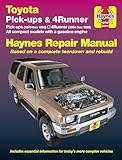
- Step-by-step procedures written from a complete teardown and rebuild, giving you the confidence to tackle repairs at any skill level.
- Over 700+ clear photos and diagrams that simplify complex systems, helping you complete jobs faster and with fewer mistakes.
- Comprehensive troubleshooting and fault-finding guides to quickly diagnose problems and reduce costly downtime.
Which 4Runner should you actually buy?
For a buyer who wants a simple reliability-first answer, use this hierarchy:
- Start with 2015–2024 examples. This is the mature fifth-generation range with the strongest general used-buying case.
- Consider a 2024 if the price and condition make sense. It is the newest fifth-generation model and retains the established 4.0-liter V6.
- Prefer documented maintenance over lower mileage alone. A serviced 150,000-mile truck may be a better purchase than an undocumented 90,000-mile vehicle.
- Reject serious frame corrosion. Mechanical repairs can be priced; structural corrosion can make the vehicle unsafe or uneconomical.
- Consider older models only after a more demanding inspection. Age-related leaks, rust, worn suspension parts, and deferred maintenance can erase the initial purchase-price advantage.
- Treat 2025-plus as a new-generation choice. Buy it for its new design and features if those matter to you, not because the available evidence already proves long-term superiority.
Should you buy a 4Runner with high mileage?
High mileage is not an automatic rejection for a 4Runner, but it changes the inspection and pricing requirements. The model’s long-life reputation can make a well-maintained high-mileage example attractive, yet the vehicle may still need expensive age-related work.
At higher mileage, budget for wear items and inspect the suspension, steering, brakes, wheel bearings, cooling system, exhaust, seals, drivetrain fluids, and frame. Ask whether major maintenance was performed and obtain receipts where possible. A high-mileage 4Runner with transparent records is easier to evaluate than a lower-mileage vehicle with an unexplained history.
What not to believe when comparing model years
- “This year is bulletproof.” No used vehicle is automatically problem-free.
- “Every 2003–2007 model leaks.” The documented bulletin supports inspection of a specific leak area, not a blanket condemnation.
- “Every 2002–2006 frame is unsafe.” Corrosion depends heavily on exposure and condition; the frame must be inspected individually.
- “No open recall means the vehicle is reliable.” Recall status and mechanical condition are different checks.
- “The 2025 is unreliable because it is all-new.” It is too new for a long-term reliability crown, but that is not proof of unreliability.
- “Complaint counts are failure rates.” Complaint databases can reveal issues worth investigating, but they are not controlled, representative reliability studies.
Useful documentation for a DIY buyer
A model-specific repair manual can help an owner understand inspection points, maintenance procedures, fluid specifications, torque values, and repair complexity. If you buy one, verify that it covers the exact 4Runner model year, engine, drivetrain, trim, and market. A manual for a 2005 4Runner is not automatically appropriate for a 2024 vehicle, and a two-wheel-drive manual may not cover four-wheel-drive components.
Use documentation as a supplement to Toyota’s official maintenance information and a qualified technician—not as a reason to skip a pre-purchase inspection.
Frequently Asked Questions
What is the most reliable Toyota 4Runner year?
There is not enough comparable public data to prove one single model year is best in every situation. For most used buyers, the 2015–2024 fifth-generation range is the strongest broad hunting ground. A well-maintained 2024 is the clearest late-run choice because it retains the established 4.0-liter V6.
Recommended Free Tools
Are 2025 and newer Toyota 4Runners reliable?
It is too early to award them a long-term reliability crown, but that does not mean they are unreliable. The 2025 is an all-new generation with a turbocharged 2.4-liter engine and available hybrid powertrain, so it has less long-term ownership history than the 2015–2024 generation.
Are 2003–2007 Toyota 4Runners bad years?
Not necessarily. Some vehicles in this range may develop a small oil leak in the area where the cylinder head, block, and timing cover meet. Inspect that area, review maintenance records, and have the vehicle checked independently rather than rejecting every example.
What is the biggest concern when buying an older 4Runner?
Frame and underbody corrosion can be the most important concern, particularly on vehicles exposed to road salt or coastal conditions. Have the frame, suspension mounting points, brake lines, skid plates, and other underbody components inspected on a lift.
Should I buy a high-mileage Toyota 4Runner?
Possibly, if it has thorough maintenance records, a sound frame, no major leaks or drivetrain symptoms, and a satisfactory independent inspection. High mileage should lead to more careful evaluation and a lower price, not an automatic rejection.
Do these 3 things before closing this tab:
1Clear out junk files and repair common Windows errors2Scan for outdated or missing drivers - takes under a minute3Repair Windows errors before they cause bigger problemsThe Bottom Line
The safest reliability-first strategy is to shop for the best-maintained, rust-free, VIN-checked 2015–2024 Toyota 4Runner you can afford. Choose a 2024 if you want the newest fifth-generation example and its established 4.0-liter V6, but do not pay a premium for the year alone. For older trucks, frame condition and documented care matter more than reputation. For 2025-plus models, acknowledge that the new generation needs more time before its long-term reliability can be judged fairly.
Quick Recap
Product prices and availability are accurate as of the date/time indicated and are subject to change. Any price and availability information displayed on Amazon at the time of purchase will apply.