Recommended Free Tools
Short answer: If you are buying a used GMC Terrain, put 2010–2012 at the top of your inspection-risk list, with extra caution for the 2011 model and any 2.4L four-cylinder. Owner complaints and GM service documents point to excessive oil consumption as the key early-generation concern.
Do not treat the model year as a verdict. A Terrain with documented piston or engine repairs, stable oil level, completed recalls, clean scan data, and an independent inspection can be a reasonable purchase. Later Terrains avoid some early-generation concerns but have their own transmission, safety-recall, infotainment, and software checks.


As an Amazon Associate I earn from qualifying purchases.
Which GMC Terrain years should you approach most carefully?
The first-generation GMC Terrain—especially a 2010, 2011, or 2012 with the 2.4L four-cylinder—deserves the most careful inspection. Excessive oil consumption is the biggest concern because GM issued service actions for certain 2010 and 2011 2.4L vehicles, and owner-complaint data is particularly unfavorable for those years. The 2011 Terrain has the highest complaint total in the supplied CarComplaints snapshot and lists excessive oil consumption as its most-reported problem.
Quick wins for a faster PC:
Repair Windows errors before they cause bigger problemsFix Now →Fix the driver behind crashes, sound loss and screen glitchesFind Drivers →Clear out junk files and repair common Windows errorsFree Scan →That does not mean every 2011 Terrain is defective or that every later Terrain is a safe purchase. A documented engine repair, stable oil level, clean scan, completed recalls, and an independent inspection matter more than the badge on the title. A repaired 2011 can be a better buy than a neglected 2015, while a low-mileage 2011 with unexplained oil loss is a substantial financial risk.
GMC Terrain model-year risk map
| Model years | Risk signal | What to investigate | Buying guidance |
|---|---|---|---|
| 2010–2012 | Highest-priority caution years | 2.4L engine, oil consumption, piston-ring or engine repairs, recalls, transmission behavior | Buy only after strong documentation and an independent inspection. Be especially careful with 2011. |
| 2013–2017 | Generally a different risk profile, but not automatically trouble-free | Individual engine, transmission, electrical, suspension, and maintenance condition | Condition and history should determine the decision. Do not treat the lower complaint totals as a guarantee. |
| 2018–2021 | Second-generation vehicles with different engines, transmissions, recalls, and software concerns | Powertrain configuration, shifting, airbag-related recall completion, infotainment operation | Check the VIN and test the vehicle cold and hot, including every electronic feature. |
| 2022–2024 | Fewer reported complaints, but limited long-term evidence | Infotainment software, recall status, warranty and update records | Potentially reasonable candidates, but do not mistake a young vehicle for a proven reliable one. |
| 2025–2026 | Too little mature used-vehicle history, especially for the redesigned 2026 model | Open recalls, software updates, warranty coverage, repair documentation | Buy based on warranty and vehicle-specific evidence rather than a long-term reliability verdict. |
Complaint counts are raw owner reports, not sales-adjusted failure rates. They do not account for how many vehicles of each year were sold, how many miles they accumulated, how owners report problems, or whether a complaint was confirmed by a technician. Use them to identify patterns and questions—not to declare that every vehicle from a year is bad.
Why the 2011 GMC Terrain deserves special attention
In the supplied CarComplaints snapshot, the reported complaint totals are:
| Model year | Reported complaints | How to use the number |
|---|---|---|
| 2011 | 151 | Highest total in the supplied comparison; excessive oil consumption is the leading reported problem. |
| 2010 | 122 | High complaint volume and documented concern involving certain 2.4L vehicles. |
| 2012 | 93 | Still within the principal early-Terrain caution period. |
| 2014 | 78 | Lower than the early peak, but not low enough to ignore the individual vehicle. |
| 2015 | 76 | Continue checking maintenance, powertrain, electronics, and recalls. |
| 2013 | 71 | Complaint volume is lower than 2010–2012 in this dataset, but VIN-specific checks remain important. |
| 2016 | 20 | Fewer reports in the snapshot, though raw totals are not reliability rates. |
The data supports calling 2011 the highest-priority year to investigate—not calling it an automatic rejection. Ask whether the vehicle has ever needed piston, piston-ring, or replacement-engine work. Request invoices rather than accepting a seller’s statement that the engine was repaired. Check whether the oil level is stable between services and whether the owner regularly monitored it.
The early 2.4L oil-consumption problem
This is the most important issue to screen for on an early Terrain. GM Special Coverage Adjustment 14159C covers certain 2010 GMC Terrain vehicles equipped with the 2.4L LAF engine that may consume less than 2,000 miles per quart because of piston-ring wear. The stated repair was replacement of the four piston assemblies, subject to the vehicle’s original in-service date and the 120,000-mile or 10-year coverage limit.
GM and NHTSA bulletin 15285C similarly addresses excessive oil consumption on certain 2011 GMC Terrain vehicles with the 2.4L engine. These documents do not mean that every 2.4L engine consumes oil, but they are stronger evidence than an isolated internet complaint because they show that GM documented a specific condition and repair path.
For a vehicle being considered now, the original 10-year coverage period for a 2010 or 2011 example will generally have expired. Verify the vehicle’s history and VIN rather than assuming that the special coverage is still available. The repair documentation remains valuable even when the coverage itself is no longer active.
How to check a Terrain for oil consumption
- Identify the engine. Confirm whether the vehicle has the 2.4L LAF engine. Do not rely only on an online listing; verify the configuration from the vehicle identification number, under-hood information, or service records.
- Check the oil correctly. Ask the seller to demonstrate the oil level with the engine cold or according to the owner’s-manual procedure. A low reading before a test drive is a warning sign.
- Ask about top-offs. Find out how often the owner adds oil between changes. Frequent top-offs, repeated low-oil warnings, or vague answers deserve follow-up.
- Review invoices. Look for piston, ring, piston-assembly, rebuilt-engine, or replacement-engine work. Confirm the mileage and repair date.
- Inspect for leaks. Have a technician check the engine, oil pan, seals, and underside. A clean driveway or clean underside does not rule out internal oil consumption.
- Look for neglect. A history of driving with a low-oil warning or stretching oil changes increases the risk of internal damage, even if the engine is not currently smoking or making noise.
A short test drive cannot prove that an engine does not consume oil. Internal consumption may only become obvious after hundreds or thousands of miles. Stable records and a documented repair are more meaningful than a clean-looking engine on the day of purchase.
Free tools Windows power users keep installed
One-click scans. No signup required.
Other GMC Terrain problems buyers should screen for
Transmission behavior
Transmission complaints should be treated as reported symptoms, not proof that every Terrain of a particular year has the same defect. The 2018 Terrain product information identifies multiple engine and transmission applications, including 1.5L and 2.0L turbocharged gasoline engines, a 1.6L diesel in some markets and configurations, and 9-speed or 6-speed transmission applications. That makes the exact engine and drivetrain important when comparing vehicles or researching a repair.
Test the transmission from a cold start and again after the vehicle is fully warm. Watch for:
- Delayed engagement when shifting into Drive or Reverse
- Harsh, abrupt, or slipping shifts
- Engine speed flaring between gears
- Shudder or hesitation during light acceleration
- Warning lights, reduced-power operation, or limp mode
- Unusual noises during acceleration, deceleration, or gear changes
One brief drive is not enough to diagnose a transmission. A qualified technician should evaluate a suspicious vehicle, including fluid condition where applicable and any stored powertrain codes.
Infotainment and electrical operation
Do not treat a frozen radio screen as a minor cosmetic issue without testing it. GM service bulletins describe software-related infotainment problems on 2021 Terrain vehicles, including radio settings reverting to defaults. A later bulletin covers 2022–2023 Terrain infotainment software updates intended to address software anomalies and stability problems.
The Tool Desk
Outbyte PC Repair FREERepair Windows errors before they cause bigger problemsFix Now →Outbyte Driver Updater FREEScan for outdated or missing drivers - takes under a minuteDriver Scan →During the inspection, test the radio, touchscreen, Bluetooth, phone projection, audio controls, steering-wheel buttons, backup camera, navigation if equipped, warning chimes, instrument cluster, and driver-assistance alerts. Turn the ignition off, allow the vehicle to complete an ignition cycle, restart it, and confirm that settings and connections persist. Ask whether the dealer has performed the relevant software updates and request the repair order if the seller says it has been updated.
The 2024 CarComplaints page in the supplied snapshot lists 14 complaints and one recall, including an owner-reported radio stutter or freezing complaint. That is an emerging signal from a small and recent dataset—not evidence that 2024 Terrain radios generally fail.
Windshield wipers and VIN-specific electrical recalls
The 2013 model year deserves a particularly careful VIN-specific recall check. NHTSA investigation material discusses the 2013 Equinox/Terrain windshield-wiper recall context and related complaints in the broader 2010–2016 population, while excluding 2013 from one referenced recall scope. This is not a basis for saying every 2013 Terrain has a wiper defect. It is a reason to verify the exact vehicle’s recall and campaign history instead of relying on a generic year list.
Safety systems and recall completion
Recall status is not determined reliably by the model year alone. NHTSA explains that a general year, make, and model search provides general recalls, investigations, complaints, and manufacturer communications, while a VIN search identifies unrepaired recalls associated with the specific vehicle. Open safety recalls should be repaired free of charge by a local dealership.
Examples of Terrain-related safety actions in the supplied research include:
- A 2011 seat-belt-buckle-anchor recall
- A 2012 tire-pressure-monitoring-system noncompliance recall
- A 2011–2013 electronic park-lock replacement-part recall
- A 2014 seat-height-adjuster recall affecting 2010–2012 Terrain vehicles
- A 2018 sensing diagnostic module recall
The 2018 sensing diagnostic module condition could prevent the airbag module from powering down correctly and could leave the system inoperative after a restart. The associated warning could include an illuminated airbag light and a service-restraint-system message; the remedy was software reprogramming.
A separate recall involved certain 2018–2019 vehicles produced during a defined manufacturing period whose recalled parts were not properly coated. Because recall involvement depends on production and VIN data, do not assume that every 2018 or 2019 Terrain is affected—or that none is affected—without running the VIN.
Rank #3

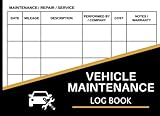
- 110 Sheets Log Book: This vehicle maintenance log book includes 110 record sheets to track repairs, services, fuel costs, and other vehicle-related expenses. It also comes with 36 convenient “Service Due” stickers to help remind you of upcoming maintenance schedules. Everything you need to keep your car records organized in one place.
- Detailed Information: Each page is carefully structured with dedicated sections for date, mileage, service description, parts replaced, vehicle information, cost, and additional notes. The clear and organized format allows you to maintain accurate records, monitor repair history, and better manage long-term vehicle performance and expenses.
- Enough Writing Space: The record sheets provide ample space for clear and thorough entries. Whether you’re documenting routine oil changes or major repairs, there’s plenty of room to write detailed information without feeling cramped.
- Easy to Use: The spiral binding allows the notebook to lay flat for comfortable writing, making entries quick and convenient. The included 36 “Service Due” stickers can be placed inside the book or on visible surfaces like your windshield or dashboard, helping you keep important maintenance reminders in sight.
- Proper Size: This compact logbook measures 5.5” x 7.1”, which fits easily in your glove compartment, center console, backpack, or desk drawer. Its portable size ensures you can access and update your vehicle records anytime, whether at home, in the garage, or at the service center.
Used GMC Terrain buying checklist
1. Run the VIN through the recall lookup
Do this before negotiating a price. Record each open campaign and ask the seller or dealer for documentation showing which campaigns have been completed. An open safety recall is a repair issue to resolve, not necessarily a reason to reject the vehicle, but you should know who will complete it and when.
PC Slower Than It Used to Be?
A free scan shows the junk files, broken settings and background clutter dragging Windows down - then fixes them in one click.Free scan · Windows 10 & 11Crashes, No Sound, or Screen Glitches?
Random freezes, missing sound and display glitches usually trace back to one bad driver. Find and replace yours safely.Free scan · under a minute2. Order a vehicle history report, but understand its limits
A vehicle history report can help reveal title brands, reported crashes, ownership changes, mileage entries, and some service events. It cannot identify every mechanical defect, prove that oil consumption is absent, or replace an inspection. Compare the report with maintenance invoices and the seller’s answers.
3. Confirm the engine, transmission, and drivetrain
Record the exact engine and drivetrain before comparing a Terrain with another model year. Early 2.4L examples require the most focused oil-consumption investigation. Later Terrains use different powertrain combinations, so a complaint or bulletin for one configuration should not automatically be applied to another.
4. Inspect the oil level and service history
Check the oil before the engine is warmed up, following the owner-manual procedure. Ask for oil-change intervals, receipts, top-off history, low-oil warnings, and any engine rebuild or replacement records. If the seller will not permit an oil-level check or cannot explain repeated oil additions, treat that as a meaningful risk.
5. Scan the vehicle before paying
An OBD2 scanner can help identify active or pending diagnostic trouble codes and may show that emissions readiness monitors are incomplete. Use it as a screening aid, not a verdict: it cannot measure oil consumption, verify recall completion, establish mechanical condition, or replace a professional inspection. A seller who clears codes immediately before the appointment may also prevent faults from reappearing during a short drive, so ask a technician to interpret the scan and the vehicle’s recent history.
Do these 3 things before closing this tab:
1Clear out junk files and repair common Windows errors2Scan for outdated or missing drivers - takes under a minute3Repair Windows errors before they cause bigger problems6. Test-drive it cold and hot
Arrange to see the vehicle before it has been warmed up. Check starting, idle quality, acceleration, braking, steering, warning lights, suspension noises, and transmission engagement. Drive long enough for the engine and transmission to reach normal operating temperature, then repeat light and moderate acceleration. Pay attention to delayed engagement, harsh shifts, shudder, hesitation, or reduced-power behavior.
7. Operate every electronic feature
Pair a phone, make a call if possible, test audio, switch the vehicle off, and restart it. Confirm the camera, display, steering-wheel controls, warning chimes, instrument cluster, navigation, and driver-assistance alerts. Settings that revert, screens that freeze, or warnings that appear after a restart should be documented and diagnosed before purchase.
8. Get an independent pre-purchase inspection
Have a technician who does not work for the seller inspect the Terrain. Ask specifically for the engine and oil leaks, underbody damage, suspension, wheel bearings, brakes, cooling system, turbo plumbing where equipped, transmission condition, scan data, and signs of neglected maintenance. The inspection is especially important for an early 2.4L vehicle, a Terrain with unexplained oil loss, or any vehicle with warning lights or inconsistent shifting.
An independent mechanic inspection is the highest-value risk-control step in this process, but it still cannot predict every future failure. It is designed to find current evidence of problems before you commit to the purchase.
9. Price the risk instead of chasing the lowest asking price
A cheap Terrain is not a bargain if it needs an engine, transmission, electrical diagnosis, or overdue safety work. Compare similar vehicles after adjusting for documented repairs, tire and brake condition, open recalls, maintenance records, and the cost of correcting known defects. If the seller refuses a VIN check, scan, oil inspection, or independent inspection, walking away is usually safer than guessing.
When an early Terrain can still make sense
A 2010–2012 Terrain should not be rejected solely because of its model year. It becomes a more defensible purchase when:
- The exact engine is confirmed and the seller provides a coherent maintenance history.
- The oil level is correct and the vehicle has no unexplained pattern of top-offs.
- Any piston, ring, piston-assembly, rebuilt-engine, or replacement-engine work is supported by invoices.
- The scan shows no unresolved powertrain or safety-system concerns.
- The transmission behaves normally both cold and warm.
- The VIN recall search shows completed campaigns or a clear plan to complete open ones.
- An independent technician finds no evidence of current engine, transmission, suspension, brake, or electrical problems.
Conversely, be ready to reject an early Terrain when the oil is low, the seller cannot explain oil loss, the engine repair story is undocumented, warning lights are active, the transmission slips or shudders, or the seller will not allow an independent inspection.
Independent reader supportYour contribution helps us test, update, and keep practical guides available for everyone.Are later GMC Terrain years safer buys?
Later years avoid some of the early first-generation context, but the evidence does not support naming one universally best Terrain year. From 2013 through 2017, complaint totals decline from the early peak in the supplied data, yet reports remain material through 2015. The inspection emphasis should shift from assuming one dominant oil-consumption problem to evaluating the individual vehicle’s engine, transmission, electrical systems, suspension, recalls, and maintenance.
What’s actually slowing this PC down?
Pick the symptom - the matching free tool is one click away.
The 2018 redesign is a different vehicle generation, not a blanket clean slate. It has different powertrain applications and its own recall and software checks. For 2021–2023 examples, infotainment behavior and software-update history deserve attention. For 2022–2024 vehicles, the lower complaint totals are encouraging only in a limited sense: the vehicles are newer, and the available ownership history is not mature enough to establish long-term reliability.
The redesigned 2026 Terrain is even harder to judge as a used vehicle. J.D. Power’s 2026 listing reports an 80/100 quality-and-reliability score labeled Average. Separately, a December 2025 report from GM Authority said Consumer Reports removed its Recommended designation after poor predicted-reliability results. Those measures are not interchangeable: one is a quality-and-reliability score, while the other is a predicted-reliability assessment. Neither provides a mature, long-term owner-failure record for a new design.
For a new or nearly new Terrain, confirm open recalls, review warranty terms, ask for software-update and repair records, and retain every repair order. There is not enough mature evidence to call the 2026 model either a proven good year or a proven bad year.
What the owner complaints really tell you
Complaint databases are useful because they reveal recurring owner-reported symptoms that deserve investigation. They are not exposure-adjusted failure statistics, engineering failure analyses, or a guarantee that a particular vehicle will fail. A high number can reflect a larger sales base, older vehicles, higher mileage, or more active reporting. A low number can reflect a younger fleet or fewer reports.
The strongest conclusion here comes from combining multiple kinds of evidence: the early-year complaint pattern, GM’s documented oil-consumption service actions for certain 2.4L vehicles, the vehicle’s actual service records, the VIN-specific recall result, a diagnostic scan, and an independent inspection. That combination is more useful than an internet ranking that labels an entire model year good or bad.
Best Value

- Made in USA - Proudly produced in Ohio by a Veteran-owned business
- This book will help you remember your last oil change /last service appointment. You can easily track all services, mileage and maintenance for multiple automobiles - great for business or personal use.
- The yearly expense summary is a very important part of this book. The yearly summary page is a perfect tool for your tax prep and your budget. After every month you should log your total business miles and personal miles in the “Annual Mileage Summary” page.
- This book comes in two convenient sizes, 8.5” x 11” - perfect to fit into any binder or clipboard that you may use for business and 5” x 7” which is the perfect size to fit into your glove compartment!
- Our unique cover is a semi-rigid transparent cover that leads to a sturdy book that resists stains and wrinkles. Reorder SKU: LOG-100-57CW-PP(Auto-Maintenance)
Can a GMC Terrain repair manual help?
A GMC Terrain repair manual or model-specific maintenance manual can be a useful reference for an owner comparing service procedures and repair information after purchase. It should remain secondary to the VIN recall lookup and professional inspection. A manual cannot authorize recall work, verify that a previous engine repair was completed correctly, or substitute for a technician’s diagnosis.
Final buying recommendation
If your shortlist includes a 2010, 2011, or 2012 GMC Terrain, start with the engine and oil history—not the asking price. Treat a 2.4L vehicle with unexplained oil loss as a serious risk. If you are considering a 2013–2017 model, judge the specific vehicle rather than assuming the early oil issue is either present or completely irrelevant. For 2018 and newer models, put more emphasis on configuration, shifting, recall completion, software, and warranty records.
The right question is not whether the GMC Terrain is universally reliable. It is whether this particular Terrain has a documented history, a stable powertrain, completed safety work, functioning electronics, and enough inspection evidence to justify its price.
Research basis: Owner-report totals are from the supplied CarComplaints model-year data. Manufacturer and safety information is based on GM Special Coverage Adjustment 14159C, GM/NHTSA bulletin 15285C, GM product and service bulletins, and NHTSA recall and investigation materials. Recall status should always be confirmed by the individual VIN.
Frequently Asked Questions
Is the 2011 GMC Terrain the worst year?
The 2011 GMC Terrain deserves the most caution because it has the highest complaint total in the supplied CarComplaints snapshot, and excessive oil consumption is its most-reported issue. GM also issued a service bulletin for excessive oil consumption on certain 2011 2.4L vehicles. It is not an automatic no-buy if the engine repair and maintenance history are documented and an independent inspection is clean.
Can an OBD2 scanner find the GMC Terrain’s main problems?
A scanner can reveal active or pending diagnostic trouble codes and help identify incomplete readiness monitors. It cannot measure internal oil consumption, verify recall completion, or determine that the engine and transmission are mechanically sound. Use it as a screening tool before a professional inspection.
Is a 2018 GMC Terrain a safe alternative to an early model?
The 2018 Terrain is a second-generation vehicle with different engines and transmissions, but it still requires a VIN recall check and a careful test drive. Check airbag-related recall completion, transmission engagement, infotainment stability, cameras, warning lights, and software-update history.
Outdated Drivers Are Slowing You Down
One free scan finds every outdated or missing driver and matches the right update for your exact hardware.Free scan · exact hardware matchWindows Errors? Fix Them Before They Spread
Repair common Windows errors and clear accumulated junk for a smoother, more stable PC - no reinstall needed.Free scan · no reinstallHow should I check recalls on a used GMC Terrain?
A VIN search identifies unrepaired safety recalls associated with that particular vehicle. A general model-year search is useful for learning about recalls and complaints, but it cannot confirm whether a specific used Terrain’s campaigns have been completed. Open safety recalls should be repaired free of charge by a local dealership.
The Bottom Line
Bottom line: The highest-priority GMC Terrain years are 2010–2012, especially 2.4L examples and most notably 2011, because of the combination of owner reports and GM-documented oil-consumption repairs. Do not automatically reject a repaired, well-documented example—but do reject unexplained oil loss, unresolved warning lights, poor transmission behavior, incomplete safety work, or a seller who refuses an independent inspection. Later Terrains have different risks, not no risks.
Quick Recap
Product prices and availability are accurate as of the date/time indicated and are subject to change. Any price and availability information displayed on Amazon at the time of purchase will apply.




