Free tools Windows power users keep installed
One-click scans. No signup required.
Choose a compact SUV when maneuverability, easier parking and lower fuel and maintenance spending matter most. Choose a full-size SUV when you regularly need a third row, substantial cargo volume, high towing capacity or generous room for adults and gear. Those are segment tendencies, not guarantees. Wheelbase, vehicle platform, model year, trim, engine, hybrid system and drivetrain can change the result enough that the exact vehicles—not just their labels—deserve comparison.
What separates a full-size SUV from a compact SUV?
“Compact” and “full-size” are market-segment labels rather than engineering standards. In the United States, compact SUVs generally occupy a smaller footprint and are often car-based crossovers. Full-size SUVs are larger and are frequently built on truck-derived architectures, although construction varies by model.
| # | Preview | Product | Price | |
|---|---|---|---|---|
| 1 |
|
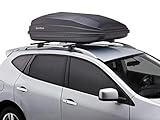
SportRack Vista XL Rear Opening Cargo Box,Black | $399.99 | Buy on Amazon |
| 2 |

|
Thule Pulse 2 L Roof Mounted Box, 16 Cubic Ft, Dual-Side Opening | $749.95 | Buy on Amazon |
| 3 |

|
Thule Force 3 XL US | $929.95 | Buy on Amazon |
As an Amazon Associate I earn from qualifying purchases.
That distinction matters because platform can affect the driving experience more than the size name. Edmunds’ buying guide describes car-based crossovers as tending toward sharper handling, quieter cabins and more comfortable rides. Truck-based SUVs are generally heavier and better suited to towing and off-road mobility. These are tendencies, not a promise that every compact rides better than every full-size vehicle; drive the specific candidates on the roads you use.
The Tool Desk
Outbyte PC Repair FREERepair Windows errors before they cause bigger problemsFix Now →Outbyte Driver Updater FREEFix the driver behind crashes, sound loss and screen glitchesFind Drivers →For a source-level explanation of segment and platform differences, see Edmunds’ SUV buying guide.
#1 Best Overall
- 18 cubic foot (510 L) internal cargo capacity
- Made from durable UV-resistant ABS material
- Rear opening for easy access away from traffic
- Tool-free mounting hardware for easy installation and removal
- Includes key and lock to secure contents in the box, and the box to your rack
| Question | Compact SUV tendency | Full-size SUV tendency |
|---|---|---|
| Exterior footprint | Shorter and narrower, usually easier to place in city streets and parking spaces | Longer and wider, with more space but greater parking and garage demands |
| Seating | Usually two rows; many can seat adults in the rear | More likely to offer three rows and room for three passengers across |
| Cargo | Broad segment guidance: up to about 70 cubic feet with seats folded | Broad segment guidance: more than 100 cubic feet with seats folded |
| Driving character | Often lighter, more maneuverable and crossover-like | Often heavier, with stronger towing and off-road orientation in truck-based versions |
| Typical running-cost direction | Usually lower fuel and maintenance costs | Usually higher fuel use, maintenance and insurance costs, especially for truck-based models |
The cargo figures in the table are broad Edmunds segment guidance, not standardized measurements between particular vehicles. Always check the manufacturer’s or evaluator’s measurement for the model and configuration you are considering.
How much passenger and cargo space do you actually get?
Seating for daily passengers
A compact SUV is often the practical fit for one or two adults, children and occasional rear-seat passengers. Edmunds notes that most compact models can seat adults in the rear, but shoulder room and legroom vary considerably. A rear-facing child seat, a tall front passenger and luggage can consume space quickly, so bring your actual car seats and have the tallest regular passengers sit in both rows during a test drive.
Full-size SUVs are more likely to provide a usable third row and enough width for three passengers across. That advantage is most valuable when a family routinely carries six or more people, when adults use the third row, or when children need separate seating positions. A third row that is technically present but difficult to access or uncomfortable for your passengers does not solve the space problem; test the entry path, seat cushion height and available headroom.
Do these 3 things before closing this tab:
1Scan for outdated or missing drivers - takes under a minute2Repair Windows errors before they cause bigger problems3Fix the driver behind crashes, sound loss and screen glitchesAccess to a third row
Third-row access depends on the second-row design, door opening and seat-slide range. Check whether a child can climb through, whether an adult can fold or tilt the seat without removing a child seat, and whether a booster or car seat blocks the access mechanism. Compact SUVs that offer a third row, where available, should be evaluated as occasional-use seating unless the dimensions prove otherwise.
Cargo behind the seats in use
Maximum cargo volume is not the same as usable family cargo space. A full-size SUV may advertise more than 100 cubic feet with seats folded, yet your everyday measurement is the space behind the third row or behind the second row when the third row is occupied. Measure the stroller, sports equipment, cooler or mobility device you actually carry. Check the lift-over height, opening width and floor length; a taller cargo bay can be less useful if heavy items are difficult to load.
A concrete full-size example
Edmunds lists the 2026 Chevrolet Suburban RST 4WD with eight seats, 41.5 cubic feet behind the seats and 144.5 cubic feet at maximum capacity. Those figures belong to that specific trim and configuration; they are not a specification for every Suburban or every full-size SUV. Use them to understand the scale of the category, then verify the exact vehicle’s seat arrangement and cargo measurements.
Comfort, noise and maneuverability
Ride and cabin comfort
A smaller crossover can feel easier to control because its body is lighter and its wheelbase and width are easier to judge. Car-based platforms also tend to deliver the quieter, more compliant ride described in Edmunds’ guide. But suspension tuning, tires, wheel size and seat design can outweigh segment averages. A compact SUV with large wheels may ride more firmly than a larger vehicle with a comfort-oriented setup.
Recommended Free Tools
Rank #2
- A simple, durable roof box built for commuting, day trips, and weekend escapes
- 450 litres of cargo space and a 75 kg load capacity for luggage, gear, skis and snowboards. Secure, tool-free system with a torque indicator that clicks when safely attached. Confirms closure for added peace of mind. Access your gear easily from either side of the vehicle
- Streamlined shape designed to suit a wide variety of modern vehicles
- Made from hardwearing ASA-ABS plastic that resists sun, scratches, and weather
- Full trunk access with minimal risk of contact with the cargo box, thanks to its forward position on the vehicle roof
In a full-size SUV, the longer body can provide a calm highway ride and more space between occupants. The trade-off is mass: acceleration, braking and direction changes can feel less immediate, and narrow roads or parking structures require more attention. Listen for wind and tire noise at highway speed, try the second and third rows, and evaluate how easily you can see the corners of the vehicle.
Parking and turning
Compare turning circle, camera views, sensor coverage and the actual dimensions of your garage or parking space. A full-size SUV can fit on paper yet leave little room to open doors or walk around it. A compact SUV generally requires fewer corrections in a tight space, but visibility and driver-assistance calibration still differ by model. A test drive that includes your usual parking area is more informative than a short dealership loop.
Fuel economy: engine and drivetrain matter more than the badge
Fuel economy comparisons are meaningful only when model year, engine, hybrid status, trim and drivetrain stay attached to the number. The available figures below are 2026 examples reported by Edmunds as EPA estimates; they are not a controlled test of equal powertrains.
| Vehicle and configuration | Reported combined fuel economy | What the figure shows |
|---|---|---|
| 2026 Nissan Rogue example | 32 mpg | Compact-SUV gasoline example reported by Edmunds |
| 2026 Toyota RAV4 hybrid, front-wheel drive | 43 mpg | Hybrid and front-wheel-drive configuration can materially improve economy |
| 2026 Chevrolet Suburban diesel example | 23 mpg | Large-SUV diesel configuration reported by Edmunds |
| 2026 Chevrolet Suburban RST 4WD, gasoline V8 | 16 mpg | Different engine and 4WD configuration from the diesel example |
See the underlying model examples in Edmunds’ 2026 fuel-economy SUV roundup and its large-SUV fuel-economy roundup. The 2026 Suburban RST specification page is at Edmunds’ 2026 Chevrolet Suburban specs page.
PC Slower Than It Used to Be?
A free scan shows the junk files, broken settings and background clutter dragging Windows down - then fixes them in one click.Free scan · Windows 10 & 11Crashes, No Sound, or Screen Glitches?
Random freezes, missing sound and display glitches usually trace back to one bad driver. Find and replace yours safely.Free scan · under a minuteAll-wheel drive, four-wheel drive, larger wheels and heavier equipment can reduce economy relative to a two-wheel-drive or lighter version. For your comparison, record the EPA combined rating for the exact stock number or trim, multiply your annual miles by the fuel price in your area, and compare that result with insurance and service estimates. Do not apply the 16-mpg V8 figure to the diesel model or to another SUV.
Running costs beyond fuel
Maintenance and repairs
Edmunds’ buying guidance says compact SUVs usually cost less to fuel and maintain. Midsize and full-size vehicles generally deliver worse mileage and can carry higher insurance expense, particularly when they use truck-based hardware. The direction is useful for budgeting, but there is no like-for-like total-cost-of-ownership study here that supports a universal dollar premium.
Ask a dealer or independent shop for the scheduled-service intervals and prices for the exact engine and drivetrain. Larger tires, brakes and 4WD components can cost more to replace, while a hybrid may have different service needs from a gasoline or diesel vehicle. Obtain a local insurance quote rather than assuming a segment-wide percentage difference; premiums depend on driver, location, coverage, claims history and the specific vehicle.
Rank #3
- Offers durability and maintains a sleek appearance, designed to handle daily use and the demands of active lifestyles
- A quick, secure, and intuitive mounting system that indicates when the cargo box is safely attached with a simple click
- Provides easy access to your cargo from both sides of the vehicle, enhancing convenience and efficiency
- Extensively tested for road safety and durability in the Thule Test Center, ensuring top-notch quality and reliability
- SlideLock system with separate locking and opening functions, automatically locks the lid in place and indicates when the box is closed securely
Purchase and financing cost
Include transaction price, taxes, financing interest, registration and expected depreciation in the same worksheet as fuel and service. A compact SUV’s lower purchase price can be offset if you later need to rent a larger vehicle or replace it because the third row or towing capacity is inadequate. Conversely, paying for a full-size SUV’s unused capability ties up money and increases carrying costs every day.
A simple annual operating-cost worksheet
- Fuel: divide your annual miles by the exact EPA combined mpg, then multiply by your local price per gallon. Keep the calculation separate for city-heavy and highway-heavy use if your mileage pattern is unusual.
- Insurance: request quotes for the exact year, trim and VIN-equivalent configuration at the coverage limits you need.
- Service: list scheduled maintenance, tires, brakes and drivetrain-fluid service; ask what is due at your expected mileage.
- Financing: compare total interest and fees, not only the monthly payment.
- Usage value: assign a real value to the third-row seating, cargo volume or towing that would prevent an extra vehicle rental or trip.
Towing, payload and road capability
If towing is central to the decision, start with the trailer’s loaded weight, tongue weight, payload and the equipment required to control it. A vehicle’s maximum tow rating is not a universal promise for every trim. The 2026 Chevrolet Suburban RST listing states up to 8,000 pounds of towing, but that figure should not be projected to every Suburban, engine or drivetrain.
Compact SUVs can be entirely adequate for light trailers and everyday roads, while full-size, truck-based SUVs generally provide a larger margin for heavy trailers, passengers and cargo. Confirm the vehicle’s payload label, hitch rating, cooling equipment, axle ratio and required towing package. If you regularly drive unpaved trails, snow or steep grades, determine whether all-wheel drive is sufficient or whether a true four-wheel-drive system, low range and appropriate tires are necessary.
Safety ratings: compare the right way
The National Highway Traffic Safety Administration says its New Car Assessment Program provides information about crash protection and rollover safety beyond federal requirements. Its 5-Star program is useful, but ratings must be read within NHTSA’s comparison rules. Rollover and side-crash ratings can be compared across vehicle classes. Frontal and overall scores can be compared only among vehicles in the same class and within 250 pounds.
That means there is no evidence here for calling either the full-size or compact class categorically safer. Look up the exact model year and trim at NHTSA’s Car Safety Ratings tool, check recalls, and verify which driver-assistance features are standard or optional. A five-star result from one class should not be treated as a direct frontal or overall comparison with a vehicle outside the permitted class and weight range.
A decision framework you can use at the dealership
Step 1: Define the people you carry
- Count adults, children and child seats on your busiest normal day.
- Decide whether three passengers must fit across one row.
- Specify how often the third row will be occupied and by whom.
- Test access with the child seats, boosters or mobility equipment you actually use.
Step 2: Measure real cargo needs
- Measure the largest item that must remain behind occupied seats.
- Check opening width, lift-over height and floor length, not only the published maximum.
- Confirm that the seats fold in the combinations you need; maximum volume often requires folding multiple rows.
Step 3: Match the drive to the road
- Drive city streets, a highway and a tight parking area.
- Evaluate ride, road noise, braking, visibility, turning effort and seat comfort in every row.
- For snow, trails or towing, verify the precise AWD or 4WD system, tires and tow equipment.
Step 4: Build an exact-cost comparison
- Record EPA combined mpg for each engine and drivetrain.
- Use your annual mileage and local fuel price.
- Get insurance quotes and service estimates for the exact trims.
- Include purchase price, financing and expected replacement costs.
Step 5: Validate safety information
- Check NHTSA ratings for the same model year.
- Apply the 250-pound and same-class limits to frontal and overall comparisons.
- Review rollover and side-crash results separately.
- Check recalls and the driver-assistance equipment included on the vehicle you can actually buy.
Which SUV size fits common ownership patterns?
Choose a compact SUV when
- Your normal load is one to five people and you rarely need a third row.
- You park on narrow streets or in a compact garage.
- Lower fuel and routine-maintenance costs are a priority.
- Your trailer, cargo and road conditions fit the vehicle’s ratings.
- You prefer a lighter, more maneuverable crossover feel.
Choose a full-size SUV when
- You regularly carry six or more people or need adult-usable third-row space.
- You need substantial cargo volume while several seats remain occupied.
- Your trailer, payload or terrain demands the capability of a larger platform.
- You can accommodate the vehicle’s length, width, turning needs and loading height.
- You have budgeted for potentially higher fuel, maintenance, insurance and financing costs.
Bottom line for the full-size-versus-compact decision
A compact SUV is usually the more economical and convenient daily tool; a full-size SUV earns its cost when its passenger space, cargo capacity or towing margin is used often. The most defensible choice comes from matching your real occupants, cargo, roads and trailer to one exact configuration, then checking its EPA estimate, local insurance quote, service schedule and NHTSA ratings. Segment labels narrow the search, but they cannot replace that vehicle-specific check.
Quick Recap
Product prices and availability are accurate as of the date/time indicated and are subject to change. Any price and availability information displayed on Amazon at the time of purchase will apply.




