If facial protection is your priority, choose a properly fitted, standards-compliant full-face helmet. Its chin bar covers the lower face that an open-face helmet leaves exposed, and the strongest comparative evidence favors full-face designs for reducing facial fractures and some head-injury outcomes. Open-face helmets can feel less enclosed and may suit riders who value an unobstructed face, but that convenience comes with substantially more facial exposure. Neither style is automatically comfortable or safe when it fits poorly, carries the wrong certification, or is altered with unapproved parts.
What separates a full-face helmet from an open-face helmet?
The defining difference is the chin bar. A full-face helmet wraps around the back, sides, crown and lower front of the head, with a fixed chin guard and a visor or face shield. An open-face helmet covers the crown, sides and back but leaves the jaw and chin open; some models include a face shield, while others rely on separate eye protection.
As an Amazon Associate I earn from qualifying purchases.
| Feature | Full-face | Open-face | What it means on the road |
|---|---|---|---|
| Lower-face coverage | Chin bar covers the jaw and chin | No chin guard; lower face exposed | The clearest safety distinction. NHTSA describes the absence of a chin guard as increasing safety risk. |
| Face shield | Usually integrated into the helmet shell | May be built in, optional or absent | A shield protects eyes and some facial area; it does not replace a chin bar. |
| Weather exposure | Closed shield can block rain, insects and cold air | Face remains more exposed, depending on shield and eyewear | Conditions and accessory choices matter as much as helmet style. |
| Ventilation | Shell vents and internal channels move air through an enclosed helmet | Open front creates a more exposed feeling | Actual airflow depends on the specific design, fit, speed and climate. |
| Wind and noise | Can reduce direct wind when the shield is closed, but sealing and vents affect noise | More direct wind exposure; NHTSA notes significant wind noise for open-face and half helmets | Use hearing protection that is compatible with the helmet and local law. |
| Certification | Verify the exact model’s required market label | Verify the exact model’s required market label | In the United States, both styles sold for motorcycle use must meet FMVSS No. 218 and carry required DOT labeling. |
Which style is safer?
Full-face helmets have the stronger facial-protection evidence
The Eastern Association for the Surgery of Trauma (EAST) systematic review and guideline included 37 studies involving 37,233 riders. Compared with non-full-face helmets, full-face helmets were associated with lower odds of traumatic brain injury (odds ratio 0.40, 95% confidence interval 0.23–0.70) and facial fracture (odds ratio 0.26, 95% confidence interval 0.15–0.46). The authors also reported lower head-and-neck and facial injury-severity scores and issued a conditional recommendation for full-face helmets to reduce traumatic brain injury, facial fractures and injury severity.
Outdated Drivers Are Slowing You Down
One free scan finds every outdated or missing driver and matches the right update for your exact hardware.Free scan · exact hardware matchWindows Errors? Fix Them Before They Spread
Repair common Windows errors and clear accumulated junk for a smoother, more stable PC - no reinstall needed.Free scan · no reinstallAn odds ratio is a comparison within the pooled studies, not a promise that an individual rider has a 60% lower crash risk or a 74% lower absolute chance of facial fracture. The result does not tell you what will happen in every impact, with every helmet, or to every rider. It does establish a consistent direction of evidence: covering the chin and face is associated with fewer serious facial and some head injuries than using a helmet without that coverage.
#1 Best Overall

- 2 Visors Included: Clear + Smoked and 1 Neck Scarf for Winter Use
- Streamlined Aerodynamic Design Reduces Wind Noise and Drag
- Advanced and Lightweight Durable ABS Shell
- Quick Release Clasp and Strap and Removable Inner Lining Pads
- Meets or Exceeds FMVSS-218 and DOT Safety Standards
What the evidence does not establish
A 2021 scoping review of 137 studies found that evidence favoring full-face helmets for head and facial protection was limited and that evidence showing one helmet type to be better for neck injury was scarce. Helmets can also affect vision, hearing and ventilation. That caution remains important: a full-face helmet is not proven to prevent every brain injury, and the available evidence does not show that it universally protects the neck better than an open-face helmet.
An observational case-control study of motorized two-wheeler riders who sustained head impacts found a lower risk of facial injury among full-face users. Because riders were observed rather than randomly assigned to helmet types, the finding is an association rather than proof that the helmet alone caused the difference. Rider behavior, speed, road conditions, motorcycle type and other factors can influence both helmet choice and injury outcome.
Laboratory tests support the chin-bar rationale, with limits
A 2017 laboratory study used THOR dummy impacts and the SIMon finite-element head model. Under the tested facial-impact conditions, full-face protection significantly reduced modeled brain-injury risk compared with no helmet. The paper also noted that major motorcycle-helmet standards at that time did not include a facial-impact requirement. This is biomechanical evidence, not a real-world trial comparing every open-face and full-face model.
A 2023 laboratory study tested full-face motorcycle and bicycle helmets, an open-face helmet and a face-airbag concept. In its measured impacts, the full-face motorcycle helmet and face airbag reduced facial forces and brain strain. The authors said the implications for neck tension and basilar-skull fracture required further investigation. Those results should not be generalized to all products or crash angles.
NHTSA’s helmet-testing presentation reported that two open-face helmet models in a small test program failed a face-shield penetration test, with the striker reaching the headform. This is not a representative failure rate for all open-face shields; it shows why the exact helmet, shield and certification matter.
Rank #2

- 【DOT Certified & High-Impact Protection】 This full face motorcycle helmet meets or exceeds DOT FMVSS-218 standards, ensuring professional-grade safety. Built with a rugged ABS shell and energy-absorbing EPS, these motorcycle helmets dot approved provide ultimate defense for street bikes, cruisers, and sport bikes
- 【Optimized Airflow for All-Weather Riding】 Experience superior ventilation with 4 strategically placed air intakes and exhaust vents. This full face helmet design minimizes wind resistance and fogging, keeping you cool during summer rides and providing a reliable full face helmet adult option for rainy or cold weather
- 【Quick-Release Dual Visor System】 Adapt to any light condition with ease. Our full face helmet motorcycle features a tool-free quick-release system. Each order includes a pre-installed tinted shield plus a bonus clear visor, making these full face motorcycle helmets for men and women versatile for both bright days and night riding
- 【Washable Lining & Comfort Fit】 Maintain freshness on every journey with our fully removable and machine-washable interior. The moisture-wicking sponge padding makes these motorcycle helmets for adults incredibly comfortable for long-distance trips, ensuring a snug fit for these full face motorcycle helmets dot certified
- 【Complete Bundle & Perfect Sizing】 We include a premium carrying bag for easy storage and scratch protection. Whether you are searching for motorcycle helmets for women or men, TRIANGLE offers 4 sizes (S-XL) to ensure a secure fit. Please measure your head circumference to find the perfect full face motorcycle helmet for women or men
Comfort and everyday usability
Comfort is a fit-and-environment question, not a style guarantee
An open-face helmet feels less enclosed because the rider’s cheeks, jaw and mouth area are exposed. That can make low-speed city riding, frequent stops and warm-weather errands feel easier. It also allows more direct airflow and makes conversation, eating or drinking during a stop simpler. The same openness exposes the face to rain, cold, dust, insects and wind.
A full-face helmet encloses more of the head, but NHTSA describes the category as comfortable and well ventilated when properly designed. Vents, internal channels, a correctly positioned shield and a stable fit can keep air moving without exposing the face. At highway speed, a closed shield can make weather and wind management easier. A poorly fitting or poorly vented model can still feel hot, press on the forehead or create turbulence.
The Tool Desk
Outbyte Driver Updater FREEScan for outdated or missing drivers - takes under a minuteDriver Scan →Outbyte PC Repair FREERepair Windows errors before they cause bigger problemsFix Now →There is no validated universal statistic showing that one style is more comfortable, quieter or better ventilated for all riders. Climate, riding speed, head shape, shell design, hair, eyewear and communication equipment all change the experience. Treat comfort claims as model-specific and test the exact helmet before committing.
How the two styles behave in common riding situations
| Situation | Full-face considerations | Open-face considerations |
|---|---|---|
| Urban commuting | More facial protection and weather control; may feel warmer at long stops | Easy face access and an airy feel; more exposure to traffic dust, rain and impacts |
| Highway or fast riding | Closed shield and chin bar provide a more enclosed barrier; check noise and visor sealing | Direct wind and noise can become tiring; eye protection is essential |
| Cold or wet weather | Better ability to keep rain and cold air off the face when the shield is closed | Requires suitable eyewear and face protection; lower face remains exposed |
| Hot climate | Prioritize effective vents, moisture-wicking liners and a shape that does not create pressure points | More exposed airflow can feel cooler, but sun, insects and debris reach the face |
| Glasses or intercom | Try the helmet with the exact glasses and communication unit; cheek pads must not force the equipment into the face | Access is easier, but wind can move glasses or disturb microphones |
How to fit either helmet correctly
Certification cannot compensate for a loose or unstable fit. NHTSA advises that the helmet be equally snug around the crown, tight in the cheeks and stable when you shake your head. Follow this process with the exact model and size you intend to use:
- Measure and select a starting size. Measure around the widest part of your head according to the manufacturer’s chart. Head shape differs even when circumference is identical, so the chart is only a starting point.
- Put the helmet on fully. Open the retention strap, spread the cheek pads gently and pull the helmet down until the crown is seated. Do not judge fit from a quick touch on top of the head.
- Check even pressure. The liner should contact the crown and cheeks firmly without a sharp hotspot. New cheek pads often feel tight; pressure should be distributed rather than concentrated.
- Test movement. Fasten the strap, hold the shell and try to rotate the helmet side to side and up and down. It should move your skin with it rather than sliding over your head. Shake your head as NHTSA recommends; the helmet should not shift independently.
- Wear your real equipment. Keep the helmet on for several minutes with the glasses, sunglasses, balaclava or intercom you will actually use. Check that the shield closes, the strap remains accessible and nothing creates a painful pressure point.
- Check retention. Use the manufacturer’s specified strap adjustment. A helmet that loosens during movement, interferes with your field of view or lifts at the forehead is the wrong size or shape.
- Use only approved adjustments. Some manufacturers offer model-specific replacement cheek pads or liners. Install only those components; improvised foam, cut liners or unrelated padding can compromise integrity and may void the warranty.
Do not size up simply to gain more room for thick clothing or electronics. Select a helmet that fits your head first, then choose compatible, manufacturer-approved accessories.
Rank #3
- 【DOT Certified & High-Impact Protection】 This full face motorcycle helmet meets or exceeds DOT FMVSS-218 standards, ensuring professional-grade safety. Built with a rugged ABS shell and energy-absorbing EPS, these motorcycle helmets dot approved provide ultimate defense for street bikes, cruisers, and sport bikes
- 【Optimized Airflow for All-Weather Riding】 Experience superior ventilation with 4 strategically placed air intakes and exhaust vents. This full face helmet design minimizes wind resistance and fogging, keeping you cool during summer rides and providing a reliable full face helmet adult option for rainy or cold weather
- 【Quick-Release Dual Visor System】 Adapt to any light condition with ease. Our full face helmet motorcycle features a tool-free quick-release system. Each order includes a pre-installed tinted shield plus a bonus clear visor, making these full face motorcycle helmets for men and women versatile for both bright days and night riding
- 【Washable Lining & Comfort Fit】 Maintain freshness on every journey with our fully removable and machine-washable interior. The moisture-wicking sponge padding makes these motorcycle helmets for adults incredibly comfortable for long-distance trips, ensuring a snug fit for these full face motorcycle helmets dot certified
- 【Complete Bundle & Perfect Sizing】 We include a premium carrying bag for easy storage and scratch protection. Whether you are searching for motorcycle helmets for women or men, TRIANGLE offers 4 sizes (S-XL) to ensure a secure fit. Please measure your head circumference to find the perfect full face motorcycle helmet for women or men
Certification and labels: what to check before buying
United States requirements
NHTSA says motorcycle helmets sold in the United States must comply with Federal Motor Vehicle Safety Standard (FMVSS) No. 218 and carry the required DOT information on the rear label. DOT is a manufacturer-certification system: the maker certifies that the helmet meets the standard, while NHTSA conducts compliance testing on selected helmets. A DOT symbol is not a statement that NHTSA pre-approved that individual helmet before sale.
What’s actually slowing this PC down?
Pick the symptom - the matching free tool is one click away.
Inspect the label, model identification and seller carefully. Avoid novelty helmets that lack the required certification information and be cautious of counterfeit labels. Verify the exact model rather than assuming every helmet from a brand or every version of a shell carries the same approval.
Outside the United States
Certification rules differ by jurisdiction. Check the standard required where you will ride and confirm that the exact helmet carries the current local mark. A label accepted in one market does not automatically satisfy another market’s law. Importing a helmet can also create problems with legality, warranty support and replacement parts.
Independent reader supportYour contribution helps us test, update, and keep practical guides available for everyone.Choosing between the styles for your riding pattern
Start with the exposure you are willing to accept, then narrow the choice by fit and certification. The following framework keeps convenience from overshadowing the safety trade-off:
- Choose full-face first if you ride on highways, travel in changing weather, ride at night, regularly encounter gravel or insects, or want the strongest available evidence for facial and some head-injury protection.
- Consider open-face only with eyes open to its limitation: the chin and lower face remain unprotected by a chin bar. Select it because the riding context and your priorities justify that exposure, not because a face shield makes it equivalent to a full-face helmet.
- For mixed riding, a well-ventilated full-face helmet can cover more conditions with one piece of equipment. If you choose an open-face model for short, slow trips, keep suitable eye protection available and reassess when speed, distance or weather changes.
- For passengers and new riders, explain the coverage difference explicitly. A passenger should make an informed choice and receive a helmet that fits their own head; sharing a shell or assuming one size fits all is unsafe.
Shopping checklist for a DOT-compliant full-face or open-face helmet
- Confirm the exact model’s certification for the country where it will be used.
- Try the actual size and shell shape, not just a visually similar model.
- Check crown and cheek pressure, retention stability and field of view.
- Close and open the shield while wearing gloves; inspect the seal and locking mechanism.
- Test vents and confirm that their controls are reachable without distracting you.
- Wear your normal glasses, hearing protection and communication equipment during the fit check.
- Ask whether model-specific cheek pads, liners and replacement shields are available.
- Read the manufacturer’s care, storage and replacement guidance; do not use solvents or alter the shell or liner.
- Reject helmets with cracks, crushed foam, damaged straps, unknown history or suspicious labels.
Common mistakes and how to avoid them
“The face shield makes an open-face helmet equivalent.”
It does not. A shield can help with wind, rain and eye hazards, but it does not provide the structural chin coverage of a full-face helmet. Shield construction and retention also vary by model.
Do these 3 things before closing this tab:
1Scan for outdated or missing drivers - takes under a minute2Clear out junk files and repair common Windows errors3Fix the driver behind crashes, sound loss and screen glitchesRank #4
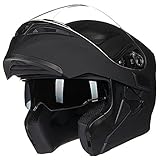
- High Resistance ABS Shell With Micrometrically Adjustable Strap
- Meets or Exceeds FMVSS-218 and DOT Safety Standards
- Helmet Liner / Cheek Pads are Lightweight, Soft and Easily Removable and Washable
- Sleek and Lightweight Design Reduces Wind Noise
- Modular Flip-Up Function Anti-Scratch, Anti-Fog and Wide View Clear Visor
“A looser helmet will be more comfortable on long rides.”
A loose helmet can move, lift or rotate in a crash and often becomes noisier. Choose even, firm contact and solve pressure problems with the correct size, shape or approved replacement pads rather than extra padding.
“DOT means the government tested and approved this helmet before sale.”
In the United States, DOT reflects the manufacturer’s certification under FMVSS No. 218. NHTSA’s compliance testing is performed on selected helmets; it is not a universal pre-sale approval process.
“Full-face helmets prevent all brain or neck injuries.”
The evidence supports lower odds for specific outcomes, not immunity. Crash direction, speed, surface, fit, retention and helmet condition still matter. Evidence that one style is superior for neck injury remains scarce.
“Any replacement liner or foam is acceptable.”
Only use components approved for that model. Cutting, gluing or stuffing the liner can change how the helmet manages energy and may void its warranty.
Quick wins for a faster PC:
Clear out junk files and repair common Windows errorsFree Scan →Fix the driver behind crashes, sound loss and screen glitchesFind Drivers →Repair Windows errors before they cause bigger problemsFix Now →Care, replacement and post-crash decisions
Follow the maker’s cleaning and storage instructions, keep the liner and shield free of chemicals that can damage materials, and inspect the strap, shell, vents, shield and interior after hard use. Replace a helmet after a crash or significant impact even when damage is not visible; energy-absorbing materials can be compromised internally. Replace components only with parts specified for that model, and replace the entire helmet when the manufacturer sets a service-life limit or when its history is unknown.
Verdict: which should you buy?
For most riders seeking the best-supported protection, a correctly fitted, market-certified full-face helmet is the more defensible choice because it adds a chin bar and is associated with lower odds of traumatic brain injury and facial fracture in the EAST evidence. An open-face helmet can be a deliberate comfort or convenience choice for riders who accept greater lower-face exposure, but a shield does not erase that trade-off. Whichever style you select, fit, retention, certification and condition determine whether the helmet can perform as intended.
Quick Recap
Product prices and availability are accurate as of the date/time indicated and are subject to change. Any price and availability information displayed on Amazon at the time of purchase will apply.




